Sheila Ann Thompson Interview, 02 October 2026
Abstract
Sheila Ann Thompson recalls growing up in Cleveland’s Cedar-Central (Fairfax) and Lee-Harvard neighborhoods and describes how her experiences of outdoor recreation shaped her life. She discusses attending Camp Mueller from age seven until age fourteen in the early to mid-1960s, following in the footsteps of her mother, who had attended the camp decades earlier. Thompson remembers Camp Mueller’s predominantly Black campers and counselors, its songs and traditions, and activities including swimming, hiking, nature study, and overnight camping. She compares these experiences with a summer at the more racially mixed Hiram House Camp, where she participated in horseback riding, archery, canoeing, and fishing. She also recalls family day trips to Midway Lake, a popular recreational destination for African American families, where she rode horses, picnicked, and enjoyed the lake and surrounding grounds. Around 1979, Thompson returned to camping as an adult staff member in Cleveland’s school camping program, working at Camp Mueller, Camp Koinonia, River Road Camp, and Camp Hope. She reflects on how these experiences fostered independence, discipline, resilience, lasting friendships, and a lifelong love of nature. Thompson also reflects on her eight years of driving the electric cart at Cleveland-Hopkins International Airport and the close bonds she formed with flight attendants.
Metadata
Interview Transcript
Transcripts may contain errors.
Sheila Thompson [00:00:37] Okay, my name is— my full name is Sheila Ann Thompson.
Arrye Rosser [00:00:40] And what year were you born?
Sheila Thompson [00:00:42] I was born in 1953.
Arrye Rosser [00:00:44] Excellent. And tell us about your family growing up, just so we get a little background on you.
Sheila Thompson [00:00:49] Okay, I grew up in a middle-class- It was four of us in the family: my mom, my dad, and my brother. My mom was an educator. My dad worked at the post office. My brother and I, we had a very close relationship. We had a good family. I mean, we did a lot of family things, and we were very, very close, very close-knit family.
Arrye Rosser [00:01:14] Where did you grow up in the area?
Sheila Thompson [00:01:17] Okay, I grew up in the Lee-Harvard area. We moved there in 19— it was August 1960. At the time we moved, I was seven years old.
Arrye Rosser [00:01:25] Did you always live in the Lee-Harvard area, or did you move around?
Sheila Thompson [00:01:29] Well, we always— we pretty much lived there. When I was born, I lived on 84th between Cedar and Central. That's with my grandfather. We had one of those old extended houses where you had your cousins on one side, and my grandpa was downstairs, and I had another cousin. It was an extended family home, but we moved out in August of 1960. We moved to Lee-Harvard, and we stayed there for over— it was about 60 years.
Arrye Rosser [00:02:00] Oh, wow.
Sheila Thompson [00:02:01] Yeah.
Arrye Rosser [00:02:01] What school did you go to?
Sheila Thompson [00:02:03] I started out— I went to Bolton, was my first elementary school. Then when we moved to Lee-Harvard, I went to Gracemount. I went to Gracemount until 6th grade, then I went to Catholic school. I went to Epiphany Catholic School. And then from high school, I went to Hoban Dominican for a very short period of time. It was an all-girl Catholic high school. And I graduated from Lutheran East.
Arrye Rosser [00:02:25] Excellent. Excellent. And what was your— what has your career been? What kind of work have you done?
Sheila Thompson [00:02:30] Okay. I was a social worker with the Department of Children and Family Services. I also did research. When I graduated from college, I graduated from college in Atlanta, Georgia, Clark College. I also did two years at Bowling Green State University. When I finished school at Clark, I worked for Georgia State University. I also worked for Emory University, and I worked in a program called Project Martin. Oh, and I worked for Morehouse School of Medicine, Atlanta University Center. I did that for like 6 years. And I worked for a program with Emory called Project Martin. And then from there, I went into teaching, and I taught school.
Arrye Rosser [00:03:06] What did you teach?
Sheila Thompson [00:03:07] I taught early childhood from kindergarten to 8th grade.
Arrye Rosser [00:03:11] Did you specialize in a certain area of teaching?
Sheila Thompson [00:03:14] Pretty— just early childhood. I liked the little ones because I understood their math.
Arrye Rosser [00:03:23] I hear you. Well, let's go back to when you were a kid growing up in Lee-Harvard. Make sure I got that, the right area. Tell us, kind of, did you go and play outside in the area?
Sheila Thompson [00:03:37] Yeah, we played- It was so much different back then, because we played with each other. We had street clubs where they would have street club block parties, and then I played with my friends. We would play, like, Rock Teacher and Hide-and-Go-Seek. And then we also— there were community centers that we went to also. And one thing I could say, my mother and father both were swimmers, so we used to go to Fairfax, which is in the area that we moved from, and we used to go family swim. We did family swimming at Fairfax. But I had a good time playing with my friends. We played typical games, and we were very close. And to this day, I'm still friends with my childhood friends. I have over 60 years of friendship with a lot of my childhood friends who are still living.
Arrye Rosser [00:04:26] That's incredible. Did you have a particular park or something that you went to, or were you just in the backyard?
Sheila Thompson [00:04:33] We did backyard, and then we would go to different parks. I remember going to— what was that park? Woodhill Park, at the time. I would go roller skating, ice skating there. I would go swimming there, too, along with going swimming at Fairfax. So, we did a lot of outside activities, and I remember my dad would take us to Midway Lake, and I learned how to go— I learned horseback riding when I was little, too.
Arrye Rosser [00:05:01] Wow.
Sheila Thompson [00:05:01] Yeah.
Arrye Rosser [00:05:02] Wow. Well, how did you end up at Midway Lake?
Sheila Thompson [00:05:04] He had a good friend that had horses out there, so we would go. We didn't go often, but we would go every now and then. We would go out to Midway and ride horses. It was a huge. It was like a park, but it was like- It was sort of like a national park-like, but it was huge. And we'd picnic. We'd have picnics out there, and it was really nice. And then we also did, with my dad working at the post office, every year they would have their annual picnic at Euclid Beach and Geauga Lake. So we would go to the picnics, and a lot of my friends that lived in the neighborhood, we would all go together.
Arrye Rosser [00:05:42] Oh, yeah.
Sheila Thompson [00:05:43] So because growing up, we also had a close-knit neighborhood, too. The kids knew each other's relatives, and our families were close.
Arrye Rosser [00:05:53] It's wonderful that you had all these different experiences. When you went to Midway Lake, were there many other Black families that were there?
Sheila Thompson [00:06:01] Yeah, there were other Black families there, yeah. And then we also— I remember going to Fox Lake, which is in Angola, Indiana. We would go there for vacation and stay in cabins. It was— and we met other Black families there. It was like a resort.
Arrye Rosser [00:06:19] It's interesting, because I've interviewed quite a few African American folks from the area who are talking about their childhood, and how some kids have no experiences doing outdoor things, and some people have a lot. What do you think was the thing that maybe made your family more interested? in being outside. Were your parents outdoorsy people?
Sheila Thompson [00:06:44] I'm sorry, what?
Arrye Rosser [00:06:45] Were your parents outdoorsy people?
Sheila Thompson [00:06:46] Yeah, my mom and dad both were. In fact, my mother went to Camp Mueller. I don't remember exactly what year, but that's how I got introduced to Camp Mueller. My mom went to Camp Mueller when she was a little girl, and that was a long, long time ago. And then I got reintroduced— a friend, when my mom was teaching school at Parkwood Elementary - that was one of the schools she taught at - her friend, I remember, Mrs. Riley, her kids went to Camp Mueller. So they were talking about Camp Mueller, and so she said, oh, yeah. And she says, well, I'm going to— Ricky and Sheila, I'm going to send them both to camp. So we went with Michelle, and it was Michelle, Sherry, Jonathan, and Wilson. The last name was Riley.
Arrye Rosser [00:07:33] Gotcha.
Sheila Thompson [00:07:34] And so we all would go to camp together.
Arrye Rosser [00:07:37] Do you have a sense of what years your mother might have been at camp?
Sheila Thompson [00:07:44] Okay, she was— my mom died at '71, but I'm trying to think. She graduated from college, I think, in the '40s.
Arrye Rosser [00:07:52] I was kind of wondering if it was—
Sheila Thompson [00:07:53] So it had to be in the '30s.
Arrye Rosser [00:07:55] Very late '30s, early '40s. Maybe early '40s, somewhere in the '40s before- Yeah, that would have just been right when Camp Mueller was opening.
Sheila Thompson [00:08:03] Yeah.
Arrye Rosser [00:08:03] That's amazing that she was one of the first campers.
Sheila Thompson [00:08:07] Yep.
Arrye Rosser [00:08:08] Did she tell you about what her experiences were like at camp?
Sheila Thompson [00:08:10] We didn't really talk too much about her experience, although she said that she did go to camp, and she thought it was good for us to go to camp, too. Yeah. So, yeah.
Arrye Rosser [00:08:21] Was your dad— oh, keep going.
Sheila Thompson [00:08:24] And my dad, I don't think Dad went to camp. Oh, my father didn't, but my mom did.
Arrye Rosser [00:08:29] Was he, like, did he have outdoor hobbies or things like that? Was he a fisherman?
Sheila Thompson [00:08:33] You know, my dad, I'm going to tell you what my dad did. He collected license plates from all over the world, and he liked to play pool. He used to play basketball, because I remember when I was little, my parents, it was interesting because my mom and dad, they worked together. My father being working at the post office, he worked in the evenings. My mom, being a teacher, worked during the daytime. So my mom would— my dad would give us our breakfast in the morning. He would give us our lunch when we came home from school. And if he had to go up to school, talk to the teachers, he would do that. And then my mom would come home in the evening. Dad would get ready for work. And he did— she would do homework with us. She'd bathe us, get us ready for the next day. She would have all my barrettes and stuff prepared, and my dad brushed my hair in the mornings and sent me off to school. So I was blessed that both my mom and dad were in my life, and they worked together. And the only time we really had babysitters is when they went out together.
Arrye Rosser [00:09:33] Right.
Sheila Thompson [00:09:33] But other than that, we were either at— it was either one parent or the other parent. So growing up in the neighborhood that I did live in, majority of the kids, there was a two-family household, two-parent household. Most of the parents in the neighborhood were either teachers, doctors, lawyers. It was professional people.
Arrye Rosser [00:09:56] How old were you when you first went to Camp Mueller, and then what years were you there, in terms of the 1960s, right?
Sheila Thompson [00:10:06] I started Camp Mueller when I was seven years old, so I had to be in the late- Let's see. I was born in '53. '59, I guess it was in the '60s.
Arrye Rosser [00:10:19] Like around— would it have been 1960?
Sheila Thompson [00:10:22] Around 1960.
Arrye Rosser [00:10:24] Yeah. And how many years did you go?
Sheila Thompson [00:10:26] From [age] 7 to 14, although I missed— it was seven years straight, but I missed one year because my mother was getting my clothes together. We were supposed to leave that Monday, going to camp, and on Saturday I fell and broke my fingers, so I couldn't go. But the following year, I went to Camp Mueller and I also went to Hiram House. She let me go to two different camps for two weeks the following year.
Arrye Rosser [00:10:52] And when were you a counselor? Was that from 14 onwards?
Sheila Thompson [00:10:58] No, when I became a counselor, it was more— I was with the school camping program. And it was back— I'm trying to remember. I think it was around '79 that I worked with the school camping program. So Camp Mueller was one of the camps that we worked at. It was Camp Mueller, it was Camp Koinonia, it was River Road Camp, and let's see. I think those were the three.
Arrye Rosser [00:11:28] So you were older. You weren't a young—
Sheila Thompson [00:11:29] I was older, yeah.
Arrye Rosser [00:11:30] Yeah, yeah, yeah. Okay. That clears that up for me.
Sheila Thompson [00:11:33] Oh, and there was Camp Hope, too, which is now George Forbes Camp.
Arrye Rosser [00:11:36] Okay. I'll ask you about those ones later, but let's circle back to Camp Mueller. So, did you used to come for like a two-week session? Is that—
Sheila Thompson [00:11:45] Well, we would come for two weeks, yes.
Arrye Rosser [00:11:47] Okay.
Sheila Thompson [00:11:48] Every summer, it was two weeks.
Arrye Rosser [00:11:49] And did you always come with your brother?
Sheila Thompson [00:11:51] Yeah, my brother went, too. Except one time, he came later because he had summer school, and it was so cute because I learned how to swim in the deep water. Here at Camp Mueller. So when Ricky came, my dad brought Ricky out to camp, and I was so excited. I said, Ricky, you got to watch me swim in the deep water. So he was like, you can't swim in the deep water. So I went and got on the diving board and jumped off. I said, see! I was so excited about that. Yeah, but yeah, we both came to camp together for the most part.
Arrye Rosser [00:12:21] Was he younger than you?
Sheila Thompson [00:12:22] No, he was older than I was.
Arrye Rosser [00:12:24] How much older was he?
Sheila Thompson [00:12:25] About a year and a half, because my brother was— okay, I had just— when my brother passed, my brother died at 45. He had a massive heart attack, and I had just turned 44, and he would have been turning 46 in October, October 13th.
Arrye Rosser [00:12:43] Describe how you got to and from camp.
Sheila Thompson [00:12:47] We would go to Phillis Wheatley, and there was a bus that would take us, that would bring us out to camp. Our parents would take us down. And what was interesting about that also, I wanted to say, is this. I remember the preparation for camp. They would give us a list of all the things that we would need to take, our clothes, you know, and my mom would check off the list. And we both had trunks, those metal lockers, footlockers, that they'd pack our clothes in, and we would, you know, my dad would drag them out and— We'd take them, and they'd put them on the bus, and we would all get on the bus and come to camp.
Arrye Rosser [00:13:22] That is so cool. Did you have the impression that most of the kids were from the Cleveland area, or did they come from farther afield?
Sheila Thompson [00:13:31] Majority of the kids were from the Cleveland area, but then there was some maybe from Akron, and I remember there was a couple of kids that came from outside of Ohio.
Arrye Rosser [00:13:41] Wow, that's cool.
Sheila Thompson [00:13:43] Mm-hmm. They might've been visiting a relative or somebody here in Ohio, but there was a couple of kids that came from outside. And I still have friends that I remember, you know, when I went to camp. In fact, I was talking to my best friend, her name is Marcella Boyd Cox. She's a funeral director. But Marcella, we talked on the phone about Camp Mueller, and one of the things that she remembered was Moho. Moho was this ghost that they scared us with. That if we were bad, he would come visit us.
Arrye Rosser [00:14:17] When did they bring out the Moho stories?
Sheila Thompson [00:14:19] He came. Moho came, too. One day, we were in the cabin, and Moho came, and we were scared to death. And I remember this one girl named Angela Cooper, she jumped in the bed with me, because I think he was after her, and we were shaking, and it was crazy.
Arrye Rosser [00:14:35] Did one of the counselors dress up as Moho?
Sheila Thompson [00:14:38] I think it was one of the counselors. They said he didn't have a head, and he— I mean, It was scary. I mean, the way they described it, it was really scary. And he had this white sheet on. But yeah, everybody know about— because Marcella, when we were talking, said, yeah, I remember about Moho, too.
Arrye Rosser [00:14:56] That's funny. Going back to just who the campers were, Camp Mueller is predominantly African American, but do you remember all of the- Do you remember the counselors and the campers being Black, or do you remember white kids here, too?
Sheila Thompson [00:15:14] Majority of them were Black. There were a few— I'm trying to think. One of the— I don't know if it was the nurse, somebody. There were a few Black staff members, I think. But I remember mostly all the counselors were Black, and they were college kids. In fact, one of the counselors, I ran into— my mother was a member of a sorority, Alpha Kappa Alpha sorority, which I'm also AKA. And anyway, they had their national— well, they had their regional here in Cleveland. And there was one of her sorority sisters, our sorority sister, there was a counselor. His name was Curtis Henry.
Arrye Rosser [00:16:00] Curtis Henry.
Sheila Thompson [00:16:01] But see, we didn't know them by their real names until after camp because they all had Indian names. So we knew him as Blackfoot. And I happened— I was at an exhibit looking at some exhibits and I saw him. I said, oh my God, it's Blackfoot! And he turned and he looked. He said, you must have went to Camp Mueller. Yep.
Arrye Rosser [00:16:22] What was your Indian name?
Sheila Thompson [00:16:23] I didn't have an Indian name. Oh, when— no, when we worked with the Cleveland Board of Education—
Arrye Rosser [00:16:28] Was this the staff?
Sheila Thompson [00:16:29] It was just the staff when— Not being understood. Okay, when we were campers, it was the staff that had it. But when I was with the school camping program, we didn't have Indian names at that time. Yeah, but I remember I had Pocahontas, I had Morning Glory was one of my counselors, Anatickee, and then there was Blackfoot, there was Geronimo. Let me see who else. What was his name? Not Bald Eagle, something Eagle. Brave Eagle. Yeah, it was Brave Eagle. Yeah. So that was quite interesting. And we didn't know what their real names were until at the end because they had what they called the Mueller Eye. And it was a little booklet that they gave us. And we had last will and testament, like, I'm going to will my polka dot socks to this person, and I'm going to will my pleasing personality to that person. That was kind of cool. I wish I still had a copy of the Mueller Eye though.
Arrye Rosser [00:17:23] I know, I would love to see that.
Sheila Thompson [00:17:25] And then some of the songs that we sang were also in the Mueller ride.
Arrye Rosser [00:17:29] Excellent. Let me go back and have you tell the story that you told me earlier about when you first arrived, when you were a little seven-year-old, and you weren't so enthusiastic about being at Camp Mueller. Tell us about that story again.
Sheila Thompson [00:17:45] Oh, man. The first day I got here, first of all, this was my first experience ever being away from my mom and dad, and I cried the whole time I was here. And I wrote my mom and dad a letter. My father had given us little postcards since he worked at the post office, and I wrote a letter home, and I told them the food was bad, they treated me mean, and I wanted to come home. So my mom and dad came out to the camp, and Miss Campbell, who was called Squaw Chief, She would not let my parents see me or let me see my parents, and she told them, just let her tough it out here. She'll be okay. And so, I was so glad when we left. But then the following year, when I had to go to camp, I cried because I had to leave to go home, because I had such a good time. But I feel good about it because my mom knew best. My parents knew best about sending us to camp. It was a wonderful experience for me. And I looked forward to coming. We got used to looking forward. And then a couple of my friends, there was a guy named Skip. Unfortunately, he passed away. And Linda Blackman. We hung out in the summertime. After camp, we would hang out in the summer.
Arrye Rosser [00:18:56] Were there any kids who were from your neighborhood?
Sheila Thompson [00:19:01] Believe it or not, there wasn't a lot of kids in my neighborhood, but they were from all other areas. A lot like Linda Blackmon. They were from East Boulevard area. And then there was a guy named Tony Morton, the Morton, the whole Morton family. Tony was a counselor too. And Tony was a counselor, and we raided the cafeteria with Tony. He came to our tent one night because he liked one of the girls that was in the tent. And so, we snuck out in our pajamas. It was Linda Blackman, myself, and we went with Tony, and we raided the— we came up to the cafeteria and raided the refrigerator.
Arrye Rosser [00:19:47] What did you get?
Sheila Thompson [00:19:49] Juice and cookies and whatever. That was so much fun. That was a lot of fun, yeah. And Tony, they would be— it was the Morton family, they would be here every summer, too.
Arrye Rosser [00:20:05] So, you saw, when you came back to camp, you saw a lot of the same campers that you were used to seeing?
Sheila Thompson [00:20:10] Uh-huh. I would see a lot of the same campers. We looked forward to seeing each other every summer. As we got older, it was like, yeah, you're going to camp? Yeah, I'm going to be at camp. I'll see you at 4th session. So, it was wonderful.
Arrye Rosser [00:20:23] Did some of the kids do things with the Phillis Wheatley outside of Camp Mueller, or were they just getting together at Camp Mueller anyway?
Sheila Thompson [00:20:32] Pretty much it was Camp Mueller, as far as I know, but my mother was in a social club, and it was called the Les Belle Fleures. And I remember they had a kiddie revue at Phyllis Wheatley, and it was the cutest thing. We would dress up, and we would— it was sort of like a talent show that we did. And we did that at Phillis Wheatley, and that was really nice, too.
Arrye Rosser [00:20:53] Very cool. Well, bringing you back to Camp Mueller, tell us, what was a typical day like, or what was the pattern of the day or the week?
Sheila Thompson [00:21:02] Okay, so what we would do is, when we got up in the morning, we would get ready for breakfast. And so what we would do was— and then we had color guards. They would pick out the color guards, and we would have to be at 7:30. They would ring the bell. And we would come down the hill. Now, when I was seven, I was in Unit 1 and 2. Those were the girls that were in the cabins up on top of the hill. Unit 3 was the girls down at the bottom of the hill. They had the tents. And then the boys were 4 and 5. They were in tents, and they were on the other side, like down through the ravine on the other side.
Arrye Rosser [00:21:42] Mm-hmm.
Sheila Thompson [00:21:43] So, we would all meet up at the at the mess hall, and we would go and we would raise the flag. And after we raised the flag, then we would come in and eat. And after breakfast, we would go and go clean up the cabin, and then we would have swimming after that. We would go swimming, and then we would have different hikes and different activities that we would do. And I also remember one time we hiked to Blossom Music, and they had a concert going on, and we hiked to Blossom.
Arrye Rosser [00:22:16] That's really cool.
Sheila Thompson [00:22:17] Because it's not really that far from here. We followed the music.
Arrye Rosser [00:22:22] Oh, that's wonderful. Well, let me ask you a little bit more about the swimming. Were you swimming in the pond here, or were you in the pool?
Sheila Thompson [00:22:29] We were in the swimming pool.
Arrye Rosser [00:22:30] Yeah.
Sheila Thompson [00:22:31] And one thing that was good about the pool, we had progressive swimming. So like, you could start out and you would get your little certificate at the end. I started out as a beginner, and then I went to advanced beginner, and then I went to intermediate. And then I think the next one was junior lifesaving. And then you become a lifesaver where you could be like a lifesaver, a regular person. [laughs]
Arrye Rosser [00:22:58] Yeah, like a lifeguard. That's the word.
Sheila Thompson [00:23:01] Lifeguard. [crosstalk] Yeah. So I went as far as intermediate.
Arrye Rosser [00:23:06] Oh, excellent. What was your favorite activity to do?
Sheila Thompson [00:23:12] I liked arts and crafts, because we did arts and crafts. There was an arts and crafts cabin right over there, at the bottom. It's right across from where the tents used to be, at the bottom of the hill. I enjoyed arts and crafts. I enjoyed hiking, too, because you learn so much about the different trees and things. One thing was that, you know, they tell you don't touch poison ivy. They showed you what poison ivy was. But one experience that I did have that was kind of bad was that I got stung in my face 4 times at one time by some bees. And one of the campers, she led me over there. She said, ooh, there's bees over here. Come on, I want you to see them. Next thing I know, they swelled up. But that was the worst experience I had. But other than that, everything was really good. We would sometimes hike at night, which was fun because, you know, they wanted us to listen and hear the sounds and, you know, and let our eyes get adjusted to the darkness and that we would be okay. And we— when I was a camp counselor, what we did was we did the Harriet Tubman experience here at Camp Mueller, which I thought was awesome. They had A field, and in the field, we would go— we would go— we would— okay, we would have counselors. I was Harriet Tubman one time. We would take turns, and then we'd have people that had the pop guns, and they were running after, and I'd run in the cabin and say, hide me, hide me, they're after me. And I'd say, okay, everybody be quiet, and everybody had to get down. And one thing that we always had before we did the Harriet Tubman was— What was that? We had a silent dinner, but I don't know why they would do this. They always give us baked beans. So, you know what that was like. So, the kids are down like that and pootin'. [laughs] But then we'd get them out, and then we'd run down. We would go down the ravine and up the other side, and then we would culminate in the big area with a big bonfire, and then we would ask them how did they feel- What did they think Harriet Tubman felt like? It was awesome. I loved that experience for the kids, yeah.
Arrye Rosser [00:25:25] Did you do any other Black history things, lessons, or—
Sheila Thompson [00:25:31] That was pretty much the biggie that we did. Yeah, I would say that was— we didn't really do too much, a whole lot of Black history. Well, we did plays and things like that, too. Yeah, we did. Yeah, and that was something that I liked. As a camper, I also liked the counselors doing talent shows for us.
Arrye Rosser [00:25:51] Mm-hmm.
Sheila Thompson [00:25:52] That was fun. And I remember, I was in a play called Meteo Spoleto, and it was how the first Weather Gang got started. And Tony Morton, who I told you about, he was the director of the play, and he chose me to be Meteo Spoleto, the main character. Okay, so we were— it was supposed to be a serious play, but we turned it into a comedy because we forgot our lines. And I remember my one friend Emily, and I said, you're supposed to be the fire. You're supposed to say, don't scorch me like this. And she said, what? What? I mean, it was a disaster. And Toni was standing around the corner going like this, oh my God, I can't believe this. But it was fun. It was really fun. But the talent shows were awesome too.
Arrye Rosser [00:26:39] Let me ask you, other than swimming - because you talked about learning to swim - were there other skills that you learned at camp?
Sheila Thompson [00:26:48] Survival skills of, you know, like if you got a bee sting, what to do. I mean, going to the nurse, you learned a lot through the nurse's station, too. We learned quite a bit. I'm trying to think of some of the things. The camping experience itself, just, you know, learning about nature was, was very, very key to me. And being able to navigate and use a compass and know where you're going, you know, those were some of the skills that we picked up too while we were here at camp.
Arrye Rosser [00:27:20] That's cool. Did you, how did, did you just like go for a hike and then the counselors would pick out like nature things that they knew, or did you have like a—
Sheila Thompson [00:27:30] Like, what kind of—
Arrye Rosser [00:27:31] A type or something like that?
Sheila Thompson [00:27:32] Yeah, they would, what kind of tree is this? Or, what leaf is this? And then, one thing that was, we had to have our rooms, our cabins cleaned. We learned how to make hospital corners, because all the beds were, you had to have hospital corners, and they had to be tightly tucked. And they did, they did some serious inspection. They'd go under the beds, and we'd have to sweep them out, make sure everything was perfect. For the cabin that had the most perfect cabin, you would get an award for that. What I enjoyed, too, was singing the camp songs, because we would sing camp songs after lunch and after dinner.
Arrye Rosser [00:28:15] Do you remember the words to any of them?
Sheila Thompson [00:28:17] Oh, yeah.
Arrye Rosser [00:28:18] You've got to sing a few bars for us.
Sheila Thompson [00:28:21] Okay. "Boom-boom, ain't it great to be crazy? Boom-boom, ain't it great to be crazy? Way down south where bananas grow, boom-boom, ain't it great to be crazy? A horse and a flea and three blind mice were sitting in a corner shooting dice. The horse slipped, fell on the flea. The flea said, whoopsie, there's a horsey on me. Boom-boom, ain't it great to be crazy?" And then our beloved camp song, which was: "Camp Mueller campers are the campers that are really gone. Camp Mueller! Camp Mueller campers are the campers that are really gone. Camp Mueller! Mueller, how we love your name, and we hope to bring you fame. Camp Mueller campers are the campers that are really gone. Camp Mueller! Work, campers, work. Do your best. Dance and sing. You're better than the rest. La, la, la, la, la, la, la, la. Camp Mueller. La-le, la-le, la-le, la-le, la, Camp Mueller. La-le, la-le, la-le, la, la-le, la-le, la-le, la, la-le, la-le, la-le, la-le, la-le, la, Camp Mueller!"
Arrye Rosser [00:29:29] Oh, that's so wonderful. Thank you so much for sharing that with us.
Sheila Thompson [00:29:33] And then the one song that I— one thing that I really, really liked was the last day of camp before we went home. We had this big, huge bonfire down by the swimming pool. And what we would do is we would light a candle. Everybody would sit, all the, you know, the whole entire camp, we would sit around the edge of the pool by the gate, and we would have candles, and we would take the candles and place them in the water. And there was a big, huge bonfire in the water, and some of the counselors that swam, they would help, you know, push the candlelight, candles to the bonfire. And one of the songs that we sang was: Each campfire lights anew the flames of friendship true. The joy we had in knowing you would last our whole life through. And as each ember died away, we wished that we could always stay. But since we cannot have our way, we'll meet again some other day. And it was so beautiful and really emotional. Yeah.
Arrye Rosser [00:30:43] Yeah. It sounds absolutely lovely.
Sheila Thompson [00:30:46] Huh?
Arrye Rosser [00:30:46] I can picture it in my mind.
Sheila Thompson [00:30:48] Yeah, it was just so beautiful because it was nothing but candlelight, you know. It was a huge bonfire, and we're just sitting there and everybody's crying.
Arrye Rosser [00:30:56] Yeah, yeah, yeah. Well, you told us about the raid on the kitchen. Did you get into any other mischief when you were at camp, or were you—
Sheila Thompson [00:31:09] Yes.
Arrye Rosser [00:31:11]
That you want to save it for the TV. [laughs]
Sheila Thompson [00:31:13]
I'm going to tell you something. This is— I'm going to— when I turned 14, I could have went when I was 15, but because we were so mischievous at 14, they said we can't come back no more. What we were doing was, I was down in the tents then, and so we played a trick on the counselors. So, they would be in their bed asleep, and we were taking the poles out of the tent so the tent would come down. We were also pulling, snatching beds out, too, pulling. So, when they wake up and they roll over, they're on the ground. So, those are some of the crazy things that we did. [laughs] This was my last year. And then, of course, we had crushes on some of the counselors. And it was cute, because you find your little boyfriend at camp. [laughs] Yeah, I remember this one guy - I think his name was Charles Dawson - yeah, I told him he was my Camp Mueller boyfriend. [laughs] But it was just a wonderful, wonderful experience. And I, you know, if I had— I don't have any children. I got two little fur babies. But if I had kids of my own, they would be going to camp, too. They really would, because that was one of the best decisions that my parents made. And I'm glad that they had the foresight to see, you know, that we had that experience, especially here at Camp Mueller. I just loved it. Although, I did go to Hiram House, too. too. And I went to Hiram House for two weeks and I liked Hiram House, but it was, I don't know, it was a little bit different though. One thing that Hiram House was, had more things because we had, well, we did archery here, but they had archery, they had horseback. We didn't have horseback riding here, but they did there. And then we did do canoeing in the boats. And there was a song that we used to sing, What You Gonna Do in a Little Canoe? Which was fun. And then we went fishing, too. We did go fishing. But it was nice, because you had that big pond there. We would go down to the pond, and we would go fishing, and we would just sit down there and listen to the sounds of the different animals down in the pond.
Arrye Rosser [00:33:33] This was at Hiram House?
Sheila Thompson [00:33:34] No, that was here at Camp Mueller.
Arrye Rosser [00:33:36] Oh, did you go fishing here at Camp Mueller?
Sheila Thompson [00:33:38] Yeah, we would put our lines in there. Yeah, but we learned how to canoe, too. That's one thing that I thought was really good.
Arrye Rosser [00:33:47] Did you always stay on the property, or did you ever go over to Kendall Lake? I had heard sometimes that there's things that were over— like maybe it was before they built the pool, that the campers would go over to Kendall Lake area, but I don't know if that—
Sheila Thompson [00:34:03] Well, when I was a camper here, we always stayed on the campgrounds. Yeah, because they had the pool. At that time, they had the pool. But it was kind of neat because we figured out different ways to get to the pool. Up on top of the hill, there was the two cabins that were right over here, and then there was the latrine that was right here. So behind that, there was a pathway that you could go down that would take you down to the swimming pool. So learning the different ways of going, the hiking. But one thing I didn't like, well, you get up in the morning and they had a We would have to wash up and then take cold showers. And then you had to go to the bathroom in a little hole and a little mess. That wasn't fun, but we got used to doing it. We didn't have toilets.
Arrye Rosser [00:34:52] There was no plumbing, right?
Sheila Thompson [00:34:53] No plumbing at all. No, we roughed it. It was a plain building. Yeah.
Arrye Rosser [00:34:57] What was the food like?
Sheila Thompson [00:35:00] The food was pretty good. It wasn't bad.
Arrye Rosser [00:35:04] Was there any special dishes or things like that?
Sheila Thompson [00:35:07] What I remember, they used to have the butter— what was it? The apple butter for our toast. The cooks did a pretty good job, although they had a song. "The food at Camp Mueller, they say, is mighty nice. It's good for cuts and bruises and tastes like iodine. Oh, I don't want any more camping life. Gee, Mom, I want to go- Oh, Mom, I want to go- Gee, Mom, I want to go home." Yeah, but the food, I remember, and we had two meals. We had breakfast, lunch, and dinner. And it was kind of fun lining up for it. And at the end of the evening, we would take the flag down. We'd put it up in the morning and take the flag down in the evening.
Arrye Rosser [00:35:50] Did your brother- Ricky, right? Did he like it as much as you did?
Sheila Thompson [00:35:54] He did. He really liked camp, yeah.
Arrye Rosser [00:35:57] Were there about the same number of boys as girls?
Sheila Thompson [00:36:00] I think it was pretty much— I can't— well, I think it was about the same, yeah. But see, the boys were like in 4 and 5, so they were on the other side. But we would sneak down. I know there was times when we would go down the hill and go up the other side, and go over to where the boys were. And it's like sometimes the counselors would bring us together.
Arrye Rosser [00:36:20] Yeah.
Sheila Thompson [00:36:21] But I think they was liking each other, too.
Arrye Rosser [00:36:23] Yeah, okay, that's probably true. Did you do your activities with the boys, as well, or were it girls?
Sheila Thompson [00:36:30] Some things we did together. Some things we did do together. In fact, we played— I remember we would play in the big open field. We had baseball. We would play baseball, volleyball, soccer. So, we had other activities like that that we did. I remember playing— We were playing baseball, and I did a— I put 2 people out.
[00:36:56] I did a— what do you call it when you do a double?
Arrye Rosser [00:36:59] Double play?
Sheila Thompson [00:37:00] I did a double play, yeah.
Arrye Rosser [00:37:02] Good for you.
Sheila Thompson [00:37:06] And we played flag football.
Arrye Rosser [00:37:08] Oh, very good. Tell me, walk me through— we'll go for a walk afterwards, but what you remember about the layout of the camp and the different things. So what did you— at the activity building, what was the things that you would do there?
Sheila Thompson [00:37:27] Okay, now we had— okay, now—
Arrye Rosser [00:37:30] Or was there more than one activity building?
Sheila Thompson [00:37:31] You're talking about the arts and crafts over here?
Arrye Rosser [00:37:34] Oh, yeah. I guess it would be the mess hall, was that—
Sheila Thompson [00:37:38] Oh, that's what— okay, the mess hall is where we pretty much ate.
Arrye Rosser [00:37:41] Okay.
Sheila Thompson [00:37:42] We would have programs there. And like if they had a meeting or something, we would all come together. So that's pretty much where— that was a community area for everybody. And then arts and crafts, like different units would go to arts and crafts at different times. So like maybe Unit 1 might go at 8 o'clock. Well, no, I would say around 10 or 11 o'clock, you know? And then like where they're arts and crafts, another unit might be going swimming.
Arrye Rosser [00:38:11] Mm-hmm.
Sheila Thompson [00:38:12] So, they had it structured like that.
Arrye Rosser [00:38:14] Was your unit, the kids that you were staying in the same tent or cabin with, or were you mixed up?
Sheila Thompson [00:38:22] Well, you were staying— okay, I can't remember the age group, but I know the younger girls, they stayed in Unit 1 and Unit 2. And then when you got older, you went to Unit 3. That's where the older kids were. For the boys, I think they just had— they didn't have— they had Unit 4 and 5, just Unit 4 and 5 for the boys. So, I think there probably was more girls than boys in that case.
Arrye Rosser [00:38:49] So, it was probably older boys, younger boys, with different units, and then there was extras, because it started out as a girls' camp, so I wondered, and then they let boys in later.
Sheila Thompson [00:38:58] Right.
Arrye Rosser [00:38:59] Yeah.
Sheila Thompson [00:39:00] So, I think the younger boys were in Unit 4, the older boys were in Unit 5. Yeah.
Arrye Rosser [00:39:04] Okay. So what about— so you had the pool where you went swimming, and then there was the pond. What kinds of activities did you do at the pond?
Sheila Thompson [00:39:14] Well, in the pond, we pretty much did canoeing.
Arrye Rosser [00:39:18] Okay.
Sheila Thompson [00:39:18] Yeah.
Arrye Rosser [00:39:20] And a little bit of fishing, huh?
Sheila Thompson [00:39:22] Yeah, some fishing. Yeah.
Arrye Rosser [00:39:24] And then the trails- Did Camp Mueller have a lot of trails?
Sheila Thompson [00:39:31] Oh, they had a lot, yes. There were, like, behind, up at the top of the hill, you could go down through the ravine and come up on the other side, and it would bring you to the back of where the boys' unit was. Then there were ways to get down to where the pond is from the back, too, up over here, up— okay, where the Where the bathroom was, behind there, there was a path that led down to over where the pond was and by the swimming pool.
Arrye Rosser [00:40:01] I haven't been there, but there's like an overlook where you hike up high and you can see across the valley.
Sheila Thompson [00:40:08] Oh, really?
Arrye Rosser [00:40:09] Yeah. I haven't ever done it, though, but—
Sheila Thompson [00:40:11] Wow.
Arrye Rosser [00:40:12] One of my ranger friends has done that.
Sheila Thompson [00:40:15] I'd like to do that. [laughs]
Arrye Rosser [00:40:16] I know. Me too.
Sheila Thompson [00:40:16] Why don't we do it? I don't know if today's the day, but it would be kind of cool. I would love to come back out here again though. I would, because this, I mean, this was my happy place. I mean, I just, just being here today, it just, like I told you, when I pulled up I still got emotional because it was like, there's a mess hall, you know? And it's like, for, to be able to come every summer, it was just, I can't even describe it. It was just, it was just an awesome experience.
Arrye Rosser [00:40:46] Yeah.
Sheila Thompson [00:40:47] And like I said, not all kids were able to do that, but it taught me a lot because of the fact that I did become a camp counselor. I love the outdoors. I love camping out. I'm trying to get my boyfriend to pitch a tent in his backyard, but he won't do it.
Arrye Rosser [00:41:07] Well, tell me a little bit more about your camp friends, because you had some—
Sheila Thompson [00:41:11] Okay, Linda Blackmon, she just got married again. She lives in— she's a psychologist. She lives in— she was in Connecticut. I'm not sure where they're living now, but she was one of my partners in crime. And then there was— I'm trying to remember everybody that was in my tent. There was Linda Blackmon, this girl named Darlene, Beverly Coles, Michelle Riley. Let's see who else. Emily and me. I think there was about six or seven of us in the tent. Yeah, those are the ones that I can remember. And then—
Arrye Rosser [00:41:50] Did the counselors stay in the tent, too?
Sheila Thompson [00:41:53] Huh?
Arrye Rosser [00:41:53] Did the counselors sleep in the tent?
Sheila Thompson [00:41:54] Yeah, the counselors stayed in the tent with us, yeah, to keep an eye on us. [laughs] Yeah, and let's see. I'm trying to think. That was when I got older, when we slept down in the big tent. But I slept in a tent. And then there was a— oh, Joanetta, this girl named Joanetta Stanley. She was another one. Tony liked Joanetta.
Arrye Rosser [00:42:20] I'm impressed you can remember their names.
Sheila Thompson [00:42:23] Yeah.
Arrye Rosser [00:42:24] That's amazing. How about the camp director? What can you tell us about Miss Campbell?
Sheila Thompson [00:42:29] Miss Campbell was— she was a no-nonsense person. But she was still a warm and friendly person, too. I mean, she was strict. She didn't take no mess. If you got in trouble, you got in trouble. But she was— I kind of remember she was kind of brown-skinned, a tall lady, wore glasses. But we called her Squaw Chief. And she did a good job taking care of everybody at the camp.
Arrye Rosser [00:42:53] Was she there the whole time you were there?
Sheila Thompson [00:42:54] Yeah, she was there the whole time. And then I'm trying to remember who was— We had nurses. They had a nurse station. I'm trying to remember who the nurse— I can't remember who the nurse— I remember when I was a camp counselor with the school camping program, the nurse's name was Miss Butts. Let's see, I'm trying to see who else I remember. I remember Morning Glory, though. She was one of our counselors that we had. I remember they would play music, and they would have their little radios. In the cabins, we had like— okay, the cabin was like on one side, it had a wall in the middle, and you had kids on one side and you had kids on the other side, and then there was a little area, a little square area where the counselors stayed, so they could kind of come out. Where they stayed was kind of like in the middle, it was like a little room in the middle, and they had bunk beds, because I think, if I'm not mistaken, there were two counselors in there with us. Yeah.
Arrye Rosser [00:43:52] Very cool. Well, tell me about— we'll switch a little bit to some of the other camps that you were at. How did you end up going to Hiram House Camp?
Sheila Thompson [00:44:00] I went to Hiram House because my mom, she took her class out to Hiram House, because at that time they had the school camping program, and she thought it was a really nice camp. So, she said, well— oh, no, you know what? That was— no, this was— I went to Hiram House before she took her class there. I told her I wanted to go to— I heard about Hiram House. She had heard about it. So, I says, well, can I go to Hiram House? She says, okay. Since you missed that one session at Camp Mueller, then I'll let you go to two different camps. And I enjoyed Hiram House. Now, with Hiram House, I stayed in a tent when I first got there. They had a fort right on the campgrounds, and I remember that we would go up in the fort and then they had the boats. The boats were right off of Chagrin Boulevard. They had the boats. It was sort of like a boathouse. And I remember us sleeping in the boathouse one night. We spent the night in the boathouse. I remember going horseback riding. And we did a lot of different activities, too, there. We did archery.
Arrye Rosser [00:45:08] Archery?
Sheila Thompson [00:45:11] Let's see, what else did we do? We swam. We went swimming. We did a lot of hiking. Let's see.
Arrye Rosser [00:45:24] Did you go canoeing there, too? You said there was canoeing in the boathouse?
Sheila Thompson [00:45:28] Canoeing, yeah, we went canoeing, yeah. We did fishing.
Arrye Rosser [00:45:34] About what year was this?
Sheila Thompson [00:45:36] I'm trying to remember when I went. Let's see. You know what? It was— okay. I believe I was 12 years old when I broke my fingers, and I think that was in like '65. So, I'm guessing maybe '66 was the year that I went to Hiram House.
Arrye Rosser [00:45:55] You were about 13?
Sheila Thompson [00:45:57] Yeah, I was about 13 years old when I went to Hiram House. Because it was— I was at Hiram House and Camp Mueller that summer. That was when I went to both of them.
Arrye Rosser [00:46:06] Was it a two-week session?
Sheila Thompson [00:46:07] Both of them were two weeks, yeah.
Arrye Rosser [00:46:09] That must have been quite the adventure to be gone for that long.
Sheila Thompson [00:46:13] It was fun, yeah, yeah.
Arrye Rosser [00:46:15] What was your favorite activity at Hiram House?
Sheila Thompson [00:46:18] Singing. I liked singing. I liked hiking. I liked going to the fort. When we went to the fort, that was fun.
Arrye Rosser [00:46:31] What was the fort?
Sheila Thompson [00:46:32] It was made like an army fort. They had, what do you call it, haystacks and stuff, and you could climb up. It was more things that you could climb on.
Arrye Rosser [00:46:45] Was it more like a play area?
Sheila Thompson [00:46:47] Yeah, like a play area, but it was made like a fort, yeah.
Arrye Rosser [00:46:54] What was—
Sheila Thompson [00:46:55] And I remember some of the kids that I met at Hiram House that I kept in contact with. We wrote letters back and forth for a long time. One name, her name was Sherry Alden, and we lost contact with each other, but we wrote each other. And I think they had a crush on one of the counselors, Adrian, because he looked like— do you remember- I don't know if you guys remember Illya Kuryakin. He used to be The Man from U.N.C.L.E. Okay, yeah, blonde hair and blue eyes, and she just thought he was just it. And we would talk about him in our letters back and forth.
Arrye Rosser [00:47:32] Were most of the kids at camp at Hiram House, were they Black, or was it—
Sheila Thompson [00:47:38] It was mixed. I would say there was more white kids than Black kids at Hiram House, yeah.
Arrye Rosser [00:47:42] Yeah, that was kind of my impression, but I just kind of picked I remember there was a girl named Tammy.
Sheila Thompson [00:47:49] She was beautiful. She had blonde hair, blue eyes, and we got to be real close. Our last names were the same. Her name was Tammy Thompson. She called me her soul sister.
Arrye Rosser [00:48:00] I should have asked you, too, where your mom taught class that they went to Hiram House. What was your mom teaching?
Sheila Thompson [00:48:08] I think she was at George Washington Carver when she took her class at Hiram House.
Arrye Rosser [00:48:12] Okay.
Sheila Thompson [00:48:12] Yep. Because she taught at Parkwood Elementary, she taught at George Washington Carver, she taught at West Junior High, and she retired at Margaret Spellacy. So she started out with early childhood. Well, when she was at Parkwood, she taught 4th and 5th grade, and then she ended up teaching 2nd and 3rd at George Washington Carver. And she might have taught a 4th grade too there. And then she went to middle school. She went to West Junior High, and then Margaret Spellacy. Yeah.
Arrye Rosser [00:48:44] Were there any special programs at Hiram House that you remember, like a special evening program or things like that that stick in your mind?
Sheila Thompson [00:48:52] I'm trying to think. Nothing that I can remember, but I've been out to Hiram House for their— every year, they have a fall thing. It's sort of like a homecoming. And I've been to Herm House for the homecoming. They should have that for Camp Mueller, too. That would be nice, you know? If I could round up some of the past campers, I think we could do that.
Arrye Rosser [00:49:17] Yeah. We could rent the place, too.
Sheila Thompson [00:49:20] Yeah.
Arrye Rosser [00:49:21] Come take over. Let me see. Explain a little bit more about how you became a camp counselor, like what that program was, how old you were.
Sheila Thompson [00:49:33] It was in 19— I believe it was in '79, because I was— okay, I had went away to school, and then I came back. I went to Clark for a year, and I came back, but then I ended up going back in '81 and finishing school. But during that time, I think it was like in 1979. Let's see, wait a minute.
Arrye Rosser [00:49:53] So, you were a college student?
Sheila Thompson [00:49:54] Oh, was it '70? Yeah, it was '70. I believe it was '79, because it was '78, I was living in Washington, D.C. I was there for a year. '79, it was '79, '80 was when I went to the school camping program. I was at— come home from Atlanta and I wasn't working, and my mother told me, you need a job. So somebody, one of her friends or a friend of— yeah, one of her, my mom's friends knew someone who worked with the school camping program. She was a director. Her name was Ethel Keith. And so, she told— she had me call her, and I called her. And we went to River Road Camp. I was at River Road Camp at that time. That was the first camp that we went to with the school camping program that I was involved in. And that was out on Chardon Road. And that was quite interesting. It was. It was different. River Road was like a Y camp.
Arrye Rosser [00:50:52] Mm-hmm.
Sheila Thompson [00:50:53] And it was more like a lot of obstacle courses and things like that.
Arrye Rosser [00:51:00] He said it was in— let me just skip to that section. So, that was in Chardon?
Sheila Thompson [00:51:04] Right off of Chardon Road, yes. It was River Road, yeah. Chardon and River Road.
Arrye Rosser [00:51:10] And was it YMCA?
Sheila Thompson [00:51:12] It was like a YMCA camp, yes. But it was through the school camping program that the kids came out, teachers brought their kids out, and we would take them on hikes the first night. And with all programs, with the school camping when the teachers brought the kids to us, they would stay in the cabin with us. And what we would do is, like, the first night they're there, I teach them how to make a bedroll. Okay? Then the second night, I teach them how to build a fire. And then the third night, I take them out in the woods and we sleep out in the woods all night.
Arrye Rosser [00:51:41] Yeah.
Sheila Thompson [00:51:42] And we'd make silver turtles where you take aluminum foil. And that's what I like, cooking out. Because we would have campfires and cook out here too. But what we would do is take aluminum foil, and we put ground beef in it, onions, celery, carrots, and then we fold it up, and then potatoes, and then we hold it over the fire, and that would be their meal. We called them silver turtles.
Arrye Rosser [00:52:07] Silver turtles. I've never heard that.
Sheila Thompson [00:52:08] Yeah.
Arrye Rosser [00:52:09] That's really cool. What other activities did River Road Camp offer?
Sheila Thompson [00:52:16] We did pretty much a lot of hiking. We would take the kids to Squires Castle, because that wasn't that far. We taught them songs, and taught them about the trees and different things. We'd take them on nature walks.
Arrye Rosser [00:52:33] What were the populations of the children that were being served? Were they—
Sheila Thompson [00:52:40] They were mixed. It was a mixed population. Some of them were inner-city, too.
Arrye Rosser [00:52:44] Yeah. Were they coming from the Cleveland area?
Sheila Thompson [00:52:46] They were coming from the Cleveland area, yeah. Cleveland Public Schools.
Arrye Rosser [00:52:50] How about at Hiram House Camp? Were they coming from a particular neighborhood, or were they coming from all over?
Sheila Thompson [00:52:59] These were kids that came from— I would say they were inner-city elementary school kids.
Arrye Rosser [00:53:12] How many camps did you work at? How did it work? Because I know you worked at a variety of camps. Did you switch camps different years, or were you there during the school year, and you did the—
Sheila Thompson [00:53:24] I was there during the school year, and then we would switch to different camps. I liked Koinonia. Koinonia was really a nice camp. Koinonia was like a Christian camp. It's in the Madison-Thompson area. And they had this thing called the Bama Bridge. It was like a swinging bridge that you walk across. It was kind of cool. And one thing, one story I can tell you about a minute at Koinonia. One day, the kids were with their teachers, and we were, the counselors were sitting around, and they had this big, huge pond. And we're sitting up there, and I'm singing a song, Jeremiah Was a Bullfrog. This frog, really, this really happened, this frog comes up out of the water and goes, ribbit, ribbit, ribbit, and it goes back in. And we just, we just could not stop laughing. It was so funny. But we had fun at— I had fun at Koinonia. It was a beautiful camp too.
Arrye Rosser [00:54:18] What's Koinonia?
Sheila Thompson [00:54:19] It's— wait a minute, K— is it K-O-E? Wait a minute.
Arrye Rosser [00:54:23] I had it down as K-O-I-N-O–N–I-A, but I don't know if that's right.
Sheila Thompson [00:54:29] That might be right. Hold on, I'll get my phone right quick.
Arrye Rosser [00:54:35] And you said it was in Madison, Ohio?
Sheila Thompson [00:54:37] Madison-Thompson area, yeah. Because we would drive out there the night before and spend the night out there, so we would be there in the morning for, you know, when camp started.
Arrye Rosser [00:54:54] Were your responsibilities pretty much the same, whatever camp you were working at?
Sheila Thompson [00:54:58] Yeah, we were, you know, make sure the kids were safe and they did what they were supposed to do. They were like my babies, and I treated them like my babies. So, we took care of them, made sure that they weren't fighting or doing anything crazy.
Arrye Rosser [00:55:16] Did you teach classes, too?
Sheila Thompson [00:55:19] Basically, what I did was nature. I would take them on nature hikes and explain to them different things and take them through the woods. And I remember, We had— I think we did a talent show for them, and they just loved it. Yeah. And then they did one for us, and they imitated us. And they said, can you guess which counselor this is? So, it was fun.
Arrye Rosser [00:55:49] Koinonia, do you remember who ran that camp?
Sheila Thompson [00:55:54] I don't know exactly who ran it, but it was— I mean, we were there through the school camping program, but it was— it's a religious— it's a church camp.
Arrye Rosser [00:56:03] Church camp, gotcha.
Sheila Thompson [00:56:04] Yeah.
Arrye Rosser [00:56:05] That might help us figure it out. Do you remember what denomination it was?
Sheila Thompson [00:56:10] I want to say Baptist, I believe.
Arrye Rosser [00:56:15] Okay. Put a question mark there. So, did you basically work— did you work through the summer season as well? So, did you do the summer campers, or it was also the school year?
Sheila Thompson [00:56:26] It was all school year. In the summer, too. I did some summer, too, because Camp Hope, which was George Forbes now, I worked at that camp. That was in the summer, because I remember going swimming and things like that.
Arrye Rosser [00:56:46] What was the location of that camp?
Sheila Thompson [00:56:48] George Forbes was— Camp Hope was located on Harvard Road.
Arrye Rosser [00:56:52] Okay. In Cleveland?
Sheila Thompson [00:56:54] And that's through the City of Cleveland, mm-hmm, yeah.
Arrye Rosser [00:56:56] And that's the one that's Camp George Forbes now?
Sheila Thompson [00:56:59] Yeah.
Arrye Rosser [00:57:01] And the City of Cleveland ran it?
Sheila Thompson [00:57:04] Yes.
Arrye Rosser [00:57:04] Okay. Let's see.
Sheila Thompson [00:57:08] And they didn't have cabins, they just had tents. I mean, they didn't have tents, they just had the cabins. And I took the kids on hikes, and I did the same thing, teaching them how to do the bedrolls and things like that, and then take them out in the woods. And it was so funny, because I would always have a roll of toilet paper with me, and the kids would say, well, where do we go to the bathroom? I'd say, pick a tree, any tree. The kids must have been horrified. I said, we're roughing it now. And it was so funny because I remember at Camp Kon— at Camp Forbes, these two kids, it was pouring, and we were out in the woods, okay? And we had a— it started thundering and lightning, so we had to go back to the main area, to the cafeteria area, okay? And I was— I had been up, I was so tired. And I remember Jo— what was that girl's name? Her name was Josette. Josette and her friend, they were messing with me and I'm trying to get some sleep. They said, Scotty want to kiss you goodnight. Scotty was a ladybug. [laughs] And they just kept messing with me. And this one girl, her name was Shefirn, I'll never forget her. She was messing around with one of the boys and I caught them. And I told her, I said, look, I said, we're not doing this. You're going to have to go home. Because she was noncompliant.
Arrye Rosser [00:58:29] Yeah.
Sheila Thompson [00:58:30] So, I had to call her parents, and she had to leave. That hurt me to my heart, because I didn't want to send nobody home. But it was like, she's not going to get me in trouble, you know what I'm saying? But those kids were crazy. They were funny. I ran into her— she's a nurse— at South Pointe Hospital. I was in line in the cafeteria, and when I saw her badge, And it had her name on it. I said, Excuse me. I said, Did you go to Camp Hope? She said, Yeah. And I told her around the year. I said, Around '70-something. No, around '80. '79, '80. She said, Yeah. I said, I was your camp counselor. [laughs] She said, Oh, my God! And she looked up, I remember you! Yeah, so.
Arrye Rosser [00:59:23] Were there any different things that the kids did at Camp Hope than at the other camp?
Sheila Thompson [00:59:27] They went swimming, and we did the hiking. Most of it's pretty much the same, that I take them on hikes and teach them about living out in the woods. They adjusted to it. They didn't like it. Some of them complained the whole time. All they wanted to do was go swimming. And then making them clean up, clean the cabins.
Arrye Rosser [00:59:48] Where did they swim at that camp?
Sheila Thompson [00:59:50] We had a pool. There was a pool there. It was a nice pool there. They had a really nice pool that they'd go swimming at.
Arrye Rosser [00:59:56] How close is it to the Ohio and Erie Canal Reservation?
Sheila Thompson [01:00:00] Actually, I'm going to tell you. Camp Forbes is— if you keep straight out Harvard, Camp Forbes is not far from Tri-C. You know where it is? Okay. And if you keep straight out, then that'll take you all the way to S.O.M. Center Road, then Camp Hiram House is on the left-hand side. So, they weren't that far from one another.
Arrye Rosser [01:00:23] Yeah, that's really cool. Well, I think you got all of the questions. Let me just double-check if I missed anything. Oh, I have a few questions at the end. Oh, there was Camp Center Mills. I was going to ask you—
Sheila Thompson [01:00:35] I didn't go to Center Mills, but that was one of the camps. I didn't work at Center Mills.
Arrye Rosser [01:00:39] You didn't work at that one?
Sheila Thompson [01:00:40] Uh-uh, I didn't work at Center Mills.
Arrye Rosser [01:00:42] Okay. Let's see. Did you— I think I answered that. Ask a little bit about how did your experiences at camp shape you as a child?
Sheila Thompson [01:01:02] Well, for one thing, It taught me that the world didn't revolve around me. And it taught me discipline, because there were things that I had to do, like making up my bed every day. Well, my mother made me make up my bed, but a lot of times I'd try to slack off on that. But camp made me more responsible, I would say. It shaped me in a lot of ways, because it, you know, going to camp as a child and then becoming a camp counselor as you get as an adult, you know, and I always loved camp. I always loved that experience, you know, and I was trying to figure out ways. I mean, the school camping program is something that they should bring back because there's no phones and, you know, the kids don't have all the things that they have, so they have to learn to bond with each other. And I think that that's very key. And I think that It shaped me in the sense that all my childhood friends that I have now is because of them, because of being able to interact with different kids from all over. I feel like I can interact with anybody.
Arrye Rosser [01:02:13] Did your brother ever talk about what was important about— did it have the same kind of deep impression What about him?
Sheila Thompson [01:02:22] He enjoyed— he liked being away from home, and he just enjoyed hiking, and he enjoyed— Ricky, he had a lot of friends, so he enjoyed meeting people. He enjoyed camp. He looked forward to going to camp, too, because he had friends just like Skip. We all maintained a close bond. Unfortunately, like I said, Skip passed I was going to ask why you thought some of these camp friendships lasted so long.
Arrye Rosser [01:02:57] What was the secret sauce that just kind of held it all together?
Sheila Thompson [01:03:01] With the camps?
Arrye Rosser [01:03:02] Yeah, or just that you have these friendships that have lasted so long.
Sheila Thompson [01:03:10] What I can say is this. It's like, once I meet somebody and I bond with them, I'm— you're my friend for life. You are. I love people and I always have. I was always, even when I was a little girl, I never met a stranger. And, you know, it's about keeping in touch, you know, calling, how are you doing? You know, that kind of thing. And I always kept in touch with my friends. I have a friend right now. Who lives over in the Middle East. Okay, we grew up together. I've known him since I was seven. He's an international basketball coach over in, um, in Jordan, but he's lived in Jordan, Dubai. He's lived all over the Middle East. His dad and my mom went to college together. His dad worked at the post office with my dad. So we, we have a family. I mean, we got a connection. And to this day, we're still best of friends. And every time he comes in town, he'll call me, we get together. And even my childhood from the age of seven, I'm still friends with them, even though they live other places. I'll get on the phone, call them, hey, what's going on? How you doing? They'll call me. But we have that bond, and I think that that came with us not having to rely on modern technology, but actually developing bonds with each other by talking and spending time with one another. That's what I feel sorry for a lot of these kids because they don't have that. They don't understand true friendship.
Arrye Rosser [01:04:44] Mm-hmm.
Sheila Thompson [01:04:44] You know, and it's like once you meet a person, you know, when I meet people and I get to know them and I like them, they touch my heart and they always have a piece of my heart. They will always have that. You know, because I will always call and check on you and see how you're doing. And like, I worked at the airport for eight years. I loved that job. I was a— I told you what, I used to drive electric cart and I would pick up passengers and take them to and from their gates. And I worked with United. I worked for Huntley, but we contracted with United. To this day, I've got over 300 and something flight attendants. that are crazy about me and I'm crazy about them. And it's funny because I call them all my air angels. And when they would come in, I would always give them hugs because, you know, they go through so much. People don't know what they go through up in that air. And when they come home and, you know, sometimes they're delayed and they want to get home early and they want to get to their families and things like that. And so when they come in, it's like they see me, I'm like, hey, come here. And I give them hugs and— That's so sweet. I'm going to tell you what they did for me. I got a book. They were getting on the cart with me, taking all these pictures, and I didn't know why they were taking the pictures for. They, I mean, they were treating me like I was a celebrity. And I'm like, why are you guys taking all these pictures? And one of the guys, his name is Ashanti, he told me, he says, I can't tell you why, but soon you're going to find out how much we really, really love you. What they did was all those pictures that they took, put it in a hardbound book. And wrote, each one of them, they wrote how much they loved me and what I meant to them. And it was just so— when I got that book, I cried like a baby. And then I was out sick, they brought me flowers. They got me this plaque that said that I light up their lives and stuff. And it was just so beautiful. And then one girl gave me her— gave me United Wings and— That's a great gift. They did a fundraiser for me. I had no idea they were doing it. And they said to start out small. They gave me over $1,000 that they had collected to give to me. And I was like, this is great. And you know what? It started off something simple. I gave all of them Valentines. Valentines is always special to me because my parents always made it special. And I know one year they flew down to Atlanta to spend Valentine's with me. And so I got them little candy bracelets and the necklace and the little boxes of candy. So I was passing it out to them when they were coming through, and I didn't think nothing of it. And they just thought that was such a big deal, you know? And I'm like, wow, you know? And then that's what this turned out to be. And to this day, they told me this at the airport, it's not the same. Because I had Karen and Andrea, they're two flight attendants that I had dinner with yesterday, and they said, Sheila— and even my one friend Laura called me. She says, the airport will never be the same without you because you love people and you hug on them and you give them love. But see, my philosophy is this: I was blessed with a wonderful family, and I had a lot of love from my mom and dad and my brother. And my philosophy— what good is love if you can't give it away? You're not supposed to keep it, you're supposed to give it away. And I believe God is love, and that's all he wants us to do is love one another and share that love that he's given us with everybody. And that would make this world a much better place to live in.
Arrye Rosser [01:08:10] That's beautiful. That's absolutely beautiful.
Sheila Thompson [01:08:13] And see, that's, you know, when everybody passed away, I said, wow, who's going to love me now? And God said, I'll show you. Now I got all these flight attendants. So my thing is, you know, if I share the love that my family gave me, then that keeps their legacy alive.
Arrye Rosser [01:08:30] Is there anything else you want to say about maybe kind of the influence camp has had on you as an adult with how you spend your time, or you feel like you're a more outdoorsy person because of camp?
Sheila Thompson [01:08:45] I'm an outdoorsy person. I still love the outdoors. Camp has been a big influence on my life because it taught me You know, from the time that I wanted to go home and I couldn't go home, all right, it taught me how to persevere.
Arrye Rosser [01:09:02] Right.
Sheila Thompson [01:09:03] You know, and it's like sometimes you, you, you go through challenges and changes and it's like, well, how am I going to get through this? But there's always a way you're going to get through it. You just got to tough it out. You got to be strong. You know, you got to be strong and There's always the light at the end of the tunnel, but you got to— sometimes you got to go through things before you get to that light. And for me, going to Camp Mueller that first time when I didn't want to go to camp and was scared to be away from home, that showed me that I could be resilient. It was a big influence on me.
Arrye Rosser [01:09:40] Yeah. Wow.
Sheila Thompson [01:09:42] And I would love to come out to Camp Mueller some more, and I wish that they would bring back the school camping program. They need to do that. These kids, a lot of these kids need to know about bonding with each other, about bonding with nature.
Arrye Rosser [01:09:58] Well, I came here, I got recruited to work at Cuyahoga Valley Environmental Education Center, which is the residential place that the kids come to here in the national park, and some of those staff would come and work at Camp Mueller too, or just do classes at Camp Mueller.
Sheila Thompson [01:10:15] Oh, okay.
Arrye Rosser [01:10:16] It wasn't me, it was another one of my ranger colleagues, Ranger Heather, who used to come out to Camp Mueller and do some programming here. But I kind of came up in the camp mode too, or the school mode.
Sheila Thompson [01:10:27] Oh, did you? Okay.
Arrye Rosser [01:10:28] Well, that was my first career, so—
Sheila Thompson [01:10:31] Wow.
Arrye Rosser [01:10:32] So it means a lot to me too to hear the impact that it's had on you for your whole life. It's just incredible.
Sheila Thompson [01:10:39] Yeah.
Arrye Rosser [01:10:39] Yeah. Well, and we had— I should maybe just wrap up to say we met through the Green Book Cleveland website, if I'm remembering right.
Sheila Thompson [01:10:48] You know what? I went on there just to see about— I said, I wonder what's up with, you know, about Camp Mueller.
Arrye Rosser [01:10:54] Yeah, we have to write about it.
Sheila Thompson [01:10:56] Yeah, I just, you know, I just happened to go on there because I was thinking, I said, I sing about this song and I just— and that's when we met. And when I saw your name, I said, let me call her. [laughs] Yeah, and it turned out— I mean, I didn't know that it was going to turn out to be this, but I'm so happy.
Arrye Rosser [01:11:16] Me too. It's just been a total pleasure. Well, is there anything else that you'd like to share, or do you think we covered everything?
Sheila Thompson [01:11:22] I think we covered everything.
Arrye Rosser [01:11:25] But— oh yes, let me ask Mark, do you have any questions?
Mark Souther [01:11:29] Yeah, I do have a question. I have a few questions for you that I'd like to ask, maybe three or so. My first one goes back to when you were a child. We learned that you grew up originally on East 84th Street in the Cedar-Central area, and I know you were really young at the time, but do you possibly remember anything about the neighborhood, any particular places, especially on Cedar Avenue?
Sheila Thompson [01:11:52] I remember at that time, it was considered a nice area. What I noticed is, there was a lot of families that lived in multi-unit homes. That's what I remember. I remember because my cousins— the house that we lived in, it was a big old house. It was big, and it had the wraparound porch upstairs and downstairs. And my— you went up the steps, and we lived on this side, on the right side. My cousins lived on the left side. And my aunt, she had two children. She had a boy and a girl, and my mom had a boy and a girl. But my dad wasn't— she wasn't married at the time, but my dad was in my life. My mom was married. But then I had my cousin, Deanie and Pinky. They lived downstairs. And then my grandpa lived on the other side. But I found there was a lot of homes like that that had multifamily. living in them, in that area. And I remember, even when we were little, going to Fairfax. That was the community center that people would go to, and that's where I first learned how to swim, at Fairfax. We would do family night. My father swam, my mom swam, so we would do family night. So we'd go on family night to Fairfax and go swimming. So I thought that was good, and the kids in the neighborhood We were close. We had close— in fact, I'm still friends with them, too. My cousin, she lives in Clarksville, Tennessee. In fact, I'll be visiting with her for Thanksgiving. But unfortunately, her brother passed away. Her brother and my brother were real close. And he— when I came home for my brother's— well, my brother was here, but after my brother passed and we had a service, her brother, because my brother wasn't here, he went back to Clarksville with her. Unfortunately, he was in a car accident and got killed, and so it's the two of us. We were raised like sisters, yeah. But she would come spend the night with me, and I'd spend the night over there with them. But yeah, that neighborhood was a close-knit neighborhood, and even some of the people that grew up there are still friends, yeah.
Mark Souther [01:14:07] Do you remember any businesses, such as restaurants?
Sheila Thompson [01:14:10] Yeah, there was- There used to be this seafood place called Art's Seafood. There was a Chinese place that I found out that my cousin by marriage, her father owned, and I can't remember the name of it. Was it Fee? It was something Fee that was over on— it was on Cedar. My church that I still attend, Antioch Baptist Church, it's right on the corner of Cedar and 89th Street. And then there's Boyd's Funeral Home, which has been in business for over 100 years. And my best friend, Marcella, who came to Camp Mueller, she— her parents own that. Her mom and dad are deceased, but Marcella and I, we met in high school at Lutheran East, and we're still best friends to this day.
Mark Souther [01:15:04] One other question I had is about Camp Mueller. You mentioned that some kids came from very far away, even maybe out of state. Do you remember if they met at Phillis Wheatley, or did their parents have to take them directly to the camp?
Sheila Thompson [01:15:19] See, what I'm thinking, I'm not sure. What I was wondering is that if some of the kids had relatives here. Or, it's a possibility, if they were from out of state and they didn't have relatives here, Then maybe their parents did bring them out to the camp.
Mark Souther [01:15:38] I wondered how they found out about it.
Sheila Thompson [01:15:39] Yeah, because I know that we would get on the bus, and we'd be singing the camp songs on the way to camp, and singing the songs going home. But yeah, we all met down at Phillis Wheatley. I remember the day that— the one day that I couldn't go. It was raining outside, and I'm standing in the corner, I want to go to camp! My mom looked at me and said, well, you can't go this time. Hand's all bandaged up. Dad was mad, because he had plans. Him and my mom had made plans, and I messed up their plans. But it turned out good, though. Yeah.
Mark Souther [01:16:16] And my last— and this is sort of a little set of related questions. You're the first person in a long time that has - in an interview - has mentioned Midway Lake. I'm very interested in Midway Lake, and wanted to ask just a few questions about that. One is, do you remember what years you went, and how often you went?
Sheila Thompson [01:16:36] Okay. I was a little girl. I think I went when I was about— that's a good question. I kind of remember going out there when I was about five years old. 'Cause there's a picture of my dad and I, my dad holding me, and I had on a little— he had on a white hat and my hair was all over my head. But I think I was about five years old when I went, and then I went when I got older. We went out to Midway about maybe three or four times. Yeah. But it was like a big, huge— there was another place called Candy Cane Farm, which they had horseback riding, but I went there when I was older. But Dad would go out to Midway. His friend Charlie had horses out there, so we would go out, and it was a big, huge lake. It was a lot of African American families that went out there to Midway Lake.
Mark Souther [01:17:37] Did you stay overnight in a cabin, or did you go—
Sheila Thompson [01:17:40] No, it was a day trip. We would go out and spend the whole day out there, and then come home. Yeah.
Mark Souther [01:17:45] Anything else that you can describe about your memories of what the place looked like? I know it had a big lake, of course.
Sheila Thompson [01:17:52] It was a lot of grass. It was a big, huge area with a lot of grass. They had a lake, of course, a big lake. I'm trying to remember. They had fishing there. I know that they did fishing, and I know that they had some type of clubhouse there that I can kind of remember. Let's see, because I don't know. Let's see. I know we went out there about at least four times, for sure. Yeah, but that's pretty much all I can remember about Midway. Yeah.
Arrye Rosser [01:18:35]
What were the activities that you did there?
Sheila Thompson [01:18:37]
They would barbecue. People would bring their coolers with their drinks and things like that, and barbecue and things like that out there, too.
Arrye Rosser [01:18:46] Were there picnic shelters and things?
Sheila Thompson [01:18:48] Picnic?
Arrye Rosser [01:18:49] Were there picnic shelters?
Sheila Thompson [01:18:50] Yeah, there were picnic shelters out there.
Arrye Rosser [01:18:52] Were there grills and things like that?
Sheila Thompson [01:18:53] Mm-hmm, yeah, yes, yeah.
Mark Souther [01:18:57] I guess the last question is one that came up because you mentioned the place, Candy Cane Farm. Where was that, and what was that like?
Sheila Thompson [01:19:05] Candy Cane Farm was like route— I want to say Route 303. It was out far. But Candy Cane, they had horses out there, and I worked— when I worked for— I worked at Harvard Community Service Center as a counselor, and for the summer camp program, and we took the kids out there, and they had horses. And it was pretty much— horseback riding was the main thing out there at Candy Cane Farm. But I remember Skip— there was a— what was it? There was a picnic there, and Skip that I met from Camp Mueller, we would— he was— we didn't go together, but I met him out there.
Arrye Rosser [01:19:51] Right.
Sheila Thompson [01:19:51] And I was out there with someone else, and we hung out, and we just had— it was like a big, huge— Um, ground where they had picnics and, um, they had DJs and people partied, and that's what that was like. But it was like pretty much they had a lot of horseback riding there at Candy Cane Farm, which I— it's been a long time. I was, I was an adult when I went.
Mark Souther [01:20:15] So that would have been in the 1960s or '70s?
Sheila Thompson [01:20:19] I would say '70s. In the late '70s, yeah. Might have even been in the '80s, yeah.
Mark Souther [01:20:26] You may not have been around.
Sheila Thompson [01:20:27] Yeah, I was grown at that time when I went out to Candy Cane Farm.
Arrye Rosser [01:20:31] Were you college age?
Sheila Thompson [01:20:33] Yeah. I was out of high school, because I drove out there. I remember driving out there, so I was out of high school, yeah.
Mark Souther [01:20:43] Was it racially integrated? Was it African American?
Sheila Thompson [01:20:47] It was mixed. It was, but there was, at that time, for that particular picnic that I went to, it was pretty much all Black. Yeah. But there were— I've been out there before. When we took the kids out, it was a mixture of people that ran it.
Arrye Rosser [01:21:05] What was the nearest town?
Sheila Thompson [01:21:08] That's a good question.
Arrye Rosser [01:21:09] Like, east of Cuyahoga Valley?
Sheila Thompson [01:21:11] I don't know if it was Burton. Was it out by Burton?
Arrye Rosser [01:21:15] Like in Geauga County?
Sheila Thompson [01:21:16] I've got to look that up, because I'm not really sure, but I remember going— I think we went out Route 303, going out there. And that's how 303 over here when I was a kid.
Arrye Rosser [01:21:27] Yeah, yeah, we're just right around the corner from 303, so you got my interest on that, but it sounds like it was to the east of where we are now.
Sheila Thompson [01:21:35] It might have been.
Arrye Rosser [01:21:36] But it's hard to say.
Sheila Thompson [01:21:37] I just remember driving out there.
Arrye Rosser [01:21:40] And it was out in the country.
Sheila Thompson [01:21:41] Yeah, it was out in the country, but it's so beautiful out here. I mean, the drive here was awesome. I just took my time, and because I left my house about what— I wanted to leave around 8 o'clock, but I left a little later. But I, I said I got to get up and get ready. Yeah.
Mark Souther [01:21:57] Those are all the questions I have. After we're done recording, I have a few spelling questions for a few of the names.
Sheila Thompson [01:22:05] Okay.
Arrye Rosser [01:22:05]
Yeah, go ahead, get them on the record. [crosstalk] Yeah, why not?
Mark Souther [01:22:08] That'll make it easier. So my list included- You mentioned a place in Indiana, a lake. What was that?
Sheila Thompson [01:22:15] It was called Fox Lake.
Mark Souther [01:22:17] F-O-X?
Sheila Thompson [01:22:18] F-O-X-L-A-K-E. Yeah.
Mark Souther [01:22:20] Making sure I heard it correctly. Moho the ghost. How would you probably spell that?
Sheila Thompson [01:22:26] M-O-H-O.
Arrye Rosser [01:22:27] Moho.
Mark Souther [01:22:28] Okay.
Sheila Thompson [01:22:29] And you know what? I'm going to look up some more history on Moho because I found a lot of things. I found— well, the Camp Mueller— well, I knew the Camp Mueller- I remember the Camp Mueller song, but they sing it on—
Arrye Rosser [01:22:40] I've heard it too.
Sheila Thompson [01:22:41] Yeah. Yeah, I thought that was awesome.
Mark Souther [01:22:46] You mentioned a book, I think, that had the will and testament.
Sheila Thompson [01:22:50] It was called The Mueller Eye. Yeah, it's M-U-E-L-L-E-R-E-Y-E.
Mark Souther [01:22:55] E-Y-E.
Sheila Thompson [01:22:56] Yes.
Mark Souther [01:22:56] I thought so, but I was not 100% sure. Squaw Chief?
Sheila Thompson [01:23:01] Squaw. S-Q-A-W. No, S-Q-U-A-W. Squaw Chief. C-H-I-E-F.
Arrye Rosser [01:23:09] Squaw Chief. Like Indian squaw.
Sheila Thompson [01:23:13] Yeah. Squaw Chief. Yes. That was what we called her. She was— her name was Miss Campbell. I don't remember her first name, but her name was Miss Campbell, and she was the director of I think I've seen maybe some correspondence.
Arrye Rosser [01:23:28] I have to double-check. Did you ever meet Jane Edna? Did Jane Edna want to have a picture?
Sheila Thompson [01:23:36] I wanted to get— you know what? After we talked, I went down to the Jane Edna Hunter Building. They used to have a statue of her outside, but I don't know if it's on the inside now. But I told you I was going to do a picture of her. I'm still going to get that picture for you.
Arrye Rosser [01:23:51] I'd love to see it.
Sheila Thompson [01:23:52] Yeah. I know that I looked it up on film.
Arrye Rosser [01:23:55] I gotta get myself down there.
Sheila Thompson [01:23:57] Well, I tell you, we do lunch.
Arrye Rosser [01:23:59] Yeah.
Sheila Thompson [01:23:59] I'm gonna pull it.
Mark Souther [01:24:01] Three more. Your mother's social club that you mentioned—
Sheila Thompson [01:24:05] It was called the Les Belle Fleures, and it's spelled L-E-S B-E-L-L-E F-L-E-U-R-S. It was French, the beautiful flowers.
Mark Souther [01:24:20] And then finally— no, two more.
Arrye Rosser [01:24:23] Meteo Spoleto?
Sheila Thompson [01:24:26] Meteo. I don't know how you spell that. Meteo. M-I-T-O? Mito. P. Mito Polito. That's a good question.
Mark Souther [01:24:37] Well, maybe that'll help me look it up.
Sheila Thompson [01:24:40] Yeah. Mito Polito was how the first weather vane got started, and Tony made— had me start. Me and Emily were on the floor, on the stage. No, no! [inaudible] And he's like, oh my God. [laughs]
Mark Souther [01:24:54] And then finally, the name of the camper when you were at Camp Hope, Shavern?
Sheila Thompson [01:25:01] Shefirn. S-H— is it E? S-H-E-F-I-R-N.
Arrye Rosser [01:25:11] Shefirn.
Sheila Thompson [01:25:12] I don't know her last name, but that was her first name.
Mark Souther [01:25:15] S-H-E-F-I-R-N?
Sheila Thompson [01:25:20] Shefirn. I think that's S-H-E-F-I-R-N. Shefirn. I'm spelling it how it sounds.
Mark Souther [01:25:28] That's okay. Thank you very much.
Sheila Thompson [01:25:31] Oh, you're very—
Arrye Rosser [01:25:32] Thank you.
Sheila Thompson [01:25:32] Thank you so much.
Arrye Rosser [01:25:34] And we enjoyed it so much, and I'm looking forward to walking around the grounds with you too.
Sheila Thompson [01:25:39] And you know what? This is the beginning of a new relationship with us, okay? Because anything you need me for, you got it. I'm serious. Thank you so much. Yeah, because I appreciate you. I appreciate what you're doing. I appreciate you guys keeping the history of Camp Mueller alive, you know? Because this is— I mean, this is like, wow.
[01:26:00] I'm like over the top being here and just being able to do this. Yeah.
Arrye Rosser [01:26:05] Yeah, that's really special.
Mark Souther [01:26:06] We really enjoyed it as well. Great interview.
Sheila Thompson [01:26:10] Now, are you at Cleveland Clinic? I mean, are you at Cleveland?
Mark Souther [01:26:15]
State.
Sheila Thompson [01:26:16]
Cleveland State? [crosstalk] Okay.
Mark Souther [01:26:17] In the Department of History.
Sheila Thompson [01:26:19] Oh, okay. Great. Now, I have a— my girlfriend Marcella, her daughter, she's into history too. Her name is Ina Cox. She just got her doctorate from— she went to school in Chicago, I think. Yeah. But yeah, I like Cleveland State. I went to Cleveland State for a little bit too, when I was in Cleveland.
Arrye Rosser [01:26:47] Yeah. Wonderful. Well, let me text— you go ahead and turn that off. I'm going to text Terry and just tell him we're done.
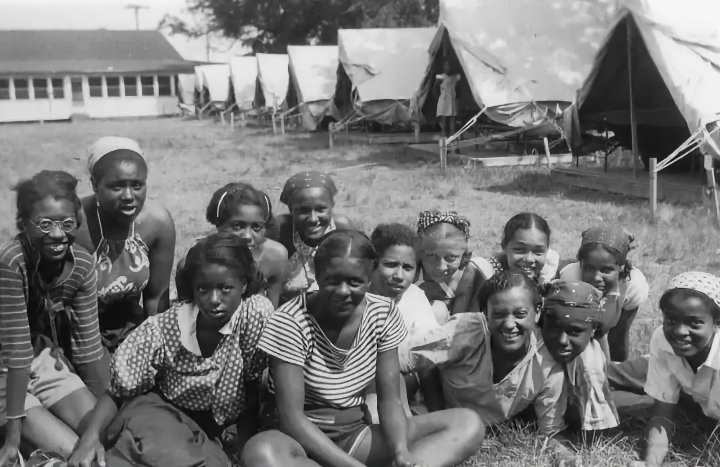
Camp Mueller
Camp Mueller was one of the nation’s first and among its few African American summer camps, located south of Peninsula in what is now the Cuyahoga Valley National Park. Operated by the Phillis Wheatley Association in Cleveland, the camp opened in 1941 and initially served only girls. Interviews in this collection focus on the recollections of former campers and staff at Camp Mueller. The first ten interviews in this collection were conducted in 2010 by faculty and students in cooperation with…