Alan Dean Buchanan interview, 24 June 2013
Abstract
Alan Dean Buchanan has been the Judge in Cleveland Heights since 2001. He took over for Lynn Toler who was elected in 1994. Judge Buchanan was born in Beaver Falls, Pennsylvania. He lived with his mother and older brother and attended Northwestern High School in Darlington, Pennsylvania. After high school he went to Princeton University in New Jersey. He was one of about 13 blacks in a graduating class of about 700. While at Princeton he wrote his senior thesis on Carl Stokes campaign in Cleveland, which he came to visit. While here he was introduced to Jim Brown and others who started the Black Economic Union. After he left Princeton he worked full time for the Black Economic Union and started law school at Case Western Reserve University. He then became a clerk for George Forbes and worked at his firm after graduating and passing the bar in 1973. Eventually he went on to start his own practice with three other lawyers. Judge Buchanan has had a long legal career.
Metadata
Interview Transcript
Transcripts may contain errors.
Alan Dean Buchanan [00:00:10] Good evening. Good evening.
Katherine Taylor [00:00:12] I'd like to know a little bit about you, Judge Buchanan. Can you tell me where you were born and raised, something about your parents and your memories as a child?
Alan Dean Buchanan [00:00:23] Oh boy. Well, I can tell you though, I was born in Beaver Falls, Pennsylvania. Not too far from Cleveland there, just across the border in Pennsylvania. And went to high school in Darlington, PA. It's a smaller suburb of Beaver Falls. And graduated there in 1964. And, you know, when I was at Darlington High School— Northwestern High School actually was the name of it. And when I was there, I was very involved in athletics, football, basketball, and ran track. So I enjoyed all of that, and it created some opportunities for me. I was also in an academic program and was given an opportunity to attend Princeton University in Princeton, New Jersey. And I did attend there and graduated from there in 1968. And while I was there, I majored in political science, actually politics. It's called politics there rather than political science. But I did my senior thesis, which all of us had— have to do in order to graduate from Princeton. I did a senior thesis on Carl Stokes' campaign for mayor, actually here in Cleveland. And, you know, I was able to come to Cleveland between my junior and senior years. And it was during that time I had an opportunity to meet Carl Stokes. And of course, his campaign for mayor was very active during that summer. So I was able to, you know, observe a lot about that and participate in his campaign to some extent. And I gathered sufficient information that allowed me to, to base my senior thesis on his campaign for mayor. And of course, you know, that was a very historic campaign. And, you know, he was— became, as a result of that effort, the first mayor of a major city. And of course, the population in Cleveland was much more substantial at that time. So Cleveland was considered a big city at that time. So it was, you know, a great opportunity for me.
Alan Dean Buchanan [00:02:37] since my major was in politics, to be able to get some practical experience in politics by observing and writing about that campaign. So it was a great experience for me. So I did go back to Princeton that fall and finish my senior year there and finish my thesis and graduated. So that's a great story. So then I decided to come to Cleveland and work with an organization that was called the Black Economic Union. It was actually founded by Jim Brown and some other Cleveland athletes, including John Wooten, who was a guard on the Cleveland Browns team. And I had actually met those guys the summer before. I graduated while I was here in Cleveland and actually worked for them on a work-study program. And the work-study program allowed me— it was a Princeton program, of course— and that work-study program allowed me the opportunity to work really anywhere in the country, and the school would pay for, you know, my financial requirements. And so, of course, I chose to come to Cleveland. You know, met Stokes and he was actually a board member of the Black Economic Union at that time. And so I met him in that context and, you know, participated in his campaign. But as a result of that experience, I was able to finish my senior thesis and had a job waiting for me when I graduated from Princeton here to come back to work with the Black Economic Union. And I did that for a few years, and then went to law school at Case Western Reserve University. So that's where I got my law degree, at Case Western. So I don't know, what was the rest of your question?
Katherine Taylor [00:04:35] A little bit about your parents and what it was like growing up as a child in Pennsylvania.
Alan Dean Buchanan [00:04:42] Well, my parents, my mother, I lived with my mother. My father and mother were not married. But my father, I knew who he was. He was— lived in the same area, actually in New Brighton, Pennsylvania, which is very close to Beaver Falls. And so I knew my father and had a good relationship with him, but he and my mother were not married. But my mother and a brother, my brother Jerry, who was a year and a half older than me, all lived together. And, you know, he also went to Princeton University. And so we, you know, had shared that experience together. And— but growing up in Beaver Falls was a great experience for me. It was a very small town. You know, I was— lived in a rural area for a very long time. Most of my childhood I lived in a rural area. And, you know, it was a farming— community, and we spent a lot of our time on farms, you know, riding horses and things of that nature, and also baling hay, doing all the things that you have to do on a farm. So it was a great experience for me.
Katherine Taylor [00:05:58] You mentioned your high school. What high school did you say you attended?
Alan Dean Buchanan [00:06:02] Well, it was Northwest— it was called Northwestern High School. It was in Darlington, Pennsylvania.
Katherine Taylor [00:06:08] Was that predominantly a mixed school? Was it predominantly Black, mixed, white, Black?
Alan Dean Buchanan [00:06:15] It was predominantly white. In fact, my family, my brother and I attended that high school, and maybe 2 or 3 other families that were Blacks went to that school at the time that we were there.
Katherine Taylor [00:06:30] Was that because of where you were located?
Alan Dean Buchanan [00:06:33] Yeah, it was just, you know, it was a rural area and there weren't very many blacks living in that area at the time.
Katherine Taylor [00:06:40] Were you confronted with any kind of discrimination being you?
Alan Dean Buchanan [00:06:45] Well, there was some, but, you know, at the time there was nothing of any real significance that stands out. There were a few experiences that I had, but nothing of any major nature.
Katherine Taylor [00:06:57] Tell me something about your college years.
Alan Dean Buchanan [00:07:00] Well, the college years, as I said, I was at Princeton. When I was there, you know, it was just academic. I mean, the focus was academic. Princeton at that time was an all-male school.
Katherine Taylor [00:07:11] Okay.
Alan Dean Buchanan [00:07:12] So, you know, there were only a handful of women actually that were there on a program that was a critical language program that, you know, invited females as well as males to participate in that program. But that was the only— they were the only females on campus other than some professors. But— and there was a very small number of females on campus at that time, maybe 20 females. And there was a very small number of minorities that were at the school at that time. I think in my class there was a total of maybe 13 Blacks that were in my class at Princeton, out of a class of about 700. Yeah, so it was a very, you know, small number, small percentage of blacks that were there.
Katherine Taylor [00:08:09] What was it like working on the campaign for Carl Stokes?
Alan Dean Buchanan [00:08:12] Well, I mean, it was interesting. I was, you know, as a student, you know, you're absorbing as much information as you can. But I think I understood the historical significance of that campaign at the time.
Katherine Taylor [00:08:24] Um-hum.
Alan Dean Buchanan [00:08:24] And so it was a tremendous opportunity for me to, you know, since I had an interest in politics, it was my— I was majoring in politics at that time, so obviously it was, you know, a tremendous opportunity for me. And, you know, I just began to learn some of the basics of politics there. I mean, actually real-life politics. It's one thing to read about it and, you know, get the academic understanding of what politics was about, but it's another thing to actually, you know, be involved in a campaign and understanding all the things that really have to be done to be successful in a political campaign. And for me, it was just a tremendous experience because I— it served as a great foundation for me. My interest in politics went beyond just having that as a major. I was actually interested in politics. And when I graduated from Princeton and came to Case Western Reserve, of course I wanted to practice law and eventually I did, but I always became very active in political activities in Cleveland particularly throughout my entire career. But I was always working for other or supporting other candidates for office. And so it was only until very deep into my legal career that I actually determined that I wanted to run for office and was elected fortunately to the judgeship here. And that was in 2001. But over a period of 30 years or so, I was just active in politics.
Katherine Taylor [00:10:03] Working on that campaign, were you an organizer, or did you do some of the literature? Did you write, have any involvement with some of the ideas for the campaign?
Alan Dean Buchanan [00:10:14] Oh, no, I was not a principal person at all in the campaign. I was one of the guys that would be out distributing literature and things of that nature. So I wasn't in any way contributing to the ideas. the policies or the, you know, the main thrust of the campaign. I was just doing grunt work mainly. But I was given an opportunity to, you know, to meet everybody who was at a higher level than me as a student. But no, I didn't participate in any policymaking. Okay.
Katherine Taylor [00:10:46] You indicated that the Black Economic Union was—
Alan Dean Buchanan [00:10:49] Mm-hmm. Right.
Katherine Taylor [00:10:51] Explain that more. What was that about?
Alan Dean Buchanan [00:10:52] Well, the Black Economic Union is an organization that was Again, founded by Jim Brown, John Wooten, and some other black athletes here in Cleveland. And the purpose of the organization was to provide assistance in the black community. And that assistance took the place— took the form of offering loans to minority companies. And there were a number of companies that received funding through the— the Black Economic Union. One of the things that I did while I was here in Cleveland that summer— this was in 1967— was I helped the organization prepare a grant that was submitted to the Ford Foundation for funding. And, you know, I helped write that grant and continued to work with them even while I was at Princeton. to get that grant completed and submitted to the Ford Foundation. They were successful in getting the grant funded through the Ford Foundation. So that's one reason why there was a job sort of waiting for me after I graduated from college, because that grant allowed the organization to open up offices around the country. There were offices that were, as a result of that funding, were opened And in Kansas City, Missouri, in Los Angeles, California, in New York City, in Washington, D.C., and there were a number of locations around the country that were funded as a result of that grant that was offered to them by the Ford Foundation.
Katherine Taylor [00:12:35] You mentioned the term real politics. Can you explain that? You used it.
Alan Dean Buchanan [00:12:40] Well, I mean, it's one thing to— you know, I was a student at that time, so my focus was academic. But I really had not had much practical experience in politics other than what I had read. And I understood politics, but I just had never had the practical experience. So when I say real politics, I mean really understanding what is required to be successful in politics. And it's something that you really have to do in order to really have a good understanding of it. And as I said, I was just fascinated by politics. I understood that that was something that was of significance in our community. And by our community, I'm talking about the Black community to make gains in that area of politics. And again, I was right on the cusp of some major things happening. I mean, if you look at the history of politics for the black community, you know, it really didn't begin in the late '60s, but it sort of took off at that point. Because there, you know, Carl Stokes being the first mayor of a major city, you know, that was kind of the beginning of it. When you look now, there are, you know, Black mayors in most of— the major cities in the country. It's just blossomed since then. Of course, that led to— not long after Carl Stokes was elected, his brother was elected to Congress, Lou Stokes. He was a tremendous lawyer and became a tremendous congressman, well-loved, and was in that position for a very substantial period of time before he retired.
Katherine Taylor [00:14:23] What was the atmosphere like in Cleveland during that time?
Alan Dean Buchanan [00:14:27] Well, during that time there was a lot of tension in Cleveland. I have recollections of the riots that were taking place in Cleveland at around that time. I observed a lot of things that were sort of frightening in a sense. I observed a lot of violence in Cleveland. racially motivated violence. But, but, you know, like I said, I came back the following year because of the opportunity for me to begin my career here in Cleveland. And, and the violence, you know, was very significant during that period of time.
Katherine Taylor [00:15:10] Can you share with us about the violence, please?
Alan Dean Buchanan [00:15:12] Well, I mean, at that time, you know, you know about the riots that took place in I think it was in 1968 or thereabouts. And, you know, the Glenville Riots, there were— it was just a lot of violence. I mean, there was a lot of discrimination apparently that was taking place, a lot of tension between the races.[00:15:33] And, you know, and I felt, you know, good that I was, was here to be able to witness that. But it wasn't just in Cleveland, as you know, it was all over the country. country at that time. That was the year, it was in 1968, that Martin Luther King was killed, and that, of course, was a major event for our nation. There were reactions all over the country as a result of that. When I say there was tension, it wasn't just in Cleveland, it was all over the country at that time.
Katherine Taylor [00:16:06] What kind of businesses were here? What was Cleveland like so far as the business community?
Alan Dean Buchanan [00:16:11] Well, the business community in Cleveland was very, very active, I think, during that period of time in the late '60s. I lived right at 105 and Euclid— well, really 105 and Chester, but it was right in that area. And there was a very substantial Black business community that was kind of centered in that area around 105th. There were a lot of Black businesses there. There were a lot of other Black businesses on Cedar Avenue between 105th and 55th Street. A lot of activity on 55th. So that area was just very active in businesses. And so it was good to see that. But of course, you know, it's changed substantially. substantially since then. There are very few Black businesses in that area now. I think if you look at Euclid Avenue, you know, you can see the change, very significant changes in terms of the kinds of— excuse me— the kinds of businesses and the kind of institutions, you know, that are located in those areas now, particularly on Euclid Avenue.
Katherine Taylor [00:17:25] You went to Case Western Reserve? What was it like?
Alan Dean Buchanan [00:17:29] Well, it was tough. I mean, I went to school, went to law school there, so it was no joke at all. I mean, Case Western Reserve is a very good school. It was academically challenging, but I did what I had to do. I got through it and passed the bar, so that's what gave me the boost for my career.
Katherine Taylor [00:17:47] And after passing the bar, what was your life like? Did you go on to become married? What kind of jobs did you have?
Alan Dean Buchanan [00:17:56] Well, I actually worked pretty much full-time while I was in law school at the Black Economic Union. Then I also did some clerking work with a law firm, the Gaines, Rogers, Horton, and Forbes firm. George Forbes was one of the principals of that firm. Clarence Rogers was one of the principals of the firm, Earl Horton and Clarence Gaines. Clarence Gaines went on, as you may know, to become a municipal court housing judge. I think he was the first municipal housing court judge in Cleveland. I clerked with them while I was in law school, really for pretty much all 3 years that I was in school. But after I graduated and passed the bar, Then I worked with George Forbes' firm even then as a lawyer for a couple of years. That was in 1973, was when I graduated and passed the bar. In 1973 then there was a program that I helped to write up too that created the establishment of a program called the Law and Justice Program. That was located over on Hough Avenue on 65th Street, 65th and Hough. And when that program became funded, I was the first director of the program. I was still working for the Forbes law firm at that time. And so I did both. I ran the program and also worked for the law firm. And, you know, we were providing free services under the Model Cities program to people in the Hough area. And so as I said, I was the director of the program. There were other lawyers who were part-time attorneys on our staff. And basically, as I said, we just provided free service, free legal services to people in that area.
Katherine Taylor [00:19:55] What was Hough like during that time?
Alan Dean Buchanan [00:19:58] Well, again, it was kind of in the aftermath of all the destruction. So people were beginning to move out of that area because there were, you know, there was a— there had been a lot of violence actually in that area. And people were beginning to migrate out of the Hough area at that time. But, you know, I mean, I enjoyed working there. You know, I learned a lot about that area and, you know, I was on the board of some organizations, not only the Black Economic Union, but also the Hough Development Corporation, which was run by a gentleman by the name of DeForest Brown. I don't know if you remember him, but DeForrest Brown was a minister, but he was also a community organizer. And, you know, learned a lot from him about community organizing and things of that nature as well. So, but—
Katherine Taylor [00:20:53] And then you went on to get married and then moved to Cleveland Heights?
Alan Dean Buchanan [00:20:59] No, well, you said that a couple of times. No, I didn't go on to get married then. I did eventually get married, but it was— I was kind of late into my career when I did that. I was 38 at the time I got married. But, you know, I made the right choice and, you know, I'm still with my wife, Louise. She and I have been married now 29 years.
Katherine Taylor [00:21:20] And you moved into Cleveland Heights?
Alan Dean Buchanan [00:21:22] Well, I moved into Cleveland Heights in 1988. Yeah. And it was after I'd gone down to— after I had worked at the Forbes law firm, I then had gone into a private practice on my own, together with 3 other lawyers, relatively young lawyers, we decided to hang our own shingle out and we did that. We were located in the Williamson Building downtown that was replaced by the BP Building, right where the BP Building is on Public Square. So we moved in there and opened up our law office.
Katherine Taylor [00:22:00] Hardiman, was it?
Alan Dean Buchanan [00:22:03] Yeah, Hardiman, Alexander, Buchanan, and Travers.
Katherine Taylor [00:22:10] And when you moved to Cleveland Heights, were you confronted with any terms like steering?
Alan Dean Buchanan [00:22:16] Well, no, I wasn't. Uh, you know, I didn't have any problem in terms of identifying a house and being able to purchase that house, if that's what you mean. Um, so no, I didn't experience any steering, uh, at all. You know, I bought the house and we're still in the same house there on Seton Road in Cleveland Heights.
Katherine Taylor [00:22:35] What do you know about the Heights Community Congress?
Alan Dean Buchanan [00:22:38] Heights Community Congress? You know, not really much, although I understand that it's a, you know, an organization that has some history in Cleveland Heights. I think my wife may have been on that board for a period of time, a short period of time within the last five years. She was on the board probably for about maybe two years or so, but I, to be honest with you, I don't know that much about that organization. I've never really spent a lot of time with that organization. My wife did, and she was only on it for a short period of time, so I can't really, you know, explain any detail about that organization.
Katherine Taylor [00:23:16] Do you know anything about the Heights Housing Service— Services?
Alan Dean Buchanan [00:23:20] Heights Housing Services? Now, is that the name of a specific organization?
Katherine Taylor [00:23:24] Yes, I believe that was taken over by the, uh, by the city.
Alan Dean Buchanan [00:23:28] Yeah, I know they have housing services here at the city.
Katherine Taylor [00:23:32] Yeah, it had something to do with discrimination, and it was an organization for that, tried to circumvent, you know, housing discrimination in Cleveland Heights.
Alan Dean Buchanan [00:23:42] Um, I know some people who were involved in that, but again, I didn't have any direct connection with that early on. I think the, uh—
Katherine Taylor [00:23:51] What was the— what was What was campaigning like for you when you ran for judge?
Alan Dean Buchanan [00:23:56] Well, it was sort of a déjà vu really for me because as I said I knew a lot about politics. I had done a lot of political activity early in my career. I had helped out on just a great number of campaigns. Arnold Pinckney, who's a great campaigner, here and a person who's run a lot of campaigns successfully for a lot of candidates, you know, became a mentor, you know, to me in a sense. Actually, he was a board member of the Black Economic Union. So when I first came to Cleveland, he was a board member. I met him and, you know, and he was very active in Carl Stokes' campaign and his brother's campaign, Lou Stokes. Carl— I mean, Arnold was the campaign manager for Lou Stokes' first campaign for Congress, which was, as you know, was successful. And then Arnold himself ran for mayor in Cleveland in 1975, I believe it was, and I was very active in his campaign. And then in 1982, Richard Celeste, Rick Celeste, ran for governor. And at that time I was on the board of the Cuyahoga County Mental Health Board here, and his wife Dagmar came on the board while I was the president of the board. And so I got to know her very well, and through her I met Rick Celeste. And when he ran for governor in 2000— in 1982, you know, I—
Alan Dean Buchanan [00:25:36] I was asked to help out on his campaign. I did that. And of course, that was a successful campaign. And then after that campaign was successful, he was elected, and I was asked to be on the transition team for him to help before he actually took office, to go down to Columbus and begin preparing for his taking office. And so I did that, and as a result of that, I was actually asked to become the legal counsel for the governor. So I did take on that responsibility. I was an executive assistant for the governor dealing with all legal issues.
Katherine Taylor [00:26:20] You were vice chair also on the Ohio Board of Taxpayers.
Alan Dean Buchanan [00:26:24] Ohio Board of Taxpayers.
Katherine Taylor [00:26:25] What exactly did you do?
Alan Dean Buchanan [00:26:26] Well, the Board of Taxpayers is this— The next level above the Board of Revisions. You're probably familiar with the local Board of Revision, which are in all the major cities or counties. And Cuyahoga County had a Board of Revision, and they, you know, determined the tax value for properties. And so in Cuyahoga County, the Board of Revisions would set or hear appeals from the tax valuations that are put on by the, uh, by the auditors, you know, for the county. And if somebody doesn't like or wants to appeal the tax valuation, then that's appealed to— from the Board of Revisions. If they get a, a, uh, and, and a determination made at the Board of Revisions that they don't like, then they can appeal that to the Ohio Board of Tax Appeals. So we heard appeals on tax cases of that nature relative to housing, but also property tax issues for all major corporations in the, in the state. And we determined whether the tax valuations that were assessed by the State Department of Taxation were appropriate, and if not, it could be appealed to us and we'd make a determination of what the appropriate value should be.
Katherine Taylor [00:27:45] You were also on the national boards, the Bar Association as a leader, leadership. What did you do on the Bar Association?
Alan Dean Buchanan [00:27:53] Well, I was never really that active with the Bar Associations. I mean, I joined them, but I was never an officer of any Bar Association.
Katherine Taylor [00:28:03] And what is Norman's Bar Association? It says Norman's.
Alan Dean Buchanan [00:28:06] Norman Minor Bar Association.
Katherine Taylor [00:28:07] What exactly is it?
Alan Dean Buchanan [00:28:08] Well, Norman S. Minor was a great lawyer. here in our community, in Cleveland community. So there was an organization that was put together. It was actually a— the effort was to combine some of the organizations that existed. There was the Cleveland Bar Association. There was also a Black Bar Association for males primarily. There was another bar association for females, Black females. And the Norman Minor Bar Association was an effort that was really undertaken, I think it was by Ron Adrian initially, to try to bring all of the Black bars together into one. When I said Cleveland Bar Association, it was actually Cleveland Lawyers Association, but it was a Black bar association. That organization, there was a Black women's Bar Association, and the Norman Minor Bar effort was to try to combine those. Never really did combine them. It just became a 3rd bar organization. So, but I was never really an officer of that organization. I did participate in it, though.
Katherine Taylor [00:29:18] Running for a position in Cleveland Heights, what was Cleveland Heights' atmosphere at the time? Was there— because I understand that the Jewish population had migrated So what was it like running for a position as a judge during that time?
Alan Dean Buchanan [00:29:38] Well, Cleveland Heights was a community that was in transition, I think, at that point. There had been a black judge that preceded me here. That was Judge Lynn Toler. She was elected in 1994. And she ran a very, very good campaign. I believe she was a Republican, although, you know, they're nonpartisan races, but Lynn Toler was a Republican and was able to step in and win that election in 1994. My recollection is that it was a very close election. race. There may have been 5 or 6 candidates in the race when she ran in 1994, and it was following the judgeship of Judge Sarah Hunter. Sarah Hunter was a female judge here before Lynn Toler was elected. And there were, as I said, about 5 or 6 candidates that ran. Lynn Toler ran a very smart campaign, was elected, and she held that office for 8 years. She won initially by about 3 or 4 votes, and it was one of the Jewish leaders in the community that was one of the candidates that she ran against. It was a very close race. She won actually—
Alan Dean Buchanan [00:31:11] by about 3 votes and there was a recount. And as a lawyer, I was asked to represent her in that whole process. You may remember the hanging chads issue that came about when— on a presidential level with Bush and Gore. And so we experienced that back in 1994 because it was such a close race and there was It was a challenge that was made by the person who came in second, which was a very prominent Jewish attorney here. In any event, there was a recount and Judge Toler picked up a couple of votes, so she ended up being elected, but it was very close. She ran a great campaign and of course after She was reelected 6 years later. She was reelected and then she was given an opportunity to move to television. She did that. She took on one of the TV programs. And I represented her actually in that process as well. So I negotiated her contract to work with 20th Century Fox. It was on a program. That was eventually canceled, but she stayed out in that arena and was able to pick up another program. She's been on TV since then.
Katherine Taylor [00:32:38] You sound like you're a great negotiator.
Alan Dean Buchanan [00:32:41] Well, it's something that I've always enjoyed doing and I've had some success at it during my legal career. So yeah, I enjoy it.
Katherine Taylor [00:32:51] What's it like being judged by your peers? Cleveland Heights?
Alan Dean Buchanan [00:32:55] Well, it's tremendous. I was elected in 2001 and I enjoyed— as I said, it was sort of déjà vu for me in a sense that I had learned a lot about politics, the practical, real elements of politics. I had learned a lot about it helping out other people and to then have an opportunity to do it for myself It was just a tremendous experience for me. We had to get it all done within a very short period of time because Lynn Toler retired, I think it was in September, the beginning of September of 2001. At that time, there was a judge that was appointed to the position. by the governor. I think it was Governor Taft at that time. And the lady that he appointed to the position was, you know, had the name of Kelly and she was, you know, kind of related to— she was the sister-in-law of the mayor, Mayor Kelly here in Cleveland Heights. And so there was, you know, all kinds of issues that came up that were, you know, that I challenged. One was the There was a determination whether or not all of those of us who had submitted our names to be candidates, whether we would be on the ballot, because the Board of Elections had made a determination initially that there would be a write-in only for that office. And I challenged that because there was— Because my understanding of state law was that depending upon when the person retired and the office became available, there were some timing issues there that I thought the Board of Elections had made the wrong decision on, so I challenged it. And eventually we were able to be successful and get all the names of all the candidates on the ballot.
Alan Dean Buchanan [00:35:02] So it was not without some controversy, you know, but, you know, we were successful in that. And then, you know, I ran a campaign, was able to win the election. And we only had 8 weeks to campaign. And all the experience that I had in politics, you know, came to bear at that point. So most people— most people, or very few people, I think, really knew who I was when I first decided to run. And you were a congressman. But, you know, I did what I had to do and, you know, was successful.
Katherine Taylor [00:35:32] What are some of the challenges you're confronted with as a judge versus as just as it was as an attorney? Were there any challenges, any differences?
Alan Dean Buchanan [00:35:44] Well, I mean, I, you know, all the experience that I had, I'd been in the practice of law for 28 years before I became a judge, so I knew that handling the legal aspects of the job was not going to be a problem at all. What I anticipated was the biggest challenge for me would be the administrative aspect of it, just knowing how to actually operate a court. I had never had that experience. And so it took a while to get a handle on that, but I was able to do it and we've been, I think, pretty successful at it. In terms of the challenges of the job. I mean, it's a— it's just a tremendous opportunity to, um, to be a benefit to your community. As you know, in Cleveland Heights there's only one judge, and the judge is responsible for, you know, matters that, that occurred just within the boundaries of the city of Cleveland Heights. There are some other jurisdictions, suburban jurisdictions, that have more than one city that are within their jurisdiction. Shaker Heights, for an example, they have Pepper Pike, Beechwood, and others, University Heights. Those are all communities that the Shaker Heights Court manages. And Cleveland Heights is just the city of Cleveland Heights. So I just— I've learned so much about our community, um, and it's just been a tremendous honor really for me to be the judge here and try to you know, help resolve problems in the community. That's really what the judge does. You know, most of the cases that we hear are, you know, as you may know, we have a very prolific police department in terms of their traffic enforcement. And our police here do, I think, an excellent job of that. You know, a lot of people complain because they're prolific in writing tickets, but it's also, you know, a very strategic way that they police the community here. I think they do a very good job. They have an excellent response time, you know, if a person or a family or individuals or any— anyone are in trouble in the community. If they make a call, the police are probably going to be on the scene within a matter of minutes. And I mean literally, you know, maybe 2 to 5 minutes they're able to respond to emergencies that occur in the city. That's very unusual. I don't know how it is in other suburbs, but I know it's a tremendous benefit for our citizens to have that kind of police response. And it, uh, you know, so, you know, I'm very sensitive to what the police do. You know, as a judge, I can't be biased in any way favorable towards them, but, you know, I've been able to see over the years that the way that they respond to emergencies in our community is a tremendous benefit for the people that live here.
Katherine Taylor [00:38:34] Has the community changed over the past 20 years or since you've been judge? Have you seen the community change in any respect?
Alan Dean Buchanan [00:38:45] Well, I mean, for example, when I ran for office in 2001, the percentage of Blacks in the community was about 41%, you know, close to 42% of the population. And over the years it's increased. And I actually thought the last time that I ran in 2011, so 11, 10 years later, I thought that the population percentage of Blacks living in Cleveland Heights would be about 50%. It was not quite at that level, which I learned after the— excuse me— after the census was done, but it was more than 46%. All right. So there's been a significant increase in the percentage of Blacks living in the community here. So I've been able to see it not only in my efforts in campaigning, you know, knowing— you know, I know a lot about the city now. I know where, you know, the pockets of different ethnic pockets are in the city. And, uh, you know, so it's knowing that is helpful in a lot of ways. Not only helps me with my job here, but also in campaigning, you know, to know, you know, where to, to emphasize, you know, the campaign efforts.
Katherine Taylor [00:40:05] So would you think that Cleveland Heights is a melting pot, that it's a mixture of everyone now?
Alan Dean Buchanan [00:40:10] It is. I think, yeah, there's a very diverse population here, and, uh, you know, and I think that's good for the community. Yeah.
Katherine Taylor [00:40:20] Tim, is there something you would like to ask? I can, if you—
Alan Dean Buchanan [00:40:27] I mean, okay.
Timothy Klypchak [00:40:28] Yeah, one of the things that, um, grows while you were talking is, um, when you came to Cleveland, what did you think of the way the Did you notice that the city was divided east-west?
Alan Dean Buchanan [00:40:40] Well, I mean, I thought it was interesting. I was curious about that. It appeared to me that most Blacks were living on the east side and whites on the west side, whites and Hispanics primarily on the west side. But it was just a very interesting observation. way in which ethnic groups come together in Cleveland. I think it's kind of unique, but I don't know, it might be the same in other cities. But I always thought it was interesting how ethnic groups would tend to live in those pockets all over Cleveland. And I think it's good. There's no reason— I don't think it's a— I didn't view that as being an indication of racism or anything, but just a matter of people wanting to be with people that look like them or act like them. Talk like them, things like that.
Timothy Klypchak [00:41:28] I've had some pretty bad experiences campaigning when I campaigned for Obama. Were there any experiences that stuck out to you?
Alan Dean Buchanan [00:41:41] Well, as far as me campaigning, not really. Not really. I haven't had any bad experiences. You know, sometimes you encounter people who just don't want to be bothered and they let you know. I know that, but I never really felt, in terms of my campaigning here in Cleveland Heights, I never really felt any racism or anything like that. I mean, it is a very diverse community. It's a very liberal community. And I mean, I've enjoyed it. And really, you know, the community's been very open, I believe. I've experienced that, you know, when I ran for the judgeship, you know, community leaders that I did not really know well were very open to my candidacy and showed a lot of support. I've come to know them all very well since that time. But, um, you know, it's, it's, uh, you know, I, I have not experienced much racism here. I've seen, I've seen it in other areas. I mean, sitting as judge, I know there have been some people who have complained about racism. Sometimes they complain about the police. But, but in terms of actually, you know, experiencing racism myself or seeing it as a very pervasive problem in Cleveland Heights, I don't see that at all.
Timothy Klypchak [00:42:59] And where did you— when you moved to Cleveland, you lived over where at?
Alan Dean Buchanan [00:43:04] Well, when I first came to Cleveland, I lived really on 105 and Chester, 105 and Euclid area. I lived there and I moved out to Warrensville Heights for a while. Then I moved— I had a house on Colonnade Road, still have that house on Colonnade Road in Cleveland. And then, you know, moved to— I was living in Columbus and Cleveland at that time. And then I settled in Cleveland Heights here about in 1988.
Timothy Klypchak [00:43:36] Why did you choose Cleveland Heights?
Alan Dean Buchanan [00:43:38] Well, actually, I mean, I was looking all over for, you know, the kind of house that I wanted. I'd actually found a nice house in East Cleveland. It was up on, you know, in the Heights area of Cleveland, in the Forest Hills area. And, you know, just things didn't work out with that house, but I liked the area, so I decided that I wanted to settle
Katherine Taylor [00:44:06] I did want to ask you, were you ever involved with Michael White's campaign at all?
Alan Dean Buchanan [00:44:13] Well, I was supportive of Michael White and only as a— I was not active in terms of campaigning for him, but I was supportive of him. I supported his campaigns financially.
Katherine Taylor [00:44:26] You mentioned Congressman What was it like? Did you ever work with him directly on anything?
Alan Dean Buchanan [00:44:34] Oh boy. Well, I'll tell you this. I probably would not have been elected judge had it not been for Louis Stokes. He was— I was able to get him to agree to do an ad for me when I first ran for the judgeship. And, you know, he's just one of the persons that's endeared by everybody in this community, not only, you know, in Cleveland Heights but elsewhere. But Cleveland Heights was a strong base of support for him in all of his campaigns. And so I was able to get Congressman Stokes to do an ad for me. And I used that ad, and as a result of that— I mean, there were weeks when I would be out campaigning and of course now again it was only 8 weeks that I had to campaign. There would be weeks that I would be out campaigning, I'm knocking on doors, people didn't know who I was. And then I got Lou Stokes to do a campaign ad for me. And once that happened, I mean, doors opened for me. It was unbelievable. You know, I'd be knocking on doors and people had seen those ads. I was able to really run a lot of ads with him. I had two ads basically. with me and Lou Stokes and one was just with me. So I think the ones with him prevailed and people saw me with him and just doors just opened. It was unbelievable. Then he's been supportive of me. He's been an honorary chairman of all of the campaigns that I've had over the years as judge and just a tremendous individual. I mean, he's such a professional. And endeared by, you know, people in this community to a tremendous extent.
Katherine Taylor [00:46:19] As a Black educator and politician, what is it like to have that, to be involved in the community?
Alan Dean Buchanan [00:46:26] Well, it's an honor. I mean, it's a real privilege for me to be the judge here. I just feel so blessed to have the opportunity. And for me, it was what made it even greater was the fact that I had so much experience in politics and I understood it. And then I never really had thought about running for a judgeship. I mean, it's just something that I just enjoyed helping other people. But in that process, I've learned so much. And then to be able to take what I had learned and be able to benefit from it myself was just a tremendous opportunity, tremendous experience. But here— but actually now to be the judge here and to have the opportunity to make decisions about, you know, what happens here in our community and to kind of set a standard. I think the judge really does help set the standard for conduct in the community because when people are, you know, step, you know, outside of the bounds of those standards, then, you know, the police, you know, take action. But at the same time— You know, I think by— it's kind of an ongoing educational process. You know, people in the community, you know, can see or know when they come into court, number one, that they're going to be treated fairly. I think, you know, people expect that, and, and I make it a very prominent part of what I do to, to show respect to everybody that comes into court. I think it's important that a judge does that, you know, to know that you're not you know, above the people. You're really a representative of the people and, and try to make sure that the standards in the community are being met. And people need to know what their standards are. Those standards are when, when people move into the community. It's interesting because I see a lot of people who, you know, maybe lived in Cleveland or lived in, in other locations that, you know, have not really been a part of this city. And when they come here, they bring a lot of what they experienced in those other locations with them. And so it takes time for people to really understand, you know, what this community is all about.[ And so the court helps people understand that. You know, we let them know, listen, you know, you can't be disorderly. You can't disrespect your neighbors. You might be in the same building in a duplex and you got a neighbor on one side of you and you live in half of it, but you can't— play your music loud. I mean, you can't, you know, disrupt, you know, another person's quiet enjoyment of their home. And, you know, if they live next to you, if, you know, they have the right to peace and quiet just as you do if you want that. But you can't have your kids be up all night playing basketball, you know, in the backyard or, you know, by the garage and there's another family living in the same house that you live in. So, you know, people have— sometimes it takes time for people to understand that. You know, and— but it's part of the court's responsibility to let them know, well, listen, you know, there are consequences. It might be a small fine. They might be placed on probation with the understanding that, you know, if you, you know, you allow that type of activity to go on, there may be a more severe consequence down the road while you're on probation here, you know. Excuse me. So it's a process. You know, it's a— in my judgment, it's an interesting one. Yes.
Katherine Taylor [00:49:45] If you had one or two memories, what would it be since you've been on the bench?
Alan Dean Buchanan [00:49:52] Well, you know, there have been some cases that have been very heartbreaking where, you know, that have resulted in people losing their lives, some police officers and other people in the community. That is very heart-wrenching, but those would be the most, you know, the cases that would stand out in my mind. But, uh, you know, but for the most part, the, you know, I enjoy the, the job and, you know, I enjoy the opportunity just to, uh, again, kind of help set the standards for our community.
Katherine Taylor [00:50:24] Thank you.
Alan Dean Buchanan [00:50:25] All right. Thanks a lot.
Katherine Taylor [00:50:26] I enjoyed this interview and hopefully we'll be able to— do you have any suggestions for us to interview anyone else?
Alan Dean Buchanan [00:50:32] Uh, none come to mind. I mean, there are a lot of, uh, you know, interesting people and I don't know what type of people you're trying to get, but, you know.
Racial Integration in the Heights
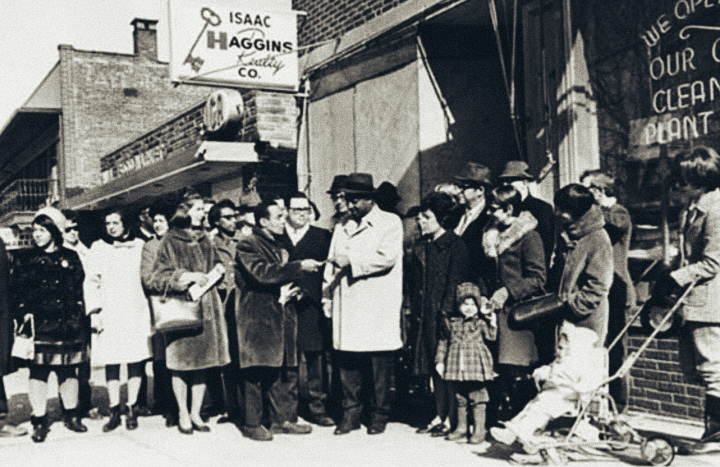
Interviews in this series were collected by undergraduate students at Cleveland State University under the supervision of Dr. Mark Souther, with funding from the Office of the Provost. The series contains interviews with pioneers of suburban residential integration and social activists who supported peaceful managed integration/desegregation and fair housing in Cleveland Heights and Shaker Heights in the 1950s to 1970s.