Marian Morton interview, 01 July 2013
Abstract
Marian Morton is a professor at John Carroll University. She has lived in Cleveland Heights since the early 1960s. She wrote a book on Cleveland Heights history and has done photograph books for Cleveland Heights and Shaker Heights as well. She does not have a strong personal recollection of what was going on in the city and only discovered much of the state of race relations and integration through her later research.
Metadata
Interview Transcript
Transcripts may contain errors.
Marian Morton [00:00:10] Marian Morton.
Timothy Klypchak [00:00:13] Where were you born?
Marian Morton [00:00:15] I was born in Cambridge, Massachusetts, in 1937.
Timothy Klypchak [00:00:21] Did you grow up in Cambridge?
Marian Morton [00:00:23] No, I grew up in Cleveland.
Timothy Klypchak [00:00:25] When did you come to Cleveland?
Marian Morton [00:00:27] I was probably about 2 years old.
Timothy Klypchak [00:00:30] And what brought your parents to Cleveland?
Marian Morton [00:00:33] Their parents lived here.
Timothy Klypchak [00:00:36] So what did your parents do for work?
Marian Morton [00:00:43] My dad was a lawyer. My mom was a homemaker, I guess you would say.
Timothy Klypchak [00:00:54] And where about in the Cleveland area did they move to?
Marian Morton [00:00:58] I grew up in Shaker Heights.
Timothy Klypchak [00:01:02] What was it like there?
Marian Morton [00:01:05] What was it like there? I don't know, seemed like a nice place to grow up. Lots of kids on the street. The school was up the street from me. Walked to school.
Timothy Klypchak [00:01:16] What was the name of the school?
Marian Morton [00:01:18] Malvern School. It's no longer Malvern School, it's now Hannah Perkins School.
Timothy Klypchak [00:01:25] What were some of the things you did as a kid in Shaker Heights?
Marian Morton [00:01:32] Did stuff kids usually do. You want to get to the Cleveland Heights part? I don't want to be short with you. I don't really feel very well, so the sooner we could do this, the better.
Timothy Klypchak [00:01:45] Okay. When did you move to Cleveland Heights?
Marian Morton [00:01:49] I moved to Cleveland Heights in 1965.
Timothy Klypchak [00:01:54] And was it right out of college?
Marian Morton [00:01:58] No, it was not right out of college. I got out of college in 1959 and got married. We lived in Cleveland, then we moved to Pepper Pike, then we moved to Cleveland Heights in 1965.
Timothy Klypchak [00:02:10] Were you married when you moved to Cleveland Heights? Okay. When you moved to Cleveland Heights, what was your experience with the neighborhood when you first got here?
Marian Morton [00:02:24] Well, we lived on Scarborough. I guess I liked it because it seemed like the neighborhood I grew up in, Shaker Heights. The school was up the street. There were lots of kids around to play with. So I guess I chose it for that reason. Everybody on the street was white, if that's what you're thinking. There were no Black families on the street.
Timothy Klypchak [00:02:50] Did you get involved with the community when you moved on to Scarborough?
Marian Morton [00:02:53] No. When we moved on to Scarborough, I had 3 kids. I would still— I had one more 4 years later. I was in graduate school part-time. I was working part-time, raising the kids part-time. No, that was it. No community activities.
Timothy Klypchak [00:03:12] When did you move from Scarborough?
Marian Morton [00:03:14] Moved from Scarborough in 1976 and moved around the corner to Fairfax. Same neighborhood, just right around the corner.
Timothy Klypchak [00:03:24] How had the neighborhood changed from moving on Scarborough to Fairfax?
Marian Morton [00:03:28] Fairfax was a little fancier neighborhood. It still is. Other than that, it was a little closer to the school, more kids around to play with. It was just a little nicer neighborhood. It was a bigger house. We needed a bigger house at that point, because we had 4 kids by then.
Timothy Klypchak [00:03:50] Was the neighborhood changing within that period?
Marian Morton [00:03:53] Not that I noticed. Not in my immediate neighborhood, no. There were some— I'm going to get to what you're interested in. There were— as far as— the only reason I know there was one Black child in my daughter Elizabeth's class was that my other daughter found a picture of it on Facebook. And a picture of that class.[00:04:18] There was one Black child in that class that year. And there was one Black child in the class the next year. When my daughter Sarah graduated from Fairfax, which would have been— let's see, she was born in 1969, so it would have been 1980 maybe. I think there were 2 or 3 Black children in the class. That was it. Is that what you're asking me? But my neighbors didn't change. I mean, the neighborhood changed only— I could notice it only in the kids' classrooms. I was not aware of it. I seem to have been not aware of a lot of things.
Timothy Klypchak [00:05:04] What did you think about when the Heights were integrated in the 1960s?
Marian Morton [00:05:09] I wasn't aware of it. I wasn't aware of any of it, despite the fact that I read the local paper. Or if I was aware of it, I didn't pay any attention to it. It was— I had my hands full. I had 4 kids. I was working part-time. I had a full-time job by then, I guess, in 1970. I had a lot on my plate. I wasn't very observant. So I told you, I'm not a good source on this. I just wasn't aware of what was going on. Everything I know about that, I read about later. And that's what's in the book. That's how I discovered it, doing research 20, 25 years later. Leave it to an historian not to pay attention to the present, huh?
Timothy Klypchak [00:05:57] Yeah, some— I mean, things you live in, you don't think is history until—
Marian Morton [00:06:03] I guess not. I just wasn't paying attention. It wasn't— I mean, I was— I was a supporter of the civil rights movement. I knew about that, but I wasn't paying attention to what was going on around me.
Timothy Klypchak [00:06:20] What about some of the other world events that were happening in Cleveland?
Marian Morton [00:06:25] The world events? Well, you were aware of the riots, of course, because I was in grad school then, and there were National Guard all around. That I was aware of. I was aware of Kent State, of course. I paid attention to that. I graduated in June of 1970 with one of those armbands that all of us wore in sympathy with the Kent State massacre victims.
Timothy Klypchak [00:06:57] Where did you go to grad school?
Marian Morton [00:06:59] CWU.
Timothy Klypchak [00:07:03] Any— after the Kent State—
Marian Morton [00:07:07] Massacre, we call it.
Timothy Klypchak [00:07:09] Were there any protests on campus?
Marian Morton [00:07:13] There were, but I didn't live on campus. You remember, I was a grad student. I lived at home. I think there were. I think— and the reason that I think that is that I think there might be a picture of that somewhere. Might be Cleveland Memory. You might check there. Or Encyclopedia of Cleveland History somewhere. Either protests after that or protests right around that time. I know I've seen a picture of it. I just don't remember where I saw it.
Timothy Klypchak [00:07:50] Through your research, what did you think about some of the organizations that popped up in Cleveland Heights in the 1960s?
Marian Morton [00:07:58] What did I think about them when I discovered there were such things?
Timothy Klypchak [00:08:03] Yeah.
Marian Morton [00:08:04] I suppose they were— I thought they were interesting. The first of those groups, I can't remember, the Friends for Human Rights, something like that. Susie knows the name of it. She has all my stuff. And it's in the book. I thought that— I thought they were kind of out there. But The early '70s are really much more tumultuous than the '60s. And I think that the '60s extend into the '70s, I think. They were— I don't know. I guess they were typical '70s things. This is the group that ultimately became HCC. No. It's a group that preceded HCC. And it has human rights in the title of the name. I just don't remember what it is. You'll have to look at my notes or look at my book or check Susie's notes.
Timothy Klypchak [00:08:59] Well, there is the Heights Community Congress.
Marian Morton [00:09:01] Right.
Timothy Klypchak [00:09:03] And what did you think about what they were doing?
Marian Morton [00:09:05] I didn't know anything about them. I didn't pay any attention. It's like everything else. I was completely oblivious to it.
Timothy Klypchak [00:09:31] What about the political atmosphere throughout them?
Marian Morton [00:09:36] Right over my head. I didn't pay much attention to local politics. Although I pay attention to national politics, I didn't— I just— I wasn't paying attention to that either. I think I voted every time, but I couldn't tell you who for. I told you, I'm not a good source on it. I discovered it as I researched it. It was all news to me, like a lot of things. All news to me. If I paid attention, I don't remember. Let's put it that way. Oral history— I told Susie this the other day— oral history, and you know it yourself, is very untrustworthy. I mean, I just don't remember things. Or if I remember things, I selectively remember things. And then I selectively tell you about it. I always tell my own students, Oral history is the icing on the cake. It's not the cake. You've got to have the cake. Then you do the icing. But, you know, I like icing, but you can't live on icing. That's my point. The cake is from documents.[00:10:47] The cake is written stuff at the time. You know, I'm looking back at this many, many years later. So.
Timothy Klypchak [00:10:59] What were some of the people that you possibly remember encountering who may have been big parts of Cleveland Heights?
Marian Morton [00:11:08] I do not remember meeting a single public official. Sorry.
Timothy Klypchak [00:11:14] Well, not just public officials. What about community leaders? Active people in the community?
Marian Morton [00:11:19] No. I didn't even get involved in any kind of city activities until the 1990s. And I got on the Landmark Commission, which has nothing to do with racial integration or anything else. I mean, it was that long. I was a resident of the city 30 years by the time I got actually involved in anything. Not like Susie. Susie got here and jumped in with both feet. I just never did. I'm not that kind of person. I'm not that person. I'm not that person either. I wish I were. I'm not.
Timothy Klypchak [00:11:51] Well, can I ask you about the Landmark Committee then?
Marian Morton [00:11:56] Landmark Commission? Sure, if you want to.
Timothy Klypchak [00:11:59] What did you— what kind of things did you have landmarked?
Marian Morton [00:12:03] You know what a Landmark Commission does, doesn't it? Do you?
Timothy Klypchak [00:12:06] Sort of.
Marian Morton [00:12:07] Yeah, it designates certain houses or buildings or sites as of either historic or architectural importance. I think we have— 40-something landmarks in Cleveland Heights. And mostly they're grand old homes and nice buildings like Cumberland Bathhouse or churches, stuff like that. It was fun.
Timothy Klypchak [00:12:36] What are your favorite landmarks in Cleveland Heights?
Marian Morton [00:12:40] Oh, God, I don't know. I don't know, I guess the bathhouse. That's where I usually— the pool. Not because it's so grand. But that was a nice introduction to the city, really. And now I'm on Citizens Advisory Committee, which is the committee that advises on the distribution of block grant funds. You know what block grant funds are?
Timothy Klypchak [00:13:08] Mm-hmm.
Marian Morton [00:13:09] Federal funds. And that's interesting. That's a little more interesting. It's a lot more interesting, actually.
Timothy Klypchak [00:13:18] I've actually had people tell me about how they've been on the committee like that since the '60s. Can you tell me what you've been doing on it?
Marian Morton [00:13:26] On the advisory committee? Sitting and listening to people ask for money. That's what we do.
Timothy Klypchak [00:13:32] What are some of the projects that have come before you that stick out?
Marian Morton [00:13:37] Well, most of the projects, those federal funds were intended originally for infrastructure.
Timothy Klypchak [00:13:44] Right.
Marian Morton [00:13:45] That's roads. We don't have any bridges. Roads and houses. Roads and housing. So that's what they still— water, water lines. Still mostly go for that. But also, we give some— we don't give the money. Council— we advise and council does what it wants. But— Well, we hear requests from what we call neighborhood organizations or social service organizations. They're like the little food bank over here, or family service organizations, or Heights Youth Club. And they also ask for money. So, you find out what's going on. So, it's very valuable that way. Some of that block grant money does go for racial integration, or to maintain a racially integrated community. A little tiny bit of it does. But that's the only thing that's related at all to what you're interested in.
Timothy Klypchak [00:14:58] Who are some of the people now that you work with who might be, might have been key?
Marian Morton [00:15:07] That's my phone.
Timothy Klypchak [00:15:08] That's fine, I can pause this.
Marian Morton [00:15:09] Let me run up and see if they have some.
Timothy Klypchak [00:15:12] Some of the people that you come across now through the committees that you're on?
Marian Morton [00:15:18] Well, it's a big committee. There are 20 people on it. You want me to list 20 people? I'm not sure what you're after here.
Timothy Klypchak [00:15:34] Just people who might have been leaders earlier.
Marian Morton [00:15:38] Oh, who might actually know stuff?
Timothy Klypchak [00:15:41] Yeah.
Marian Morton [00:15:42] Well, you must have a long list of people who already know stuff. Didn't Susie give you a— Susie knows all those people. I don't even know any of them. Um, are you going to interview people like the mayor?
Timothy Klypchak [00:15:56] Yeah, we have, uh, Carol Edwards and Doris Brown.
Marian Morton [00:15:58] Oh yeah, there you go. And Susanna Nierman O'Neill, city manager.
Timothy Klypchak [00:16:03] Yeah, I actually sat in on an interview.
Marian Morton [00:16:05] Oh, did you? Oh yeah, okay. Well, you're good. I mean, I, I know the people on the committee. I know some people at City Hall, you know, in the planning department, but I don't know anybody that, that you Wouldn't already have the name of.
Timothy Klypchak [00:16:20] Okay.
Marian Morton [00:16:21] So.
Timothy Klypchak [00:16:24] All right, well, I'm kind of out of questions.
Marian Morton [00:16:27] Okay, I'm really sorry. I— one, I knew I wasn't going to be very helpful, because I don't have many personal recollections of that at all. You know, my life revolved around how to get 4 kids out the door, how to get myself to work, and How to get them back and how to get them where they needed to do it and how was I supposed to do my job. That was it. And I'm not a terribly good multitasker. And it really wasn't until the 1990s that I got involved in any kind of civic activity, unlike Susie. And it wasn't until I started this book, you know, a dozen years ago, that I really learned much about it.
Timothy Klypchak [00:17:11] Last question. This is off subject, but what's your favorite thing to teach at John Carroll?
Marian Morton [00:17:18] Actually, Cleveland history.
Timothy Klypchak [00:17:20] I mean, specifically, what is your favorite from Cleveland history?
Marian Morton [00:17:26] Favorite part of Cleveland history? Well, this probably sounds odd, but I like teaching about the churches. in Cleveland, because— and that's where my students always did their site visits, to certain churches, because churches— although I didn't belong to a church— churches are wonderful ways of charting a community's growth, tracing a community's growth and change over time. So I liked it, and I really enjoyed their presentations. Most of our John Carroll students are from the area. So this means that they would often get a chance to either discover that their own church was interesting and important, or find out something about where their parents got married, or where Grandma got buried, or something like that. So I enjoyed that.
Timothy Klypchak [00:18:24] Which of the churches have a really, really long Detailed history? Because I did something on St. Augustine's Church, but I didn't find as much as I thought I would.
Marian Morton [00:18:37] You mean published histories? Well, there is one. The diocese put out a history, and I can't remember the name of it. It's upstairs, though. It was just like short bios of the churches. But that's all. They have to rely on websites. I try to discourage them from using the church's website, because what they're going to find there is all the good stuff. Encyclopedia of Cleveland History has entries on a lot of those churches, too.
Timothy Klypchak [00:19:17] Okay. Well, thank you for your time.
Marian Morton [00:19:20] Sorry I'm not better. I'm just, A, I don't know much. B, I don't feel very well. C, my damn phone is on the other floor. So—
Timothy Klypchak [00:19:29] That's fine.
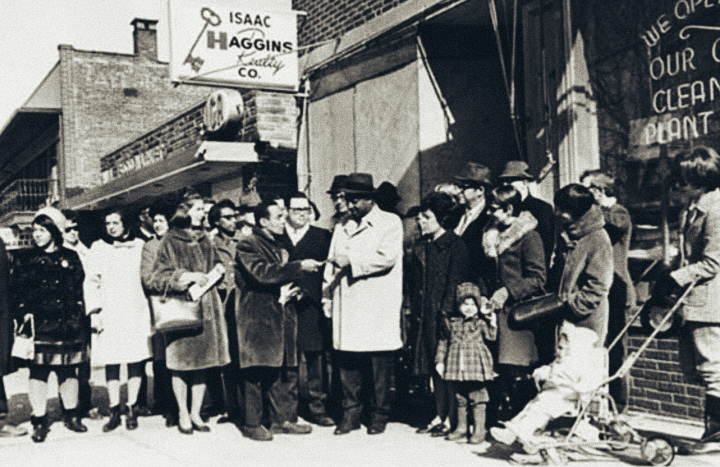
Racial Integration in the Heights
Interviews in this series were collected by undergraduate students at Cleveland State University under the supervision of Dr. Mark Souther, with funding from the Office of the Provost. The series contains interviews with pioneers of suburban residential integration and social activists who supported peaceful managed integration/desegregation and fair housing in Cleveland Heights and Shaker Heights in the 1950s to 1970s.