Nicholas Mazzone interview, 24 July 2013
Abstract
Nicholas Mazzone talks about growing up in Cleveland's near west side and the clubs and tensions of the 1960s and 1970s.
Metadata
Participants:
Mazzone, Nicholas (interviewee) / Hollowell, Bethany (interviewer)
Collection:
Racial Integration in the Heights
Institutional Repository:
Cleveland Regional Oral History Collection
Interview Transcript
Transcripts may contain errors.
Bethany Hollowell [00:00:00] Today is Wednesday, July 24th. I'm here with Nicholas Mazzone. Would you please state your full name for the record?
Nicholas Mazzone [00:00:09] Nicholas Joseph Mazzone.
Bethany Hollowell [00:00:12] Okay. Mr. Mazzone, would you please tell me where you were born and what year?
Nicholas Mazzone [00:00:18] I was born in Cleveland, Ohio in 1951, so I'm 62 years old.
Bethany Hollowell [00:00:25] And what neighborhood did you grow up in?
Nicholas Mazzone [00:00:26] I grew up in the Clark and Fulton area, St. Rocco area. That's the Near West Side.
Bethany Hollowell [00:00:35] And do you remember the address of your first home?
Nicholas Mazzone [00:00:37] Yes, I do. It was 3609 Clark Avenue.
Bethany Hollowell [00:00:41] And what did your parents do?
Nicholas Mazzone [00:00:42] My father was part owner of the neighborhood bakery along with my 2 uncles, and my mother was a stay-at-home mom, and she raised myself and my older brother and my younger sister. And we lived in that neighborhood until I was 16, and then we moved to Brooklyn, Ohio.
Bethany Hollowell [00:01:03] What are your— what was the home like that you lived in?
Nicholas Mazzone [00:01:07] The home that I lived in was a big, large double house. We lived upstairs. My uncle, my father's brother, lived downstairs. So we had three children in our family. My uncle had seven, and my other uncle who my dad was in business with lived two doors away from us, and my grandfather lived three doors away, and the bakery was like five doors away. So we were all, our whole family, my father's whole family was really within, you know, 1,000 feet of each other. So we grew up all knowing all of our family, and so it was a nice way to grow up.
Bethany Hollowell [00:01:41] And Did you ever work in the bakery yourself?
Nicholas Mazzone [00:01:45] Yes, that was my very first job. My father had me working in the bakery when I was, I can recall, 6 or 7 years old. I used to go there on Saturday mornings and put boxes together, cookie boxes and cake boxes, and he would give me a quarter, and that was my very first job.
Bethany Hollowell [00:02:02] Do you care to share the name of this bakery?
Nicholas Mazzone [00:02:05] It's Mazzone and Sons Bakery, and it's still there. 3519 Clark Avenue. My one uncle is still alive, although he's not doing very well, but my one cousin runs the bakery right now and he has been doing that for the past almost 30 years.
Bethany Hollowell [00:02:23] So who originally started the bakery?
Nicholas Mazzone [00:02:25] My grandfather and my older uncle started it. My other uncle, the one who currently owns it now, came— After World War II, my dad, who was a barber by trade, joined them, I think about 1949 or 1950 when my grandfather had a stroke and couldn't work any longer. So my dad came into the business and basically worked in the store, took care of all the retail from 1950 until he retired in 1977.
Bethany Hollowell [00:02:59] And were your— so was your father a second-generation immigrant?
Nicholas Mazzone [00:03:06] My father was actually born here in the United States but grew up in Italy. When my grandfather, my grandparents were born in Italy, came here probably in their 20s. They actually initially lived in Omaha, Nebraska. How they got there, I really don't know, but my dad and my two uncles were born here in the States, and then my grandparents moved everybody back to Italy. And my father came back here when he was about 17. So he was actually an American-born citizen and then grew up in Italy and came back here just before, as I said, the 17th or 18th.
Bethany Hollowell [00:03:47] Why did he come back?
Nicholas Mazzone [00:03:51] Well, I think he came back because my grandparents moved back here. At least my grandfather was already here. My grandmother moved back and moved brought all the kids back. But they came to Cleveland because my grandfather had relatives here, and that's where they— that's why they settled in Cleveland, Ohio, as opposed to going back to Nebraska.
Bethany Hollowell [00:04:07] Was it a big Italian community in the Clark and Fulton area?
Nicholas Mazzone [00:04:10] Yes, at that time the Clark and Fulton area was one of the Italian pockets. It was the— and what the Italians do, as most ethnic people do, when they move into a specific area, generally people from the same ethnic background in Italy or the same towns and provinces tend to gather into the same areas, the same type of ghetto area. Because if you look at the definition of a ghetto, it's where people who have common backgrounds live. And that's really— so we had an Italian ghetto there.
Bethany Hollowell [00:04:43] And what were the surrounding ethnic groups next to Italian?
Nicholas Mazzone [00:04:48] Back then, there were a lot of Germans. A lot of Eastern Europeans, Polish, a lot of Polish families. I would say that was probably the biggest mix.
Bethany Hollowell [00:05:01] So living in the Clark Fulton area, that's rather close to downtown. Did you ever go to downtown as a child?
Nicholas Mazzone [00:05:07] Yes, it was kind of a treat. My mother would shop downtown, because there were no malls, there were no suburbs. The suburbs didn't have malls. My mother, when she would come down to the shop at the department stores, May Company, Higbee's, Sterling-Lindner, Halle's. It was a big treat for us. She would put us on the bus, and we would go down there and usually spend the whole day downtown shopping.
Bethany Hollowell [00:05:29] Did you go down during Christmas time?
Nicholas Mazzone [00:05:31] Yes, I can remember going down to Higbee's, coming down to Sterling-Lindner, which was actually right across the street from where we're sitting right now, and looking at the big Christmas tree and going to Halle's and seeing Mr. Jingeling and Santa Claus. And so, yeah.
Bethany Hollowell [00:05:49] Did you ever go to any baseball games? I know that the stadium wasn't located where it is now, but it was in the municipal—
Nicholas Mazzone [00:05:56] Right, yeah. My father was a big baseball fan, and having— working in the bakery on a daily basis, a lot of people that had tickets, especially attorneys and judges and things, when they would stop into the bakery to buy bread on their way home from work would give my father tickets. And a lot of times he would call me at like 5 o'clock and say, "I've got tickets to the ballgame, so get cleaned up and we'll go down." So I can remember, I think my first game I was about 7 or 8 years old when I went down there. And as I said, it was something my father and I always did, went to ballgames.
Bethany Hollowell [00:06:27] Could you share with me any memories that you have distinctly in the Clark-Fulton area? Playing with neighborhood kids?
Nicholas Mazzone [00:06:36] Well, as I said, our neighborhood was primarily Italian, although there were kids from other ethnicities. But we all went to St. Rocco School, or if they went to public school, they went to Walton School, which was a block away. So our neighborhood was full of kids, and we all played together. In fact, the group of friends that I still have now, you know, 62 years later, are people that I grew up with when I was 5 years old. My core group of friends right now, I went to kindergarten with, so we've known each other for, you know, 55, 56, 57 years.
Bethany Hollowell [00:07:19] Could you tell me a little bit about St. Rocco's?
Nicholas Mazzone [00:07:22] Okay, St. Rocco's is an Italian parish located again in the, in the Near West Side in the in that area that I grew up in. It's been in Cleveland, I think this is our 99th year. Next year will be our 100th anniversary of being a parish in the neighborhood. It was built basically very strong ethnic background. My grandparents actually, when they came here from Italy, became part of the parish. When they built the new church, my grandfather donated a lot of the bread for the meals for the workers because most of it was done by the parishioners. We didn't— there weren't too many outside contractors that did the work. So it's been my parish my whole life. I was born there, went to school there. When my kids were growing up, I used to take them back there all the time. I never really joined any other parish, and I'm still very active down there today.
Bethany Hollowell [00:08:18] What was Walton School like? You said you had I have friends that attended there and it was public. So was the demographic at Walton School integrated or?
Nicholas Mazzone [00:08:29] At that point in time, when you say integrated, if you're referring to Black versus white, in our neighborhood there really weren't very many Black residents. People just hadn't moved there yet. Most of the Black community was still on the east side of Cleveland. Well, there were, although as I was growing up, there were a lot of Puerto Rican families that had started to move into the area. While I was at St. Rocco, and I know through Walton School because I had some cousins that went to Walton School and knew their friends, the Puerto Rican families were probably, if I were to put a percentage, I would probably say about 10% of the people in the neighborhood were probably Puerto Rican if they weren't the other ethnicities that I pointed out earlier.
Bethany Hollowell [00:09:16] Right, then where did you go to high school?
Nicholas Mazzone [00:09:18] I went to St. Edward High School in Lakewood. Most of my friends and family all went to West Tech High School, which is no longer— it's now a, I think it's a condo association or an apartment building. But that's where I would have gone. West Tech High School is on 98th off Lorraine. But I went to St. Ed's in Lakewood primarily because I did get a scholarship there for the first year. And my father said, if you want to go there, the only way you're going to go there was with some financial help. So I did get half my tuition paid for the first year, which at that time was only $200. Today it's upwards of $13,000, so it's been a few years.
Bethany Hollowell [00:09:58] What did you get a scholarship for?
Nicholas Mazzone [00:10:01] I had the highest of the boys academically in our grade school, our 8th grade class, and then there was a girl who went to Our Lady of Lourdes— excuse me, Lourdes Academy, which was also off Lorraine in the Near West Side. And she won it for the girls. So we had the highest boys and girls academic.
Bethany Hollowell [00:10:21] Did you ever travel to the East Side as a kid growing up?
Nicholas Mazzone [00:10:26] Not when I was younger, except to come down to ballgames. When I was a little bit older, probably in my early teen years, I would come down to go to baseball games and with my friends, and we would jump on the bus. But that was really my only introduction to coming across the river, across Public Square, was coming to ballgames.
Bethany Hollowell [00:10:47] So from graduation at St. Edward's, you moved on to John Carroll, correct?
Nicholas Mazzone [00:10:55] I went to college at John Carroll, correct.
Bethany Hollowell [00:10:58] What was it— could you Can you kind of paint that scene for me?
Bethany Hollowell [00:11:02] What was your college experience like?
Nicholas Mazzone [00:11:02] Being a commuter, because my father could not afford to have me living on campus, and I was always working through high school and college, so I kind of paid for about half of my college tuition as well. I traveled— the highway system, freeway system wasn't like it is today, where you could jump on the freeway and get from the West Side out to John Carroll pretty quickly. At that time, it was just basically traveling through the neighborhoods. And the, the easiest way to get from John Carroll from where I lived was coming downtown, getting on Carnegie Avenue, going down Carnegie to Cedar, up Cedar Hill to Fairmount, Fairmont right to the campus. So I traveled that pretty much daily for four years and got a chance to see some of the bad, the, the bad neighborhoods, some of the, the, the more run-down slum areas of the city, if you want to use that terminology. But it was kind of an eye-opener at that point in time until you got out of Cleveland proper and got into Cleveland Heights and University Heights, which the neighborhoods got a little bit better.
Bethany Hollowell [00:12:18] Did you not have any kind of idea of what East Side was like in those kind of poorer neighborhoods prior to traveling?
Nicholas Mazzone [00:12:27] I did have an inkling. I did have some relatives on my mother's side that lived on the Near East Side. Their proximity to Public Square was probably as close as mine was on the Near West Side. There were times that we would go visit these relatives. Again, we were either taking the bus there, or my father would drive us there. I did have introduction to that. to those areas. So it wasn't a total surprise. I guess I just never realized the extent that the East Side of Cleveland, how large it was and how economically challenged it was compared to the way it is today.
Bethany Hollowell [00:13:11] I guess, what was your impression of the Heights area? What did you do there besides go to school?
Nicholas Mazzone [00:13:21] On the weekends when I was at John Carroll, we would come down. That was when the, you know, the 1960s influence was just probably in its heyday, even though I was in school mostly in the early '70s. But we would go to Cleveland Heights, and that was the— it was where the so-called hippies were pretty relevant there. I mean, that was where the— if you were into that type of lifestyle, that's where you found it, was in Cleveland Heights. Getting into University Heights was more money there. Shaker Heights was more money. So it was economically was much, much nicer than what I had been accustomed to in the neighborhoods that I grew up in.
Bethany Hollowell [00:14:06] Why did your— you said when you were When you were 16, just backtracking a little bit, you moved to Brooklyn?
Nicholas Mazzone [00:14:10] Right.
Bethany Hollowell [00:14:11] Why did your parents make that move?
Nicholas Mazzone [00:14:13] I think they wanted to get out of the neighborhood. At that time, the neighborhood was starting to make a turn for the worse. A lot of the Italian families that were in that neighborhood that were families that my parents knew or that were friends with my grandparents, they had either died or they had moved out as well. I think you saw this mostly probably toward the mid-'60s, because we saw it in grade school when I was at St. Rocco. There were a lot more of the kids that lived in the neighborhood that were moving out, and they either took a bus to come to school or their parents had to drive them. So I think this was pretty much the name of the game, was get out of the city as quickly as you could. So my parents decided to go to Brooklyn since I had some relatives that lived in that area there.
Bethany Hollowell [00:15:04] You were out of St. Rocco's, though, by the time you had left, since you were 16?
Nicholas Mazzone [00:15:10] Correct.
Nicholas Mazzone [00:15:10] I was almost out of high school at that point. I was going to be a senior in high school when we moved out.
Bethany Hollowell [00:15:15] Do you remember who purchased your home after you lived there?
Nicholas Mazzone [00:15:19] My dad rented— my dad and my uncle, as I said, they had owned the house together. We lived upstairs, and my uncle lived downstairs. Then they eventually sold it to the factory that was on the corner, A.J. Rose and Company. And they still have it today, the property. The whole house is gone, but they've managed to take over all of the property where my house was, plus one or two of the houses next to it.
Bethany Hollowell [00:15:40] But they never did anything with it
Nicholas Mazzone [00:15:43] It's just part of their parking lot. It was never redeveloped, no.
Bethany Hollowell [00:15:51] So fast-forward again to John Carroll. What was your class like as a freshman? far as demographic? And when I say demographic, I mean mixed.
Nicholas Mazzone [00:16:00] I would say overall John Carroll was probably primarily white and also primarily male. When I was at Carroll, it was the first year— back in 1969 is when I started there— was the first year that they let women live on campus. So that kind of changed the demographics substantially. Because prior to that, women could attend it, but they couldn't live on campus. When they finally opened up one of the dorms and designated it as a female dormitory, women's dormitory. Then the demographics changed, but primarily it was, I would say, ethnic-wise, it was probably 90% white, of which probably 75% of it was male. The other 25% of that was female, and then the rest were ethnic, mostly Black was the other ethnicity. I think that's changed today quite a bit, but at that time, that's what it was.
Bethany Hollowell [00:16:55] I'm interested in the— you used the word pockets, which I liked, of ethnicities. When I think of Cleveland, Cleveland, Italy history, I think, of course, Little Italy. Did you know anybody living over in that part of town?
Nicholas Mazzone [00:17:14] I had some friends who had relatives there. The demographics in Little Italy, even though now it has changed because I think primarily because of the university, because of Case, and I think also because of the hospitals as well, I think there are a lot more of their residents are more diverse. But back then it was a very strict Italian neighborhood, and I don't think they went through the change in ethnicity like the pocket of Italians where I grew up. The neighborhood where I grew up, even though it was primarily Italian when I was a kid, very rapidly changed to everything but Italian. I think Little Italy, I think they preserved that neighborhood. And I'm not sure why it worked for them and not for the West Side. I'm not sure if it was just the way it was situated. They were kind of landlocked. There was really no place for people to move into. There wasn't any place to build new places. I think most of the people that were in those neighborhoods lived in homes as opposed to apartments. In my old neighborhood, there were a lot of apartments in certain areas, and I think that tends to change the demographics substantially.
Bethany Hollowell [00:18:27] So what— at what point— I'm sorry, what point in time was this when you'd say that African Americans were moving into your old neighborhood? Early '70s?
Nicholas Mazzone [00:18:38] Probably closer to the later part of the '70s. I think the ethnicity in my old neighborhood went from pretty much Italian, German, Polish— Puerto Ricans started moving in, a lot of Appalachian whites moved in, and then I think Blacks started moving in as well. I think when more people moved, more of the homeowners moved out and either sold to other homeowners who decided to rent their property out, or if the homeowners moved out and rented themselves to other people, I think that's when the demographics changed substantially because most of the, both of the, the other ethnics that moved in there were not owning homes, they were renting. And I think that has a tendency to change a neighborhood.
Bethany Hollowell [00:19:31] That's a good point.
Bethany Hollowell [00:19:34] So, back to John Carroll, what did you do for fun while you were— I know you said you were out there on the weekends. Did you go to Coventry Road?
Nicholas Mazzone [00:19:44] A little bit on Coventry. Most of— at that point in time, what was becoming more popular were the clubs that were in downtown Cleveland, which are no longer— most of the property that the clubs sat on is now occupied by Cleveland State. in some way, shape, or form. But back when I started going to the clubs back in '69, when we turned 18, a lot of the clubs were— the only way to get in there is you either had to have a college ID or you had to have a— if you were in one of the trades, so you had an apprenticeship card. And I think that tended to keep the demographic more I think more white, more male. And then, in fact, what was— well, initially, when we first started going down there, they were letting— you didn't have to have these college IDs or any other type of identification other than, at that time, a draft card to prove how old you were to get into the bars, which at that time was 18. But as there were a lot of trouble, I mean, I can remember any number of times being in these places where— Fistfights would break out and people would pull knives out and things. That was almost a daily occurrence. Then the club owners realized that they were sitting on a powder keg and decided that in order to clean it up, they had to regulate who was going to be allowed in. At that point is when they started requiring college identification cards or an apprenticeship card if you were in one of the trades. One of the trade professions. And I think at that point in time, we were coming down to the clubs, oh God, Friday, Saturday, Sunday, and sometimes during the week as well. The most popular ones at that time were the Plato, the Agora, and there were Socrates Cave, which then became the Mad Hatter. There was the Ramp. There was the Library.
Nicholas Mazzone [00:21:44] There was Fad Glenn's, there was the Down Under. Those were mostly on the Cleveland State campus. But those were the mainstays. We would kind of make all the rounds over the course of the weekend.
Bethany Hollowell [00:21:57] I don't really understand this trade card thing. [00:22:01] What is that?
Nicholas Mazzone [00:22:01] Well, if you decided you wanted to become an electrician, so you got into the electrical union, and you were in a formal internship program, or a- not an internship program, an apprenticeship program. They gave you a membership card. That was the equivalent of a college identification card. It meant that you belonged to an education program, maybe not a traditional college program, but you were learning a trade to become an electrician, a carpenter, a cement finisher, a bricklayer, whatever it was.
Bethany Hollowell [00:22:33] You could use those cards to get into these clubs?
Nicholas Mazzone [00:22:36] Right.
Bethany Hollowell [00:22:37] And you said that by that being one of the, I guess, one of the ways that they allowed people into the clubs, you said that that kind of geared the demographic towards mostly white males.
Nicholas Mazzone [00:22:52] Correct. I think so, yeah.
Bethany Hollowell [00:22:54] And so why wouldn't African American men of age have these trade cards, you think?
Nicholas Mazzone [00:23:01] I don't I just don't think that most of them were interested in getting into the trades, and I don't think a lot of them were interested in going to college as well. Although I think I did have some friends that went to Cleveland State, and there were a fair amount of African Americans there at Cleveland State. Certainly not to the extent that they are there today, or at Tri-C, or Carroll, or any other college campus. But I think what it tended to do is it tended to keep out the troublemaker-type people. Not that there wasn't trouble, but the delinquent-type people probably were not going to go— they weren't going to get into the clubs.
Bethany Hollowell [00:23:41] Right. I understand. What's your kind of memory or recollection of the Civil Rights Movement in Cleveland, Ohio? Do you remember any of the marches that would go from University Circle to—
Nicholas Mazzone [00:24:02] Only what I would have read in the newspaper, although years later I do recall that there were some problems over at Collinwood High School. Collinwood High School was in a— what used to be a primarily Italian neighborhood over off of St. Clair. And its demographics changed a lot, similar to what happened in the St. Rocco area. And at one point— and the reason I know this is because when I was in college, I worked at the steel mills, and one of my good friends that I worked with was a Black kid who went to— he's a couple years older than me, and he was at Collinwood at the time. And he was telling— he would tell us stories about how the Blacks and the Italians would go at it on a daily basis. It was a— It was pretty brutal. So, I learned, again, I learned after the fact what was going on there. Most of the, as I recall, most of the Civil Rights things that were going on were probably mid-'60s when Lyndon Johnson was in office. After Kennedy was killed, Lyndon Johnson was in office for, well, he finished Kennedy's term and then ran and was elected on his own. And that's when Martin Luther King was doing his walks through Selma.
Nicholas Mazzone [00:25:17] Alabama. I think, again, I recall seeing that on the news or reading it in the paper, but that was really the only exposure I had had to that type of thing.
Bethany Hollowell [00:25:28] Do you remember when Martin Luther King came to Cleveland?
Nicholas Mazzone [00:25:31] Vaguely, vaguely. I remember when he was killed, but I don't— the fact that he was killed 3 days after we moved into our new house, I remember that very, very well, in April of '68.
Bethany Hollowell [00:25:42] Where had you moved? You moved into a new house. Where was this?
Nicholas Mazzone [00:25:47] In Brooklyn. In Brooklyn, yeah.
Bethany Hollowell [00:25:48] Okay. So you were—
Nicholas Mazzone [00:25:49] 17. I was 17 at the time, yeah. That same summer was when Bobby Kennedy was killed, June 8th, '68. They were actually killed about 60 days apart.
Bethany Hollowell [00:26:02] Right. I know you and I have spoke about The Leo's Casino and those clubs over in that area, more towards University Circle. What was— could you kind of share with me some stories about University Circle nightlife?
Nicholas Mazzone [00:26:23] University Circle, actually, as I recall back then, the college clubs kind of started up there. The actual— the original Agora, I believe, started up in Murray Hill, in the Mayfield Road area. University Circle area. There were a couple of them whose names right now I can't remember. I was not old enough to participate, but I remember I used to listen to the radio all the time and listen to the top 40 stations at the time. They would always advertise for Friday night dances and weekend things going on. But as far as Leo's Casino thing is concerned, in the neighborhood that I grew up in, even though it was primarily Italian, We had— our music influence was very Motown, Motown-oriented. And you have to remember back then, back in the late '60s when the hippie movement was coming through, the music, the tastes in music changed. And it was the— my old neighborhood was called— was a very what was called greaser neighborhood. If you were a greaser, you wore your hair back, you wore a certain type of shoes, certain type of pants, certain type of shirt, and that's what your neighborhood was like. And our musical influence was, even though it was rock and roll, was not the British movement. Even though I liked that music, that was not our influence. Our influence was a lot of the Motown. I mean, Smokey Robinson and the Temptations and the Four Tops and just go on and on and on. And Leo's Casino was one of the only venues in town that actually promoted those groups. So having that background in music and liking that music to the point where even one of the bunch of kids in my old neighborhood got together and had a band and played all Motown. That's all they played. So we knew the songs, we knew the words, we knew how the melodies went. So when we had an opportunity to go see the groups live. I mean, it was great. So that's what Leo's Casino provided for us. So we had a, you know, a bunch of Italians from the Italian kids from the West Side having an opportunity to go see Smokey Robinson and the Temptations and the Four Tops and Little Anthony and the Imperials and Stevie Wonder and just that whole group. It was great. It was a great opportunity. So we would venture out to Leo's Casino. Maybe four or five times a year, we'd get out there, usually on a Friday or a Saturday night. It was a chance for everybody to dress up, because it was a classy place. You dressed up in your best greaser clothes, and most of us had these black cashmere coats. We would dress up and go out to these places, and we would have a good time.
Bethany Hollowell [00:29:11] Well, in the Collinwood area, there's this tension going on between the Blacks and Italians. It seems like, based off of what you've just told me, that music was able to kind of— it was common ground, something that you could agree on, and then you'd meet at Leo's Casino to both appreciate it.
Nicholas Mazzone [00:29:30] Right.
Bethany Hollowell [00:29:31] Was there any racial tension at Leo's Casino?
Nicholas Mazzone [00:29:35] Not that I recall. And I do remember that there were as many whites there as there were Blacks a lot of the times, because I said we shared the music. And even though, you know, things I read about now about entertainers and what they went through back in the '50s and the '60s, even though they— there was a lot of common ground through the music, I think the racial tension was still there. You know, a lot of the Black artists still couldn't use certain restrooms, couldn't eat in certain restaurants, couldn't stay in certain hotels or motels. So I think that was the— and the story that I always remember reading, I'm a big fan of the— Of the Rat Pack group, Frank Sinatra, Dean Martin, Sammy Davis Jr., Peter Lawford. A lot of that is my ethnicity, and I liked all of those people as entertainers. And I always remember the story where when they were appearing someplace, I forget where, they wouldn't let Sammy Davis stay at the— they were in Vegas or someplace, Reno, someplace. They wouldn't let Sammy Davis Jr. stay in the hotel because he was Black. And Frank Sinatra and Dean Martin said, well, if he's not staying, we're not staying either. So that type of support, I think, was good for everybody at that point in time. But again, that's what I recall happening back in that era.
Bethany Hollowell [00:30:55] And when was this that happened with Sammy Davis?
Nicholas Mazzone [00:30:58] Probably back in the late '50s and into the '60s, because the Rat Pack, as I remember, the Rat Pack came out They were very popular throughout the '60s, and they, and again, you have to, you had to know who the players were. Peter Lawford was John Kennedy's brother-in-law, JFK's brother-in-law. So, that got a lot of those guys politically hooked up to the presidency, and there was a lot of that that went on, and, you know, the story is that, you know, John F. Kennedy's father basically bought him the election by meeting with the Chicago organized crime figures. So, there was a lot of that that went on. So, that kind of always intrigued me. But I think that was the timeframe, was primarily the '60s, I believe.
Bethany Hollowell [00:31:54] So, in the University Circle area, would you agree if I said that it was more integrated over in the University Circle area, and then as you got more closer to downtown, those were the quote-unquote white clubs.
Nicholas Mazzone [00:32:07] Yes, absolutely. I would definitely agree with that.
Bethany Hollowell [00:32:11] Were there any other clubs in the University Circle area near Leo's Casino that were playing the music you guys liked, but you knew that if you walked in as a bunch of greasers that—
Nicholas Mazzone [00:32:22] No, right. Most of the— now remember, Leo's Casino was not necessarily in the University Circle area. Leo's Casino, as I remember, was around 75th, right off of Chester, right. That would be what's today called Midtown. It was probably on the very eastern end of Midtown. As I said, the clubs that were in existence in the University Circle area were primarily visited by or patronized by university students, you know, the Case students. And so that, I think, had— because it was a college influence and because it was a, you know, very upscale school, big thinkers, a lot of money, I think that influenced the— I think that music was more of the mods, as they used to call them, the mods, which had a British influence, you know, from the Beatles and the Stones and the bubblegum music that was out back then. That was all British influence, the British music influence. I said I enjoyed that music, but that's what you found in the clubs up there. The clubs downtown tended to stay, even though some of the bands, because at that time they had live music, some of the bands that appeared in the clubs downtown had more of a Motown flavor, but they also started integrating some of the British rock into their— in fact, there was one group called the Raspberries who then— Eric Carman, who became a music personality on his own, His group, the Raspberries, initially were a Beatles cover group. They used to dress like them. We used to go see them on Sunday night there. They would wear the collarless suits and they would sing all Beatles music. Then they kind of went out on their own and started developing their own sound.
Bethany Hollowell [00:34:11] Do you recall— I don't really know what time Short Vincent was, but did you ever go to it? Yeah.
Nicholas Mazzone [00:34:21] Short Vincent was— was around forever, probably until the late '70s or early '80s when they— and primarily what was there then was theatrical. You've got to remember now, Short Vincent Street was there before the National City Bank building is there. At that time, National City Bank building where that sits right now, there were a bunch of other places. One of them was the Roxy. The Roxy was a burlesque theater, okay, strippers and that type of thing. And that's why— and that's really where a lot of the seedier people in town used to kind of hang around. And that's why Short Vincent got its reputation as it did, because the Theatrical— a lot of the mob was there. Actually, it was kind of a cut of Americana. There were the judges, the attorneys, and the mob. They all hung around the same places. And if you wanted to meet somebody, good or bad, that's where you probably went. You could probably meet you know, somebody there that you wanted to meet. But at that time, there was, as I said, Leo's— I mean, the Roxy was there, the Theatrical was there, and there were a few other bars in that area. As I said, a lot more seedier than they were legitimate. But then that all kind of changed when they knocked all of that— those bad buildings down and put the National City Bank Center up there that's there now, or PNC as it's called now. But at that time when they first opened that up, they put a restaurant in there called the Roxy. The Roxy Bar and Grill was named specifically for the burlesque house that was sitting on the same piece of property, you know, 40 years before that.
Bethany Hollowell [00:35:58] Do you recall a restaurant kind of near there called the Forum Cafeteria?
Nicholas Mazzone [00:36:04] The Forum Cafeteria, yeah. It was a— it was I don't remember exactly where it was, but it was basically like school cafeteria. You went down there. There was another group that had come into town. Oh, God, I can't think of the name of them either. But there were three or four. One was in the Leader Building, one was in the Huntington Building, and there was a third one, which I don't remember the location. But they were all cafeteria. When you walked in, you went there at breakfast or lunch, and you stood in line and got your food and sat down in a common area. It was just like being in high school again. But yeah, I do remember the Forum.
Bethany Hollowell [00:36:40] Do you recall La Cave?
Nicholas Mazzone [00:36:43] The what?
Bethany Hollowell [00:36:44] La Cave, or the club called—
Nicholas Mazzone [00:36:46] Oh, the Cave, yeah, La Cave, yeah. I don't remember that. I've heard of it, but I don't remember. I don't think I've ever been there. We had a place called the Cave, which was not La Cave. Was that downtown here? Was it out on University?
Bethany Hollowell [00:36:57] It was near University. Okay, it was up there- Not the university, but that Midtown.
Nicholas Mazzone [00:37:04] Okay. The other thing that you have to remember, too, is back then, right next to University Circle was the East 105th area, East 105th and Euclid, which is now almost all occupied by a Clinic, the Cleveland Clinic. But at that time, that's where— that was another seedy area. I mean, there was more crime going on on East 105th. Because this is where there were all the porno houses were there, the strip clubs were there, the bars were there, all the pimps and the prostitutes were all up there. So that area was pretty bad. It was pretty bad. And so any of the clubs that were right in that area, we were never allowed to go there. You know, my father had never found out I had gone to half the places I was at. He probably would have broke my legs.
Bethany Hollowell [00:37:58] Do you recall the Hough Riots?
Nicholas Mazzone [00:38:01] Yes, I do recall the Hough Riots.
Bethany Hollowell [00:38:03] Do you remember reading about them in the paper or knowing anybody involved?
Nicholas Mazzone [00:38:08] I didn't know anybody involved, although I do— well, there was a friend of our family who was a cop, and he had been in the middle of a lot of that. But I never I never was able to speak to him directly about it, but I knew through stories that I heard that he told my father and my uncles and some of that stuff. But, I do remember that very well. The Glenville riots, the Hough riots, I remember all of those.
Bethany Hollowell [00:38:37] In the East 55th area, there's a theater called the Olympia Theater. There was- Do you-
Nicholas Mozzone [00:38:40] No.
Bethany Hollowell [00:38:41] Are you familiar with it?
Nicholas Mazzone [00:38:42] No, not at all.
Bethany Hollowell [00:38:47] Do you recall, and this is just something that interests me personally, is that during this time of the Hough Riots and the Glenville Riots, they would, Black business owners would put in their window that they were a Soul Brother business in order to indicate to Black customers that, you know, leave this place alone because we're on your side. They're also, we're Black as well.
Nicholas Mazzone [00:39:10] Mm-hmm.
Bethany Hollowell [00:39:13] Did you ever run into any incidents like that?
Nicholas Mazzone [00:39:17] No, no, not personally, no.
Bethany Hollowell [00:39:23] You said you grew up in the Brooklyn area. What was that— what was the demographic like over there? Obviously, everybody was leaving the Clark-Fulton area because it was becoming integrated.
Nicholas Mazzone [00:39:34] It was very much like what we had down in our old neighborhood. In fact, a lot of the people from our parish moved within those 3 or 4 blocks where my parents lived. So it was what we had down on Clark and Fulton, we now had in Brooklyn. It was the same type, but the difference being it wasn't our neighborhood, you know what I mean? The Clark and Fulton neighborhood was our neighborhood. That was not— we were just kind of displaced there, you know, and people knew each other. You had your house, I had my house. If we say hello to each other as we walk by, that's really the extent of it. Because Brooklyn is another old neighborhood. The area where my parents moved into, they actually built their house. It used to be part of an airport, an old Brooklyn airport years ago. It wasn't like they moved next door to somebody who had been in the neighborhood for 1,000 years. Most everybody within the three or four streets where my parents lived, that was all a brand-new development. Those people all moved in within a year of each other, so we were all new to that area. In that regard, we were all unfamiliar with the surroundings and what was there. It kind of made everybody— put everybody kind of in the same boat. It wasn't like, well, look who moved in next to me. I've been here 50 years, and you're just moving in now. It didn't have that flavor.
Bethany Hollowell [00:40:55] What about the bakery? Did you continue to— did you move it?
Nicholas Mazzone [00:41:00] No, the bakery is still in the same exact spot it's been since 1937. It's been remodeled. My uncle and my cousin remodeled it about maybe 25 years ago or so. They made it a little bit bigger. That demographic has changed substantially. We had a lot of— when I was there, when my dad was there, when I worked with him— I also worked with my dad on weekends. I worked in the store. I worked in the store from the time I was probably 14 until— God, until I was about 25 or 26. I worked on weekends to give him a hand. But at that time, most of our business was neighborhood, the neighborhood business, because everybody lived in the St. Rocco area. Now, most of it, most of the business now is not neighborhood business. It's people who drive from, you know, they're coming from a certain place to going to another place. and, you know, stopping there. At that time, when, when I was a kid, when we were living in that area, our neighborhood was still very much of a, of a neighborhood where we had the bakery. Across the street from us was an Italian import store. There were grocery stores on the corner. There was a local gas station. There was the two neighborhood dry cleaners. There was a couple of shoe repair shops, barber shops. So if you went up and down Clark Avenue or Fulton Road, It was a very traditional neighborhood, big city neighborhood, where there was anything and everything you needed was right there. You didn't have to go shopping at the grocery store or supermarket or the big drugstores. Everything that you needed was in your neighborhood. What I think happened in a lot of cases was the large grocery store kind of changed the demographic of the neighborhood, because when the grocery stores came in, They pretty much put the little retail stores out of business. I mean, there was— why would you go to the grocery store, then have to go to the butcher shop, and then have to go to here or there when you could just basically go to one store and do it all? So that, I think, if you find any neighborhood that had those types of small mom-and-pop type businesses, the large box stores, they pretty much put all of those out of business.
Bethany Hollowell [00:43:21] Do you remember the name of the grocery store? Was it one specific grocery store, or was that kind of just a—
Nicholas Mazzone [00:43:27] You mean the large grocery store?
Bethany Hollowell [00:43:28] Yeah.
Nicholas Mazzone [00:43:28] Well, the first one that was in our neighborhood that I remember was Kroger, was there. Now, there's no Krogers up here now. Kroger is based out of Cincinnati, and they always have been. But they had Kroger stores up here. There was also the old store, the old Fisher store, Fisher Foods, which then became— Fisher Foods eventually is now Giant Eagle through a series of mergers and acquisitions over the past 50 years. Fisher's became Fisher Foods because at that time there was Fisher's, then there was Fazio stores. Fazio was locally owned. Rini's was locally owned. Rigo's was locally owned. There were all those types of grocery stores where they only had one or two grocery stores in certain neighborhood pockets, whereas the Pick 'n Pay was really the other, the next biggest chain, which then became Tops. If you remember the Tops stores, well, Pick 'n Pay became Finest became Tops eventually, okay, because they all got bought out by other, by various companies. But those are really the only stores that were Those were the big ones, the Fisher Foods and Kroger's, and then Pick 'n Pay when it came to be. Those were the 3 major— but Pick 'n Pay was the only local one. They say Kroger's was out of Cincinnati, and Fisher's was— I don't know where Fisher's was from. I don't know. They may have been local, but I'm not positive. Oh, there was A&P stores, too, which there are a lot of A&Ps on the West Coast. It stands for the Atlantic and Pacific Food Company, Coffee Company, something like that. So there were these big chains, but I think Pick 'n Pay was probably the main one that started taking up a lot of the business away from the small little locally owned grocery stores. We had actually 3 or 4 local grocery stores in our neighborhood. They all carried the same products. They were all small stores. They were all family-owned. owned by families, and— but they all had a certain neighborhood that they catered to, or a certain series of blocks, and those blocks were able to sustain those stores. But when you put one big grocery store chain at the other end of the, you know, three blocks away or four blocks away, eventually people are going to walk right by those small stores and go to the big one because they could save a few dollars. That's what happened. Because back then, when we— there was a grocery store right on Clark and Fulton called Queso's that my mother used to go to. She would go to the grocery store on Saturday morning, buy all her groceries, and then they would deliver them in the afternoon. They would put them in boxes, and the guy would actually come and deliver it, bring it upstairs and put it on your table. Here's all your groceries that you ordered. You can't do that today. Now you load up your van or your trunk or whatever, and you go home with it. Those were the kinds of— but everything was a little bit higher, a little bit more expensive. As families started growing, families started having more children, and money started becoming a little bit more scarce. Then people were starting to save, look for bargains. The bargains were in the food costs. The small little grocery— my mother would literally walk by three small little grocery stores to go to the big grocery store, because she could save a few dollars. That eventually put all the little grocery stores out of business. It was a shame, too, because they said you got to know all these people. You got to know their families.
Bethany Hollowell [00:46:49] Your bakery has kind of remained due to just loyal customers that you've had for years.
Nicholas Mazzone [00:46:59] Yeah, that, and I think also they've diversified. They've gotten more into— most of their business now is wholesale. Like they do a lot of the— I'm not exactly sure of their commercial base, but they do a lot of restaurants. They do a lot of large— similar to what Orlando does on the east side. Orlando Baking Company, they do all the restaurants and they do— that's where all of their business went. And I think from our family bakery was pretty much the same thing. I don't think their retail store does anywhere near what we used to do as far as number of items being sold is concerned. But I think they keep the store open just as a showcase, a way to sell your product.
Bethany Hollowell [00:47:46] So it's actually almost comparable to a factory then, your bake shop?
Nicholas Mazzone [00:47:53] Pretty much, yeah, pretty much, now.
Bethany Hollowell [00:47:55] There's a storefront where you can—
Nicholas Mazzone [00:47:57] There is a storefront where you can go in there and you can buy pastry every day. You can buy fresh bread. And that's the other thing too, you know, you can go to the grocery store and buy a loaf of bread, Italian bread, for $1.69, they're going to charge you $3 for the same product. Well, it's actually better. I mean, the stuff at the grocery store is garbage. I mean, it really is. I mean, I buy it only because it's convenient, but it's like, it's not as good as, it never will be as good as the small little bake shops that bake their own bread. It's just not anywhere close to it. It tastes different. It smells different. Feels different.
Bethany Hollowell [00:48:35] So how often do you get your bread from there then?
Nicholas Mazzone [00:48:37] Very seldom. I don't get down there. I don't get there very much when they're open. But every once in a while, I will get it. I'll buy some, throw it in the freezer.
Bethany Hollowell [00:48:48] Well, who runs it now?
Nicholas Mazzone [00:48:50] My cousin. My cousin has it now. And his dad is still alive. His dad's in a nursing home. He's 95 years old.
Bethany Hollowell [00:48:58] I did have a question. Oh, something about the greasers. That was kind of interesting to me. I mean, because I've always seen this image in movies and everything like that.
Nicholas Mazzone [00:49:13] Well, if you've seen Grease, the movie Grease— did you ever see the movie or the play Grease? That's the greasers. Only that was the '50s, the late '50s, but it was the same type of thing.
Bethany Hollowell [00:49:23] Did the Rat Pack ever visit Cleveland? Did you ever see them?
Nicholas Mazzone [00:49:27] I don't know. I don't know if they ever did or not. I'm going to guess no, but I don't know. I know they've all been here individually. Frank Sinatra— in fact, Frank Sinatra, when they opened up the old Coliseum, which is no longer— it was down in Peninsula, Ohio, or Richfield, Ohio— he was the one who did— he was the opening act for that venue. That was back in '73.
Bethany Hollowell [00:49:53] I know you said you didn't skate, but have you ever heard of Skateland?
Nicholas Mazzone [00:50:01] Sure.
Bethany Hollowell [00:50:02] Did you ever go there?
Nicholas Mazzone [00:50:04] No, no. The Skateland that I'm aware of was over on Denison and 73rd Street. Denison and 73rd. I knew, I had family and friends used to go there. I never went there. Skating was not something that we did in our neighborhood.
Bethany Hollowell [00:50:17]Not the greaser kids?
Nicholas Mazzone [00:50:18] No, no, not. The girls did it, but the boys weren't going to do that.
Bethany Hollowell [00:50:28] Okay, so it was kind of a girl thing.
Nicholas Mazzone [00:50:29] Yeah, pretty much.
Bethany Hollowell [00:50:31] You said you worked in the steel mills, though. What was that like? Because in the '60s— what would have been '70s that you were working?
Nicholas Mazzone [00:50:40] Summer of '69, '70, and '71. I worked there 3 summers while I was in college.
Bethany Hollowell [00:50:44] My understanding is that it began to deteriorate around the '80s.
Nicholas Mazzone [00:50:51] Yeah, it actually started back in the '70s. There were a number of steel companies here in town, and over the course of probably 10 years, they all started closing their doors. When I was working there, I worked for a company called Republic Steel, which had various different divisions. The division that I worked in made track bolts, bolts for railroad tracks, of every size, shape you could imagine. That's what I did three summers. They had a commitment, Republic Steel had a commitment that they would hire— I don't know, there was 15 or 20 of us that were college kids. They would hire us for the summer. I actually got in there because a friend of my dad's was the foreman. My dad asked him if he could get me a job there, and he did. There were probably 10 of us in the group that we were in. There were probably 10 of us. We were there every summer for 3 years. I'll tell you what, it was hard work. It was hot. It was the summertime. Worked all the shifts. The last year, half of the second summer and all of the third summer, I was there working 11 to 7, 11 at night until 7 in the morning.
Bethany Hollowell [00:52:06] Wow.
Nicholas Mazzone [00:52:07] But it was— I mean, it was the— we were making $2 an hour, $2.25 an hour. That was the prevailing wage at that time. So it was, you know, it was something to do. It was a way to make some dollars in the summertime, and I don't regret it.
Bethany Hollowell [00:52:22] You had a friend there, you said, that was a Black friend.
Nicholas Mazzone [00:52:29] Yeah, it was a guy that I knew from there who went to Collinwood High School. And as I said, he was there— he's a couple years older than me, so he was there during the During the— when the Italians and the Blacks were going at it tooth and nail. He had a lot of respect for that time. Nobody wanted to get beat up going to school in the morning or while you were at school. It was a difficult time to be in school at that time.
Bethany Hollowell [00:52:56] Are you still in contact with him?
Nicholas Mazzone [00:52:58] No, God, no. I haven't seen him in about 40 years since I left there.
Bethany Hollowell [00:53:03] Well, we are coming up on an hour, believe it or not. I'm wondering if you have any fun stories that you want to tell, or just any kind of your fondest Cleveland memories. Obviously, you have the bakery, which is a fun childhood memory.
Nicholas Mazzone [00:53:19] I guess my fondest memories are the friendships that I made. As I said, the neighborhood I grew up in, When we were kids, our summers consisted of— we had a local playground that we hung around. We used to play, we spend our whole day there, play baseball in the morning, go back. And because at that time a lot of the local playgrounds had a, had a teacher and a coach— teacher would be the female version of the coach, would be the male version— and they were usually college students who maybe they were phys ed majors or something, and they would be there the whole day during the summertime, and they would pretty much kind of oversee the activities of the kids going there. They would, if the kids had a baseball team, they kind of managed the team. But, again, my biggest recollection and my fondest memories in that era was knowing, hanging out with the kids that I hung around with, who to this day I still hang around with, a lot of them. And, in fact, it's funny because George Tomadio, he's 10 years younger than I am. Now, we have some common friends of guys that hung— because he lived in the same neighborhood. I didn't know him, but we had some common friends who were from a couple of families where the older kids I knew, the younger kids he knew. In fact, one of my good friends is a guy that he did grow up with. This is the kind of thing, when you start getting out and working, you start meeting people who know certain people. Now, like Megan, Megan Haldy in the audit department, I've known her family forever. I know her grandfather was a good friend of my dad's. He was a good friend. When my dad was alive. So I've known her whole family forever. I went to school with her cousins. So we lived in a very close-knit area, very close-knit neighborhood. So whether you were friends with people or whether I knew people because of my dad, because of the bakery— I mean, I worked in the bakery and I worked in the store for 10 years. A lot of those people that I knew from there, I know their families. So there's a lot of connections. And when I meet people and they hear my last name, I have that going for me. They say, oh, was your family from the bakery? Well, yeah. So that tends to— that's the first barrier you break down. We've got something in common. I used to go there. Joe Pease, his father— Joe had been in the bakery when I was a kid. I didn't know him then because he was a few years younger. But I remember his dad telling me— his dad's still alive— and his dad would say, you know, I used to go in there. I see the old, the white-haired guy. Well, that was my father. He said he had a young kid working for him. That was me. That was me. So, you know, people hear who you are, and that's— so that's one thing that I always took away from that neighborhood was it was a true neighborhood where people knew each other, people looked out for each other, and it really kind of carried on into life. You know, it wasn't like when we moved out of the neighborhood, everything just goes with you. Now you have those ties, and those ties are important. And I think Today, a lot of the kids today don't have that because they grew up in developments and it takes an hour to go from one house to the next. It takes you 45 minutes just to get out of the development. So they don't know their neighbors. They don't know kids that they go to school with unless their moms arrange a playdate or something. So I have one friend of mine whose— our grandfathers knew each other in Italy. Our dads hooked up back here in Cleveland when they moved here. He and I know each other, and now our kids hang around together. So that's four generations. You don't find that very often. So, and that's with the group that I hang around with, there's more of that than there isn't. There's more of that second, third generation of people knowing one another. And we'll never lose that, you know. It'll always be part of us.
Bethany Hollowell [00:57:00] I feel like that's kind of specific to the Italian ethnicity for some reason.
Nicholas Mazzone [00:57:06] I think it's specific to the ethnics in general, regardless of what background they are, what ethnicity. I think the Hispanics have that. I think Jewish people have that. I think that was— my ex-wife is Lebanese, and I think their family is very much like that. There's always this common bond. Somebody's Middle Eastern, they have that connection there. So I think when you come here from a certain region that's someplace else, You always look for that commonality. It's like walking into a room, and we've all done this. You walk into a room of people you think are strangers. The first thing you do is look, try to find a friendly face, and then you tend to gravitate toward that person because you figure, I know you, so let's go talk to other people. It's a lot easier to do when you got a wingman, right? And I think that's the— I think that's the same thing that happens with ethnic groups. There's some commonality there. I'm Italian, you're Italian. I'm German, you're German. I'm Catholic, you're Catholic, we have something in common, and it kind of helps you. You kind of feed off each other, and it's more, you know, as they say, there's strength in numbers. So I think when you bring that into the mix, I think it's a lot easier to assimilate into another group.
Bethany Hollowell [00:58:19] And going— touching on that commonality again, the Motown music was kind of that between the two races for you guys. Did you ever make any African American friends based off of that commonality of interest in music?
Nicholas Mazzone [00:58:35] Well, actually, I'm not sure if it's actually making a friend, but I have a buddy of mine who is Italian and he married a woman, a girl, a woman who's half Black and half white. And she's a recording artist. She records. And she does a lot of stuff like the stuff that like Taylor Swift would do today, you know, that, that type of music, you know what I mean? Uh, but through her I've met— now they have a recording studio in Strongsville, and through her I've met some, some nice people. In fact, one of my friends, uh, her— she's got a daughter that is interested in singing, so I hooked her up with my— with Brenda, my friend Brenda, Rick's wife. And so she's given her some voice lessons. And so anybody that I know that looking for, for voice lessons, I always send them over to Brenda because Brenda is a very good voice teacher. So I have met some people through the music, but never— I mean, I don't have any friends that were in Motown or anything else. That I don't have. I wish I did, but I don't.
Bethany Hollowell [00:59:33] I think that's everybody's wish, is to have a friend that's high up in that business particularly. Well, anyways, do you have any last words, anything that you'd like to share, other stories No, I think we've touched on pretty much everything.
Nicholas Mazzone [00:59:50] You have a pretty broad range of questions, and you're very good at what— you're very good at this. You are, really. Obviously, you've done this enough to where you— the questions just kind of come off of— off the top of your head, and you're kind of feeding one off the other. So that's a good thing.[01:00:03] You're going to be a reporter someday. You're going to be like Barbara Walters here.
Bethany Hollowell [01:00:04] Oh boy, 2020. Well, thank you. I appreciate you-
Nicholas Mazzone [01:00:06] Oh you're welcome.
Bethany Hollowell [01:00:08] Agreeing to do this with me. And I will stop there.
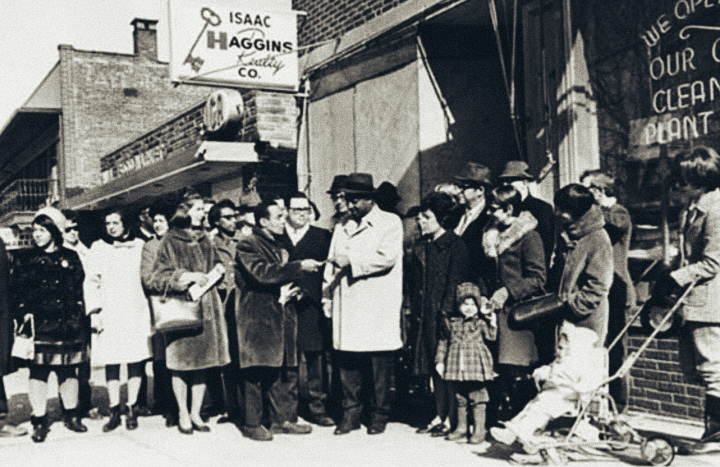
Racial Integration in the Heights
Interviews in this series were collected by undergraduate students at Cleveland State University under the supervision of Dr. Mark Souther, with funding from the Office of the Provost. The series contains interviews with pioneers of suburban residential integration and social activists who supported peaceful managed integration/desegregation and fair housing in Cleveland Heights and Shaker Heights in the 1950s to 1970s.