Donna McIntyre Whyte interview, 24 May 2013
Abstract
Donna McIntyre Whyte is a Cleveland native, born in 1948, and grew up in the Glenville neighborhood, and then later on to the Mt. Pleasant area. Her father taught her and her sister many domestic and handy skills such as how to work on cars. She lived close to her grandparents, close enough to walk their alone as a child. Her grandparents have interesting stories, and she appreciated them and spent a lot of time with them. She does not recall any distinct instances of segregation, but does remember when the building of John F. Kennedy High School, and that the boundaries they drew for the school district seemed like a racial boundary in order to make Kennedy an "all black school." At this time in the early to mid sixties, white families were fleeing the city and created South High School, the "white" equivalent to JFK. Whyte attended John Adams High School because it had honors programs and because her father went there. She was friends with people who went to JFK because the school was built her junior year. The interview stops at her high school graduation. She provides a great account of what it was like to grow up in the Glenville and Mt. Pleasant areas in the 1950s and 1960s.
Metadata
Interview Transcript
Transcripts may contain errors.
Donna McIntyre Whyte [00:00:20] Well, thank you so much. I'm flattered. I really am flattered to be a part of this project.
Mark Souther [00:00:25] Will you state your full name so we have it on the record?
Donna McIntyre Whyte [00:00:28] Yes, Donna McIntyre White.
Mark Souther [00:00:31] Thank you. And please tell me where you were born.
Donna McIntyre Whyte [00:00:35] I was born in Cleveland, Ohio, actually at Mount Sinai Hospital on 105th and Chester.
Mark Souther [00:00:44] And what neighborhood did you grow up in?
Donna McIntyre Whyte [00:00:48] Well, when I was born, that— the Mount Sinai is in the Glenville area. I do believe that virtually all African American babies were born there at the time. I was born in 1948. And my family lived in the Glenville area at that time on a street called Westchester right off of 105th Street, East 105th Street.
[00:01:06] And then when I was 5 years old, we moved to the Mount Pleasant community, which is, well, Kinsman, 140th and Kinsman is the street that I grew up on. So I stayed in Mount Pleasant from— and actually started elementary school and went all the way through high school and lived in the same house. And my mother still resides there.
Mark Souther [00:01:29] Will you tell me a little bit more about the place you lived on Westchester?
Donna McIntyre Whyte [00:01:34] Mm-hmm. Well, the house actually is still standing, which is really interesting. And my parents must have moved there after my sister was born because I know my sister's two years older than I am, Dianne McIntyre. And I do believe that when she was born they lived in a 3rd floor dwelling in Glenville. And then my father and his brother bought the house on Westchester. It was a duplex. And in Cleveland we call duplex side-by-side doubles. So the house actually resembled a colonial because it was a two-story house. And we lived on half the house. and my father's brother and his family lived in the other half of the house. So we had an entire suite where we had three bedrooms and— excuse me— you know, first and second floor and basement. So it was a— it felt like a single house. And there are a number of duplexes in Cleveland. When I left Cleveland in 1966 to go to Columbus to go to school actually, I know that in Columbus people called duplexes, what we call doubles. Doubles for us are up and down stairs. And we call duplexes side-by-side doubles. So that's the house. And it hasn't been too long ago that I was in the Glenville area and I drove down the street just to see if the house was still standing. Because as I have lived in Cleveland for, you know, I grew up here, I left for 15 years and came back, I don't necessarily expect, particularly at this time, I don't expect houses to still be standing. And I've only really lived in two. The one— well, I mean, as a child. I only lived in the one on Westchester and the one on 140th Street. And my grandparents, actually, the reason we moved into Mount Pleasant is because my father grew up in a house on 142nd and Glendale, between Bartlett and Glendale. And that house is still standing as well. My sister had told me a few months ago she thought that it had been torn down, but it's still there too. So my grandparents were there.
Mark Souther [00:03:49] Do you know the current addresses of the place on Westchester, the one on 147th, and then the place that you moved ultimately on 140th?
Donna McIntyre Whyte [00:04:01] Yes. Well, some of those street numbers are not— I'll tell you what they are. The one on Westchester is 10405, 10405 Westchester. The one on 140th Street, which is where my mother and my sister live at this point, is 3703 East 140th Street. And my grandparents' address was 3842? I think that's what it is. 3847? Something like that, 'cause they're on an odd side as well. I can't remember that address as well. When I was that— when my grandparents were living, the address wasn't important. You know, you went to the house. And they were in the block that was, you know, one block south from, you know, from us. Yes, that's right. It was southeast. So it was really— actually, we were on 140th Street and there was no 141st. And so 142nd was right around the corner from us and we could walk over there even as very young children. Very young children. You know, 5, 6 years old. As long as we could cross the street, across what was considered a main street. When I grew up on— when I was on 105th and Westchester, I can remember the first time that I was allowed to cross 105th, which is really a main street, at 105th and Superior by myself. And I was four. I think my mother was standing on the other side of the street though. I don't— I wasn't going anywhere at that age by myself. But we, we had a, um, We were allowed to be independent even at very, very young ages and could still feel relatively safe. Because I know even in kindergarten when my sister would walk me to school, she didn't walk me to school all throughout the year that I was in kindergarten. I didn't need that. You know, eventually I found— I had my own friends and I could walk to school. So I grew up in a community and at a time when we had neighborhood schools. So essentially all children at the elementary level lived close enough to a school that we could walk, even at the age of 5. So we didn't have school buses at all.
Mark Souther [00:06:26] Were, um, how would you characterize the housing in the Westchester area? Well, you were age five when you moved to Mount Pleasant, so I'm guessing you don't have many memories of the time, but can you tell me what You do remember from when— besides the stories you told me from Westchester.
Donna McIntyre Whyte [00:06:46] Well, one of the things that I remember about the house on Westchester is that because our family lived on the other side of the house, there was a reason for us to feel like it was one big house. And so our cousins, first cousins of course, were the, you know, the family we related to most, more so than their parents. And we could get to the house next door through the basement. We didn't have to necessarily go outside. So, and my cousin, first cousin Philip was just a year older than me. So he was between my sister and I, his age. And then his sister Karen is the oldest of our, of our cousins. You know, my father had three brothers, McIntyre, the McIntyre brothers. And so this was his oldest brother who he had bought the house with. And so his oldest daughter Karen— was considerably older than my sister who was the second cousin. And so I related more to Philip because Philip was just a year older than me. And so we could visit each other by going through the basement door. There was a door evidently there. And I remember the ceilings being so high. I remember feeling that we were in a single house. The houses in, in Glenville were— the rooms were much larger than the houses in Mount Pleasant. So there was that even that I could remember, you know, the staircase feeling. And maybe it was because I was so young. You know, the staircase feeling steep and the ceilings being very high. I can remember many things about it in terms of the structure of it. So, you know, through the living room, dining room, into the kitchen. So, you know, you may call those shotgun houses. And even some of the furnishings, I remember the radio, the record player, because we had 48— not 48, 78 records, vinyl records that would break if you dropped them. And I remember having my first dog on Westchester. So I was really pretty, pretty young. Had a few others after that once we moved on to 140th. And I can remember as I thought about the, you know, the recent tornado, the weather when we were young. Because I remember looking out the front window and watching the tree next door fall on our tree. Falling not toward the house, but just watching this— I can see it now, just slow motion. And it fell on our tree on our front lawn and killed the tree. Eventually our tree died. And so— and I remember many of the people who lived on the street and next door. Our doctor actually, our pediatrician, lived next door to us and had his office on 100— I think it was on 105th. So it was— in my memory, of course, very normal for people of all means. Well, we didn't think in terms of class. I was too young to think of that. It was really just that it was my family, the community, other children my age that we played with, and the family mostly. But many of the people that I remembered lived in that area moved to Mount Pleasant. So some of them, I can remember the Jackson family across the street from us that I ended up being in elementary school with in Mount Pleasant. So there was obviously a movement and that was the path. If people were going to move from that area, generally speaking, they moved south. They moved to Mount Pleasant. And I don't remember their houses. I don't remember if they were also in double houses or duplexes. But I remembered the children. The children. And then I looked up, and they were living on 146th Street or whatever, and we all ended up in the same elementary school. Some of the other things that I can remember— well, I remember the people more than anything else. And when we moved to Mount Pleasant, one of the things I remembered was there was a broader, I think, representation of class, broader. And again, I wasn't conscious of it when I was young, but I knew that there was a difference in how we spoke. Because when I, you know, was young, everybody communicated pretty much the same way. And when we moved to Mount Pleasant, I remember that I started to learn dialect. I started to learn Black dialect. And I remember that because my mother would get really angry at some of the things that, that we would say. I had never said the word ain't. I had never said, you know, double negatives. And, and I learned that. But I didn't learn it until after we had moved. And it— whether it was from school or the neighborhood or whatever. But that really was something I remembered my mother being upset about. Not that we didn't learn how to— and maybe my sister didn't at all. It may have really been the people who I preferred interacting with, 'cause, you know, we'd just go outside and play. You know, so it was really just being a part of the neighborhood. So I remember quite a bit about Westchester. And as a young child, of course, not wanting to move. because that was, you know, that was home. I didn't know, but I knew where my grandparents lived because of course we would go over to their house and they were on 142nd Street. So my world, it was not completely unfamiliar to live around the corner from them. And I, and it was close enough that even as a young child, like I said, I could walk over to their house. So, you know, that felt good.
Mark Souther [00:12:57] Do you remember going to, Going to different businesses with your mother or father in Westchester?
Donna McIntyre Whyte [00:13:07] In that area? Well, you know, when you say that, what I remember most about that area was Cory Methodist Church. And the reason I remember that is because my sister and I took dance lessons. at Corey, and the dance teacher's name was Elaine Redmond. Elaine Gibbs. Her name is Redmond now. Okay. Elaine Gibbs. One of the, one of the things about our lives in Cleveland and being a part of, you know, the McIntyre family is that my father moved to Cleveland in 1918 with his family, of course. He was born in 1914, and his family moved here. And so he was— He was born in Cleveland? A part of the African American community that settled initially in the Cedar-Central area. And then his family moved to Mount Pleasant in 1928. And that's a whole story about how they moved to Mount Pleasant and the reason why they moved there. And what you just asked me just slipped my mind.
Mark Souther [00:14:18] Okay, and then I'll come back to you. I have so many things I want to ask. Maybe two interviews.
Donna McIntyre Whyte [00:14:24] Okay, okay, that's fine. It'll be fun.
Mark Souther [00:14:27] That way we really cover things well. Well, I asked about businesses. Do you remember any grocery— do you remember where your mother went to the grocery store?
Donna McIntyre Whyte [00:14:37] Nope. Nope. I can remember department stores, going to department stores, whether that was downtown. And I know that as a young child, we could go shopping in the 105th and Euclid area and didn't necessarily have to go downtown. Our downtown was 105th and Euclid because all the businesses were there. And because as a youngster you don't really notice, or at least I don't remember recalling, you know, something that had to do with what we would consider to be race. You know, I didn't care who owned— you know, if you're going shopping, you're more concerned with being close to your mother because you don't want to get lost. You know? So where she was, you know, what store she went to. And— but again, when I really just reflect on what I can recall is being in the— whether it was the auditorium or the lower level of Cory Methodist Church taking dance lessons. And that being— and we didn't attend Cory. So, you know, going to the church was because of the size of the structure and the— you know, I can remember the warmth of the wood inside the church. And the fact that my sister and I were, you know, children who happened to take ballet. And so that was, you know, certainly for my sister, the introduction to dance. And I danced and we took lessons. And then actually Elaine Gibbs was one of the friends of my father since he grew up in Cleveland. And her story— she definitely is someone who you should interview— her story and her exposure and the reason that she was a ballet teacher, of course, You know, she's African American. This was, you know, I was born in 1948, so when I took dance, it was 19— you know, '52 or '53 or something like that. We were very young. And so, she had already been exposed to ballet. And so, had a number of children who came to ballet classes. And it was just very classical, and our exposure was, you know, ballet, not modern or anything like that. And then eventually she moved her dance school to 139th and Union, which is right around the corner from 140th and Kinsman. If you know that intersection at 140th where Union and Kinsman, you know, it's a Y, a fork in the road. So again, once we lived in Mount Pleasant, we could walk to dance because it was right down the street. It was right down the street. So how that happened in her, you know, experience that she happened to have moved her dance school, we could still go. We would have gone anyway, even if she had remained at Corey. But what I can recall is it was around the same time. You know, my sister would know that better than I, because she was older. The two years between my sister and I make a big difference in terms of what we recall in the exposure in our lives because we had our individual experiences.
Mark Souther [00:18:00] Did you attend church?
Donna McIntyre Whyte [00:18:03] Yes. We went to St. Andrew's Episcopal Church, which is on 46th and Cedar. Still there. And what I understand, and this is more so from my study of history and study of Cleveland, is that St. Andrew's was either the second or third African American church established in Cleveland. I know that Mount Zion Congregational, I do believe, was the first. And I do believe that St. Andrew's was the 2nd. And my father and his brother went to St. Andrew's as children. And my mother is not originally from Cleveland. She's from upstate New York. And when she moved to Cleveland, She originally went to Antioch Baptist Church. She had grown up in a Baptist church in New York. And then when came— you know, she came to Cleveland because she was able to secure a job here. And then when she and my father married, she converted to Episcopalian. And so we grew up— that was the only church I knew. And, you know, occasionally we'd go and take our mother at this time. But we grew up there. You know, baptized at St. Andrew's and confirmed and, you know, all, you know, throughout our, you know, our years as children growing up in Cleveland, we were members of St. Andrew's.
Mark Souther [00:19:27] Was this considered an AME church?
Donna McIntyre Whyte [00:19:30] No, no, Episcopalian.
Mark Souther [00:19:32] And did they use the term Methodist Episcopal at that time?
Donna McIntyre Whyte [00:19:36] Nope.
Mark Souther [00:19:36] I've noticed that a lot of churches—
Donna McIntyre Whyte [00:19:38] Nope, it's not an AME church. It's Episcopal. You know, it's more closely affiliated with the Catholic Church.
Mark Souther [00:19:45] Yeah.
Donna McIntyre Whyte [00:19:45] And so, no, this is an Episcopal Church. It's organized through a, you know, Episcopal diocese. So it's a, you know, it's a kind of mainline Protestant church. And because my father, you know, had been a member there and a child actually, you know, growing up there, there was not a conversation about whether— and my mother, you know, I mean, I knew families as I was a child whose parents actually attended different churches. And again, as a child, you think everything is really normal. No matter what happens in anybody's family. But my family happened to be one where, you know, we all, you know, considered ourselves following the same religion. You know, we followed the same faith. And, you know, that was— And unless I went to church with some other, you know, child, that was really the beginning and end of the exposure that I had in church. Actually, my mother's sister was in Baltimore, you know, all of her life. And all of her adult life. And she also was Episcopalian. Which is really interesting because I know that my mother and her sister grew up in the Baptist Church. But it probably had to do with their husbands. And the fact that they, you know, followed the, you know, the faith that their husbands, you know, had prior to the time that they were married. And so that was all of our exposure. You know, we knew the service, the Sunday school. My mother was a Sunday school teacher. And so the Episcopal Church was the beginning and end of our, you know, really religious upbringing. And after I left Cleveland, I really didn't attend church once I went to, college. It was difficult for me to relate to honestly a white Episcopal church. When I went to Ohio State, there was a church on the campus, St. Stephen's, which was an Episcopal church. And my sister would go. But I just, I said, Diane, I'm not feeling it. You know, I'm just not. I just don't. I was accustomed to the service at St. Andrew's being what you would always consider, you know, high mass. And you would have communion every Sunday. And once we were confirmed, we were about, you know, 12, 13 years old or so. And, you know, certainly there were certain aspects of the Bible we had to learn in order to be confirmed. And then we kind of graduated to going to the church service instead of going to Sunday school. So, you know, we were— it was in our blood. It was in our blood. And the Episcopal churches were, you know, it was an extension of, you know, who we were. The children we grew up in church with were, you know, part of our extended family. And then, you know, school was another way and our neighborhood was another way for us to connect with other, you know, young people who we thought reflected who, you know, who we were on a day-to-day basis. And then just our family. And my parents and their friends, we had, you know, the wonderful opportunity because my father grew up here. And he had, you know, the 1930s in Cleveland. He would tell us stories and we would just say, our lives aren't that much fun. You know, we wished that we could have, you know, talked about, you know, our upbringing like he did because it just sounded like it was wonderful. You know, he would talk about his friends. And because my mother didn't grow up here— didn't grow up here, this wasn't her home. When she came, my mother's friends had been my father's friends. Or they were the wives of my father's friends. And so they had a very wide social circle. And even, you know, the women developed clubs that weren't sororities. Weren't formal sororities. My mother actually was with a bridge club until recently. You know, women who were older and they stopped getting together just because they were older. But all of their friends of course had children. And so we grew up with all of the children. Because they were— we were all around the same age. We were all around the same age. And we have, in our adult lives, we always feel like we have, you know, a relationship. Like you would a cousin. A cousin. So, you know, one family in particular, in order not to explain to people that this was my mother's best friend's children, you just say, well, this is my cousin. So, you know, kind of adopt people.
Mark Souther [00:24:28] I'm going to back up and get you to— ask you to tell me about first your father, going back to birth and how he came to Cleveland. And then we'll pick up your mother's story.
Donna McIntyre Whyte [00:24:42] My father's name, Francis Benjamin McIntyre. And everybody called him Benny. Benny McIntyre. He was born in Jacksonville, Florida. His father originally from Jamaica. And his mother originally from— I can't remember the name of the town. My sister will remember. Summerville. Summerville, South Carolina. And I know this more because we're having family reunions now. And where my grandfather and grandmother met, I'm not sure if it was in Florida. Because I know my father and his brother were born in Florida. So my grandmother's family must have moved there. They ended up in New York. So my grandfather had taken his mother and his sister. My grandfather's sister was born in Caracas, Venezuela. And they, you know, ended up moving up to New York. And so much of my father's mother's family also was in the New York, New Jersey area. And when my father— my father and his family and all— when my father, like I said, he was born in 1914. And my grandfather had many skills. What we would say in a nutshell was that he was an engineer. He was from Jamaica. And he had worked on the Panama Canal. We knew that. And there are many stories I think may or may not be true, but, you know, kind of romanticized a lot about my grandfather. Once they came to Cleveland, it was because my grandfather was hired to be John D. Rockefeller's doctor's chauffeur. So chauffeuring was a common job. And it— what I understand, and probably more as an adult I understand this because as a child you just take everything for granted, is that it really— you know, allowed them to be exposed to wealth, you know, among white people. And also a certain level of expectation in our families. So my grandmother was a seamstress. She made many of our clothes. I remember the clothes that she would make. I remember she gave me a doll one Christmas. And, um, and the doll was a nurse. She had a, you know, You know, her white uniform and her red and blue cape that was corduroy. And, you know, as a child you say either Santa Claus brought it to me or it came from the store, but I thought the doll had those clothes on. And then I learned later that my grandmother had made the clothes. She had taken whatever the doll's clothes off. And I remember my grandmother like yesterday. And it was— and she died when I was 8. She, you know, lived around the corner from us. And I remember her most because I was the child that looked most like her and felt good about that. She was just— I mean, not about me, but I thought my grandmother was really just this beautiful woman. And her heritage was South Carolina. You know, we know our history, of course. There were many— on my mother and father's side, there was, you know, ancestors who were white. So her father was clearly indistinguishable from any white person. And her mother was a Native American, and I can't remember the name of the tribe. So, so they had a look that was unique. Okay? And my grandmother was known for being the sister in her family that never cut her hair. So we knew her as this woman with this gray. I think my gray is much like hers. But her hair was long and straight and down to her waist. And the way she wore it wrapped, it was who she was. And we called her Baba because her name was Bertha. Her name was Alberta. And my sister tried to say Bertha. So she ended up Baba, and my grandfather was Dad. So Baba and Dad were our grandparents. And then so my father, you know, being here as a 4-year-old here, and then went through elementary, he went to Moses Cleveland. I think he went to Alexander Hamilton. He went to John Adams as well. So we also did, you know, as children go to John Adams. And John Adams High School. And so my father didn't finish high school. But everybody could work at that time. And my sister has a lot more information because she actually interviewed my father. So she knows the first job he had. But I do believe he started working when he was about 14. My father was also a chauffeur. He had worked for a traveling salesman. There were many jobs that he had. He'd worked at Westinghouse. And he ultimately worked at the post office. And that's where he retired, from the post office. He was in the service. So he was drafted. It was during World War II. And so he did, you know, serve in the U.S. Army. And all of his brothers as well. One brother was in the Air Force. He was a Tuskegee Airman. Another was— two of them were in the Navy. And my father was in the Army. And my father served in North Africa. And I think it was in Sicily in that area. And so my mother moved to Cleveland in 1940, 1941. And she met my father and they were married in January of 1942. And then my father was deployed, you know, he was in the service. And then when he came back, then here we were, 1946 and 1948. So my father really was the reason that we're here because of his family, you know, being here in Cleveland. And the kind of legacy of the 4 brothers was what we grew up with. My grandmother, like I said, passed when I was 8. My grandfather, my paternal grandparents, my grandfather passed when I was about 12 or so. And because we could, you know, walk around the corner to go visit them, there were times I can remember going over there And particularly after my grandmother passed away, to just go visit my grandfather. He, by the time we were— that I can recall, I don't remember my grandfather working. I know that he had worked for Rockefeller's doctor. And actually somebody in his doctor's family just passed away recently. Dr. Biggers. My sister knows all the specifics about— the Dr. Biggers family. And when my father— they were in the Cedar Central area and I know that they lived on Quincy Avenue. What we know is that Dr. Biggers wanted my grandfather to move out of that neighborhood. And so he offered him an opportunity and built the house that they lived in on 142nd, which is how they ended up in Mount Pleasant. Because most people didn't leave that area, the Cedar area. Most people stayed there. The social life of the African American, you know, life and culture and businesses and all were really in that Cedar Central area for, you know, for years. And then people moved to Glenville and moved out after that particular time. Even moving into Glenville, you know, occurred a little bit later, you know, than the 1930s. So we could picture this because my father was a storyteller. So we thought we could just go through his life with him. He always had a car. He was always— and his father really knew if you were a chauffeur, you had to know how to fix a car on the road. You know, you weren't going to go into a— you had to know everything about what happened in that car. And they were simpler then. So, if you were driving and the car broke down, the chauffeur had to know how to fix it. And so, my father, you know, pretty much following his father, you know, if he chauffeured. And I was, I always said, I was the boy my father never had. My sister was, there was nothing tomboyish about my sister. So, here I come. So, I would, you know, I was the, you know, child, and I'm sure my sister has the same stories, 'cause, You know, I think my— you know, you have an individual unique relationship with your parent. So you think yours is really special. Then you find out you talk to your sibling and theirs is special too. So I know that I was the one who wanted to, you know, learn how to fix the car and paint and drive a nail. And, you know, I was the boy that, you know, my father didn't have. And one of the things that he would— and he was such an amazing you know, teacher, and he wasn't on a formal basis, but he was really the one that enjoyed teaching whatever it is that we learned. So I did learn how to— and he was very precise. He would always say about how growing up in his household, he knew how to do everything that women could do too, because he washed the dishes, cleaned the house, All of that was who my father was. And he said, because there were no girls. He said, if I had had sisters, you know, they would have washed the dishes. But because there were all boys, he said, we all had to do everything. And so we grew up with, you know, my father being the one who wanted to make sure, and he was a perfectionist to a fault. And so, For us, again, that was normal. And we had to learn how to do what he taught us how to do. You know, make the bed a certain way. You know, those square corners have to be a certain way. Everything had to be very precise. But I think that a lot of that was the culture at that time. And, and, and even sewing. Of course, my grandmother was a seamstress. But everybody could sew. Everybody had a sewing machine. Everybody could do all of that. So nothing seemed— all of the girls knew how to sew. And even in the curriculum in school, you had Home Ec, 7th grade, everybody sewed. You had cooking class. And it was unusual when boys would be in those classes. You know, but we would learn things that, you know, what do you mean you can't sew? But as children, and then my mother, of course, you know, had the same exposure as a child. So, you know, when you learn how to sew, I don't remember ever not knowing how to sew. And understanding that, you know, my grandmother— and I don't think I thought of her as a seamstress, she was just Baba. But, you know, she did work, and I guess domestic work. So, so she always worked. My grandparents worked for white people. And, you know, that was really their— their livelihood. Well, Dr. Biggers died. And he left my father— my grandfather in his will, he— my grandfather never had to work anymore. So what my grandfather did because of what skills he had, televisions came around in the late 1940s. He knew how to fix televisions, radios, everything electrical, everything. And so he passed that on to his sons, at least the ones who were interested in doing it. And so my father, you know, certainly learned, you know, how to do, but didn't necessarily do all of that. But people were self-sufficient and skilled to do things in their houses. So my father was always the one that kept the house up. You know, they'd hire people to do certain things, but for the most part he did everything on his own. And, you know, as a child you watch and you learn and then you learn because, you know, my father would teach us. As well as any other child in the neighborhood how to ride a bike, how to drive a car, how to do everything. You know, my father liked to teach children how to do what he enjoyed doing. He taught us how to dance. You know, ballroom dancing in the living room. You know, taught us how to stand on our head. You know, my father was the fun one in the house. My mother kept the order, you know. But I mean, my father had order too. I don't want to say that. But it was a really happy life, you know, happy childhood. And I think we envisioned that other children had happy, you know, households and all, or we assumed so. But we were— Spoiled and knew it. You know, we felt that we were privileged. We felt, I think, that we were— we weren't poor. We never were poor. Never even didn't understand or knew. It was when we lived in Mount Pleasant, I think, that was the first time I encountered someone who was on relief. And that was the first time I'd heard the word and I didn't understand what that was. And it was when I was prob— I was in elementary school. And there was a family who moved a door away from us. And, um, and people in the neighborhood helped to get clothes for the children. And so I was like, oh, okay. They're on relief. I don't think I still under— equated that with poverty. I don't think I understood what that was. But it didn't matter to me. You know, I mean, because they were— Barbara White was my best friend. I didn't care whatever relief was. I don't think I understood what it was. You know, we went to school. We were friends. And, you know, we still felt like, you know, life is good. But I think her family was also the first family that I met where there were not two parents in the household. 'Cause she lived with her mother and her grandmother, but there was no father there. But again, you know, when you're a kid, you don't look at things and wonder. You know, I knew that she had a father, but I— that didn't make any difference. You know, it really didn't matter. It's when you are informed about things later in your life that you think about it. You think about it. And it didn't have anything to do with what people ended up doing in their lives. You know, what their situation was at that time. So, but our own family did seem to me to be kind of typical middle-class Black people, you know. And that was what, you know, our exposure. And our family traveled as well because my mother was not from Cleveland. So we always traveled out. And that was different, you know, because my father drove and my mother drove and, you know, You know, we went to Baltimore and New York and Virginia every year, more than once a year. And occasionally rode the train. But most of the time we'd be in the car. You know, and my sister and I would sit in the backseat. And my parents, one of the things I remember about my parents, now this is, this is really something I don't think people do. You know, cars used to have a bench seat. You know, it wasn't a console in the middle. My parents would drive on the highway and switch seats and not stop the car. My mother would— she'd say, we didn't do that. We, my sister and I, would be sitting in the backseat and my mother would go, I guess, over, my father under, or other, you know, they'd slide and they would never get out of the car. And some, they'd hold the steering wheel together. We had so much fun. You know, I'd drive in my father's lap. I learned to drive when I was really, really, really, really young. I mean, like 10, you know. And they would— and I remember going to my mother's class reunion up in upstate New York. And I was 12. And we went up in the country. And she let me drive. That was real daring for my mother, because she was usually like, no, you can't do this. But my father was like, yeah, let's go. And he put me in his lap when I was really a young child. And I'd drive. You know, probably couldn't hit the pedal, but I could steer. So by the time I couldn't— one time I took the car around the corner and somebody told on me. Somebody told my mother that they saw me driving in the neighborhood. I was like, well, you know, it was better than going up and down the driveway. They used to let me drive up and down the driveway. And this time I was like, well, you know, so-and-so can drive. You know, I had a friend named Francine Miller. And she had a car when she was like 13. And my father said when he was a child, you didn't need a license. It was later. So by the time they were 14 or 15, you know, if they had access to a car, they could drive. And so my father taught me to drive really early. And maybe my first time driving was on a tractor though in Virginia at my grandfather's farm. But driving a car, it was just fun. My cousins did soapbox derby. I mean, cars were a big part of our life. And we, and we would sit on the front porch and play cars. We would play cars. We would name all the cars going down the street. You know, you'd sit on the front porch and you'd play school. You'd play cars. You know, you'd jump rope. You did all of the whatever the— games are. You do jumpin' rope and you just sit and you, you know, be a happy kid.
Mark Souther [00:43:10] What kind of car did your parents drive?
Donna McIntyre Whyte [00:43:14] My- well, the car that I drove that time was a 1956 Chevy, 4-door, blue and white. And my parents always had Pontiacs. Pontiac, or Chevrolet, either one or the other of those. And I remember one time they had a Buick. That was a little strange. That seemed to be different. But we were, you know, definitely General Motors people.
[00:43:42] I know that as a young person my father had Fords. But when, you know, we came along, it was always mostly Pontiacs. And one time we had a convertible. That was fun. 1962 Bonneville convertible. And that was fun because, you know, we could put the top down. We could put the top down.
[00:44:02] And eventually we would have 2 cars. So my mother would have a car and my father would have a car. Over time we ended up with 2 cars. And, you know, and we— I remember friends, particularly in high school, some of our friends would have cars. A few of them. A few of the boys. Not the girls. But a few of the boys would have cars.
Mark Souther [00:44:23] I'm curious, you spoke of travel and you mentioned the places you went. You had a grandfather that lived in Virginia on a farm.
Donna McIntyre Whyte [00:44:34] Right.
Mark Souther [00:44:34] Where in Virginia was that?
Donna McIntyre Whyte [00:44:35] Culpeper. Culpeper, Virginia. And the farm actually— this is my mother's family. My mother's— my mother was born and raised in Leroy, New York, which is outside of Rochester. But her family is from Virginia, Culpeper, Virginia. And we would— by the time, you know, I was born, my grandfather had moved back to Virginia. He was a widower and he had moved back to Virginia. But the farm actually was owned by my mother's— my great-grandfather. who was my grandfather's father-in-law. So this was her mother's family's farm in Culpeper, I think. My sister will know that better than my mother. And so, but my great-grandfather passed when I was about 4. He was 94 or so. And so that was my mother's maternal father. And so I didn't know until I was much, much older that this was an in-law relationship between my grandfather and my great-grandfather. You know, when you're a child, everybody's your grandparents, so it didn't matter. And so my grandfather remained on that farm for a while. So that was actually his father-in-law's farm. So my aunt, my mother's sister, who lived in Baltimore, probably owned it. 'Cause she probably had inherited that farm. farm. And, and so my grandfather lived on that farm until, you know, he got older. And then he lived between my aunt and our house in New York. Because my mother is— she always talks about, you know, her sister and there just being the two of them. So they had the same parents. And then my mother's mother, my grandmother, passed when my mother was 5 in upstate New York. But my grandfather and grandmother were originally from Virginia. My grandfather moved to upstate New York, and what we understand, and we think this is true, is that because his father was white, his father had family, or he knew of people in New York who had large farms and what we make equate to, you know, plantation-sized, you know, farms. And, and so my grandfather was a tall, strapping man. And to give you an idea of what he looked like, I used to think that he looked like Walter Brennan. You all are too young to know who Walter Brennan is. But he was an actor. And, and he always played, you know, this country person, rugged person. My grandfather just looked like him. And it never occurred to me that Walter Brennan was white. Never occurred to me that my grandfather had any white in him. He just looked like Walter Brennan. You know? And so he was about six feet tall. And, and my grandfather was a farmer. And so, you know, we would go there and for whatever length of time, you know, be there on the farm and play. And our exposure out of the city would be there, you know, on the farm. And some of it, I remember, was kind of scary because we weren't— we were city kids. So there were animals and outhouse and, you know, everything like that. But that was where we would go. And then my grandfather did live between our house. And then my grandfather remarried when my mother I think was 10 or 11 or so. And, and so my grandfather has— had another son, Uncle Ned. And he also had a stepson. So there were four children in my mother's family. And his second wife died as well. So my father— and I do believe that my uncle was probably less than a year old when my— when his mother passed. And so my grandfather didn't want to separate the family. So he never— I know that my mother and her sister lived with their grandparents in Virginia for some short time after my grandfather's stepmother, or at some time, you know, maybe he wasn't remarried at that point. But my grandfather brought the kids back. So my grandfather really raised his four children even as a widower. So he had his aunt come to live with them, you know, to raise the children. So my mother and all of the children grew up in Leroy, New York. So she, you know, her exposure there, and my uncles were really New York kids. That's where they never had lived in Virginia. And so as a young child, when we would travel, sometimes we'd go up to Leroy because it wasn't far, you know, to go up there. And the house, that my grandfather and my mother and, you know, her sister lived in eventually had been my grandfather's second wife's house and probably her husband. So that's the house we remember on Gilbert Street in Leroy. And then, you know, my aunt, you know, eventually settled in Baltimore. Because that was closer, you know, Virginia, into Culpeper. So that was where we'd go when you're, you know, I don't know if any of you have, you know, a parent who has a sibling or, you know, when mothers have sisters, they're going to travel to be wherever their sisters are. So we went to Baltimore more than any other city, because that's where my mother's sister was. And so as our, you know, young lives, we'd get on the road. They, my parents would pack us up, pack up the food, sometimes pack up the pot. Because you couldn't necessarily go to the bathroom somewhere. Put that in the back of the car and, you know, or whatever, or on the side of the road. And we'd go to Baltimore pretty often.
Mark Souther [00:50:39] That last comment you made about, you know, packing the pot in the car. I'm thinking about the geography of where you would have been going. This was in the North entirely, so it had nothing to do with Jim Crow, presumably. Can you tell us about your first experience in any travels with Jim Crow segregation?
Donna McIntyre Whyte [00:51:04] Nope. I mean, I didn't remember any of that. I think I was really, you know, I can't remember how old I was when I knew that my aunt, my mother's sister, Ruth Marshall, When I knew she was a teacher, she was a— that was the career that she had all of her life. That she taught in a segregated school system. She was in Baltimore. And I know that that probably didn't really sink in. I may have been an adult, or I was a teenager, because I couldn't, I couldn't grasp what that meant. you know, where she could not teach in a school where there were white children. You know, maybe I heard it, but it was not my experience. So I didn't understand it. I didn't know what— you know, I knew what it was like to be in a neighborhood that was Black. You know, I knew what it was like to, to have been in a neighborhood like in Glenville where everybody was Black. To move to a community where there were white people for some brief period of time. And a few left even as I, you know, grew up through my high school years. But I can remember the change in our community. Moving on to 140th Street, our neighbors on both sides being white families. And on one side where the Brewer family lives now, on the one side, the— a family moving there who was a white family through elementary school. And then the family that moved in was Black. And people left. They left. I mean, I knew the difference in my elementary school from kindergarten. And once I was in kindergarten and there were, you know, not significant, there were a number of Black people in the community at that point. more predominantly Black. And by the time I finished elementary school, there were virtually no white children in the school. So we understood that. We understood it. We didn't call it anything. You know, it was just the way life was. And it wasn't— I couldn't even tell you when— maybe I heard the term Jim Crow in the '60s. I couldn't tell you when I understood what it was. I think I understood what being in a Black neighborhood was, but we didn't identify it. We didn't identify it as anything. We didn't qualify it as good or bad. It was just the way our life— You know, as a young person, you really only care about your friends and your family and fun. And, you know, you go to school and you do whatever. You know race exists because, you know, in school, you know, we did have experiences that, you know, in our school it was not— it was integrated for the most part in high school. And you understood that there were issues because, you know, I was in the school district when, you know, there were 153,000 students in Cleveland schools when I was a child. We knew what being crowded was. You know, you knew that white people didn't want to live around Black people because they left. You know, they left. So you got new friends. You know, you got friends. And you just related to the people that you felt most comfortable with. And we, um, You know, as our community and school expanded, because elementary school was a very short, small community. Junior high was a little bit bigger. And so the demographics would change too. And then high school was even bigger. So for me, the change occurred because of white flight, you know, on the elementary level. But then on the junior high level it was integrated. And people didn't necessarily flee neighborhoods as long as those neighborhoods were still segregated. And then at the high school level the same. But we were coming from larger communities that fed into these larger schools. And, and didn't have any reason to feel like we didn't all have the same enjoyment. We, you know, liked being there. And it seemed to me that, that people were not interested in, in leaving their communities at that time, particularly once we got in high school. But it was different. My sister's experience was different from mine. Hers was a much more integrated experience. She was the only Black cheerleader. By the time I was a cheerleader, I was not the only Black cheerleader. You know, she was one— and she can tell you this— you know, one of 3 Black students in AP courses. I wasn't in AP courses. But I know that by the time I you know, came along two years later, that was not the case. There were more black students, you know, as well. So it changed and we knew that change. You could reckon, you could see it.
Mark Souther [00:56:25] When you mentioned that this white flight occurred primarily, well, in the place where you were in elementary school, I was just thinking about the years and wondering what it would be in something like 1950s.
Donna McIntyre Whyte [00:56:41] 'Cause we moved on 140th in 1953. That's when we moved on to, you know, to 140th Street. And, and so if that was '53, then let me see. You know, there were still white people there. You know, I mean, there were still even throughout the years, some people didn't leave. But, you know, you would recognize it mostly because the children left. I mean, for me, I would recognize because the children were no longer, you know, in the neighborhood or in the school. And there were choices that people made. I lived— 140th Street was an optional zone, which was one of the terms that the school district used for the elementary school that you could go to. So children on 140th Street could go to either Charles Dickens, which was on 131st, And— or Rickoff, which was on 146th and Kinsman. And I always went to Rickoff. And because the school district was so crowded at that time, they started to implement what was called relay classes, the half-day classes. And Rickoff evidently was more crowded than Charles Dickens. Charles Dickens was in a more white community. The white schools were less crowded. They were just less crowded until, you know, the communities were replaced by, you know, Black people. So some of my friends went to Charles Dickens. Their parents— in fact, my best friend who lived down the street from me, her mother took her out of Rickoff and transferred her to Charles Dickens to avoid having her in those half-day classes. Because the half-day classes happened at Rickoff, but they didn't happen at Charles Dickens.
Mark Souther [00:58:29] Was there a big push for every parent who could possibly manage it to switch to Dickens because of that?
Donna McIntyre Whyte [00:58:37] Well, she was the only one who I knew because I had a close association with her. Some of the other children who lived on 140th already went to Charles Dickens. So they didn't make a transfer. Their parents just chose that they go there, you know, from day one. And I didn't, for whatever reason, I wasn't in a grade that was subjected to relay classes. I don't know if it had to do with the size of my class or whatever, but there was never that concern about whether I would be on those half-day schedules. It just happened. And she was just a year younger than me. So it happened at her grade level. Maybe she was going into 4th grade or something like that.
Mark Souther [00:59:18] I wonder, you may or may not know, I do not have any knowledge of this. I don't know if it existed, to be honest. Did the school district ever attempt to redraw boundaries in order to maintain this so-called color line?
Donna McIntyre Whyte [00:59:34] Oh yeah. Well, the, the— when I was most aware of that was when John F. Kennedy was built, high school. was built. I went to John Adams. And in the time that I was there, I went to John Adams in 1960— I graduated in 1966. I was supposed to have graduated in '67. We went into high school in 10th grade. So whatever, we can subtract three from that. 1964. So the first— and I was a January baby. You know, I started school— Cleveland, the— the system at that point was that if your birthday was a certain time of year, you started the second semester of the year. Everybody didn't start school in September. Some students started in— we called it— I called us January babies. We started the second semester, which meant that we graduated in January of that year, 12 years later. The fact that the schools were so crowded, everybody knew that. Everybody knew that. You know, you were in there and it was crowded. It was just, you know, what you experienced. And so, you know, we knew, you know, we were conscious that there were a number of schools that were being built across the school district. Well, John F. Kennedy, it was coming really close when they talked about building a school in the Lee-Harvard area. Because the John Adams School District was— Lee Harvard was part of that. And our friends were in school with us at Adams. And at the time that I was at John Adams, maybe there were 3,700, 3,800 students in the school at Adams. But, you know, Adams had a tradition. You wanted to be there. And, you know, my father went there. So I mean, it had a tradition even in families. And it also had a reputation because John Adams was the school on the east side that had the major work programs. You know, if you were academically talented, then you could live anywhere in Cleveland and you could go to John Adams because it was likely that in the district where you lived, there were not those programs. So the AP programs were at Adams. And, and again, Adams still had, you know, a fair number of white students. So the school district followed. And I did a study on that. So I saw how the major work programs and how the money followed the population. But John Adams was the college prep school. And we even, you know, that was the reputation of the school district. And I learned this more once I came back to Cleveland and talked to other people who grew up in Cleveland on the East Side. And I had no idea how they had viewed Adams. But we felt privileged to be in that school. And so, but then, you know, I mean, sports and everything else makes you feel a little bit less privileged because everybody's on the same playing field. But, but what happened when Kennedy was built in 19— whenever they started building it, I don't know. But it opened in September—of 1965. Right, 'cause I graduated in June of '66. Yeah. It opened in, I think, January of '65. That's right, 'cause my sister graduated from Adams in June of '64. So she didn't— Kennedy was not a factor for her at all. Well, when we found what the boundary lines were for Kennedy, And Kennedy's on like 176th or whatever and Harvard. And John Adams is on 116th and Corlett. And you'd have to look at a map to know this. When we knew that some of the children who lived on 130th and Abel were in the Kennedy School District, it was clearly race. It had to be. Because the boundary lines and the distance that a student would have to go to go to Kennedy. And they lived virtually within walking distance of John Adams. We all talked about it. They're like, okay, well, they're making Kennedy a Black school. They're leaving the resources at Adams because it's— it will leave it more of the racial balance would be more even or, you know, whatever. There would be a higher percentage of white students at Adams by taking all these Black children out. But what happened as well was, you know, the community Mount Pleasant and Lee Harvard were like middle-class Black communities. So they populated Kennedy with a middle-class population, particularly the Lee Harvard community where people had settled there, you know, in the early '60s. Actually, for my dissertation, I interviewed Arnold Pinckney who had been on the— and he lived in Lee-Harvard. And he also was on the school board. And he talked about how people would drive around, Black people would drive around in the Lee-Harvard area on Sunday and they called it Black Sunday. Because all of the sale signs, the for sale signs. And they could kind of pick out a house. And then do it and say, well, you know, call the realtor later. Because so many white people were leaving the Lee-Harvard area. And, you know, the flight in Mount Pleasant, I was younger so I didn't, you know, see it as much. And the housing was different too in Mount Pleasant and in the Lee-Harvard area. The houses in Lee-Harvard were newer, were newer. But the community flipped. If you just look at the demographics, the, you know, demographics of the community changed quickly, you know, in a 10 and more broadly a 20-year period between 1950 and 1970. But we all knew that that was race when we saw those boundary lines. They didn't make sense. They didn't make sense in terms of a student's accessibility to the school. And maybe they said, okay, well, let's look at the numbers of students. There were about an even number of students at Adams and Kennedy when it was built. And Kennedy also did not have an honors program. So when it opened, some of the children who we were in those advanced major work classes went to Kennedy. And they were honors students or AP students. And it felt like it was an insult, you know, to us. I know to me as a student. You know, some of my friends. But it was their choice. One of the things that the school district did, they didn't put honors at Kennedy. So they gave students who were honors students an option to stay at Adams. Because Adams had the honors programs. So the parents really could choose, you know, and these were African American parents, they could choose to keep their child at Adams because Kennedy did not have an honors program. And some of them had that option. Kennedy also did not have a senior class. So if you were going into your senior year and you were graduating in 1966, there was no— you couldn't go to Kennedy because the first graduating class there was January of '67. And so there were ways that, you know, eventually that worked out. So they became like our football rivals. We're like, what do you mean? You know, we know you. And they were good. They were good. So that was what we remember too. We had another high school in, you know, athletics that became— You know, but it was funny because we were— we had all been in the same building for— and I mean, it was, it was sports rivalry. It wasn't rivalry in any other way. And then when we graduated, I would go to Kennedy's class reunions as well as Adams. They had more fun.
Mark Souther [01:07:52] I'm a little confused about with all this of the boundaries, though, is it seems that if both areas had transitioned to majority African American, how was the— how was there a color line?
Donna McIntyre Whyte [01:08:08] Well—
Mark Souther [01:08:08] I guess I fully understand how race is involved if Mount Pleasant had already transitioned.
Donna McIntyre Whyte [01:08:12] Right, right. But see, there was Mount Pleasant. I don't remember the names of the neighborhoods. But, you know, there was Mount Pleasant, which was kind of where that distance was, that 130th and Abel, that was part of Mount Pleasant. And then when you look at the— the district that John Adams represented, it was a community— I have no idea, maybe it was closer to Broadway. Yeah, where South High School is. So that was part of John Adams' district as well. And I don't know exactly what year South was built. South was not even on the radar screen. I don't know when South was built. But You know, South was built too to give it— to give white students a school to go to. Because South was not a Black school. You know, I was like, where is it? But see, students from that Broadway area went to Adams until South was built. So that's where the— so, you know, Adams was in the middle. And, you know, on one side of John Adams was, you know, more white community. And on another side it was more Black. And over time it was more predominantly Black. You know, but when Kennedy was built it was, you know, I mean if I looked at my yearbook, I should have brought that with me. You know, there, I don't know what the percentage was. Maybe the— maybe my graduating class had 2/3, 3/4 African American. You know, but there were still, you know, white students there.
Mark Souther [01:09:50] That makes a lot more sense. I had forgotten about the fact that we're talking about an area that was more southeast and south of downtown. It was whiter, and the flow of Black population tended to go more east-south.
Donna McIntyre Whyte [01:10:07] Yes, exactly, exactly.
Mark Souther [01:10:10] I wanted to pause because we're in the- We've been going for an hour and 10 minutes. I don't want us to go too long today, probably, just so we don't wear ourselves out. Would you be willing to be interviewed on another day?
Donna McIntyre Whyte [01:10:23] Oh, sure. Absolutely. This is fun. Make me think.
Mark Souther [01:10:27] Her mother was a pioneering aviator, the first African American woman in Ohio to obtain her pilot's license. And the ninth in the United States, I think, right?
Donna McIntyre Whyte [01:10:41] What did you say?
Mark Souther [01:10:42] The ninth in the United States.
Donna McIntyre Whyte [01:10:44] You might know. Really? I never knew that. We always say she was among the first. We never knew the number. You've probably done more research than I have. Well, she was licensed in 1940. So it was pretty early. It was early.
Mark Souther [01:11:03] You know, we've just gotten into high school. We've dropped a few balls along the way, including, you know, your mother's life up to that time.
Donna McIntyre Whyte [01:11:16] Oh yeah.
Mark Souther [01:11:17] There's a lot really we could cover. And then, so I could— we didn't talk about the Bruce Klunder story. I think we want to save that. There's a lot that That someone could still talk to you about.
Donna McIntyre Whyte [01:11:30] Oh, okay.
Mark Souther [01:11:31] You could talk to them about-
Donna McIntyre Whyte [01:11:32] Oh yeah, oh yeah, this is fun. He is really making— stretching my memory. You know, it's fun, you know. But I mean in a nutshell, when I graduated from high school and I graduated outside of my class, my class really was supposed to be January of '67 and that decision— but some of that had to do with how the schools were organized. Because when we were in elementary school, We had— I was— came to school in February of whatever, 1954. Maybe that's when I started. And the school didn't have a major work program. Rickoff didn't. But in 2nd grade, the school identified 8 of us in 2nd grade. And I think we were the eight smart kids in that January class. And they kept the 8 of us together. For all the rest of the time we were in elementary school, which at that time ended at the end of 6th grade. And they would combine us usually with the children who were the half year ahead of us. So, you know, we had the A and B. So if we were in 4A, which was the second half of the 4th grade— figure that out— it was the second half of the 4th grade, we'd be in class with 5B kids. And that tended to be our experience through elementary school. So we were always taught— the teacher wouldn't necessarily separate us just because of the time of the year we were born. We were in the same room. And eight of us, I could name all eight of us, all Black in elementary school. And so I remember graduating from Rickoff and saying to my teacher, why can't we go? Why can't we go to 7th grade too? You didn't separate us. And so, you know, they couldn't do that. They couldn't do that. But I related to the children in that next grade. I was in school with them. I knew where they lived. I had been in their houses. They were my friends. They were just maybe six months older than me. And so I always felt like— and I knew the curriculum was different for the January kids. When I went to junior high, at Hamilton, the grade level half year ahead of me started algebra in 8th grade. That was when they started having children take algebra, right at that time. And they did not allow my class to do that. I said, this is not fair. Why? You know, we're smart kids. And so it was really a matter of resources determining who they wanted to pay or whatever. And so they didn't allow us to have that opportunity to go through as much math as that half grade ahead of us. And I just felt like it was always kind of a denial. And I was young enough to know and mature enough, you know, to see that. And so I always felt like I was out of sync. Plus, from kindergarten, my mother always let me know that The deadline to get into school was October 15th. You would start school in September. And you know what date I was born? On October 16th at 2:00 AM. And so even at the age of 5, I felt cheated out of those two. And I'm like— and I remember that at 5, I could have started school in September. I didn't know the kids at that time, but it always felt like, what? And January, our classes were smaller. Our graduating classes were smaller. And then as I got older, I also didn't want to work at the phone company. Virtually all the kids who graduated in January went and worked for the phone company. And I said, you have to wait until September to go to college? It just felt like, what? You know, you're flopping around like, you know, and a lot of them didn't go because they started working. You know, and I was like, I want to end in June and I want to go to college in September. And so it was, you know, those messages came to me as a really young person. And even though I loved being in that January class because those were really the kids I was friends with all the way through school, I related to the June '66 students as well. And that started in elementary school. My next-door neighbor is somebody I went to elementary school with. You know, and she came out in June of '66. You know, so I've always related to the students who were maybe six months older. So, yeah, and the school district really had that influence on my, on my thinking. But when that math class, that was it. I was like, I'm done. You know, there's no reason why we should be cheated out of this. You know, taking algebra. You know, just because we happened to have started school at a certain time. I didn't understand bureaucracy and all that other, you know. It just was like, that's just not fair. That's just not fair. And I liked math. And my sister was two years older than me, so whatever she did, she'd bring her stuff home and I was like, teach me, Dianne. You know, teach me, Diane. I learned French from her. My mother made me take French because we could talk. Because she was, you know, she'd come home and teach me different things. So it just felt like a real violation, you know, of our opportunity, you know. And I had no idea what was happening downtown, you know, at the school board. But, you know, then you start thinking about, you know, your life and what choices you have. A lot of kids graduated in June of '66. To avoid going to Kennedy. They went to summer school because they didn't want to leave John Adams. And I went as well, but, you know, they allowed us. And then they had a rule. You had to be at least 17 and a half to graduate early, but they waived it. They waived it because they knew the kids didn't want to transfer to Kennedy. So there was a lot going on.
Mark Souther [01:17:37] Thank you so much for taking the time.
Donna McIntyre Whyte [01:17:40] Thank you all for listening to me ramble.
Mark Souther [01:17:43] Do you have any questions you'd like to ask now before we conclude, or do you want to save those and maybe whoever does the interview could incorporate them?
Katherine Taylor [01:17:54] I don't presently. It was just very interesting, and we have similar backgrounds, so I look forward to it.
Donna McIntyre Whyte [01:18:01] Are you a Clevelander?
Katherine Taylor [01:18:02] Yes, I am.
Donna McIntyre Whyte [01:18:03] Oh, okay.
Katherine Taylor [01:18:06] I attended JFK in 1968 or '69. And then I went to Shaker, so I too can see the difference in the curriculum. Transitioning from Kennedy to Shaker, but then transitioning back from Shaker for a few months back to JFK.
Donna McIntyre Whyte [01:18:32] Oh my goodness, I'd love to talk to you.
Mark Souther [01:18:36] We're going to interview Katherine. She's agreed to be interviewed, so she's actually going to be here as well. I should note for the record that, um, I'm joined— we're joined today by Katherine Taylor, a student at Cleveland State, Timothy Klypchak, a student at Cleveland State, and Bethany Hollowell, also a student at Cleveland State. Summer Provost research project.
Donna McIntyre Whyte [01:19:01] Very good. Now, are you all native Clevelanders or around the area?
Timothy Klypchak [01:19:05] I am from Brooklyn Centre over on— right where the Denison and Harvard Bridge meet.
Donna McIntyre Whyte [01:19:10] Yes. Okay. Okay. Okay. I'm familiar.
Bethany Hollowell [01:19:15] I originally grew up on the east side in Perry, Ohio.
Donna McIntyre Whyte [01:19:20] Okay. Yeah, farther out. Okay. Oh, nice, nice, nice. Actually, when I came back to Cleveland with my children, they were supposed to go to Denison Elementary School. That was when they were bused. Did you go there?
Timothy Klypchak [01:19:33] Yeah.
Donna McIntyre Whyte [01:19:34] Oh, interesting. They didn't go. That's my whole conversation about busing. I was like, Denison, where in the world is that? You know.
Mark Souther [01:19:47] Before we turn off the tape, do we— I know you were thinking of others to interview, but were you writing those down?
Donna McIntyre Whyte [01:19:57] I was, yes.
Mark Souther [01:19:59] I'll put those on the record then.
Donna McIntyre Whyte [01:20:01] Okay. I mean, one person in particular that I just need to send an email to and I can call is Sonali Wilson. You know, she's here at the university, you know, so she would be easy enough. And of course, you know, my mother and my sister. Oh yes, and I can just give you, um, I can— oh, Elaine Gibbs. Yes, right as we were talking, I hadn't thought of her before, but she's, she's available. You know, she lives in Beachwood.
Mark Souther [01:20:27] Can you make the initial call?
Donna McIntyre Whyte [01:20:28] Sure, absolutely.
Mark Souther [01:20:30] And let us know, let me know when it's okay for us then to follow up so it won't be a cold call.
Donna McIntyre Whyte [01:20:36] Certainly.
Mark Souther [01:20:36] We'd love to do that. Well, for interviewing you again, I know that you mentioned this is about your last day coming downtown, but can we come to you?
Donna McIntyre Whyte [01:20:48] Oh sure, absolutely, absolutely.
Mark Souther [01:20:51] Should we set that up while we're all here? We can do it. I thought what I would do, my next step is to begin to back away from being the lead interviewer in this project as they start to see some examples of interviewing.
Donna McIntyre Whyte [01:21:06] Mm-hmm.
Mark Souther [01:21:07] And I don't claim that I do a perfect job, but I've done it a good bit.
Donna McIntyre Whyte [01:21:14] Mm-hmm.
Mark Souther [01:21:16] And I make mistakes too, here and there. But I will then become the facilitator, just to be on hand. I mean, I'll probably let you all put the equipment together. I'll just be there to say, yes, that's right, or no, you need to do this. And just keep an eye on things that I'll facilitate until they begin to feel like, oh yeah, I'm ready to go.
Donna McIntyre Whyte [01:21:41] Okay. Yeah, you know, because we had talked-
Racial Integration in the Heights
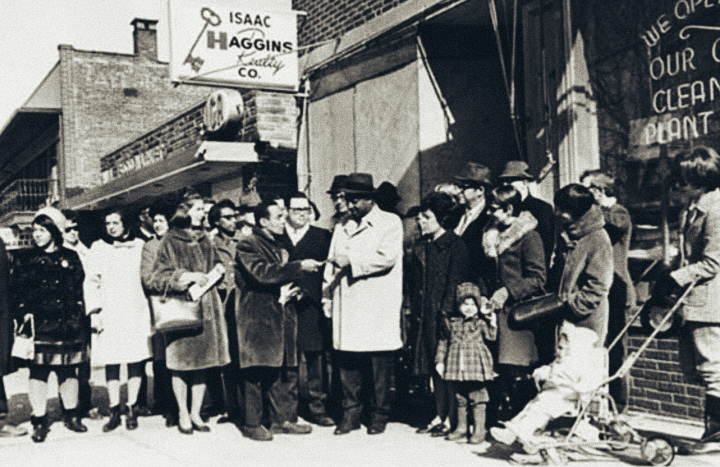
Interviews in this series were collected by undergraduate students at Cleveland State University under the supervision of Dr. Mark Souther, with funding from the Office of the Provost. The series contains interviews with pioneers of suburban residential integration and social activists who supported peaceful managed integration/desegregation and fair housing in Cleveland Heights and Shaker Heights in the 1950s to 1970s.