E. Christine Morris interview, 02 June 2013
Abstract
Christine Morris was born in Columbus, Ohio, and had one brother. She grew up on the east side, but went to a school in the northern part of the city because her parents utilized her grandparent's address in the northern part of the city. She has fond memories of school and the neighborhood. She went on to Ohio University, and met her husband there, who was originally from Alabama. She finished her internship at the Cleveland Clinic. They lived first in the Mt. Pleasant area, and then moved on to Cleveland Heights, where they were the first black family on Lincoln Boulevard. She, unfortunantly, did not have an easy experience. She felt uncomfortable taking her kids out on the street, especially after the bombing of a nearby black family's home in Cleveland Heights.
Metadata
Interview Transcript
Transcripts may contain errors.
Christine Morris [00:00:23] You're welcome.
Mark Souther [00:00:25] What is your full name so that we have it on the record?
Christine Morris [00:00:28] My full name is Eleanor Christine Morris.
Mark Souther [00:00:33] Where were you born?
Christine Morris [00:00:35] Columbus, Ohio.
Mark Souther [00:00:38] Whereabouts in the city?
Christine Morris [00:00:40] In the city, in the east, on the east side of the city, about 2 or 3 miles from downtown Columbus. It might have been a little more than that, but I know it was— we took the bus to school. Central High School was across High Street and down on the west side of town. The Governor's Mansion used to be on Champion Avenue, and so I lived about 2 blocks from there. My street was actually 1 block and then 2 blocks north of the Governor's Mansion in those days.
Mark Souther [00:01:28] Did you have siblings?
Christine Morris [00:01:30] I had 1 brother. His name was Walter Mayo.
Mark Souther [00:01:37] He spelled it Walter—
Christine Morris [00:01:38] Walter L. Mayo, M-A-Y-O.
Mark Souther [00:01:44] So, Mayo was your maiden name?
Christine Morris [00:01:45] Maiden name, yes.
Mark Souther [00:01:47] What did your parents do?
Christine Morris [00:01:49] My father was a truck driver and an artist, and my mom was a domestic.
Mark Souther [00:01:58] Did she work in a home or in a—
Christine Morris [00:02:00] She worked in a home for most of her career, and all of my growing up, actually. She went to University Hospital. She got a job at University Hospital, which she really enjoyed, working as an assistant in the laboratory. And that she liked. She was proud of that.
Mark Souther [00:02:28] How would you describe your neighborhood where you grew up?
Christine Morris [00:02:37] In what, what way? What, uh—
Mark Souther [00:02:40] Well, the, the, um, types of houses.
Christine Morris [00:02:43] Okay. There, um, on the street where I lived, there was, uh, there were single-family homes and two-family homes. And our house was a single-family. The block was not very long, so that there Were about 5 properties on our street. And there were 3 of them that were double families. And so that didn't leave a lot of room for the single families. But— and we lived in a two-story house. And to the north of us— Was a pro— the projects. I think one of the first projects that Roosevelt put in place. And it was really a big, sprawling brick complex or compound. And it was great fun because there was lots of green area and kids in the neighborhood and kids who lived there. Played there, football, basketball, whatever. And there was a playground and a school, a junior high school not far. Champion Avenue Junior High School. It was, it was a, it was pleasant. It was pretty green and very pleasant, safe, comfortable.
Mark Souther [00:04:21] Did your— your father was a truck driver. Did he drive locally or long distance?
Christine Morris [00:04:27] He drove distances. 3C Highway, before there were interstates, he drove that route from Cincinnati to Columbus to Cleveland. And the company that he drove for was Hometown was Mount Vernon, Ohio. It was E.A. Schlairet, and that's S-C-H-L-A-I-R-E-T. And my dad grew up in Mount Vernon, Ohio, and that was the connection. So he met my mom and moved to Columbus.
Mark Souther [00:05:14] Where were his parents from?
Christine Morris [00:05:17] His parents were from Marion, Ohio, down on the Ohio River. And as adults, they scattered around the countryside, and my father's father went to Mount Vernon, Ohio. And he was also He was a teamster. He drove horses and carried freight back and forth to places that I guess it had to go. But both of them were artists, and my grandfather was folk carvings. He had— he produced quite a collection of art, and my dad— What was his name? Did oil paintings and, and some watercolors and so forth. And we were fortunate enough to have all of that displayed at Kenyon College and down at Columbus Museum of Art. And it's— it was really nice to see it all together like that. And both of them are named Walter Mayo. One's Walter— my grandfather is Walter O. Mayo, and my father is Walter Leroy Mayo.
Mark Souther [00:06:43] What kinds of subjects did they paint? Or, well, when they were painting?
Christine Morris [00:06:48] Yeah, when they— they painted sort of pastoral. My dad painted fields and horses. And portraits of people. Sometimes he painted— in his latter years, he painted biblical scenes and things that he saw. He visited the Holy Land, and he made big banners of Holy Land scenes out of oil. And for homecoming at the church that we belonged to in Columbus, Bethany Baptist Church. So, he did a lot of banners every year for their homecoming. What else did he paint? Birds, and a lot of nature things, dogs, and that. Horses, a lot of horses. I have one horse picture.
Mark Souther [00:07:54] Do you— let me back up. Where was your mother originally from?
Christine Morris [00:08:00] Your parents? My mother's parents— well, she was born in Paris, Kentucky. So they were somewhere around there, my grandparents. I was never sure exactly where. My grandmother ran away from home, I think, when she was a teenager. She ran to a convent. And in the convent, she got her first pair of glasses. Apparently, her eyes were not that good. And somewhere on the street of Lexington— or was it Covington? You see, I don't really know whether it was Lexington or Covington, Kentucky. She met my grandfather, and they eventually got married and moved to— well, they had some children down there in Paris, and then he moved the family to Columbus, Ohio.
Mark Souther [00:08:57] What was their line of work, I mean, your maternal grandparents?
Christine Morris [00:09:03] My grandfather worked for the railroad. And what he did, I'm not sure. I think— I want to say engineer, but I don't know what that means. He didn't drive the plane— the train. And my grandmother took in laundry, and they planted gardens, and they had chickens. And we had a nice, fun growing up.
Mark Souther [00:09:36] On your father's side, were there— how far back would you have to go before you go back to Southern roots, if at all, presumably?
Christine Morris [00:09:47] Right. At some point farther back. That's as far as we can go. One of my nieces was tracing, and I think she traced actually back to Ireland, but she couldn't go south. And I don't think we know a lot about the parents of my grandfather and his siblings. From him, he said they were orphans. The history of this area, there was some mixing of the races there around the Ohio River in Pomeroy and Marion and those places. So I can only imagine what might have happened. I don't know exactly, but he said that they were raised by a white family. I don't know what that means, as far as, you know, who were their parents.
Mark Souther [00:11:03] You mean your grandparents?
Christine Morris [00:11:04] My grandparents' parents. I mean, he was raised by a white family.
Mark Souther [00:11:14] Right. Coming back to Columbus in your lifetime, You've said a little bit about your neighborhood, and I wondered if you could tell me about the schools you attended.
Christine Morris [00:11:27] The schools I attended. Well, I have to admit to using my grandparents' address to go to school. My mom was pretty unhappy about the school system that we lived in. And so, using my grandparents' address, I went to Second Avenue School Elementary. I went to Everett Junior High School, and I went to Central High School. And all of those schools were north of the, you know, in the northern part of the city. We lived in the eastern part of the city. So, we were fibbers.
Mark Souther [00:12:16] I thought this was your word. What was the racial makeup of the schools, both in the district where you—
Christine Morris [00:12:25] Actually—
Mark Souther [00:12:25] Were supposed to go.
Christine Morris [00:12:27] Supposed to go.
Mark Souther [00:12:28] Where you did go?
Christine Morris [00:12:29] Right. It was predominantly Black in the area that I was supposed to go, and the schools that I went to were integrated. They were mixed and predominantly white, actually.
Mark Souther [00:12:47] Did you go on to college after?
Christine Morris [00:12:49] I did. I went to Ohio University and became a medical technologist from there. And later, in later years, I got a master's degree from Baldwin-Wallace in business administration
Mark Souther [00:13:09] At OU, can you tell me the years you were there?
Christine Morris [00:13:11] I was there from '58 to '63.
Mark Souther [00:13:20] So when you were studying to be a medical technologist, what was the— is that the name? What's the name of the degree, I guess, that led to that?
Christine Morris [00:13:28] Oh, it's a bachelor's.
Mark Souther [00:13:30] And is it called met—
Christine Morris [00:13:34] in— It doesn't— it isn't called in anything. It was just a Bachelor of Science degree. And you took a registry. You did an internship, or whatever it's called these days. It was called an internship there for— in a laboratory, which I did at Cleveland Clinic. And it was a year's time, and after that is when I got my degree. And because it was— that's the way it was, the program was set up. You do your work at school and then your internship, and then if that's done satisfactorily, you get your degree. And it was a Bachelor of Science. And you do have to take a a test by the American Society of Clinical Pathologists and become registered. So I'm a registered medical technologist, and over my career I was able to take an additional test to become a specialist in hematology, which is like a master's level. So that's my education.
Mark Souther [00:14:48] When— did you enjoy OU?
Christine Morris [00:14:57] I— when I compare how I feel about OU to how some of my friends and colleagues, my husband, my roommate, they seem to enjoy OU, I don't remember really enjoying OU. I thought it was cold. I didn't have fun, and they seemed to have fun. And I don't really know what to attribute that to. But I wouldn't have— I don't have bad things to say about it. anything like that, but I just— I was serious, you know, and it seemed to be hard to me, and I didn't feel that there was a place where I could go to get help. So I felt like I struggled and all, but I made the grades, but they weren't— I think they could have been better if there had been some kind of support. That was available, you know. But I didn't know how to get that. And people you approached were not forthcoming, you know, or supporting, or inviting, you know. So it's like, you having trouble? Too bad. That's the way I felt. Now, that's, you know.
Mark Souther [00:16:42] Your husband went there, and did you know him at the time, or did you meet later?
Christine Morris [00:16:47] I met him there in the summer, the first summer. I stayed for the first summer I was there, and he came down to take some courses because he wasn't able to finish when he was going there. at first because of money. He didn't have enough money to go straight through. So I met him that summer, and that was kind of— that was fun. And then we just corresponded because he didn't— he never really came back to OU to study. And so we corresponded over the rest of the years. He would come down and visit, and I would go and visit, and that sort of thing. And so when I graduated, we got married and started our family. Took us about 4 years to start the family, but— He liked OU. He made good friends and so forth. But he didn't get his degree there. So, when he actually, in the '70s, he went— wanted to go back to school, but because of his life experience and the experience in his work, He was allowed to go to Case, their School of Social Work, and he got his master's degree in, in social work administration. So that was really nice. I think that was kind of the beginning of allowing work experience and life experience to be counted towards your degrees. And so that was pretty nice.
Mark Souther [00:18:55] Did— so he was there just a year while you were there, and then he—
Christine Morris [00:19:00] Just the summer.
Mark Souther [00:19:02] Just that summer.
Christine Morris [00:19:05] Yeah.
Mark Souther [00:19:05] Where did he go then?
Christine Morris [00:19:06] He came back to Cleveland and worked, you know, to just earn money. He had family, you know, sisters and mother and so forth, that needed, you know, so he'd help support them.
Mark Souther [00:19:25] What was his name?
Christine Morris [00:19:26] Milton Morris. Milton C. The C stood for Curtis.
Mark Souther [00:19:34] What neighborhood did he grow up in, in Cleveland?
Christine Morris [00:19:38] In around 61st Street, off of Quincy, I think. 61st Street. That's where his mom lived. And I think, as far as I know, I think he lived there most of his growing up. And then after school, when I met him, he lived on Amore. So that's in Glenville. But he went to East High School. That would make sense for East 61st Street, wouldn't it?
Mark Souther [00:20:11] I think, although I thought East High— maybe not. For some reason I thought East High was up north of Euclid Avenue, up in there, but is it? Yeah, there's an East Tech.
Christine Morris [00:20:24] East Tech, and it's different, right?
Mark Souther [00:20:26] That's what's up there. Yeah, yeah, I think it was south.
Christine Morris [00:20:31] Right.
Mark Souther [00:20:31] Or in the Central neighborhood.
Christine Morris [00:20:33] Right.
Mark Souther [00:20:34] I can look that up.
Christine Morris [00:20:37] Okay.
Mark Souther [00:20:38] I feel like I should know more about where the high schools are located. I know the names of a lot of them and I don't know the locations of them in many cases. So he grew up in that area around, I guess we'd call it the Cedar Central, part of the Cedar Central.
Christine Morris [00:20:58] Mm-hmm.
Mark Souther [00:20:59] Around Quincy. And did he go back and live then in the same place when he was going back after being at OU that summer?
Christine Morris [00:21:07] No, I don't think so. At that time, I think he was living in Glenville. And he is actually— right, no, that's okay. Just backtracking a little bit, he actually grew up— he didn't come to Cleveland until '55. He grew up in Union Springs, Alabama, which is down the road from Tuskegee. So, when he came to Cleveland in 1955, I think 61st Street might have been where he lived for a while. But when I met him, that would be '58, the summer of '59. He lived on Amor in Glenville. So I don't know how long. No, so '50— interesting, I hadn't thought of this. '55 to '59 wasn't a long time. So he hadn't been even in the North that long. Bless his heart.
Mark Souther [00:22:21] What did his parents do, both before and after? I'm sure it changed from Alabama to Ohio.
Christine Morris [00:22:31] Right. His father passed when he was 2 or so. Yeah, when he was 2, his father passed away. His brother just told us what his dad did. And I don't know, I would have to ask his sister or his brother, because I don't know. I don't know that we ever really even talked about it. I don't think he farmed. I think he did something like making things, like maybe building things, but I'm not sure. And his mother didn't work. She never worked as long as I knew her.
Mark Souther [00:23:16] And when they moved, what kind of job were they seeking?
Christine Morris [00:23:21] Right. Well, they moved, and there were 8 of them. And some of the boys were already grown, and they had left, gone to the service and what have you. When Milton came, he came with his sister and his mother. And, as I said, his mother never worked. And so his sisters, I don't know what they really did when they came.
Mark Souther [00:23:59] I see now. Sometimes you'll have to excuse my questions.
Christine Morris [00:24:03] That's all right.
Mark Souther [00:24:04] Processing everything, because you mentioned that his father died when he was 2 years old.
Christine Morris [00:24:09] Right.
Mark Souther [00:24:10] So, and you'd already told me that. When you say 8, that was, let's see, his— he was one of 8.
Christine Morris [00:24:18] Mm-hmm.
Mark Souther [00:24:19] He had seven brothers and sisters.
Christine Morris [00:24:20] Mm-hmm.
Mark Souther [00:24:21] Your husband.
Christine Morris [00:24:22] He did, yes, yes. And he was 2, so all the rest of them were older except for Betty, who was just a babe in arms when their father died
Mark Souther [00:24:36] The reason for my question originally is I wondered if they came up for factory work in Cleveland, like so many people did at this time.
Christine Morris [00:24:42] Right, they did. But I don't know. Robert was— now, Robert is a fairly accomplished carpenter and bricklayer. So I suspect that that's where he got that from, his father, when they were in the South. That's what I think he did. So that's why I think building. But Robert is, is very good at building, you know, reconstructing, renovating, and things of that nature. And, um, I believe their uncle by marriage was a bricklayer as well and worked on the Terminal Tower. Now, that's in my memory bank. And what makes me hesitate is, I'm wondering, were there unions? And did the unions, you know, and then how did that work? And I don't really know. It'd be interesting for me to explore that just to see, you know. But I remember we called him Uncle Bob. Uncle Bob talking about that terminal tower. Now, when was that built? Because now I'm worrying a little bit about, did I hear it correctly, or is that something that might have gotten twisted in my It was built—
Mark Souther [00:26:22] I can't say with certainty. I think it was built from 1927 to '30.
Christine Morris [00:26:27] Okay.
Mark Souther [00:26:28] Right around in there.
Christine Morris [00:26:29] Okay. And so he would have been about in that age, a young man. So that might—
Mark Souther [00:26:37] Perhaps so. You got married then a year after you graduated from OU?
Christine Morris [00:26:50] I got married in '62, and I did that because then I came to Cleveland and did my internship with Cleveland Clinic in medical technology. And that was really good. And I couldn't get my degree until after I had finished that. That's why I went back and for the graduation and actually got my degree. And that, yeah, that was interesting because when I was applying, I applied to University Hospital, Mount Sinai, Metro, and there were a few others that were up here, and I did not apply to Cleveland Clinic. My husband, or boyfriend at the time, or fiancé at the time, he encouraged me to apply at Cleveland Clinic. I said, well, my roommate applied for their physical therapy and she was rejected, so I don't think they'll take me. And so I was very defeatist about that whole thing. And he said, well, try anyway. So I did, and lo and behold, I was accepted. And that was great. And I got to talk to the director of the program, Dr. King, who, by the by, lived across the street on Lincoln Boulevard, right across the street where Kristin and—
Mark Souther [00:28:27] Glen.
Christine Morris [00:28:27] Glen live. Yeah, Kristen and Glen's house. So that was pretty interesting. And I just had a great time at Cleveland Clinic and under his tutelage and direction and so forth. The class was small, and the school was— this might have been its second year, if not the first year, of offering medical technology training. He opened that, so I was amongst the first few to go, you know, students to go through that program. It's a great program.
Mark Souther [00:29:08] When you moved to Cleveland— so you got married in '62, and you went back to finish your degree. When did you move to Cleveland, and where did you first live once you were married?
Christine Morris [00:29:22] Okay, we went— we got married in '62. And we lived on 125th Street in East Cleveland, right on the border, in an apartment. And one of the things that Dr. King stipulated, and that was kind of— I'm saying this because it's kind of a sign of the times— was that I accepted a stipend Of $50 a month. But as a condition, I had to work there for a year. And one of the things he said, and you can't get pregnant. You can't have any babies. So I don't think I signed anything, but I took that to heart that, you know, if I have to, you know, if I have to give birth, I would have to give the money back. Or if I couldn't stay for a year afterwards for some reason. It was interesting and all. But I managed to get through the year working after I finished the program. And all the program was a year long. And so we finished in a, you know, like all schools finishing around July. And went to commencement, or June, at OU. Went down there. My parents were there, and my husband was there. It was really a great occasion, at last.
Mark Souther [00:31:03] You mentioned 125th Street in East Cleveland, and we're talking about, what, 1963?
Christine Morris [00:31:08] Mm-hmm.
Mark Souther [00:31:09] That is, of course, before the—
Christine Morris [00:31:10] 1962.
Mark Souther [00:31:13] the real racial transition in East Cleveland, from my understanding. And I know that it proceeded from west to east, generally. So can you tell me the sort of the makeup of the— both in houses and apartments in your particular area near the border, based on what you remember, at least?
Christine Morris [00:31:35] Okay, so we were about a quarter mile or so from Superior Road, Superior and 125th. And that Superior and 125th area was commercial, and there was a theater down there and, you know, other businesses along that street. And most of the street between Superior and Castlewood. Castlewood were houses, single and double-family houses. And then our apartment building seemed to kind of be in the middle of that block. It wasn't a huge apartment building, but it was at least three stories, and it had two wings. I don't recall how many apartments or units were in that, but it was, it was lovely, you know. There was green area and a little court and stone and brick. It was, it was nice. And the streets around it, Castlewood and Carillon and— And Eddie Road runs down through there somewhere. And there was a park, but I don't think it was— it wasn't Forest Hill Park. It was another park. And there was a swimming pool. And I can't recall what that park was now, but it was close. And we used to go there. And as a matter of fact, when we got married on a Saturday, it was Memorial Day weekend, and we came back to Cleveland. And then on Sunday, he took me to get my polio vaccine. It was an oral vaccine. And also, you could say, this guy is really going to take care of you. You made a good choice. So that was the first thing we did. And we went up by that park, that's why I kind of remember that.
Mark Souther [00:34:06] Do you remember the extent of integration in that area?
Christine Morris [00:34:14] I just knew it was integrated, and I didn't pay much attention to that. And I knew that maybe the integration had maybe just begun, because now, you know, I'm from Columbus, and I don't really know much about Cleveland. My impression of Cleveland was that it was a divided city, divided by the river, and that the people— my sense of the people were that they were cold. And not neighborly, necessarily. And in crowds, I remember bumping into somebody in a crowd, and I apologized right away. That's what a Columbus person would do. And she was very frosty. And my husband said, don't speak to these people. And I thought, well, what in the world? What kind of people live here, you know? But that was my sense of the city as a whole. And I believe it was about— I remember at 15 years being here thinking this is home. It took me pretty much that long to feel at home here. And, uh, but we were on Lincoln Boulevard by then, too, and, um, it, it felt different from the rest of the city. Even although, you know, there were some people who might not have been that happy that we were here, um, there were enough people who were that I felt comfortable If I needed something, I could find help.
Mark Souther [00:36:08] Can we go back a little bit?
Christine Morris [00:36:10] I skipped some years, huh?
Mark Souther [00:36:12] That's why I'm here, to ask questions. When you were first thinking about moving from East 125th Street—
Christine Morris [00:36:23] Right, where did I get—
Mark Souther [00:36:25] How long— I guess I have a lot of questions about this, but one is How long did you look, and where did you look?
Christine Morris [00:36:33] Okay. When we were moving from 125th? Okay.
Mark Souther [00:36:39] And what were you looking for?
Christine Morris [00:36:41] Right. Well, we were looking for more of a house with a few more, you know, a couple rooms, you know, more rooms. And We found a Toufflant family in Mount Pleasant, and that's, you know, that my husband knew the city better than I did for sure, and that's what he wanted. That was the direction. So we moved to East 147th Street on The south side of Bartlett, I think. What's that other street that goes down through there?
Mark Souther [00:37:29] Well, there's Kinsman, which is north of Bartlett.
Christine Morris [00:37:32] Okay, so we were south of Kinsman. And then the next street, Glendale. Okay, Glendale. So we were north of Glendale, but south of Harvard. And it was a home that was— it was a double, a two-family up and down, and owned by the Carusos, Joe Caruso, Joe and Carmela Caruso. I don't know why I remember that, but that they were a wonderful Italian couple. And, uh, We were there— let's see. Oh, my. I don't— when did we move there? '62 to '67 is 5 years, so I think we might have been— I'd have to check this, but I think we were on 125th for a year and a half. We stayed there certainly until I finished my— you know, still, I— till I started working, because we couldn't afford to move until I got a job. So, sometime after that is when we moved to 147th. And Then we weren't— we were there for maybe a year and a half or so, and the Carusos sold the house to another couple. And I can't remember their name. And they were a Black couple. But we didn't stay there very long after that. We moved to Cleveland Heights. Now, as to how far, how long it took us to find that, I didn't pay attention. I think my husband was probably looking, you know, and he found this and said, let's go look at it. That's all I kind of remember about 147th. But for over here, so say we were there for Stephanie, our firstborn, was born over there. So that had to have been about four— she was born in '65. So, and we had lived there— what did I say?
Mark Souther [00:40:27] Well, originally, you mentioned 1962 to 1967 before you were thinking back to what portion of that time was spent in each place.
Christine Morris [00:40:37] Right.
Mark Souther [00:40:37] So, it made me wonder if you moved here in '67 or—
Christine Morris [00:40:40] Here? No, we moved here in '67, for sure. Stephanie was born in '65, and she was born in September of '65. So at '65, '66, somewhere in '66 is when we started looking, I think. You know, maybe even '65, because that unit— There were only two bedrooms there. And so if we were going to have any more children, although I don't think we thought about that.
[00:41:36] But we were— well, we had saved, we were saving all of the money, a lot of money that I was making. It wasn't long before we did have enough for a down payment and so forth. Milton knew about Stuart Wallace and fair housing and so forth, and they started showing us places. I would say that that was in late '65 or '66.
Mark Souther [00:42:13] When you started looking?
Christine Morris [00:42:14] When we started looking, exactly.
Mark Souther [00:42:17] Did you look in places beyond Cleveland Heights, or only in Cleveland Heights?
Christine Morris [00:42:27] I— we were open to where, you know, wherever we could afford. And there wasn't a lot that was available to even show. You know, and I— what I remember is waiting a long time to even see a house. But Milton wanted to be Cleveland Heights or Shaker Heights, and I think he was leaning more toward Cleveland Heights. A, the taxes were less, and B, it was closer to Cleveland Clinic, where I would be working. And I think pretty much we were looking at Cleveland Heights. He's an economical-type person. And actually, I only remember seeing 2 houses, and then this one. One was over on Somerton. One was on Coleridge, and then we saw this one. So in the time frame, I just am not all that certain, but definitely '67 of July is when we came here. We moved in.
Mark Souther [00:43:51] So it took about a year at least of looking or waiting.
Christine Morris [00:43:56] Right. Waiting for a look. Right.
Mark Souther [00:44:02] When you met Stuart Wallace, did he— how did he describe the process of this? Because obviously it was something that was rather different.
Christine Morris [00:44:14] Different, right, that's true. Most of the conversation took place between Stuart and Milton. It was, you know, I tried to be a little bit aloof just because I didn't want to be angry. You know, I didn't want to invest too much of myself and get to a point where then I'm impatient and upset about—
Mark Souther [00:44:50] About what?
Christine Morris [00:44:52] The way things are. And— but I was definitely aware that there would be issues. And there would be issues with us presenting ourselves somewhere where we know that the house is for sale, and the person just not, you know, saying, well, it's already taken, or whatever stories come out, you know. So we didn't really want to put ourselves in that. And I know he shielded me from as much as he could. And so I wish he were here, because he would be really good at describing all of that.
Mark Souther [00:45:38] That's okay. When you— do you remember who sold the house?
Christine Morris [00:45:46] You know, what I remember is he lived on Selwyn, and I always wondered where Selwyn was, and I finally found it. Years later, and his name escapes me. Would it be on some document?
Mark Souther [00:46:01] It would. One way to find out would be to go to the city directory from around that time, just before the time. Say 1965, look at who the owner was.
Christine Morris [00:46:12] Okay.
Mark Souther [00:46:13] I could easily find that out.
Christine Morris [00:46:15] Oh, okay. I know the owner of the house. was Rhoda Olenick, O-L-E-N-I-C-K, I think, Olenick. And the man, the realtor— is that who you're asking?
Mark Souther [00:46:39] No, I meant—
Christine Morris [00:46:39] Oh, you meant the person who owned the house? I'm sorry, I was thinking of the person who showed us the house.
Mark Souther [00:46:49] And where was she moving?
Christine Morris [00:46:52] She moved— I believe she moved to Chicago. And I'm worried that I'm thinking about the people next door, that they moved to Chicago. I think definitely they moved to Chicago, but I think she moved to Chicago, too.[00:47:14] She moved out of the city, and also she didn't get the flak from her neighbors who were upset that she didn't tell them that she was selling to people of color.
Mark Souther [00:47:33] My assumption, having lived on the street for 6 or 7 years, is that until fairly recently, there was this sort of, you know, insular way of handling real estate transactions in which the street was informed through the club, I'm assuming. And just as an aside, I sense that that went away in the time that I've lived here because—
Christine Morris [00:48:04] Right.
Mark Souther [00:48:05] When I first moved here, I remember getting an email early on about there's a house for sale on the street, does anyone want to buy it? And then I— with previous transactions, we've never had that happen again.
Christine Morris [00:48:17] Okay.
Mark Souther [00:48:18] So I wondered if that was something that— if you had any knowledge once you moved here, whether or not that was going on.
Christine Morris [00:48:25] Right. No, I don't know. And A lot of houses went up for sale because we were the first Black family on the street. And once that round, you know, and the people who came to, you know, live in the houses that were left that way, they stayed, you know, and they knew that we were here. And I'm trying to think, I'm trying to recreate the timeframe, but I don't really know how long that took. But I wasn't aware of any other— there may have been, because people would feel like, well, we don't want it to just go all one color, like— some areas, I guess, in Shaker that was, you know, something that happened that was not something that they wanted. So the organization that you spoke of, I think they were concerned with that kind of thing as well. Fair— not fair housing. The one I'm a charter member and never participated in.
Mark Souther [00:49:51] Heights Community Congress.
Christine Morris [00:49:51] Heights Community Congress. Right. But I was a supporter for many, you know, years. I always sent them some money.
Mark Souther [00:49:59] When you first moved here, can you recall for me the reception of the street? Maybe how many people put their houses up for sale, roughly? And were they people who were very nearby, or was it a general thing?
Christine Morris [00:50:17] Were there any other schools nearby? I think they weren't that nearby. There may have been— the closest was on the other side of Lyman. The Heberts, and I forget the people's name who were there, the Batichers and the Blums didn't budge. Across the street where Glenn and Kristen are, they went away. And then, um— Who are they? On this side of the street, there were about 3 houses, maybe where Nebel and— oh, what are their names? Brandon and— on the other side of Helen Cullinan. Well, Cullinan's house went around that time, and then the other side of Cullinan's house went. And then across the street from Perry, that brick, that went. So it was, you know— And on the other— next door to Perry, East— west toward downtown. I think that one went to a couple of those. So—
Mark Souther [00:52:13] Was it something that was unmistakable because of the timing?
Christine Morris [00:52:18] Of our coming?
Mark Souther [00:52:19] Or was it something you felt maybe you always wondered?
Christine Morris [00:52:23] Well, I always wondered, you know, and I didn't want to dwell there too much. You know, it's not anything you can do anything about.
Mark Souther [00:52:39] And—
Christine Morris [00:52:40] but I have a sense, and no proof, because nobody is going to say that to me, that there was probably an effort at some point in time to try to keep a balance, if nothing else. Not necessarily keep people out, but at least keep things balanced so that it didn't— because we were here by ourselves for a really long time. And Mrs. Lowry came there on the end. There was Mrs. Bailey in the house on this side of Bailey. Was— I forget their names now, but they were Black. Mrs. Bailey's still there, but the other— the kids lost that house, I guess, next to Kristen on this side. And so, Mrs. Lowery, I know she passed away. Her family there? Her daughter, Dorothy?
Mark Souther [00:53:53] Dorothy Woodall.
Christine Morris [00:53:55] Woodall, right, right, right. Okay.
Mark Souther [00:53:57] So I've wanted to- I've only spoken with her when we've walked by with our daughter.
Christine Morris [00:54:04] Okay.
Mark Souther [00:54:05] But usually we're in such a hurry keeping up with her, and it was on her tricycle, and we were running around and say hello, but I've never formally met her.
Christine Morris [00:54:13] Yeah, I should probably go get speak to her. I haven't. I just come in my house and I just kind of get lost in here. And people probably think I'm antisocial, but I'm not. I spend a lot of time, you know, my husband really was more outgoing and, you know, up and down the street and in the yard and talking to people and what have you. And Mr. Travis across the street, good, you know, an art— he was an artist. You remember or know of him?
Mark Souther [00:54:49] Yeah.
Christine Morris [00:54:51] Yes, okay, so they were good friends, and Mr. Travis drew a picture. It's here in this house somewhere. I hope I find it. And it was a caricature, actually, of my husband shoveling his His sidewalk, because he would do that. He would shovel— this lady next door was older, you know, and he would shovel older people's sidewalks. And so there's this kind of nice thing to have from him, and I think he signed it too.
Mark Souther [00:55:34] I know where Kristen and Glen are now, 3051, I believe, or 3055, I think. That house, if I'm not mistaken, you mentioned was the Dr. King.
Christine Morris [00:55:47] Right.
Mark Souther [00:55:47] Was he the one that then left?
Christine Morris [00:55:49] No, no. I think, you know, when I went to school there at Cleveland Clinic, I didn't know where he lived. And he was gone by the time we got here. And he moved just over on Overlook. And so I didn't know, you know, that for a really long time. That's maybe like 5 years or so. And he wasn't here when I got here. And when he heard that we had bought a house on Lincoln Boulevard, That's when he told me that he lived on Lincoln Boulevard before he moved on Overlook.
Mark Souther [00:56:31] One other thing that I thought of from our previous conversation was that you mentioned that there was a bombing soon before you moved in. I think— I'll just let you tell me about it. I think I know what you're—
Christine Morris [00:56:45] Right. I don't know the name, the people who owned the house at that time. And I only this year went on the Heights Heritage tour, saw that house. I never knew exactly where it was and who it belonged to, but I knew that it had happened. And it was on the tour, so you could see where the floor that was damaged was replaced. And they explained how a sort of a porch area had been damaged really badly, so they reconstructed all of that and so forth. And I, you know, when I was looking at that, I remembered feeling about that. And it was either Overlook or Edgehill. I think it was Edgehill. Edgehill, down toward Euclid Heights Boulevard. And since it was so close, and we had already, you know, bid on the house and determined that we were going to come here and all, and I guess it sounds like it was before, not after we moved here. I don't know. I don't really recall. I just know it was in that time frame. That all happened. And it was worrisome. I was expecting a baby in January, and it was July when we moved in. And I'm not sure when between all that time the bombing took place. But it was middle of summer, and I just stayed in the house. Because I didn't really want to, or in the backyard, and I kept the one little person that I had close to me. And when you would think that it would be nice to put her in a stroller and walk around the block, I just didn't feel free to do that at all. And I didn't feel free to even be downstairs in my house. I had that big bay window there. And I wanted to stay away from that in case anybody threw anything at it. I stayed upstairs all the time. And it, you know, it could have been because of— but you want to protect when you're expecting children and you have children that you have to. So it was unpleasant. And my husband and I, we didn't talk much about it, you know. And basically, I didn't want him to know that I was that upset about it, you know, and all, so that he wouldn't second-guess the decisions.
Mark Souther [00:59:53] Did— Did you mention that some people on the street did reach out in a positive way?
Christine Morris [01:00:00] They did. They did. That's the Sweeneys who live to the east of Peter's house. Peter and his mom, Janet. Janet Sentry's house. The next door, Tim and Libby Sweeney lived there. And they, you know, they came over and brought warming gifts, you know. Tim was a lawyer and Libby, I think— I don't think she worked, but she, you know, was— and I don't know what her background would have been, you know, and everything, but— That was the place. It was kind of like Lyman's house, you know, where everybody goes, and Glenn and Kristen's house. And they would have the May Kentucky Derby party, and we'd go over there, and we were always invited. And there was a couple down the street who lived in Perry's house, and I don't remember— Nancy, I can't remember her last name. And we would gather there after the street picnic and around the fireplace and sing songs. And now— and that was just, you know, who else? Other people were a little older. You know, the Blooms were older. So we were maybe in your age bracket. Around that time. Or, well, at least we were, you know, we were in our late 20s, you know. And Milton liked to decorate for the— and plan for the street picnic. So he was like James Krause over there. And so he put up the banners and put up the end of the street and so forth. And on. And I just tended to the house and my kids. And, you know, I don't think I'm shy, but I'm just not a people person exactly. And I think about it, and I think about the people on the street and how many have ever been in my house. You're one, you know, you're one of the few. And it's— I don't think of it.
Mark Souther [01:02:44] Did, over the course of a few years, as you started to participate in some of the street events, it's just interesting, there's this tension, I guess. Was it more— when you mentioned going out with a stroller, was it more— did you come to see Lincoln Boulevard as okay, but you worried about surrounding streets? Or was— or would you not make that distinction?
Christine Morris [01:03:10] There is a distinction. And early on, it was the street. I didn't go— I just didn't go strolling with— they— we stayed I had the baby in January, and then the following summer— I'm trying to think if I got a little more ambitious or a little bit more free about that. I need to think about that a little bit, because at some point in time, of course, I went back to work, and I didn't have a lot of time with two little people on my hands to, to do that sort of thing. So I'm thinking that I probably didn't do it then either. And, but we did eventually put up a play area in the backyard, and other children came, and that was really fun. They were welcome. And, and I kind of made the decision Actually, that I would rather be a welcoming place for anybody who wants to come than have my kids go somewhere else. And the thing that made me make that decision was that one day we were in the car and Stephanie was about 3, and she had— she stuttered as a little tot, you know, she might have been 4. And she was saying something in her little baby, you know, not really clear. And she kept saying it over and over and over and over. And we were— and she was looking out the window, and I thought, what is she saying? And it had the N-word. And something about here comes the end, that, you know, whatever. And I thought, is that really what she's saying, you know? And if so, it's really discouraging. Excuse me. So I thought, I don't want her- She would go— she didn't go very far from the house on her little tricycle out front. And I was pretty much watchful, but, you know, at some point in time, you let them go a little bit. But she— so we put up the play area, and all, you know, whoever was nearby, whoever wanted to come, could come, and they did, and they had a lot of fun. And I didn't have to worry about my kids being mistreated somewhere else, and I certainly wouldn't mistreat anybody else's kids, you know.
Mark Souther [01:06:18] So she came— I may have mixed this up, I'm sorry if I did. You say it was your daughter who came back, said she had picked it up from someone? Do you think it was in the neighborhood?
Christine Morris [01:06:35] Yeah, because she's never not with me other than, you know, in the neighborhood. I would let her ride her little tricycle down the driveway and she could go either way, a couple houses or one house that way and one house this way. And she was real good about that, you know. And I had the other little one, That I was staying with and all. And she was trustworthy. She wouldn't go in the street, things of that nature. And the kids, bigger kids, played in the street. And bigger kids were across the street, and a couple houses down had a— the Cullinan house had a really lot of kids, a big family. And so there was always a cluster out there, you know, and she would go and sit there. And if I would look out, she was just watching them. And so that, you know, I never said anything to anybody, or I mean, how are you going to trace that? And her countenance when she said it, was down, you know. And I didn't even know how to address it. I felt so bad, you know. So anyway, that's— she's the one that we learned over the years, you know, when things would happen to her, we would take— we didn't know that this was like— just to jump forward, she was on the track team and— Somebody took her and a few other kids on the track, in a track club, down to Salem, Ohio. And they didn't get back until way past 2 in the morning. And I was worried. And it just happened that that's what they did. And they were fine. They got back. And all. And, but I decided we need a station wagon, because anywhere she goes, I'm going to take her and all her friends. And so I was always with them wherever they went. So, because I just didn't trust the society to take care of them.
Mark Souther [01:09:15] Yeah, I'm looking at the time and wondering if we can meet another time to continue.
Christine Morris [01:09:24] Absolutely.
Mark Souther [01:09:25] I don't want to keep you too long, and I also will get in trouble if I don't go home and eat at 6. But I'd like to think of more questions, and you may think of things that we should talk about too.
Christine Morris [01:09:37] Okay.
Mark Souther [01:09:38] When can I come back? Maybe not today.
Christine Morris [01:09:40] Right, right, right.
Mark Souther [01:09:43] But soon, maybe. I'd like to do it before—
Christine Morris [01:09:46] I'd really like to do it if we can before I go on vacation. Okay.
Mark Souther [01:09:49] Next Friday.
Christine Morris [01:09:50] Next Friday.
Mark Souther [01:09:51] Do it while, you know, while we're in the conversation.
Christine Morris [01:09:57] Mm-hmm. Tuesday would be—
Mark Souther [01:10:01] I'm free Tuesday.
Christine Morris [01:10:02] Okay.
Mark Souther [01:10:03] All day. I have nothing to do Tuesday.
Christine Morris [01:10:07] Excellent. Well, Tuesday, I'll, you know, I think I can go in early and get done the things that I do on Tuesday, and hopefully there's nothing. I'll ask my administrator if she has anything on her plate that she wants to get done Tuesday and try to get out of there early. And typically I only work 5 hours, and, but Father's Day is coming and some other thing is coming and blah, you know, so I get caught— yeah, I get caught up actually volunteering then, you know, and so forth. So why don't we touch base and I'll see how soon I can get— Get away from there. This has been very interesting.
Mark Souther [01:11:00] We can just aim for the afternoon then.
Christine Morris [01:11:03] Right, right.
Mark Souther [01:11:04] At some point.
Christine Morris [01:11:05] Exactly.
Mark Souther [01:11:06] Yeah.
Christine Morris [01:11:07] Okay.
Mark Souther [01:11:07] Okay. So should I just call you sometime that day?
Christine Morris [01:11:11] You can. That's true. Yeah. That— and that'll give me a good chance to know where I am.
Mark Souther [01:11:18] Okay.
Christine Morris [01:11:19] And what's expected.
Mark Souther [01:11:20] Okay.
Christine Morris [01:11:21] Good. Okay.
Mark Souther [01:11:23] Thanks so much. I'll go ahead and stop this for now. You're welcome.
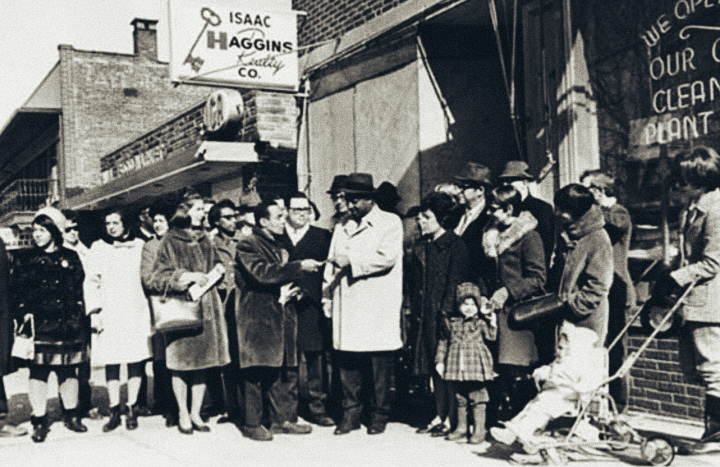
Racial Integration in the Heights
Interviews in this series were collected by undergraduate students at Cleveland State University under the supervision of Dr. Mark Souther, with funding from the Office of the Provost. The series contains interviews with pioneers of suburban residential integration and social activists who supported peaceful managed integration/desegregation and fair housing in Cleveland Heights and Shaker Heights in the 1950s to 1970s.