Dorothy Silver interview, 26 July 2013
Abstract
Dorothy Silver, a Detroit native, describes what drew her to Cleveland. She says that Cleveland was calling her because it was "receptive to various changes that needed to be made." She and her husband began used the theater as a stage to talk about desegregation. She discusses interracial shows at the time of the Hough Riots in 1966. She also discusses fair housing and mixed neighborhoods. She found it surprising that in her experience the people of Cleveland Heights were generally accepting.
Metadata
Interview Transcript
Transcripts may contain errors.
Dorothy Silver [00:00:11] Dorothy Silver.
Mark Souther [00:00:14] Thank you. Where and when were you born?
Dorothy Silver [00:00:18] Detroit, Michigan, 1929.
Mark Souther [00:00:25] How long did you live in Detroit?
Dorothy Silver [00:00:27] Until I was 20 years old.
Mark Souther [00:00:33] Did you live in the city?
Dorothy Silver [00:00:36] Yes.
Mark Souther [00:00:38] What neighborhood or what section of the city?
Dorothy Silver [00:00:41] The last address I lived in was on Tyler, off of— it was near Grand River. Was it Grand River? You know, the house that you visited me at when we were courting, that was on Tyler. What was the main street that ran there?
Mark Souther [00:01:03] Old Lamar.
Dorothy Silver [00:01:04] No, no, no, no, no, that's another street. You know, I used to remember all the addresses we lived in because in those days you moved frequently to avoid not being able to pay the rent. You know, it was true Depression times. Tyler. Tyler was off of a lovely street. It was a nice neighborhood, mostly double homes, and the schools were all in the area. And we— you were being raised in a slightly different part of Detroit at that time. By the way, it is amazing and tragic what happened to Detroit, isn't it? Very interesting article in the New York Times today about, look out, this is coming to other cities if you're not careful, and how this happened, et cetera, et cetera. As opposed to a much more optimistic article yesterday in the Times. You read it? Well, in any event, Detroit was our home. Reuben's dad was— Reuben Silver, my husband who is here.
Mark Souther [00:02:07] Mm-hmm.
Dorothy Silver [00:02:08] His dad was head of the Jewish Family Social Service Agency in Detroit, which brought them there. And so you came when you were about 8 or 9, right? Something like that. And we met there at Wayne State— what was then Wayne University. In the theater. And so we left when we married on August 28th, 1949, and essentially began his graduate school career.
Mark Souther [00:02:49] Where was that?
Dorothy Silver [00:02:50] University of Connecticut, Florida State University, Ohio State University, where he ultimately got his PhD in 1961 by writing a dissertation about the history of Karamu from 1915 to 1961.
Mark Souther [00:03:09] In the course of his research for the dissertation, I would assume that he probably talked to people in Cleveland, or was it all about— was it all from written sources, or?
Dorothy Silver [00:03:25] A lot of it was interviews with the founders who were still the executive directors of Karamu House, Russell and Rowena Jelliffe. A lot of, you know, Google them and you'll spend the next period of your life on the internet. Remarkable people who founded Karamu in 1915, which by the way was the year you probably know the museum was founded, the orchestra was founded, the, you know, keep on going. All of the major arts institutions were founded in 1915. And the names of the benefactors and planners are the same in almost every area. So there was a powerful local source of both philanthropy and arts planning sensitivity in Cleveland.
Mark Souther [00:04:16] I think we're talking about Leonard Hanna.
Dorothy Silver [00:04:18] Absolutely. Yeah, absolutely, Leonard Hanna, who gave money and who— there is a Leonard Hanna room at Karamu, which I'm sure is still there, that has in it the remarkable wood carvings of an artist of that period in Cleveland. And if you travel around and to some of the historical buildings in Cleveland, you see a repeat of that art style because this man worked everywhere. You don't know his name, do you?
Rueben Silver [00:04:46] Probably not.
Dorothy Silver [00:04:49] Yeah. So it was a powerful, powerfully, Kind of very, very dimensional artistic community concerned with where Cleveland was going. Too bad those people aren't here anymore.
Mark Souther [00:05:08] Of course, a product of the tremendous industrial expansion.
Dorothy Silver [00:05:12] Yes, and apparently the mayor, Tom Johnson, right, who was a very influential politician, very devoted to Cleveland, that was one of the reasons the Jelliffes chose Cleveland to start Karamu in.
Mark Souther [00:05:30] I didn't realize that.
Dorothy Silver [00:05:31] Yeah, because it was a very— it was a place that was very receptive to making the changes that had to be made to incorporate what was, as I recall, a three-month period in 1915 or '16 when the war required labor in Cleveland plants and there was this huge migration from the South, mostly of African Americans. In three months, the population doubled or something like that. Those figures are in your dissertation.
Mark Souther [00:06:08] How did Karamu— I assume it was the Jelliffes' vision from the start to make it interracial theater? Is that fair?
Dorothy Silver [00:06:18] Yeah, it was their— I think they were aimed very much at what happened in terms of a substantial increase in the Black community. They were hired by a church, which was the forerunner of Church of the Covenant, to help create something, a community center in a neighborhood in the area of 38th and Central, which was rapidly becoming Black.[00:06:52] And the church also had a huge social consciousness and wanted to leave something that would help the neighborhood integrate. People who essentially were from rural backgrounds didn't know about car fare, buses, how to operate in a city environment. And so I don't know how the Jelliffes arrived at the idea of the community center. That may have been a request for the church. Do you remember? That's, you know, it's a long time ago. He had been— and there is history that Reuben and other people have written about. And his PhD, the dissertation is on a microfiche from Ann Arbor, University of Michigan. At any rate, they began with sports and very quickly— they began by sitting in a park in the area and reading stuff to the kids. And they were a young married couple, new graduates of Oberlin. Fascinating people. Fascinating people who were there almost all of the tenure you were there as artistic director. And the adults began to come in to what was then, you know, an old neighborhood building. Theater began, and after a while the Jelliffes and they're quoted heavily on this realized that athletics can support you and enrich you only for a limited time in your life, and that the arts last forever, and that it was a marvelous way, a marvelous venue for American Blacks to join American mainstream. I remember the word mainstream used a great deal. And it was interracial from the beginning, but that became, I think, a much stronger part of the organization as it developed, because initially, they were dealing essentially with a Black population. Isn't that so?
Mark Souther [00:09:15] Mm-hmm.
Dorothy Silver [00:09:15] Yeah. So they were doing plays mostly that white playwrights had written, in some cases, Black playwrights. And as time went on, it became the major place where Langston Hughes, premiered most of his plays. We had him in our home reading his poetry to kids playing jazz. It was really— there were some remarkable people that came out of the talent pool that Karamu dealt with.
Mark Souther [00:09:45] I wanted to ask how— about the transition from writing a doctoral dissertation on Karamu to becoming the first— not the first, excuse me, but to becoming the new drama director?
Dorothy Silver [00:10:00] He became the new drama director in 1955. The dissertation was in 1961.
Mark Souther [00:10:07] Oh, I see.
Dorothy Silver [00:10:10] And his wonderful advisor, who was a dear friend, called him. I'll never forget that day. and said, Reuben, you know, the oral deadline is coming up. You know, you gonna do this or not? You have 9 months to get— and Reuben, who was a very smart man and a very facile writer, did this wonderful dissertation, sort of first take, first draft, that was accepted about this remarkable institution and got it in right under the wire. So it was an interesting period of our life. You have a dissertation, so I'm sure you're familiar with all the stories. The story we heard when we started working on it, I helped him with research and was a secretary essentially, and his theatrical assistant at Karamu, was a guy gets his PhD and he's walking on a beach somewhere and a former colleague of his says, hey, how are you? He said, I said, what are you doing? I said, just finished my dissertation. So what was it on? I don't remember. Right.
Dorothy Silver [00:11:20] That was very— we really immersed ourselves. We had 2 children at the time, and I don't know where they went. I don't know where they went. We just worked day and night to get this damn thing done. It was a very good dissertation. So where was I? No transition. Karamu became an essential part of our lives, professionally and personally. And the idea of writing about Karamu, which by then Reuben knew how important it was as a phenomenon, and it remains that way, seemed perfectly logical. Remember the title that you originally planned for your dissertation?
Rueben Silver [00:12:05] It had to do with— Well, it's complicated. It was about drama.
Dorothy Silver [00:12:14] It was an analysis of literary metaphors to stage— transitioning to stage metaphors. And I finally begged him to add, in certain selected plays. It would have been a fascinating dissertation, but, you know, we would still be here writing it, I think. In any event, so this is a history of Karamu Theater from 1915 to 1961.
Mark Souther [00:12:48] In the early years when he was a drama director, what were some of the early plays that were produced?
Dorothy Silver [00:12:57] Well, the first drama director was Rowena Jelliffe.
Mark Souther [00:13:01] No, but I mean—
Dorothy Silver [00:13:03] Oh, in his tenure. The very first play you did was?
Rueben Silver [00:13:07] Rainmaker.
Dorothy Silver [00:13:08] And the— do you know the play? The Rainmaker. It was interesting. The Rainmaker. Karamu had what is now called alternative casting. Maybe it's not called that anymore, but there was a period of time in history where when you cast a Black person for a part that was not racially Black, it was called alternative casting. You cast the best person who walked in. white or Black. So, you had mixed families, you had, you know, Black people playing parts that were written for white people, unless you were doing race plays. And I remember a wonderful actor named George Gould, who was a Black actor, who I cast as a white prosecuting attorney in Blues for Mr. Charlie by Baldwin. And he put on white makeup. And so he did whiteface for him because the man had to be white. So it was very interesting. That was extremely interesting. And there were white actors at Karamu. There was recently an obit in the Plain Dealer about three weeks ago about a Black actor, Dave Connell, and about a white actor, Tom Brennan, who were both professional actors, white and Black, who came from Karamu from this early period. So it was definitely interracial.
Mark Souther [00:14:45] I had read in the Plain Dealer about Blues for Mr. Charlie.
Dorothy Silver [00:14:49] Yes.
Mark Souther [00:14:50] I noticed that it came out here in November of 1966.
Dorothy Silver [00:14:57] Uh-huh.
Mark Souther [00:14:57] I'm curious about the context for that because of a couple of things. One, well, the Hough Riots had just happened a few months before, and then Marjorie Winbigler was murdered in University Circle in early November 1966.
Dorothy Silver [00:15:13] Yeah.
Mark Souther [00:15:14] And then this came out later that month, so it was a time of great tension. I'm curious about a comment that you were quoted as saying to whoever the reporter was in that story, that you— I'll paraphrase— you had some concern about how people in the audience would take this because it was a very strident message.
Dorothy Silver [00:15:39] Very anti-white, yes.
Mark Souther [00:15:42] Can you speak to the context For this, the subject matter for the play. Of course, I read this, but I'd like it in your words.
Dorothy Silver [00:15:54] Yeah, I recall at the time that the current— the then executive director, who I think was Olcott Sanders, was very— the Jelliffes retired in when? I don't remember. Somewhere in this period after, you know, they were in their 70s when they retired. and remained very active beyond their retirement as consultants for organizations that were attempting to duplicate what Karamu had done. He was very concerned about the anti-white message in the play. And I assured him— he was a very nice man— not a Quaker, but not really conversant, I think, with the racial situation in Cleveland and elsewhere. And I said it was clearly— and I wrote a program note to this effect, it's in the program— that Karamu is committed to presenting Black voices And their views of life in America. And it is— and that this is indeed a strident play. I didn't use that word, but that's not a bad word for it. And it represents one of many voices and points of view about the American experience for both Black and white people. Period. And that's the way I felt about it. And it was— And there was a very interesting anecdote that goes with that. One of the actors, Herbert Kerr, was— I found out that he was very upset that this play was very long. It would have been run about 3.5 to 4 hours. And although at the time we were definitely into the— we were not into the period where you do 90 minutes and send the audience home, preferably without an intermission, which now seems to be the pattern. He became very upset that I was cutting, doing cuts in the play, which consisted for in large part in arias for the actors. You know, like, a lot like it occurs to me, the arias of August Wilson. You know, where they just get up and talk for like 45 minutes. And he was very concerned That I was cutting the mother word along with everything else. And we had a discussion in which I literally counted how many motherfuckers there were in the play and how many times it was said, and presented him with a kind of a debit-credit sheet of what I had cut. I had cut maybe 8 motherfuckers, and there were still about 97 left. And it was a very interesting— and it seemed to persuade him. You know, it seemed to— we got along fine, but he was afraid that I was cutting out the, you know. So I had to sit down and count the motherfuckers. We did a lot of the strong plays of people like Ed Bullins. And, well, you know, everybody. Everybody virtually, including Lorraine Hansberry. It was a period when there was a tremendous amount of Black playwriting talent emerging. Many of those people have gotten buried by now. I mean, if they're not literally dead, somewhere they changed their path and what they were doing. Remember when we met Ed Bullins in New York? And Ed Bullins was now a man, probably 70. And he had gotten very mellow. Which is not to say everything was great for the Black people. But personally, his journey had taken him somewhere else. But it was very interesting to just talk to this guy whose play were vitriolic, you know. Incredible plays. Strong, wonderful, wonderful, wonderful plays.
Mark Souther [00:20:08] For the record, can you say just a little bit about Blues for Mr. Charlie as a plot? As it connects to American history.
Dorothy Silver [00:20:16] Yeah, it's a very standard plot about, you know, lynching, about racism. It's right, right, right with Trayvon. You know, it's all still there, very strong. And particularly the, the great fight between the antagonists, a white man and a Black man. And I remember that it began with Odetta. Do you know Odetta as a singer? Get a recording. Black. She's probably— she's— I'm sure she's on your machine there. She's a Black singer who resurrected old songs, gospel, etc. And the song she sang in this kind of deep, almost basso voice was— Another man done gone. She's talking about a lynching. And I use the music to open acts and so on. But it was very much part of the history of that time when there was a great deal of Black activism and almost all of the Black writers were writing about racism in one form or another. Sometimes it was very direct, like Blues and Mr. Charlie, where you have white participants who are— Villains, and sometimes— and some who weren't. And— but mostly, the plays began to zero in on like a microscopic view of Black life, clearly surrounded by a white world, but the white characters had sort of disappeared. You know, but you were still intensely aware of the pressures that were being exerted by the context in which they were living. So that it wasn't a play like the Lorraine Hansberry, A Raisin in the Sun, where you have the white guy coming in at the end who clearly is, quote, a villain. You know, one guy representing white people, and he was a son of a bitch, you know. But then the plays began to be strictly about Blacks, but they were in this world.
Mark Souther [00:22:34] How would you connect this to the rise of Black nationalism in the second half of the '60s?
Dorothy Silver [00:22:38] It's all part of it. It's all part of it. You know, that's the period of Black is Beautiful. That's the period of not repressing anger, a period of the riots. That's all part of what was happening. And I remember the day when there was a rumor of some violence that might occur at Karamu.[00:23:06] We were called by one of the Black staff members who said, stay home today just in case.
Mark Souther [00:23:14] When was this?
Dorothy Silver [00:23:15] In the '60s.
Mark Souther [00:23:16] Before or after Hough?
Dorothy Silver [00:23:18] Oh, it was after Hough. It was after Hough. I mean, Hough really is kind of like the igniter.
Mark Souther [00:23:29] How did you feel about the Hough riots, and where were you when you learned about what was happening?
Dorothy Silver [00:23:35] We were here.
Mark Souther [00:23:38] But I mean within Cleveland. Were you in Cleveland Heights when you found out?
Dorothy Silver [00:23:42] Yeah, we were in Cleveland Heights. We were in Cleveland Heights. And, you know, and racially, you know, it was— it seems to me at the time that the community that had done the most work when we came here at creating lines of communication between the Black and white community was not Cleveland Heights at the time, it was Shaker Heights. You know, the Lomond Association and all of those things. But we also heard this great story when we moved to Cleveland Heights in 1955. And I don't remember now who told us, but it was one of the neighbors, 'cause we sort of went around and talked to neighbors who were white. I don't remember any Black people on our street when we moved to Berkshire. But we heard this great story. And maybe it was apocryphal, but maybe, probably not, from one of the neighbors. There were several, there were a lot of Catholics on the street because of the St. Ann's Parish. And the story we heard was that the priest from St. Ann's went around and visited every one of his parishioners in Cleveland Heights because a Black family, actually, as I recall, a couple not with children, was moving in somewhere. I think it was on Washington. I think I know the house. And that this was the parish and we were all parishioners. And don't get alarmed, this guy graduated from the Sorbonne, which I don't think any of us had done at the time. And I remember that story because when we moved in, we came here to work at Karamu. I mean, my husband was hired and I worked with him informally for a while and then got some low-level staff positions, but essentially working beside him in the theater. So we knew we would have Black people coming to visit us and being part of our life. And I remember asking the neighbors, could we be anonymous? Because actors are always known by people who see them on stage, and you don't know who the hell they are. You know, and they come up and they smile at you and they, did you see me? I was at your play, and so on and so forth. And so I was concerned with our anonymity. I wanted that in Cleveland Heights. And I wanted to make sure that we could entertain Black people and not have crosses burned on our lawn. And I wanted to make sure that I didn't have to keep my lawn really manicured. Because I had seen some of these other suburbs here. And the answer to all of them was, don't worry. And it was in that context that we heard the story about the parish priest from St. Ann's.
Mark Souther [00:26:44] When would that have been?
Dorothy Silver [00:26:46] 1955.
Mark Souther [00:26:47] But was it a recent event, do you mean, on Washington Boulevard, or you mean earlier years?
Dorothy Silver [00:26:52] Oh, that was in the preceding years.
Mark Souther [00:26:56] I wonder if it might- The reason I ask is I have been told in other interviews about an incident in the early 1930s in which a Black couple without children moved into a house at the corner of Cottage Grove and Washington.
Dorothy Silver [00:27:12] That's right.
Mark Souther [00:27:12] And the house was bombed.
Dorothy Silver [00:27:15] Oh, there was another house. I didn't know about the bombing. There was a bombing of the home J. Newton Hill— J. Newton Hill was one of the people. But that wasn't there. I think it was Overlook.
Mark Souther [00:27:26] That was much later, in '67.
Dorothy Silver [00:27:28] Much later.
Mark Souther [00:27:29] This was a very early example.
Dorothy Silver [00:27:31] I don't remember that, or didn't— I don't know that I ever heard that.
Mark Souther [00:27:36] Stanley Adelstein mentioned this.
Dorothy Silver [00:27:38] Yes, yes. Uh-huh. I didn't know about that. All I heard was this parish priest story, which was fascinating to me. And I certainly never saw any evidence that there were problems with our having, you know, Black company, etc., etc. Playwrights would come to town, they would stay with us, etc. You know, there was never— so all those things they told us, including about the lawn, were okay. And that's what I wanted. I did not want to move into a neighborhood where the neighborhood dictated what we did.
Mark Souther [00:28:15] When did the first African American family move on to Berkshire, if you recall?
Dorothy Silver [00:28:22] Somewhere as our kids were growing up. I don't recall that it was memorable when it happened. Maybe 10 years later, but I don't know. You know what living there is like its very private.
Dorothy Silver [00:28:44] Communal, but private. And so nobody was saying, you know, look who's coming into that house, you know. And I remember a period where after Black people began to move in, if they decided to move for some reason, a white family would buy the house. So that was unusual because coming from Detroit, where the white flight was, if a Black person moved in a neighborhood, the white people were gone. I mean, they flew away. And every time we would go to Detroit and visit friends, they were farther out. They were farther out. This didn't happen here. Didn't happen here. So there was some groundwork laid for being receptive and tolerant. And I think that's still the case, you know.
Mark Souther [00:29:36] Did you ever have any realtors try to solicit, to try to sow any panic?
Dorothy Silver [00:29:44] No.
Mark Souther [00:29:45] I, I asked because I've heard those stories elsewhere in that neighborhood.
Dorothy Silver [00:29:50] Yeah, no.
Mark Souther [00:29:50] In the late '60s.
Dorothy Silver [00:29:52] No.
Mark Souther [00:29:53] Because they missed your street.
Dorothy Silver [00:29:55] Yeah, no. Well, they certainly missed us.
Mark Souther [00:29:57] That was on Overlook.
Dorothy Silver [00:29:59] Yeah, yeah, that's interesting. No, uh, no, no problem. No problem. And as I recall, when we put our house up for sale, the people who came to look at it were all white. It's interesting. I don't remember Black people who came. And that was just three years ago. No, I don't remember that. You know, I'm aware of the— we have a t-shirt that says civility, something about the civility t-shirt. By the way, Ron Schmidt was part of that, you know. You know, I'm very aware that the rental possibilities brought in a lot of ghetto people, completely different cultural style, you know. And it's— and our kids went to, you know, the schools, the Heights schools, and got a very good education. And I remember asking, I remember being with a mother who, a white mother, who was saying that her kid was scared of the Black kids. And the Tiger's Den, which was this kind of large— you have kids? Yeah, where are they? Are they at Coventry or where?
Mark Souther [00:31:19] She's at the Ratner School, but she's only 5.
Dorothy Silver [00:31:21] Yeah.
Mark Souther [00:31:22] So she's just about to start kindergarten.
Dorothy Silver [00:31:25] Ah, okay. And anyway, Tiger's Den was like the gym or something. It's a big place that you walk through to get to eat, etc., or whatever. And she was saying that her kid, who was not a baby, you know, a high school kid, was afraid of walking through the Tiger's Den because it was the place where the Black kids congregated. And so we asked our second son— we have three sons— who was in high school then, I think the 11th grade or something. I said, what's the situation at the Tiger's Den? Do you walk through the Tiger's Den? He says, yeah. I said, is it where the Black kids meet? He says, yeah, yeah, they congregate there. I says, so are you scared when you walk through there? He says, no. I says, what do you do when you walk through? He says, hey, hi. Oh. But I attribute that a great deal to Karamu. Because we had Black people in our lives and in their lives. And I think our kids were really prepped for that to be the real world. The real world, not the world where you isolated yourself against Black people. You know, and they had Black friends, etc., etc. And Heights was a great place for them.
Mark Souther [00:32:56] How long were you associated with Karamu directly in terms of—
Dorothy Silver [00:33:01] 21 years. '55 to '76.
Mark Souther [00:33:10] And were you the drama director for that whole time?
Dorothy Silver [00:33:15] Yes. And then almost immediately walked into the job he had ultimately as department head at CSU of the theater. So we were very lucky with that, and I went from Karamu to the JCC where I ran the theater program.
Mark Souther [00:33:38] Let's back up too, just for a moment, and have you say a little bit about how— I've read this, but again, for the record. So let's pause for a second.
Dorothy Silver [00:33:48] Okay.
Mark Souther [00:33:50] Let the phone ring.
Dorothy Silver [00:33:52] Yeah, I won't answer it unless it's somebody I have to talk to. That's probably Jerry Fuller. He has a home aide coming to give him a shower in a half hour.
Dorothy Silver [00:34:03] It was great for our kids. It was a wonderful neighborhood when we moved in with lots of kids, people our age with young children. And again, there are a lot of young, very young children. You must have— your daughter must have playmates there galore. So there is an advantage to being in a neighborhood like that with the single homes, with possibility of growth and more kids presumably and so on. And it was wonderful, and the schools were wonderful. We found them very flexible. And, you know, it was still— our kids are in their mid-50s now. Our youngest child is 50. So this was— they had people who were career teachers of the kind we used to have, people who had taught for 20 and 30 years, and some wonderful people. There weren't, you know, they weren't kids starting out. There's an advantage to being our age because that kind of career commitment, I understand now, is very difficult. And one of our grandchildren is being raised in the Boulder area. Our kid is a prof at the University of Colorado. And she's going to a public school. Where they have meetings with the principal and the assistant principal and her teachers because she's in an honors track. She's a very bright little girl and they're trying to provide a very special educational experience for her. You know, where does that happen anymore? I don't know. You know, single out a child and say, that kid needs this kind of thing. And our son will write us and say, I'm sitting there with our daughter who was 6 at the time, and she's 10 now. And she's doing honors track of this and that, and they have special things for her. It's a public school in Colorado. They're not paying extra for the services. Are you happy with the schooling your daughter is getting?
Mark Souther [00:36:13] Oh, very much so.
Dorothy Silver [00:36:16] Good. Yes, I know. It's Ratner, right? Right.
Mark Souther [00:36:19] And I don't know long-term where she'll go, but for now it's going well.
Dorothy Silver [00:36:24] Yeah. Well, I'll tell you a story. Both— one of our kids, it's interesting. We have three sons. The first two were kind of very easy mainstream kids along with particular talents that they settled into early. They're both musicians. And Paul, our oldest son, who is in Alaska today, was offered a full scholarship to Hocking. So he went there for three days to look it over in a prep thing, and he came back. He says, not the real world. There's one Black kid there. And he turned it down. He was like 14.
Mark Souther [00:37:08] Wow.
Dorothy Silver [00:37:09] And then when Dan, our second son, was about the same age, he was offered a full scholarship at Interlochen Academy, where he now teaches in the summer and has for, you know, many years, to the academy. And he spent 3 days there, and I was with him, and he was going to classes and talking to teachers and so on and so forth. He said, He says, great place. He says, I don't need to go there. They were boys and it was a different time historically. And these little boys would take the bus and go to Severance and see the orchestra and do whatever they wanted to in Cleveland and where they were surrounded by great music here, which influenced them greatly. And he said, you got to get permission to leave your cabin after 7. He says, I don't need that. I said, okay. I said, gee, I think I should go here. I loved Interlochen. And up until Reuben became ill, we would visit them in the summer there where they are now. But that was interesting. They rejected it because it could not parallel the experience they were getting here, quote, in the public school. and with the kind of accoutrements of culture that blasted you in the face in Cleveland if you looked for them. You have to look for them. You know, we've met people who've never been to the theater here. We've met people who've never been to the orchestra here. And they, they far exceed the number of people who have taken advantage of them. Nevertheless, it was great for our children. Great for our children. So I love Cleveland Heights. For me, it embodies what is best about Cleveland. I know there are problems to be worked out racially, but they would— that's true everywhere. And I much prefer a society where you have the option of incorporating African Americans into your life instead of having to travel to see them. You know, this apartment is about, I would say, a third African American. And that's fine. That's the real world. And that's what we need. And I think Cleveland Heights is very much the real world. And I appreciate the efforts that are being made to handle the problems because of course there are going to be problems. Of course.
Mark Souther [00:39:51] Thank you very much for agreeing to be interviewed today.
Dorothy Silver [00:39:54] Oh, you're welcome. You're welcome. Reuben, you want to add anything? Did I say anything, quote, wrong? Okay. No, Karamu was a great, great, great part of our life, and still is in terms of the contacts we have with the people there and the people who have been there. Because arts institutions— I don't know whether there's a comparable situation in your profession— really have a way of changing your life. They change your life. And people will come to us now and say, you changed our life. And we sometimes don't even remember them. But there's something about arts that ignites a deeper probing into what people need and want to enrich themselves. So I'm very grateful for the, for the environment that Cleveland has offered, and I wish they would do more.
Racial Integration in the Heights
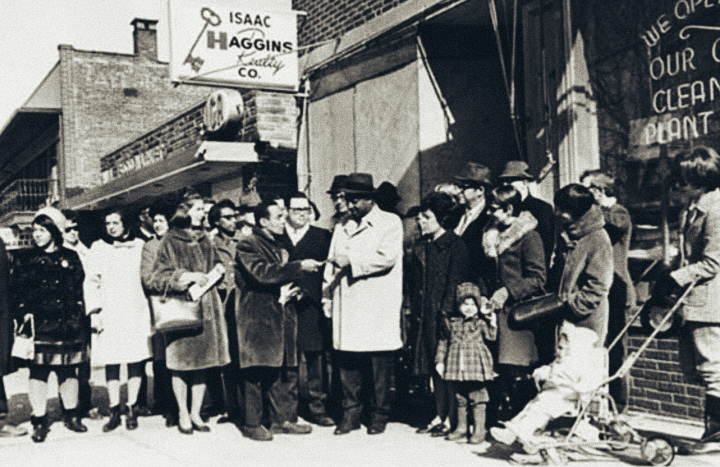
Interviews in this series were collected by undergraduate students at Cleveland State University under the supervision of Dr. Mark Souther, with funding from the Office of the Provost. The series contains interviews with pioneers of suburban residential integration and social activists who supported peaceful managed integration/desegregation and fair housing in Cleveland Heights and Shaker Heights in the 1950s to 1970s.