John A. Lunkins interview, 1 July 2013
Abstract
John Lunkins was born in Cleveland in 1964. His family was one of the only black families on his mostly Italian American street, East 113th off of Union. Growing up, Lunkins had a best friend who was of Italian descent. He shares his fondest memories of his childhood, playing baseball in the street with his friends, but then also recalls that when all the kids went to go play in the little league, he was unable to play because of his color. As Lunkins grew up he experienced some racially driven incidents, but his upbringing instilled a tolerance about these issues, and he often looked the other way. He recalls going downtown for shows, rock shows, and eating at the Forum Cafeteria.
Metadata
Interview Transcript
Transcripts may contain errors.
John Lunkins [00:00:08] John Allen Lunkins.
Bethany Hollowell [00:00:11] Okay, John, I would like to first ask you when and where you were born.
John Lunkins [00:00:16] I was born here in Cleveland, Ohio, June 6th, 1954, Mount Sinai Hospital, which is no longer in existence.
Bethany Hollowell [00:00:29] Where did you grow up? What was the first home that you lived in?
John Lunkins [00:00:32] The first home I recall was 3410 East 113th, off of Union. That was '54, '55, '56, around 1957 is when everything starts to come back into memory. I grew up in— it was predominantly— it was a white community, mostly Italian. We were the first Black family on that street. One good thing about it, I had— well, because I had older siblings, it allowed me to move around in the neighborhood more freely. than some of the other kids that didn't have siblings to protect them. I mean, there were so many different things that I recall, different pranks we used to play on the neighbors. My best friend, well, he was white, and he was Italian, and he and I, we were thick as thieves. Always played together, and, well, you know, we really got along. You know, and there was no racial issues between he and I. But his older brother, there was a slight racial issue with his older brother because of his age. And his older sister, I really don't recall too much of a racial issue with her. The mother, there wasn't. But the father, I never, ever recall ever hearing his father speak a word of English. Actually, that's how, at one point, that's how I knew Italian. I could curse in Italian, because it's all, you know, it's basically all I ever heard from him. I used to think his father was the biggest man in the world because he was so tall. He was a cement mason, because I always recalled him coming home all covered in cement and everything, and just doing his thing.
Bethany Hollowell [00:02:55] So what did your parents do?
John Lunkins [00:02:57] Well, my father was a minister, and my mother taught Sunday school. She also did day work and worked in different houses, cleaning houses and things of that nature.
Bethany Hollowell [00:03:14] Which church did you guys attend?
John Lunkins [00:03:16] The first church that I remember was— I know it was on White Avenue, off of 55th, between Hough and Lexington Avenue. It'll come to me as I think about it. But I do remember that, because my sisters— I had three sisters at the time, and they sang in the choir. The youngest of the girls played the piano. I remember many times going there for choir rehearsal and things like that.
Bethany Hollowell [00:04:03] Was it an integrated church?
John Lunkins [00:04:04] No, no, no, no. It was strictly Black. Because it was in Hough, in the Hough area, it was strictly Black. At that time, in the '50s, the Hough area was predominantly Black.
Bethany Hollowell [00:04:22] And so, you said that you were probably one of the first Black families to live on 113th. Why did your parents choose to live over there?
John Lunkins [00:04:35] That, I don't know. That was something I had never asked. That's a question to think about.
Bethany Hollowell [00:04:44] And so, where did you go to primary school?
John Lunkins [00:04:47] I went to Mount Pleasant Elementary School, which is on the corner of 116th and Union. I remember my kindergarten teacher, her name was Mrs. Jones. Here again, I thought she was the tallest woman in the world. She had to be about 6 feet, but to me, being a 5 year old, that was very tall.
Bethany Hollowell [00:05:14] So, were you one of the first African American students to attend Mount Pleasant?
John Lunkins [00:05:19] No, no, no. There were others. There were others in the neighborhood, but for us— when I say us, the Lunkins family on East 113th— we were the first.
Bethany Hollowell [00:05:36] Could you kind of share with me some of your fondest memories? Do you have any memories of living in that house, or what the house was like?
John Lunkins [00:05:43] Well, the house, we had a big, huge coal furnace in the basement. I remember many times going down in the basement. My dad would be down there shoveling coal in the furnace. I finally discovered how to get down in the basement. Because I would see him go down there, but then I never went until one day I got the courage to go down there. And I went down there, and that's what he was doing, shoveling coal in the big coal furnace. And I guess some of the— it was some of the crazy things that my brother next to me would do, a lot of different little tricks he would play on me. They used to tell me the house was haunted, there was a witch in the attic, and I was afraid because I didn't know any better. And my favorite place to play was under the porch. And Billy and I, that's where we would always hide. It was either under my porch, or Billy lived one house away from me, and we would be over in the field that was on the other side of his house, somewhere in the field hiding in the tall weeds. That's where we were always at, either his house or my house or in the field playing. And I remember the first time I climbed a tree was over there on 113th in the front yard, right there on the tree lawn. My dad had to come out and get me because I climbed up there and I got stuck. And he had to come out and get me and bring me down. And then the next time I climbed up there, because he told me not to go back up there, but I did anyway. Got stung by a bee. So then I learned my lesson then. But we used to play out in the street. At that time, we could play out in the street, and we would always play baseball. And I always wondered, some of the other kids I played with, I always wondered if some of them made it to the major leagues or not. Because they were always imitating the star baseball players, and at that time, one of the star baseball players was Rocky Colavito. And they would stage the game as if they were at a World Series. One kid would be the announcer, and they went as far as singing the national anthem. And we'd be out there playing, and just having a good time playing. One of the things that Billy and I used to love to do, here again, because we used to always love to play tricks on people, we were like the jokesters, we devised the— well, we called them apple flingers. We would get a branch, say about— 18 inches long, and we'd sharpen one end, and we'd take crabapples and stick them on the end, and flick them with our wrist. And if we wanted distance, we'd hold it all the way to the end of the— hold the end of the branch and fling it with full force with our arm. If we wanted short, accurate— our Tigers were close, then we would choke up. And just with a slight flick of the wrist, it would fling the apple exactly where we wanted it. So a lot of times, what we would do— Billy had crab— he had two crabapple trees in his yard, and we would gather apples together, and we would stage them in different areas. Then we would go through the neighborhoods, and we would pick with the other kids, and just call them names, anything to get them upset, and they would chase us. We would run through the yards, and we'd go to— we'd stop at that first point, and we'd get our apples and apple flingers, and we'd wait till the kids came around the corner. When they came around the corner, we'd blast them. Now, of course, that made them more— they were really upset by then, and we'd move on to the next point. And the thing was, I guess where we got that from, we used to watch Combat. There was an old black-and-white movie with— a war movie based off of World War I with Vic Morrow. And we would, every day we'd watch Combat, then we would go out and reenact it. And that's one of the ways we learned how to set up booby traps and things of that nature. And his dad used to get upset with us because we could take- We could cut a sod of grass, cut it in a square, and lift it up, dig a hole, you know, dig a hole deep enough, fill it with water and mud, and we could set the grass back on top, and you would never know it. And oftentimes— this is how I learned how to curse in Italian, too, because oftentimes, as he came, when he would walk through the yard, no matter where we put them, he always found the traps. And he would step in them, and oh, he would let off a few words, and we would run under my porch. We'd be under there laughing and everything, and after everything was normal, then we'd come back out and go back through the neighborhood, just playing around with other people. Life was simple back then. We had to— toys, I mean, we had toys, but we used our imagination more to create our own entertainment. We used to shoot marbles all along the curve, and sometimes the marbles would go down in the sewer. So we— when I say we, Billy and I— We had developed our muscles to the point where we could lift the cover the manhole cover up, and we would take his youngest brother, Joey, hold him by his ankles, and lower him down in the sewer to pick up our marbles, because some of the marbles would go down there. And he would gather the marbles, okay, and then we'd pull them up, we'd put the cover back down, and we'd just continue to shoot marbles. That's fun.
Bethany Hollowell [00:12:22] It sounds like you guys had a really good time. Did you ever go to any baseball games? I really liked what you said, how they created their own version of—
John Lunkins [00:12:31] No, actually, I never went to a professional baseball game until, believe it or not, until the— with the Progressive Stadium, after it was built. I had never been to a professional baseball game, ever. I had an aunt that used to go all the time, but I never went.
Bethany Hollowell [00:12:55] So when you maybe got a little bit older, did you play baseball in leagues?
John Lunkins [00:13:00] No, no, it was just sandlot ball. I never— I guess what it was, it was the color barrier, for one thing, because there were a lot of things that— We wanted to do, but we couldn't, because we weren't white. So there was always that wall, you could say a glass wall. You could see it, and you wanted to go to it, but you couldn't, because that glass was right there to stop you from going any further.
Bethany Hollowell [00:13:36] So do you remember how that felt as a kid, when your pals were doing things going out to play baseball, but you couldn't. Was there ever a moment where you came to that realization?
John Lunkins [00:13:50] Yeah, a lot of times my feelings would be hurt, but I would just forget it, and I'd just go and find something else to do, and just to occupy my time. Even when I— some of the kids, when I went over their house for If I got in, I could only go to a certain point, and that was it. You're not going any further. So if you came in, you stand right here, you're not going any further. I'll bring them to you. But my thing was, I was thinking all I wanted to do was just play. That's all I wanted to do. I wasn't interested in what was in the house or anything like that.
Bethany Hollowell [00:14:34] Was that how it was with you?
John Lunkins [00:14:35] No, no, no, no. Because oftentimes— well, his dad was an excellent cook, and oftentimes I would go over there for dinner, and come in, and I would sit down at the kitchen table with the rest of them, and we would sit there and eat. Or sometimes he would— we would watch Lost in Space, and there was a couple other programs, and he would make—
John Lunkins [00:15:02] Those turkey club sandwiches. Oftentimes, when I eat them, I always think back. He'd make a big plate of them, and we'd sit there and watch TV and eat the sandwiches. After that, back out playing. I mean, I've ran into a few racial incidents. I recall walking down the street, and I could hear them, hey, hey, hey, little nigger! And I turned around and looked, and they were sitting on the porch, and they— these guys were having the ball. It was the best thing happening to them that day, calling me that, you know. And, and I didn't really pay that much attention to it, you know. I could have went home and told my sister and my brother.
John Lunkins [00:15:55] And they would have went back over there and cleaned their clocks, but I just forgot, just threw my hand and just went on about my business. Playing in the park, Woodhill Park, well, it's called Luke Easter Park now. In the summertime, it was predominantly Black. The swimming pool was there. And mostly all the Black kids swam, or they were roller skating, because there was a pool and then there was the roller rink. It was an outdoor rink. So, and it's like I say, in the summertime you'd go and you'd hear a lot of Motown, and you hear all the R&B music, and everybody's skating, or they're over in the swimming pool. In the wintertime, it was the exact opposite. because all the whites would be there, and it'd be ice skating. A couple of times I did go ice skating. I felt out of place because it was predominantly white. And I remember my sister bought me a pair of ice skates, and I always wondered, why did she buy these for me? I'll never use them. So she calls one day, said, come on, we're going to go ice skating, and we all went ice skating. It was okay. I never really cared for it, but it was something different to do. And then also, Kingsbury Run, which is off of MLK, there's this one section where it was divided. One half, was the Blacks stayed on one side across the street, and the whites stayed on the other side. And only in the wintertime did the Blacks go across the street, because they had the big hill, you can go sled riding. But other than that, in the summertime, you didn't really go across the street, and they didn't come across. And basically, that was just, that was the way of life. You knew not to go across the street, and they knew not to come over. And occasionally, we would ride our bikes through the neighborhood, and sometimes you'd run across a few knuckleheads and want to pick with us. And again, it was either you fight your way out or take whatever comes.
Bethany Hollowell [00:18:32] I'm not familiar with Kingsbury Run. Could you tell me?
John Lunkins [00:18:36] Kingsbury Run, it's if you go down Kinsman towards 93rd, it's the last— well, it's not the last street. It's the— let's see, it's one— I think there's one other street before you get to 93rd. It's right across the street from the Police Department down there. I think that's the 4th District. It's right across the street from there. And it's on the tail end of Luke Easter Park going down towards downtown. That was one of the areas that we used to hang out at. And also, Woodhill Park, I remember meeting Martin Luther King there. This was just before he was assassinated. It was actually the last time he was here in Cleveland. And this one particular day, I was just out riding my bike, and I looked over, and I seen this big crowd. So, me being a kid, being nosy, I went over and said, what's going on? And one of his, I guess, security guards says, what? Martin Luther King. I said, yeah, for real. Can I meet him? And he was getting in the car. So the man said, hey, Martin, this young man wants to meet you. And so I stuck my head in the car, how you doing? And he shook my hand, and I said, I'm doing fine. And I got on my bike and just rode on. But I— when I went home and I told my mother about it, and oh, she was, you know, she was ecstatic, you know, because I met Martin Luther King. And to me, he was just another— he was just another Black man. I knew he was prominent, but I never— you know, he wasn't big in my eyes. So, but yeah, he was. And his— I must say, his handshake was firm, but it was gentle. And it was just— I mean, it wasn't a thing where he was intimidating or anything. A lot of times as a child, you meet adults, for the first time, they can be intimidating. But it was just something about him. He was very calm and peaceful. After that, next thing I recall hearing, he was dead, because he had been assassinated.
Bethany Hollowell [00:21:06] You mentioned that people would yell things at you. from their porches, and you kind of remained reserved. Was that something that your parents had always preached to you to—
John Lunkins [00:21:17] No, no, no. I actually, I never, ever recall hearing my mother say anything about it, or my dad, except for one time. I was down in Mississippi. And so, we went down to visit his nephew, and he wanted to take me down there just to see what it looked like. I had never even seen cotton before. So anyway, when we were down there, there was this one young lady. She was white. Every day, she would come down the street, so I'd speak to her, hey, how you doing? And then all the other kids around there, they would look at me like I was crazy. So I said, what's wrong with you? Why are you looking at me like that? I'm just talking to her. So anyway, I went in, in the house, and my dad and his nephew were sitting there talking. So I said, you know, well, come to find out, her dad owned the hardware store around the corner, and that's why she was always going that way. Anyway, I told, you know, I mentioned to my dad and his nephew, I said, there's a there was a nice-looking white girl, you know, walked by and I spoke to her. And they looked at me and my dad got mad, says, are you crazy? That's why I'm up north now, because of white people. In other words, what he had to do at one point, he had to literally jump on a train coming this way. And so that's how he wound up here in Cleveland. And, you know, it kind of struck a nerve, but I'm thinking, man, this is the '60s, man. You know, you know, it's— you don't do things like that anymore because Love the One You're With was coming out. People were starting to— that racial barrier was kind of dropping. It was still there, but it was kind of fading out some. But after that, I just dismissed it and went on about my business. But yeah, it did kind of upset him over the fact. that I had did it. All I did was just seen her as a female, and that was it. There was no color issue there.
Bethany Hollowell [00:23:41] It's so interesting to hear the difference between the North and the South, and how your father reacted when you talked to a white woman, because obviously all your neighbors were white, and so that's just kind of what you were used to. But I heard you mention You mentioned earlier as well about the Motown music, and about the music of the time. So if you could kind of tell me a little bit about what you were listening to, and what was your favorite stuff?
John Lunkins [00:24:08] Well, I'd say the Marvellettes, Supremes, Stevie Wonder. At that time he was Little Stevie Wonder. He wasn't known as Stevie Wonder. Who else? There were a lot. I just— it's hard to— I know one, my buddy, his favorite was, I think the Marvellettes sung it, Beachwood 45789. And he used to sing that all the time. What else? Dancing in the Streets, Temptations.
Bethany Hollowell [00:24:47] At the So by this time, you were kind of like a teenager. Did you go to any shows or anything like that as a teenager?
John Lunkins [00:24:57] Yeah, yeah. We used to go downtown to the Hippodrome and the Allen Theater. I remember the first time I— when I went to see— my sister took me to see— was it— yeah, Peter Pan. It was over there off of Broadway. I think it was called the Olympia at the time. And when James Bond came out, the very first one, 007, with Sean Connery, my other sister took us downtown to see that, to see that one. Let's see. And we used to always go down to the Forum Cafeteria. What was it called? Form Cafeteria. It was— that was the restaurant that everybody went to, especially on Sunday. When you were going down to the Forum, you dressed up, you put your nice clothes on, and you sat down. They always— they really had nice food there. That was something to brag about. We would go down there, we would eat, and then we'd go to the show, or we'd go to the show and then eat. But yeah, we used to go down there all the time, and there was a place called Gene's Funhouse over on Prospect. Gene's Funhouse was basically a— The beginning of Chuck E. Cheese. They had all kinds of video games, and also there was another one over on Euclid, on 105 and Euclid. I can't recall the name of that one. But it was basically, that's where a lot of Blacks went over there, the kids, to play in that particular funhouse. And then there was Leo's Casino over on Euclid.[00:27:02] That's where Temptations, Four Tops, a lot of them that were starting, when they were just starting out, that's where they went. That was the stopping point for them coming this way. So there was, I mean, there was a lot to do, a lot of different places to go. And then, well, once the Hough Riots started, Then that changed a lot. As a matter of fact, where we lived on 113th, we moved from 3410, a couple of doors up, to 3391, and I could look straight through the yard across the street at the mayor's house. And I never will forget that, when they had the Hough Riots, And how they had the National Guard all around his house, and they were sitting on the garage and up on the roof of his house. They were protecting his house. And we'd sit there and watch them, and we thought that was so cool to see the National Guard, because that was something you normally didn't see all the time, National Guards, these guys walking around with guns and things like that.
Bethany Hollowell [00:28:17] How old were you when the Hough Riots happened?
John Lunkins [00:28:18] Hough Riots? I was— I was roughly around, I think around 12, 13, somewhere around there. Yeah.
Bethany Hollowell [00:28:30] So, for you, you were just kind of more interested in the National Guard being there, as opposed to what the actual— the Hough Riots actually derived from?
John Lunkins [00:28:38] Well, yeah. Well, it was— we were told that, well, the Hough Riots were— it was wrong to fight like that. Um, you know what, you know, if I can— one of the things about at that time, to be dark Black and dark-skinned, you know, that was 2 strikes against you. If you were, if you were a Black and light-complected, then okay, you could, you could get away, you could get by with more, you know. But the thing was that they were trying at that time, they were trying to drop the term Negro and go into Afro-American and use those terms. And that's when the term soul brother was coming out. And we didn't want to accept that. Don't call me your soul brother. I'm not your soul brother. We didn't come— we didn't have the same parents. And— but we would— I recall I could hear my older siblings talking about the riots and how stupid the people were getting involved with it. And you'd hear those things, well, I don't want to be like them. I'm not going to have anything to do with it. I'm not going to protest. and fight like the rest of them. Because a lot of times, they were— at the time, we had over there on 116th and Union, there were two furniture stores. And they decided to loot those stores and just start taking out the lamps and the furniture and stuff like that. And when the police were coming, here these— here the people were running down the street with lamps and things like that. They didn't know what to do with them, so they were sticking them on people's porches, and they rang the doorbells, and police was coming right behind them. And a lot of them— that's how a lot of people got arrested for receiving stolen property. And, you know, you— I recall seeing the signs in restaurants. People would put signs up, Soul Brother Number One, and if that sign was posted in the window, Then that meant it was a Black-owned business, and the rioters would not mess with that restaurant. But other than that, they would go through and burn and pillage whatever they could from any business, unless that sign was there, then yeah, leave it alone.
Bethany Hollowell [00:31:22] I'm interested, and I'm not really familiar with this transition from Afro-American to Soul Brother. And is that something that you saw in the businesses, the local businesses, but also at school as well?
John Lunkins [00:31:37] Well, at school, it was still— you were still called Negro. That's the way it was. Whatever it was in school, that's the way it was, plain and simple. At that time, basically, the word Negro was not used. from school was concrete. It was etched in concrete. It was the Bible, so to say, the Holy Braille. So whatever they taught in school, that was it. You did not fight it and protest it. Because, well, at that time, teachers carried a lot of weight. They're not like the teachers now where, well, Mrs. Thomas said this. Oh, who cares about what Mrs. Thomas says? You do what I tell you now. But then, in the '60s, the schools carried a lot of weight, and for the longest, they did not teach that. They did not stress the importance of being an Afro-American. It was basically whatever was taught in the history books, that was it. They did not go into detail. There was no deep research of Why this particular person did this, and what this particular person did to achieve that, or anything like that. If it was there, fine. If it wasn't, that was it. I mean, even for years, I had never really paid attention to it, but even with Dick and Jane, those books, and how there was a lot of bigotry in those books. But we never paid attention to it, especially with Tar Baby.
Bethany Hollowell [00:33:26] Do you recall any of the local businesses that— and you said that you moved when you were— how old were you when you moved?
John Lunkins [00:33:34] Well, we moved right up the street to another house, right up the street.
Bethany Hollowell [00:33:39] So you stayed close, but I assume you still went to—
John Lunkins [00:33:42] Yeah, Mount Pleasant, yeah.
Bethany Hollowell [00:33:45] Okay. Do you recall any of the stores, and did your parents ever kind of insist on, I guess you could say, shopping or giving business to those Soul Brothers members?
John Lunkins [00:33:58] No, no, no. The thing was, you went— they went wherever they could. Most of the time, when my mother went shopping for groceries, the store she went to was Pick 'n Pay or A&P. Well, it was Pick 'n Pay first, because Pick 'n Pay was off of 93rd and, um, Kinsman, and that's where she would shop. And then years later, they built an A&P on 116th, and it was right, right next to where there used to be a reservoir there. What's over there now are a bunch of condos, but there used to be an A&P there. I remember when they built the store, how we used to play over there. That's where, a lot of times, when she would come home on payday, that's where she would go. But during the week, the local store was white-owned, and his name was Mr. Nick. He was real nice. He was Italian. And we could go in. And get things on credit. My mom said, send her a pack of cigarettes, or, she needs a loaf of bread. Okay, go over there and get the bread, and get the bread, and he'd write it down in the book, and we'd go on about our business. And that's the way business was done a lot of times in the stores, but other than that, basically then, we wanted to buy stuff, stuff where the white people shopped. That's because we felt that we were getting good quality stuff. And it was something, basically, it was bragging rights, too. For instance, shopping for clothes, if you went downtown to the May Company or Halle Brothers and bought stuff, That was something to brag about versus where you went to one of the local Black-owned clothing stores. Yeah, so what? And, you know, unless there was something that stood out, if you were doing it for fear to dress according to the fad, the fashion, okay, because that's where you could go because, you know, you could, you could find the right colors. But if it was something for quality and something to really brag and show, then you went downtown to the Halle Brothers, or May Company, or to one of the white-owned stores.
Bethany Hollowell [00:36:37] So where did you go to high school?
John Lunkins [00:36:38] High school, I went to Glenville, because my mother died when I was 16, and my oldest sister took me in with She lived off of St. Clair, on 117th off of St. Clair, which is a couple streets down from Glenville. That's where I went.
Bethany Hollowell [00:37:03] What was your experience like at Glenville High School?Was it much different from Mount Pleasant area?
John Lunkins [00:37:07] Yeah. It was all Black. There was only a chosen group. And the reason why it was a chosen group was, by that time, the hippie movement was strong, Vietnam was in place, and I identified more with the hippie movement than I did with the national— well, at that time, they were called Black Nationalists, or what else were consider radicals. If you, you know, you had your big afro and your—
Bethany Hollowell [00:37:46] The Panthers.
John Lunkins [00:37:47] Yeah, your denim jacket, your blue jean jacket, bell-bottoms, things like that, and red, black, and green. Those were the colors. And if you had those colors on, then basically, from the older generation, they basically looked down on you. And the same way, basically, and as hippies. They looked down on you because they looked at you as if you were just taking up time, space, and energy, and just doing whatever. But that's— we had, like I say, it was just a particular group of us, and that's how we basically identified with the hippie movement. So we kind of stood out, because everybody else was walking around— With a uniform. displaying the fist, the pump, you know, the— I can't think of it now, where they would raise their fist up as a sign of power, Black Power. Yeah, that's what I wanted to say, Black Power. Okay, we'd just go on and do our thing.
Bethany Hollowell [00:38:59] So where did you guys— I know, like, During that time, the late '60s, early '70s, Coventry Road was kind of the spot for the hippie crowd. Did you hang out up there?
John Lunkins [00:39:12] No, no. Actually, I spent most of my time then, during that time period, up in Shaker Heights. My sister had her house built there. And that's where I spent— that's where we spent most of our time. Because by that time, the kids there, the white kids there, they were nice. And on occasion, you'd run across one or two that were bad apples. But other than that, that's where we would hang out. If we weren't there, then we would go downtown. Especially when the concerts— when they would have concerts, rock concerts, down at the public auditorium. And that's where we would go. And we would fit right in with the rest of them. I recall going down there, seeing the James Gang, Santana. And I tell you, who opened for that group, for Santana, was Earth, Wind Fire, when they were just starting. That concert was out of place. They were out of place because of their style of music. Who else? Deep Purple, Emerson, Lake and Palmer. Man, there were so many other groups that I went to see. And Pink Floyd out at Blossom. And— but that's the kind of music that we like. And then, now, when we, as the guys, that's what we'd do. Now, if we were basically on a date, then it was something different, because the girls didn't really like it. So, plus, we couldn't wear our hippie garb. They didn't want that. You come over, you come over dressed. So we had to come over dressed, and we'd sit around and listen to the Shy Lights, and the Temptations, the Dells. Delfonics and stuff like that.
Bethany Hollowell [00:41:16] Wow, how fun. Your sister lived in Shaker Heights, and you said you spent a lot of time there. Why didn't you go to that high school instead of Glenville?
John Lunkins [00:41:29] Well, my sister, well, she had her 2 kids to take care of, her 2 kids and her husband. The reason why I wound up with my oldest sister, she Because she was single, and at the time— well, she had two kids, too. But she just decided to do it. She just felt that was the thing to do. I mean, there was a little rift there, but she says, okay, you're going to move in. And she provided a bed for me, and housing, and clothing, and food.
Bethany Hollowell [00:42:08] So when you graduated high school, then what did you do?
John Lunkins [00:42:14] Well, by that time, I was just— basically, I was just out there, because I was going through a thing. My mother had passed, and I was going through that rebellious state. I was working at the time, because I got a job working down at the Forum Cafeteria. And then I decided, well, look, I want to go to school. Go to school. So, well, what do you want to do? I wanted to be a music major. My sister bought my— she bought a bass guitar, and she bought her son a lead guitar. But the thing was, I didn't want to play— I wanted to play drums. So one day she called, she says, well, you thought about what instrument you want to play? And I said, yeah, I want to play drums. She says, no, I don't think so, because as much noise as you guys make and everything, I don't think— maybe find something else. And at the time I was listening to Grand Funk and this one bass riff caught my ear. I said, that's what I want. I want to play bass. She says, okay, you and Toby get on the bus and meet me over at Dick Lurie's in Cleveland Heights. It used to be— his store was Right there at Cedar and Lee, in Cleveland Heights. And we met her there, she said, all right, pick out your instruments. So I went with the black one, and Toby bought— he got a Lee guitar. So his was cream-colored. And, okay, now you've got to have lessons. So she signed us up to take lessons and everything, and every week that's where we were going. And in a way that kind of helped some. But then I left, and I decided to go— I went down to Central State. I was there about a year, year and a half. Then from there, I went into the Army. That opened a whole new world for me. What I did appreciate about the Army was the discipline that I got from it.
Bethany Hollowell [00:44:17] Right.
John Lunkins [00:44:17] Because I was on my own totally. It's like, it just took me from one point and just put me here. All right, this is what you're going to do, and this is how you're going to do it. Don't ask questions. And so—
Bethany Hollowell [00:44:33] In what year did you enroll?
John Lunkins [00:44:37] What was that? Let's see, '74, around '75.
Bethany Hollowell [00:44:44] Where did you do training at?
John Lunkins [00:44:46] I went down to Fort Bliss, Texas, for my basic training. Then for my advanced training, I stayed down there, but I trained over in White Sands, New Mexico, because I was in air defense, Hawk missile. A lot of the training was out in the desert. I was sent out to Washington State, and basically that's where my family started and everything, out in Washington State. And then from there, I was shipped overseas to Korea. And after I did my time over there, I came back home, and I've been here since, ever since.
Bethany Hollowell [00:45:29] Back to Cleveland.
John Lunkins [00:45:30] Yeah.
Bethany Hollowell [00:45:30] When you came back from Korea, where did you— Where'd you settle at in Cleveland?
John Lunkins [00:45:34] Well, I actually, by the time I came back to Cleveland, I was married. I moved in with my mother-in-law, I think maybe— I don't even think it was a year. So I got a job, and we moved around the corner in University Circle on Cornell Road. That's We were working— I was working there in University Circle. And from there, I just migrated out. And from there, they moved up to South Woodland, and then from South Woodland to University Heights, and then from University Heights to— Over here, to South Euclid.
Bethany Hollowell [00:46:29] So, from the time that you had— what was the year that you had come back from Korea?
John Lunkins [00:46:35] Let's see, '73, '74, around '75, '76, somewhere around there.
Bethany Hollowell [00:46:43] So, from the time that you had—
John Lunkins [00:46:44] Or '78.
Bethany Hollowell [00:46:52] You can say the year.
Other Speaker [00:46:54] '80.
John Lunkins [00:46:55] Was it? Okay.
Bethany Hollowell [00:46:56] Okay.
Other Speaker [00:46:57] Way off, that's what we know.
Bethany Hollowell [00:47:01] So from the time you had left to the time you came back, what was the biggest difference that you had noticed, or had you noticed any difference in society, or just—
John Lunkins [00:47:11] Well, yeah, they were much more— society was much more relaxed. than it was when I left. Racially, things were being more accepted, but there were other issues that were coming to the forefront. But other than that, it was still there. Some of it was still there because of some of the older people. You know, they still had— they were still holding on to it. I never will forget one day I was working on a job because I had started working with this one company, HVAC company. So, we were out in Parma, and so the other guy that was with me, he was white. And, uh, we were on the job, and so the customer was there. So we started, we were talking and working. So I had mentioned the fact that I'd been in, you know, in the military, had just gotten out not too long ago. And he says, well, you should have stayed there, you would have been better off. And I just, you know, I looked at him and I just walked away, you know. I said, well, let me just walk away from this. So I walked away and just found other things to do. And when he said it, when the homeowner said it, he said it with sincerity. In other words, he was basically saying that, you're not going to make it out here. You're better off in the service.
Bethany Hollowell [00:48:53] Well, in Parma, of all places, you kind of would expect this. Over there, there were They were kind of the least open to integration, I would say.
John Lunkins [00:49:03] And then, I tell you, I ran into more racial problems with Arabs.
Bethany Hollowell [00:49:11] Really?
John Lunkins [00:49:11] Yeah, yeah. A lot of times, you go to the store, and you go to their stores, and they would— they looked down on Blacks as second or third-class people. Their thing is, they would take their women, they would hide their women, so to say, basically, in their community. Because you never seen— the females never came around, once in a while. But yet, they wanted to date Black women. But as soon as you mentioned the fact That you wanted to date a female Arab? Oh, that was no, no. I mean, if you recall, not too long ago, there was a young man that shot a black guy because he was involved with his sister. Yeah, they're very protective. And I see that even now. I see a lot of it. Mm-hmm.
Bethany Hollowell [00:50:18] Where were you living that there was a larger Arab population?
John Lunkins [00:50:22] Well, just going around, just traveling, just moving around throughout the city, at work, and stop here at this store, go over there to that store, things like that.
Bethany Hollowell [00:50:33] What are we on time?
Timothy Klypchak [00:50:35] We're at 50 minutes.
Bethany Hollowell [00:50:36] 50 minutes, okay. So what was your job, you said, when you What did you do when you came out of the service?
John Lunkins [00:50:43] Well, when I first came out, I was a cook. I worked with— I worked at— well, between Kenny King's and University Circle, there in University Circle, I worked as basically a float. I drove one of the buses, or I was a parking attendant, handling the money. when people would come in to park, and then also as a property manager. So, I had just different positions. Eventually, I got a job working for an HVAC company. What's interesting about the company that I used to work for, he was Asian, he was Chinese. As a matter of fact, he was the only Chinese owner. company, HVAC company here in Cleveland. He's well known. And, um, I was with that company for like 13 years, 13 or 14 years, somewhere around there. And so, you know, I've been— everything that I learned, I learned through the company from scratch, from the bottom up. And even there, well, I experienced some racial issues, but not through the company owner. Because there was this one guy from West Virginia. We used to call him the Talking Head. And the reason why, because everything that basically came out of his mouth didn't make sense, and there was always some kind of racial connection to it. And after, you know, he would do anything he could to get me fired. He, you know, because of the fact we worked and we were able to get a new car, that really upset him. You know, I've been working here all these years and then here this guy comes in, he hasn't been here 2 or 3 years, look at him, he's getting a new car. And one, you know, he would— I'll never forget one particular day. He came in. We were riding together, and he kept leaving the truck unlocked. We'd go here, oh, I gotta lock it. Oh, don't worry about it. And we'd go someplace else, I gotta lock it. Oh, don't worry about it. And we'd go eat, don't worry about it. And then the next day he comes in, and he told the manager that someone had stole the tools off his truck, and I left his truck unlocked. You know, he would do different little things like that, you know, just trying to, uh, Do anything he could to get us fired. And at the time, there were 2 Blacks working there. And like I say, he even sometimes, as a subcontractor, he would bring some of his other buddies in, and they would try to intimidate us. And we would just look at them like they were crazy and just keep going, because they weren't— physically, they weren't a challenge for us.
Bethany Hollowell [00:53:50] I'm not familiar with HVAC. What does that mean?
John Lunkins [00:53:53] Heating, air conditioning, and ventilation. Or, in short, a furnace guy.
Bethany Hollowell [00:54:01] Where was that company located, you said?
John Lunkins [00:54:02] In Cleveland Heights.
Bethany Hollowell [00:54:04] Cleveland Heights? How was it working in the Heights? Was it a good experience?
John Lunkins [00:54:08] Cleveland Heights wasn't— at the time, Cleveland Heights was real nice. It was real nice. Here again, predominantly white. And there were issues. Yeah, I'll tell you, there was one issue that I had when I parked my car. This was before I got my new car. And I did park it on the street, and there was a family across the street from where I parked my car. She would let the kids go over there and play. would bang up against the car and just do whatever, and she wouldn't say anything. Because one day I came out and I noticed how the kids were hitting on the car, leaning up against it and things like that. And I looked at them, oh, they didn't do anything to your car? And oh, I was furious, but I couldn't, I couldn't— You couldn't do anything. do anything about it, so I just got in my car and went on about my business.
Bethany Hollowell [00:55:16] So, when you lived in University Heights, were you ever involved in any kind of community activism groups or anything like that?
John Lunkins [00:55:25] No, not until I started working for Habitat, but other than that, no.
Bethany Hollowell [00:55:31] And where did your kids go to school?
John Lunkins [00:55:33] Well, my kids went to uh let me think about it.
Bethany Hollowell [00:55:41] You remembered your schools.
John Lunkins [00:55:43] Yeah, yeah. They went to Ludlow over there in Shaker, and then he left there, and then went to Wiley, my son. And then when my daughter went to— by the time my daughter was born, she went to Mayfield. Where did she start off at?
Other Speaker [00:56:11] Shaker South Euclid School District.
John Lunkins [00:56:12] Okay. Yeah.
Bethany Hollowell [00:56:17] Did your kids all have pretty good education experiences, I assume?
John Lunkins [00:56:22] Yeah.
Bethany Hollowell [00:56:22] Did you ever decide to go back and finish your education or ever pursue music again?
John Lunkins [00:56:27] Well, I do. I still play, but from an educational standpoint, no. I just play.
Bethany Hollowell [00:56:38] Yeah, just for fun.
John Lunkins [00:56:39] Yeah.
Bethany Hollowell [00:56:40] Are you still active in a church?
John Lunkins [00:56:41] Well, I'm one of Jehovah's Witnesses.
Bethany Hollowell [00:56:44] Oh, okay. All right. Where are we at on time?
Timothy Klypchak [00:56:49] 56.
Bethany Hollowell [00:56:50] Okay. I guess lastly I would just like to ask if I was wondering if you would share kind of any of your best Cleveland memories. I know that you've shared many with me already, but if you could maybe pick out one or two that you—
John Lunkins [00:57:07] Yeah.
Bethany Hollowell [00:57:08] When you look back at your teens or your 20s.
John Lunkins [00:57:13] I can tell you, well, I tell you my favorite, some of my favorites was going to the amusement Park, Euclid Beach. On the holidays, we would go either to Euclid Beach or Geauga Lake, but we preferred Euclid Beach, because Euclid Beach was bigger. And was it every— was it Labor Day? What's the last holiday of the summer?
Bethany Hollowell [00:57:40] Labor Day.
John Lunkins [00:57:40] Yeah, every Labor Day, my sister, my sister was, well, she was the campaign manager for Carl Stokes. And they would always have that parade. They have the parade still every year down Kinsman to the park. And I never will forget one year when Stokes was running, and we were helping out, and we got to go, we got to ride and be part of the parade. And there was this old antique car. Judge George White, he's a— I think he's a circuit judge now. Is he deceased? No, no, no, no, he's still alive. And as a matter of fact, she was campaigning for him too, to get him in office. And we all got in this old antique Model A car, and we were going down Kinsman in a parade, waving at everybody. It was a lot of fun, and all the picnics that we used to have in Woodhill. We'd all get together and go and barbecue, and it was a lot of fun.
Bethany Hollowell [00:58:53] Could you tell me a little bit more about this parade?
John Lunkins [00:58:55] I'm not familiar with it. Well, every year, they have this parade with Stokes, I can't think of his name now. Carl Stokes' brother.
Bethany Hollowell [00:59:10] Louis Stokes.
John Lunkins [00:59:10] Congressman, yeah, Louis Stokes. Yeah, heads the parade. And it's just, it's like, it's a political thing. Everybody, all the politicians in that particular district get together, all the businesses get together, and they sponsor, and they just have this parade, and they go down to the park, and they have have all kinds of activities, and the politicians are on the soapbox, giving their speeches, why they should be elected, and things like that. But yeah, we used to look forward to that all the time when we were little.
Bethany Hollowell [00:59:49] Tim, did you have any questions?
Timothy Klypchak [00:59:53] Yeah. Did you ever have to, when you were not a necessarily out of high school, did you guys ever go to the West Side for anything?
John Lunkins [01:00:01] No, no. Only one time I went. I went with my aunt. I can't remember exactly where, but my aunt was a maid, too. I went with her to— I think it was over in Eastlake or Westlake. Oh, it was West, but I can't remember. But that was it. Only time we went out to the white communities was Halloween, which I do recall. My sister would take us out to— we'd go out, like out in Mayfield, all the white communities, to trick-or-treat, versus— we would start in our community, and by the time she would come and just put us all in the car, we'd go out there, and you really couldn't tell who was who, because everybody had masks on. We'd just file right in line with the rest of the kids and get our candy. Believe it or not, that was the best candy. They had the best candy.
Bethany Hollowell [01:01:07] That's funny. That was Ruby?
John Lunkins [01:01:08] Yeah.
Other Speaker [01:01:09] She lived in Shaker?
John Lunkins [01:01:10] Mm-hmm, yeah. Now, she was strictly— you did not discuss militant issues Either you— it was a thing, there was a line drawn. Either you were for them or you were against them. And in this case, getting involved in militant issues was taboo for her because of her job. She worked for Ohio Bell. And so she basically had to toe the line as a Black employee. So, her thing was, she wanted to, culture-wise, she would take us out to all the different communities, the white communities and things like that. This is where we're going to go. This is how you're expected to do this. This is how you're going to act. This is what you're going to say. And, you know, as kids, that's what we had to do. And at first, I didn't understand it at first, but then as I got older, then I could see the reason behind it.
Timothy Klypchak [01:02:28] Do you remember the death of Reverend Bruce Klunder?
John Lunkins [01:02:32] No, no, no, I don't.[01:02:36]
Timothy Klypchak [01:02:36] Did any of your family members take part in the school boycotts? That were going on at the time?
John Lunkins [01:02:42] No, because the thing was, it was a thing of keeping jobs, and— because back then, if you were involved in those different things, you had to be careful, because you could lose your job, and a lot of things that you were trying to achieve, you were basically blackballed. You could be blackballed. So you had to be careful. But I'm quite sure my dad probably knew him.
Bethany Hollowell [01:03:12] Your colleague?
John Lunkins [01:03:14] Yeah, my sisters, I'm quite sure they knew him, but I was too busy playing.
Bethany Hollowell [01:03:21] Do your sisters still live in the area?
John Lunkins [01:03:24] I have one— well, I'm sorry, I have two left. My oldest sister passed last year, and then the middle sister is still alive, and they The youngest, the one next to me, she's still alive, too.
Bethany Hollowell [01:03:39] Do you think that they would be interested in being interviewed as well, or?
John Lunkins [01:03:44] My youngest probably would be.
Bethany Hollowell [01:03:46] Okay. Well, we'll call them and ask them.
John Lunkins [01:03:51] I can call and see, yeah.
Bethany Hollowell [01:03:52] Okay.
John Lunkins [01:03:53] Yeah, I can call and see, yeah.
Bethany Hollowell [01:03:54] Well, we'll conclude, and just thank you so much for sharing your story. All of your awesome stories with us. We appreciate it.
John Lunkins [01:04:00] She might even be able to show you some pictures.
Bethany Hollowell [01:04:03] Okay, thank you.
John Lunkins [01:04:05] Sure.
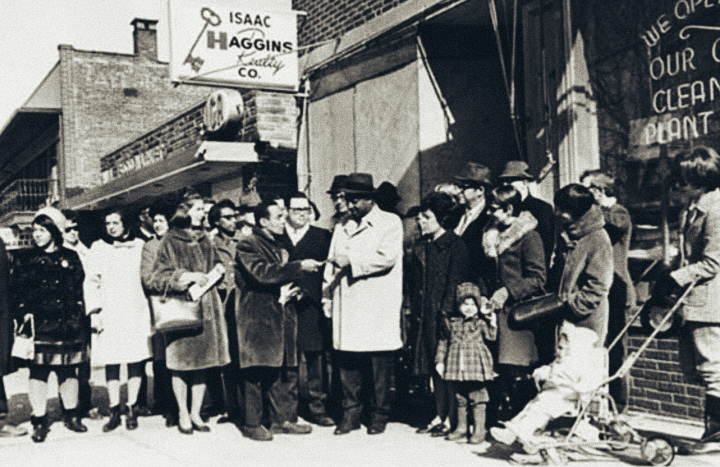
Racial Integration in the Heights
Interviews in this series were collected by undergraduate students at Cleveland State University under the supervision of Dr. Mark Souther, with funding from the Office of the Provost. The series contains interviews with pioneers of suburban residential integration and social activists who supported peaceful managed integration/desegregation and fair housing in Cleveland Heights and Shaker Heights in the 1950s to 1970s.