Pamela Ashley interview, 11 July 2013
Abstract
Pamela Ashley, a lifelong Cleveland resident, talks about her life and experiences. She was born in Cleveland and moved to Cleveland Heights in the seventh grade. She describes her travels across the country with her immediate family to visit her extended family. She talks about what she did for fun, which included dances and house parties. She also talks about her education at Dyke College, and then her employment at Standard Oil and the United States Postal Service. She also talks about the various places she lived. Her favorite home was across from the Grog Shop at Coventry. She ends the interview talking about her family and the life lessons she learned from her parents and imparted to her kids.
Metadata
Interview Transcript
Transcripts may contain errors.
Pamela Ashley [00:00:10] My name is Pamela J. Ashley.
Timothy Klypchak [00:00:14] And where were you born?
Pamela Ashley [00:00:17] In Cuyahoga.
Timothy Klypchak [00:00:18] Cuyahoga. How long have you lived here?
Pamela Ashley [00:00:22] All my life.
Timothy Klypchak [00:00:25] Where did you grow up?
Pamela Ashley [00:00:27] Cleveland Heights.
Timothy Klypchak [00:00:28] Did you get that?
Pamela Ashley [00:00:32] No, he'll get it.
Timothy Klypchak [00:00:34] What was it like growing up in Cleveland Heights?
Pamela Ashley [00:00:36] Fun.
Timothy Klypchak [00:00:37] What were some of the things you did growing up?
Pamela Ashley [00:00:41] Well, I went to Roosevelt. I came here in Cleveland Heights when I was in the 7th grade. I went to Roosevelt. It's gone now. It used to sit on Lee Road. I went to Cleveland Heights. I went to Dyke College, graduated with a Bachelor of Accounting degree, and bought my house here.
Timothy Klypchak [00:01:11] What were your parents like growing up in Cleveland Heights? What did they do?
Pamela Ashley [00:01:17] My mother was a secretary at Tow Motors. She's retired. My father was an assembly worker at Central Brass where they made faucets, and he retired, and he's deceased now. He's been gone for 10 years.
Timothy Klypchak [00:01:38] What were some of the things that you did as a family growing up in Cleveland Heights?
Pamela Ashley [00:01:43] Well, we traveled. Went to see our cousins from out of town. We went to amusement parks, had picnics, family— what you call it? I can't think.
Unknown Speaker [00:02:01] We drove Karen's car back to the apartment on Juneberry.
Pamela Ashley [00:02:11] We was a family.
Timothy Klypchak [00:02:14] Where were some of the places you guys would travel to?
Pamela Ashley [00:02:17] We went to Kansas City, Dayton, South Carolina, North Carolina, Florida, Tennessee.
Timothy Klypchak [00:02:33] Did you have family in all of those places?
Pamela Ashley [00:02:35] Yes.
Timothy Klypchak [00:02:36] Where was your favorite place to go?
Pamela Ashley [00:02:42] Kansas City.
Timothy Klypchak [00:02:44] What was it like there?
Pamela Ashley [00:02:46] Well, when you're little, we had a lot of cousins there, so we played as little kids. And then it was six of us, so we couldn't afford to go to a lot of restaurants, so when we did go out of town, we did get a treat. We always went to the Waffle House. That was our biggest thing.
Timothy Klypchak [00:03:16] What was traveling like?
Pamela Ashley [00:03:19] Well, by having six of us plus my mother and father, we would go to Dayton first, pick up my daddy's sisters and brothers. But we were— Three of us would get out the car and go in one of their cars, because my dad had the biggest family. The rest of his sisters and brothers had only two kids. So it was rough driving in the car from here to Dayton.
Timothy Klypchak [00:03:49] You said you moved here in the 7th grade. Where did your family live before Cleveland Heights?
Pamela Ashley [00:03:55] We lived in Cleveland on Parkgate.
Timothy Klypchak [00:03:57] Do you remember anything about the neighborhood there?
Pamela Ashley [00:04:01] It was real nice. A lot of kids. We played a lot of different games when we were little. We played hopscotch, jacks, hot belt, dodgeball, kickball. It's like today kids don't play like we played. Well, we didn't have technology either. The computers So it was fun. I had a lot of fun when I was a little kid.
Timothy Klypchak [00:04:27] And do you remember any specific places, like businesses, like grocery stores, going to with your parents?
Pamela Ashley [00:04:34] Kroger's. Kroger's on 152nd. Used to be a McDonald's. At that time, my mother didn't drive, so my father took her. And my father would sit in the car. We would go in the grocery store, shop. My mother didn't buy a lot of junk food. Our one treat was Cracker Jacks. She bought each one of us a box of Cracker Jacks. And then we would notice every time we went to the grocery store, my father would— McDonald's was right next door. We didn't eat much at McDonald's. So we'd notice when you come out, my daddy had McDonald's. So eventually you stopped going in the grocery store and you sit in the car with your daddy and you go to McDonald's. Oh, that was a treat.
Timothy Klypchak [00:05:35] What was the amusement park that you went to?
Pamela Ashley [00:05:38] We went to Euclid Beach.
Timothy Klypchak [00:05:40] And what was that like?
Pamela Ashley [00:05:41] Oh, Euclid Beach was fun. We had the roller coasters. We brought our picnic basket, you know, you could bring your picnic basket, sit there and eat, and then go back and ride. And we had a certain time to meet at a certain place when we left.
Timothy Klypchak [00:06:02] Do you remember when you moved to Cleveland Heights?
Pamela Ashley [00:06:04] Mm-hmm.
Timothy Klypchak [00:06:05] What was the area like?
Pamela Ashley [00:06:07] Well, back then it wasn't but a handful of Black people, so, you know, you were called different names and stuff, so it was okay.
Timothy Klypchak [00:06:21] Were there any serious issues?
Pamela Ashley [00:06:23] No, I didn't have any.
Timothy Klypchak [00:06:28] And you went to Cleveland Heights High School?
Pamela Ashley [00:06:30] Yes.
Timothy Klypchak [00:06:30] What was that like?
Pamela Ashley [00:06:31] Well, that was fun. We used to have a Tiger's Den during lunchtime. That's where we danced, you know, 4, 5, 6. A lot of days I would cut 4, 5, 6 just to hang in the Tiger's Den.
Timothy Klypchak [00:06:47] Did you have a job while you were in high school?
Pamela Ashley [00:06:50] No.
Timothy Klypchak [00:06:51] What were some of the other things that you did while you were in high school?
Pamela Ashley [00:06:55] Basically just went to school and went to the different dances. And back then we had a lot of house parties. You don't have house parties today. Kids are different. I used to sneak away, sneak and hang out with my older sister and brother. They used to wait for me on the corner because, see, I couldn't leave with them. So they would wait for me on the corner, and I would go to the house parties with them, but I had to come back home earlier. So they walked me back home and then go back to the party.
Timothy Klypchak [00:07:39] What were the house parties like?
Pamela Ashley [00:07:43] House parties were fun. You know, all we did was dance. You just dance, hand dance. Laugh. Wasn't about fighting or nothing. Everybody was just having a good time.
Timothy Klypchak [00:08:00] What were some of your favorite places to go to in Cleveland Heights or in the Cleveland area while you were in school?
Pamela Ashley [00:08:05] The Rap Arts Center used to be on Cedar on the corner. That was fun. They had ping pong, play cards. They even had a little baseball team. Cumberland Pool, went swimming. Played in Cain Park. Hide-and-seek. Played in the— I'm trying to think, did they have the little wave pool, the little baby pool?
Pamela Ashley [00:08:36] Just playing in the water. In the wintertime, sleigh riding. Sled, we rode till your hands was froze and you walking home, oh, I can't wait to get home.
Timothy Klypchak [00:08:49] Where was that at?
Pamela Ashley [00:08:50] Cain Park.
Timothy Klypchak [00:08:50] Okay. So you, I could tell that you enjoyed dancing a lot.
Pamela Ashley [00:08:57] Oh yeah, I'm a dancer.
Timothy Klypchak [00:08:58] What was some of your favorite music?
Pamela Ashley [00:09:01] I like jazz. Well, back then I liked what? Soul music.
Timothy Klypchak [00:09:11] Who were your favorite artists?
Pamela Ashley [00:09:16] Oh, I don't remember. Michael Jackson, Al Green, Temptations, all the old music, which they don't have music like that now. I'm not into rap. Hate rap. Some of it's okay, but then some of it is just not appropriate.
Timothy Klypchak [00:09:49] Did you ever go to any concerts or anything like that?
Pamela Ashley [00:09:54] No, I didn't go to many concerts when I was a teenager. Just wasn't allowed. My parents wasn't into music.
Timothy Klypchak [00:10:04] What about, was there a movie theater that you frequented?
Pamela Ashley [00:10:08] Oh, we did go to the movies on Lee Road and up at Severance. Severance Circle. Severance. It used to be a closed-in mall, and we used to go in there and walk around and go to the movies in there.
Timothy Klypchak [00:10:30] Did you go to the mall often for just without going to the movies?
Pamela Ashley [00:10:35] Yeah, just walk around.
Timothy Klypchak [00:10:37] What were some of your favorite stores in the mall?
Pamela Ashley [00:10:41] The Limited, Woolworth's. Oh, what else was in there? May Company.
Timothy Klypchak [00:10:58] And when did you graduate high school?
Pamela Ashley [00:11:02] 1976.
Timothy Klypchak [00:11:04] And from there, where did you go?
Pamela Ashley [00:11:06] Then I went to Dyke College.
Timothy Klypchak [00:11:09] Where is that at?
Pamela Ashley [00:11:10] It used to be downtown on 6th Street. I think now it's, it's a different name. It's called Myers, and it's on Prospect.
Timothy Klypchak [00:11:21] And what were some of the things you did in college?
Pamela Ashley [00:11:26] Basically nothing. I found my little part-time job working for Encore, used to be on Carnegie. And then bought a— No. And then my last year of college, I found a full-time job. Working for Cardinals Federal Bank in the budget department. So I was allowed to go to school during my lunch period and then at night and graduated in 1980 and then found a job for BP America. I mean, well, back then it was called Standard Oil. Used to sit behind Higbee's.
Timothy Klypchak [00:12:13] What was it like working at Encore?
Pamela Ashley [00:12:18] It was different. I was just part-time and I only worked 2, 3 hours a day. And I used to file, fill out some invoices.
Timothy Klypchak [00:12:32] What was the— what did the company— like, what was their product?
Pamela Ashley [00:12:38] Some kind of parts, little parts. I'm not sure.
Timothy Klypchak [00:12:44] And then what were some of the things you— where did you live when you went to college?
Pamela Ashley [00:12:50] At home with my mother and father. On Cedar, which my mother still lives on Cedar, right across the street from Cleveland Heights High School.
Timothy Klypchak [00:13:00] So high school must have been good.
Pamela Ashley [00:13:02] Yeah. My mother was so glad when we all made it out. We had plenty of parties at home. You know, back then when you're young, you know, had your little Boone's Farm, your little drinking.
Timothy Klypchak [00:13:23] Did you— are there any— what was it like at the bank?
Pamela Ashley [00:13:31] Oh, at the bank? That was interesting, because it was just three people: our manager, me, and another girl. And we did the budgets. Well, I worked in the budget department. So we did the budget for all of Cardinal Federal's banks.
Timothy Klypchak [00:13:51] And was that bank absorbed by another bank?
Pamela Ashley [00:13:54] Yeah, because I don't think Cardinal Federal exists anymore. I only worked there a year.
Timothy Klypchak [00:14:05] What did you— what degree did you get from college?
Pamela Ashley [00:14:08] Bachelor of Science in Accounting.
Timothy Klypchak [00:14:13] And how did you— how did you come to Standard Oil?
Pamela Ashley [00:14:18] Well, I just decided, oh, I need a change. I didn't care for the bank. So every morning I would get up earlier, catch the bus, and just— back then you used to fill out applications. Now everything's on computer, online. So I had a chance to get an interview and work in cash accounting department.
Timothy Klypchak [00:14:51] What were some of the people you— who were some of the people you encountered at Standard Oil?
Pamela Ashley [00:14:58] What do you mean?
Timothy Klypchak [00:15:01] Just anybody that you may have made lifelong friends with.
Pamela Ashley [00:15:02] Oh, two people, Michelle and Alfreda. She's— Alfreda's working for Cleveland State. No, not Cleveland State. Case. Case Western. She's a supervisor there in the department. HR. And Michelle, she went off to work for Progressive. And I think she's still at Progressive. Both of them are still at the same place.
Timothy Klypchak [00:15:46] How long were you at Standard Oil?
Pamela Ashley [00:15:48] Thirteen years.
Timothy Klypchak [00:15:51] And did it stay Standard Oil that whole time?
Pamela Ashley [00:15:53] No, it became BP America. And then it left Cleveland and went to— the main office went to Texas.
Timothy Klypchak [00:16:10] Where were you living during the time at Standard Oil?
Pamela Ashley [00:16:14] Standard Oil, yeah, I was living on Coventry.
Timothy Klypchak [00:16:17] What was that like?
Pamela Ashley [00:16:17] Oh, that was fun. I lived right over the Record Exchange, and Grum's was right underneath on the other side, and we had the Grog Shop across the street. When I first moved there, I couldn't go to sleep because my bedroom, because I had a little porch, was right across the street from the Grog Shop. And all I heard was the band. But eventually you got used to it and it didn't bother me no more.
Timothy Klypchak [00:16:50] What were some of the things you did in Coventry?
Pamela Ashley [00:16:52] Oh, went to the X-rated movies. Just walked up and down Coventry.
Timothy Klypchak [00:17:01] Where were some of your favorite places to maybe buy a cup of coffee, go grocery shopping?
Pamela Ashley [00:17:09] Grocery shopping, they used to have a— I can't think of the name. They had a grocery store right where Marc's is. There used to be a groc— I don't remember the name of the grocery store, but we used to go right there. Where else did I go? Oh, I went to Zagara's.
Timothy Klypchak [00:17:31] That's the grocery store?
Pamela Ashley [00:17:33] Mm-hmm.
Timothy Klypchak [00:17:35] Are there any memories of Coventry that stick out to you?
Pamela Ashley [00:17:40] Oh yeah, just watching the people. I'd sit on my porch and watch people walk up and down the street. That's when you had the mohawks, were really popular then, and just the way people dressed.
Timothy Klypchak [00:17:55] What was probably the most bizarre thing you saw on Coventry?
Pamela Ashley [00:18:01] The one guy that had the mohawk. It was red and black, and he had on red and black tux with some white tennis shoes.
Timothy Klypchak [00:18:13] I guess that would be pretty bizarre. Did you have any bad experiences?
Pamela Ashley [00:18:20] No. I love Coventry. I lived over there for six years.
Timothy Klypchak [00:18:28] And from Coventry, where did you move to?
Pamela Ashley [00:18:30] Here. That's when I bought my house.
Timothy Klypchak [00:18:34] Were you married? No.
Pamela Ashley [00:18:39] I didn't get married till I got moved in my house.
Timothy Klypchak [00:18:43] What brought you to Northampton Road?
Pamela Ashley [00:18:46] Well, I always wanted to stay in Cleveland Heights. I said when I look for a house, I'm going to stay right here in Cleveland Heights. I like Cleveland Heights.
Timothy Klypchak [00:18:58] Did you ever get involved in any community activities?
Pamela Ashley [00:19:02] No. Well, I take that back. When I was about 12, we did have a street club. And I just cleaned people's houses.
Timothy Klypchak [00:19:19] When you moved to Northampton Road, was the area— was it well integrated?
Pamela Ashley [00:19:25] Mm-hmm, yes.
Timothy Klypchak [00:19:27] And has the area changed since you've moved in?
Pamela Ashley [00:19:33] Not really, it's still about the same. Everyone keeps their houses up.
Timothy Klypchak [00:19:42] What was- When you left Standard Oil, what did you do?
Pamela Ashley [00:19:48] That's when I found a job at— no, that's when we came. Standard Oil, then BP, and then BP closed up, and then I sat home for about 3 months because we got a severance pay. And paid all my bills off, went to California, and then I said, well, I better get back out here and look for a job. And then found a job at Techpool right here on Mayfield and Warrensville. Stayed there for a year, and then took the test for the post office and got called to work for the post office. Now, I wasn't sure if I wanted to be a mail carrier. Now, I'm going around asking people, my mom, my sister, you think I could be a mail carrier? You think I can deal with the dogs, the people? And it's like, my mother told me, well, that's your job if that's what you want to do. And it's like, okay. And that's— first I was scared.
Pamela Ashley [00:20:58] I don't care for dogs, but eventually it's okay.
Timothy Klypchak [00:21:04] And around what time did you, or what year did you start working for the Postal Service?
Pamela Ashley [00:21:09] 1994. October 1994.
Timothy Klypchak [00:21:16] What was the first, are they called routes?
Pamela Ashley [00:21:19] Routes. Well, the first thing when you first started at the post office, You don't realize all the muscles that you use in your body. Working for the post office versus just walking, it's two different things. It's like when I first started, I would come home, I would be bent over. It was like the muscles, the aches and pains, because you figure you're walking up and down stairs, You're bending down, you're lifting up. You don't use that type of muscles when you're just walking.
Timothy Klypchak [00:22:04] So what was the first area that you delivered mail to?
Pamela Ashley [00:22:07] 105 in St. Clair. I was at Station H. I was there for a year and a half, then I went to Beachwood for a year. And then I've been in Cleveland Heights ever since. I have 19 years in the post office.
Timothy Klypchak [00:22:28] What were the areas like while you were walking them? You've got firsthand experience.
Pamela Ashley [00:22:33] Well, I didn't care for being over there on St. Clair. Too many stray dogs. I mean, at least in your suburbs, your dogs are secure. It's, I mean, you know, you can't stop people from having dogs. And the thing was, in your Cleveland area, a lot of pit bulls, rottweilers, and they didn't have secure fences. The chains would break. I've had a couple of experiences as a carrier in Cleveland, you know, dog Comes out. Comes out. I mean, they say don't run. You can't run. It's like your bag is your protection, and then you have your dog spray. Some of the dogs, the dog spray doesn't really work. But the dog— but the bag is your protection because if you can't get to your spray, you put the bag in front of you. You forget the mail. The mail is out of your hand 'cause you holding the bag trying to let the dog bite the bag. And then you're just trying to back up to your vehicle so you can try and get in it. Or usually the owners come out and get their dogs.
Timothy Klypchak [00:23:48] Is there any encounter that you had like that that sticks out to you?
Pamela Ashley [00:23:53] Yes. I was delivering and I went to a porch and they man-made the banister where it was so high you really couldn't see what was on the porch. You know how you have porches that's kind of closed in? And when I went up, I heard all this noise. And it was about 10 dogs up on the porch. I backed up, got in the middle of the street, threw my mail down, and was just turning around with my bag swinging it and spraying, hollering. And a couple of folks came out of their houses, and I must have sprayed a couple of dogs, and then eventually they left. But I was nervous the whole— the rest of the time. My heart was just boom, boom, boom, boom, boom, boom, boom, boom, boom, boom.
Timothy Klypchak [00:24:48] And that was while you were doing the St. Clair route?
Pamela Ashley [00:24:50] Yeah. And then another time, dog just came out of nowhere, and I wasn't prepared, but it was a car next to me. And I jumped on top of the car. That's practically my only 2 bad experiences with a dog.
Timothy Klypchak [00:25:10] Did you have much interaction with the people on the route?
Pamela Ashley [00:25:15] Yeah, you start knowing your customers. You know, they— you'd be amazed. They even watch out for you. So that was nice. You know, some of my customers knew what time I would get to their street, you know, and they used to tell me, you know, I watch you when you walk down the street and stuff. And I'd say, oh, that's nice.
Timothy Klypchak [00:25:39] Are there any customers that like stand out to you and maybe something that like some kind of interaction you guys had together?
Pamela Ashley [00:25:48] Well, basically when you're delivering, you just You might stand there for a minute to just talk with them and just keep moving. You know, we're on a time span.
Timothy Klypchak [00:26:03] Right. Did the friendliness of people change from when you first started to now? Are people just as friendly?
Pamela Ashley [00:26:14] Yeah. I mean, you have some customers that's mean. I mean, there's nothing you can do. And then you have some customers that are just nice. Come out, talk to you. You know, you call— most of my customers I call by last name. And then some of them tell me, Pam, quit calling me by my last name and call me by my first name. It's like, well, you know, I gotta respect all my elders, so.
Timothy Klypchak [00:26:44] Well, you know, What would customers have to be mean about?
Pamela Ashley [00:26:51] Walk, walk on their grass, you know, if you don't have an instruction card, especially if you're doing someone else's route and you know you're not supposed to walk across their grass. Well, I didn't know, you know, because you don't have time all the time to put up instruction cards off of different people's routes.
Timothy Klypchak [00:27:14] And what was the route you did after the St. Clair route?
Pamela Ashley [00:27:19] Well, I really didn't get a route until I got to Cleveland Heights. I just float from route to route. See, you're not on one particular route until you bid. You have to bid on a route. And when you start at the post office, you're considered as a part-time flex. So you can't get a route until you become full-time. So I didn't become full-time until 2 and a half years.
Timothy Klypchak [00:28:00] What route do you have in Cleveland Heights?
Pamela Ashley [00:28:03] I do the circle. I have the new condos. I do the medical building, cable, the church on the corner. I have two apartment buildings, and I walk Euclid Heights Boulevard, Ivydale, Oak, and Compton.
Timothy Klypchak [00:28:24] Can you tell— are there any houses that stick out to you? Like, just The way they're structured?
Pamela Ashley [00:28:36] No, just because I've been in Cleveland Heights for a long time. I've been in Cleveland Heights for 45 years. I've just seen a lot of changes as far as businesses, schools that are gone. Like my junior high school, Roosevelt, is gone. Severance Circle used to be a closed-in mall. Now it's just individual stores. Seeing companies leave, just like the Green Wall Antiques used to be on the corner of Lee and Mayfield. They've been there a good 40 years, and now they're gone.
Timothy Klypchak [00:29:19] When did they leave?
Pamela Ashley [00:29:21] They left last year. Or it was the beginning of this year. It's either the beginning of this year or last year.
Timothy Klypchak [00:29:37] What do you remember about going to Dayton?
Pamela Ashley [00:29:41] Dayton? Having a lot of family gatherings.
Timothy Klypchak [00:29:46] Did you spend a lot of time in Dayton itself?
Pamela Ashley [00:29:50] Just with— not going by myself, with my family.
Timothy Klypchak [00:29:56] And what was— did you go throughout the city?
Pamela Ashley [00:30:01] No, we just basically— back then we were little. We just stayed at our cousin's house and played and eat.
Timothy Klypchak [00:30:12] Do you still go to some of the other places you mentioned to see family?
Pamela Ashley [00:30:16] Yeah, I go to Atlanta. Oh, I didn't mention Atlanta. I go visit my cousin in Atlanta, and I go visit my cousin in Vegas, which she moved from Vegas and she lives in California, which I'm going to California in a couple of weeks.
Timothy Klypchak [00:30:38] Where does she live at in California?
Pamela Ashley [00:30:40] Los Angeles.
Timothy Klypchak [00:30:42] How does she like it there?
Pamela Ashley [00:30:45] She loves it. She got remarried, so, and he was resigned in Los Angeles.
Timothy Klypchak [00:30:53] Did you go to Atlanta as a kid?
Pamela Ashley [00:30:58] No, as an adult on my own.
Timothy Klypchak [00:31:02] What about- You said you mentioned Tennessee, right?
Pamela Ashley [00:31:06] Tennessee family reunion.
Timothy Klypchak [00:31:09] What was it like?
Pamela Ashley [00:31:11] That was nice because we was able to go to the casino. That was my first time ever being in Tennessee, so that was different. You just heard about the little different stories. Some guy was telling us you have creatures in the woods. We couldn't understand what that meant, so we kind of figured he was talking about Ku Klux Klan, you know, so.
Timothy Klypchak [00:31:42] What were some of— when you lived in Coventry, what were some of your favorite things to do?
Pamela Ashley [00:31:49] Coventry?
Timothy Klypchak [00:31:50] Well, I had my daughter, and I used to go take her to Coventry's And when you moved over here, did you get involved in any kind of community?
Pamela Ashley [00:32:04] I've never been in any community events, except for we did have a street party.
Timothy Klypchak [00:32:12] What was that like?
Pamela Ashley [00:32:15] Oh, that was nice. You know, everybody got together. We had meetings. Everybody got together and pitched in, and we had hot dogs and, you know, people made different side dishes and desserts. And we had, for the kids, we had different tables where they did art projects, got their face painted. I think we played one game with the kids, toss the balloons, water balloons.
Timothy Klypchak [00:32:50] Now, is the street party a regular event?
Pamela Ashley [00:32:53] No, that's the first time we had one and haven't had one since.
Timothy Klypchak [00:32:57] How long ago was it?
Pamela Ashley [00:32:59] 4 years ago.
Timothy Klypchak [00:33:00] Are you guys thinking about doing it again? Making it a regular occurrence?
Pamela Ashley [00:33:07] Oh, I don't know. I haven't heard anything. I mean, if we did, I would get involved again.
Timothy Klypchak [00:33:17] Besides house parties, what were some of the other things you did with your brothers and sisters and friends?
Pamela Ashley [00:33:24] Well, brothers and sisters, we did a lot of family events. My dad was— my dad had 13 sisters and brothers. So we visit our cousins. We know our cousins like they were sisters and brothers. My dad always took us around them, so I'm real close with my first cousins. And we were just more family-oriented.[00:33:58] Didn't hang much in the streets. My dad was strict, so.
Timothy Klypchak [00:34:07] When you were in school, do you remember the death of Reverend Bruce Klunder.
Pamela Ashley [00:34:16] No.
Timothy Klypchak [00:34:19] That was 1964.
Pamela Ashley [00:34:20] I wasn't here in Cleveland Heights.
Timothy Klypchak [00:34:24] It happened in Cleveland, but maybe—
Pamela Ashley [00:34:26] Oh, no.
Timothy Klypchak [00:34:29] Okay.
Pamela Ashley [00:34:30] No, I was born in '58, so I don't remember.
Timothy Klypchak [00:34:42] Is there any memories as a teenager that you have that really stick out to you?
Pamela Ashley [00:34:54] No, not really. Well, I had fun in my High school days. It was a lot of fun. You know, people, you hung out with each other and you had fun. You just, you know, we went to the parks, went to the swimming pool. You know, it wasn't about fighting or nothing like that. We just had fun. You know, you was a kid. So, no, I don't— And the dances. We used to have a lot of dances, and a lot of bands used to come to Cleveland Heights. I don't remember the bands.
Timothy Klypchak [00:35:38] And when you were at Dyke College, what were some of the things you did around downtown?
Pamela Ashley [00:35:49] Went to the movies, Hippodrome. And the Scrumpty Dump.
Timothy Klypchak [00:35:55] What is that?
Pamela Ashley [00:35:56] A movie. That's what it's called. You know, but you figure once I started college, I was trying to become an adult, get my life together.
Timothy Klypchak [00:36:16] While you were delivering mail, is there anything Was there anything that was really funny that you can remember happening?
Pamela Ashley [00:36:25] Falling. When you're delivering, I remember one time, you know, they always tell you, especially during the winter months, to hold on to the banisters. I was walking up the stairs, the stairs were icy, because you try and deliver everyone's mail. You just don't want to bring all this mail back because of the ice. So, you know, you hold on to the banister and I slipped. And I was holding on to the banister, but I was still sliding and I just let go of the banister and just slid on down the stairs. And you just lay there in the snow like, okay, I done fell. And you get up and you keep going.
Timothy Klypchak [00:37:11] It hasn't happened to you multiple times in a day, has it?
Pamela Ashley [00:37:15] Mm, you might fall maybe twice a day. And then one winter I did fall on my tailbone. Now that hurt because I fell down the steps and it were concrete steps, and I sat there for a long time. I thought maybe I broke my tailbone, but I was okay. Took a week or two to come back to normal.
Timothy Klypchak [00:37:45] What are some of your favorite parts of Cleveland Heights?
Pamela Ashley [00:37:50] Hmm, I really don't have no favorite parts. I don't really go nowhere. I just go to work, come home.
Timothy Klypchak [00:38:08] What?
Pamela Ashley [00:38:08] Right now, as you get older, you know, times are just getting harder, so you just don't have the money to really entertain. It's just hard to maintain your own household. So right now I just go to work, come home, home. I saved up for my trip this year, me, my sisters, and my mom. Our family reunion is in California, so we're going to California, Los Angeles, and then from there we're going to Hawai'i for a week, to Waikiki.
Timothy Klypchak [00:38:50] Do you take your granddaughter to Kings Park?
Pamela Ashley [00:38:53] Well, she's just a year, No, I haven't took her anywhere so far. Just, we might walk around the block.
Timothy Klypchak [00:39:04] What about your children?
Pamela Ashley [00:39:07] Well, my son, he's been in college for 2 years at Bethany in West Virginia. He's home this summer. Last year he worked Where? At Bethany. This year he's not going back to Bethany. Money's funny. So he's gonna go to Tri-C. Just as long as you stay in and, you know, get your life together. So he's gonna go to Tri-C. He's working part-time. My daughter, she's working out in Solon and she graduated from college. And she's not in the field she went to school for, but she has a job. And she just moved out last year. So, you know, I'm still trying to help her. You know, it's like the cost of living is so high. It's really hard to do a lot, especially when you have kids. You know, you still have to help them out. You're trying to get them to be prepared for the world. You know, because one day we're going to be gone, so they have to learn how to survive out here.
Timothy Klypchak [00:40:35] So. Is there anything that you wish your kids got to experience Do you think kids today have a better experience than you did growing up?
Pamela Ashley [00:40:44] Mm, had a lot more fun. I think today kids are stressed today because the way the economy is. There's no jobs, you know, parents Plus me. You're pushing your kids to go to school so they can do better for theyselves, but— and then sometimes you say, is it worth going to school? There's so many kids out here have degrees, but there's no jobs. And then they're stuck with these loans. I don't think my kids had fun like I did because of the way the world changed.
Timothy Klypchak [00:41:46] What do you mean by that?
Pamela Ashley [00:41:47] I mean, back when I was a little kid, we wouldn't think— if it was, I didn't know. I was a little kid. You didn't have guns. We didn't fight fight. I mean, you, you had a couple of us that fought, you know, fist fight. Now it's like you touch a person, you know, they want to look at you and want to fight you or, you know, want to pull a gun out. I mean, we played all kind of games, you know, where your whole street You knew everybody on the street and, you know, we went to the playground and we played different games. Where now, I look at most of your kids are lazier because of the technology. They don't go out and play-play. They sit around. They don't have no energy like we did.
Pamela Ashley [00:42:48] They're more lazier, so they don't move. That's why we have so many obese people today. And then you have your parents that don't— they're not here for their kids. You have kids having kids, especially today, and A lot of them are put on their grandparents and they're up in age and they don't have the time. So a lot of your kids just don't understand life.
Timothy Klypchak [00:43:29] When you were in school, how did adults feel about kids having kids in high school?
Pamela Ashley [00:43:36] Well, in my time, when I went to high school, Most of my— we didn't have kids. Not like today. I'd say out of my generation, maybe one or two girls might have had a baby in high school. Other than that, everyone was out once they left high school, went their own separate ways.
Timothy Klypchak [00:44:06] What made you decide on Dyke College?
Pamela Ashley [00:44:09] I didn't want to leave home. I mean, I didn't want to leave Cleveland, and I wanted to stay home. I didn't want to stay on no campus or anything, and I wanted to go to a small college.
Timothy Klypchak [00:44:28] Is there anything that you What did you learn from your parents that you think is very valuable that can continue to be passed on?
Pamela Ashley [00:44:37] It's a lot. I was thankful that my parents were there. We got whoopings. You know, my parents taught us, you know, you have to— you're going to get old. You're gonna have to go out here and do something with your life. So that made me want to go to school and do something. So, and with the 6 of us, I think we're all doing fine. You know, none of us is on the dope or anything. We all have our families, and I think my parents did a good job in raising us. They were strict, but you look back at it and you're thankful for what they did for us. You know, we couldn't hang in the streets. You know, before it got dark, you had to be in the house. We had rules. You had to go to school, so it wasn't about you were going to live there and not go to school. So I think my parents did a good job in raising us. They were there for us. They helped us.
Timothy Klypchak [00:46:00] All right, well, I don't have any other questions. Are there any stories that might stick out that you might want to share?
Pamela Ashley [00:46:13] Stories? Well, when I was Younger, but my parents being so strict, I used to sneak out. Sneak out and sneak out because I couldn't really go out. And when I went out, I used to have to be at home by 11. People didn't go out until 10, and parties didn't get started. So my thing was I would spend the night over my girlfriend's house and then go out from there.
Timothy Klypchak [00:46:47] Did you ever get caught?
Pamela Ashley [00:46:49] Yes, got caught and got a good whooping from both parents. I think I was 15 when I got my last whooping because I snuck out and got caught. Other than that, I think I had a good childhood. Like I said, I'm very thankful for my parents. And the things you see now that kids do to their parents, there's no way that I would ever talk back to my parents, want to hit my parents. It's just, it's a different world today. It's like they don't have respect for theyselves. See, and then the way the world is today, this is all new for all of us. Me, you. I mean, as a kid, you don't see the struggle, but as you get older, you have— you see it, just like I explained to my kids. Kids, you don't have the money like we used to have. It's a hard world. You need a better education. You need, you need a higher education than a high school diploma. I even, like, with my son, he's 21, I even show him bills. You know, this is what I pay for This is your car— if I had a car note, this is your car note. You have to pay house insurance. You have to pay car insurance. Keep in mind, when you work, your paycheck not yours. Most of your paycheck you gonna pay in bills. You know, so right now my son don't see that right now. He just— he hasn't really had a job.
Pamela Ashley [00:48:52] He works part-time now, but I don't ask for him to pay for anything. Just save your money, buy your own books. But I've helped him. His two years in Bethany, well, first year I paid full tuition for him. Well, you know, he got scholarship. And I paid the difference. The second year, it's like helped him a little, but he had to take a loan out. This year, I don't know where we stand for Tri-C. So, but I, I, I'm doing the same thing my parents did for me. They helped me through college, and I'm helping my kids through college. I helped my daughter through, now I'm helping my son. They're seven years apart.
Timothy Klypchak [00:49:51] Where'd your daughter go to school?
Pamela Ashley [00:49:55] Cincinnati.
Timothy Klypchak [00:50:00] What attracted your son to Bethany?
Pamela Ashley [00:50:06] Well, it was a private college. And it's a small college, so we figured— well, he made his own choice, but, you know, we talked to him. You make your own choice, whatever school you want to go to, but keep in mind you don't really need to go to a big university or college. You need a small college because you struggled through school. So you need to kind of be in a smaller college to get a better education.
Timothy Klypchak [00:50:44] One last question that's kind of sidetracking. What was the difference in price? Like, how much farther could money go when you were growing up as opposed to it can now?
Pamela Ashley [00:51:00] You want to repeat that?
Timothy Klypchak [00:51:03] Like the way things are priced now?
Pamela Ashley [00:51:09] Well, things were cheaper back then. Now it's like you pay, things are higher, but you get a less amount of quantity. I mean, look at your toilet paper and paper towel. It's like, wow, just get some toilet paper You gonna at least spend $12, $15. It's like back then, I don't remember spending $15 to get some toilet paper and paper towel. It's just the cost of living is just sky high. I mean, just to maintain your household is expensive. You have to keep your property up, your taxes. I mean, I think it's just You know, when they pass levies, go up, so your income's not going up as much. And if you're not making a certain amount, you just can't— you can't even move out. Your rent is too expensive. The average— I mean, your average paying job, I mean, $10? You can't even- You can't even move.
Timothy Klypchak [00:52:23] Yeah. All right, well, thank you for your time. I appreciate you sitting down with me.
Pamela Ashley [00:52:29] You too, Tim.
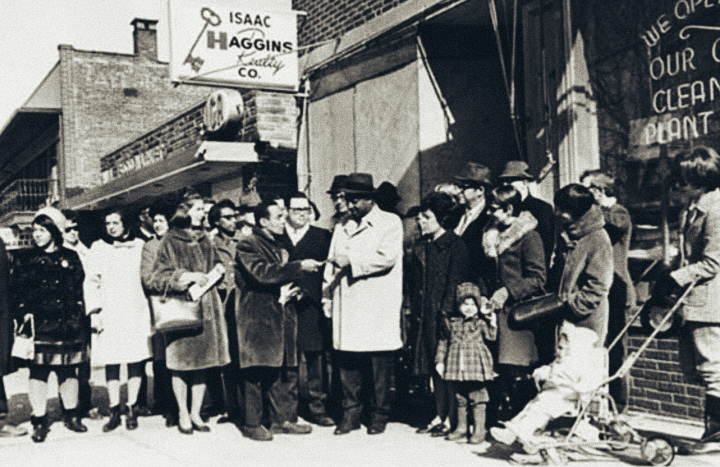
Racial Integration in the Heights
Interviews in this series were collected by undergraduate students at Cleveland State University under the supervision of Dr. Mark Souther, with funding from the Office of the Provost. The series contains interviews with pioneers of suburban residential integration and social activists who supported peaceful managed integration/desegregation and fair housing in Cleveland Heights and Shaker Heights in the 1950s to 1970s.