E. Christine Morris interview, 04 June 2013
Abstract
This interview is a followup to an earlier one with E. Christine Morris. She discusses her memories of the civil rights movement and tells stories about her husband seeing Malcolm X and her seeing tanks roll down Lincoln Boulevard in Cleveland Heights during the Glenville riots in 1968. She also discusses her church, New Community Bible Fellowship in Cleveland Heights, and her children's careers.
Metadata
Interview Transcript
Transcripts may contain errors.
Christine Morris [00:00:21] You're welcome.
Mark Souther [00:00:23] And last time you were telling me about your neighborhood in Columbus and you mentioned a housing project that was nearby. Could you tell me a little bit more about that?
Christine Morris [00:00:34] Yes, that housing project was built around just after the war, I believe. Well, which, you know, I wish I had looked to see when it was actually built, but it was a project that one of the Roosevelts had. And it was called Poindexter Village. There was not only housing, but there was a recreation center. And it covered an extensive area in Columbus, from Champion Avenue and Ohio Avenue All the way to Clifton on the east, which is about 3 blocks, and 3 very big blocks, actually. And from the south, it was bordered on Hawthorne. And on the north, it was bordered on— Mount Vernon Avenue. So it was a— it was large, and there were a lot of activities that centered around that. But it was, it was very compatible with the rest of the neighborhood of homes and houses. As I mentioned before, the street that we lived on was just a block long, and there were 6 to 8 houses on— there were 6 houses that faced the street, and then there were two houses that faced Long Street. But the rest, you know, the side of the house and their lawns and what have you, backyards, were on Winner Avenue. W-I-N-N-E-R Avenue. So, There were more children in the— in Poindexter Village, definitely, than lived on our street. I don't remember having kids my age on our street. They were mainly older people, couples who lived on the street that I lived on. Mm-hmm.
Mark Souther [00:03:11] You also mentioned, just in talking before the interview began today, about segregation in some restaurants in Columbus.
Christine Morris [00:03:23] Right. It was an unspoken segregation. You just were not welcome there, especially in the downtown area— excuse me— on High Street. You would notice when you went by that there were no people of color in there ever. And I never tried to go there. Most of this is from my, you know, going to back and forth downtown shopping or to school because my school, I'd have to go through downtown to get to my high school. And the people that I knew, my parents, my aunts and uncles, or whoever, never really mentioned going downtown to go to dinner, ever. So, I don't— I don't know when it became more— Diversity-friendly at all. I don't know, not, not in my memory growing up there.
Mark Souther [00:04:37] Where did your mother shop?
Christine Morris [00:04:43] We shopped downtown. If we had something to eat out downtown, it would be in the 10-cent store, 5-and-dime store, like Kresge's or H.L. Green's, someplace like that. Never in a restaurant.
Mark Souther [00:05:00] What about shopping? What streets did you feel welcome on?
Christine Morris [00:05:08] Well, I don't know. Broad Street and High Street were kind of the center of the shopping area down there, and there were certain stores. And I don't— I never associated it with the street per se, but Lazarus was a store where you were welcome. You know, it was a big department store like Higbee's. And— but Peck and Peck and Montaldo's, those places were uncomfortable to go there. Let's see, there was another store. I don't remember the name of it now. That— it was a bigger store than Peck Peck and Montaldo's, but not as big as Lazarus. And they had a little higher end, but not the, you know, not the great high, really expensive things. But downtown Columbus, you know, when I was growing up, there were not these shopping areas out in the malls and what have you. That just didn't exist. So everybody kind of went down there to shop. So, so it was— there was a definite chill if you wandered into one of those stores.
Mark Souther [00:06:36] You never did? You had your personal Do you have any experience like that?
Christine Morris [00:06:52] I didn't. When I was growing up, and my mom and I would go shopping, I think it's only— it's pretty much in retrospect that I've Sink of the chill. And I remember more vividly coming to Cleveland and going shopping and being actively frosted. You know, maybe told that we don't have anything here that you would like or some remark of that nature. So I think we pretty much stuck to Lazarus when we were in Columbus. Union— the Union, that was the name of the other store that was— had a little higher-end clothing in it. And we would shop there once in a great while, and it was okay. Nobody was just overtly cool to you.
Mark Souther [00:08:12] What about in Cleveland, then, since you mentioned it? What stores come to mind as places where—
Christine Morris [00:08:21] Well, downtown, the smaller stores like Peck Peck. We had a Peck Peck in Columbus, too. And there was another M store that isn't here anymore. But those smaller shops that had a little higher-end clothes, clothing and accessories in them, they were— they— if you'd go in the store, they wouldn't wait on you. You know, or they would make you wait and just be cold to you, not helpful whatsoever. And it was annoying, you know, because you— there were things that you wanted that that's where you could get them from, and they couldn't, and they wouldn't wait on you. But— The bigger stores, kind of the same thing. You know, they would make you wait and do busy themselves somewhere else. And then, you know, if you didn't— if you persisted in standing there, they would finally come over. And sometimes, after a while, you got to be— That you picked out what you wanted, tried it on, and then took it to them, you know. But you hardly ever got any, any help finding things or customer service. That was just, you know.
Mark Souther [00:10:02] Are you referring to places like Higbee's and Halle's?
Christine Morris [00:10:04] Higbee's, Halle's, Halle's, yep. And you could, you could feel it somewhat in Saks now. I think they're trying. In the past maybe 5 or so years, maybe even longer than that, I don't go there that often. But when they first came to Cleveland out there, it was the same kind of thing. It was difficult to get help. People didn't want to wait on you. And it felt like it was more a thing where they're not going to buy anything, so I'm not going to, you know. I don't know. I haven't thought of these things in a long time because I just really got so— I ignored, Your discomfort with my being there. Go ahead.
Mark Souther [00:11:19] Well, in 19— you got out of college in 1963.
Christine Morris [00:11:23] '63.
Mark Souther [00:11:23] So we're talking about the mid-'60s.
Christine Morris [00:11:25] Yes.
Mark Souther [00:11:26] Except with the sax story.
Christine Morris [00:11:28] Right.
Mark Souther [00:11:29] Which would have been probably late '70s, early '80s.
Christine Morris [00:11:31] Right, right, right, right.
Mark Souther [00:11:33] What about— I'm not speaking of discrimination necessarily here, but I'm curious when you— to what extent did you go to suburban shopping centers in the early '60s, and if so, which ones did you tend to go to?
Christine Morris [00:11:59] Severance was built, that was— we went there. There was Halle's and Higbee's, and we lived here when it was built. And I always— I hated to see its demise because it was a good place to shop, and we pretty much did all our shopping there for family things. The May Company was there on May's on the Heights at Cedar and Lee. That was, that was another place where the customer service was lacking, you know. And at some point you stop, you don't know whether it's you or they're just poor customer service givers. And at some point also you decide that I can't be bothered with this. This is what I need. So, and here's my money. Just get on with your life and not spend too much time dwelling there. But Severance Center was a very nice mall, and they had a nice variety of— range of costs too, affordable to high-end and that. So that was, that was a good experience. So that was, that was probably late '60s or—
Mark Souther [00:13:40] I think it opened in '63.
Christine Morris [00:13:42] Oh, '63, okay.
Mark Souther [00:13:44] I don't know if you were from East Cleveland or from Mount Pleasant or not. From—
Christine Morris [00:13:51] probably so, if we were still over there. Not East Cleveland. It doesn't feel like it would. I don't remember it being there when we were in East Cleveland. So where did we go from East Cleveland? Downtown. Pretty much. We didn't have a lot of money then, either. So, I don't think we did a lot of shopping. We didn't have any children. And I think pretty much downtown, whenever we went— Milton really liked downtown, and he liked Cleveland and this lake and everything. He loved the city.
Mark Souther [00:14:41] Do you remember, out of curiosity, when the first time you heard the term Mistake on the Lake was?
Christine Morris [00:14:50] Let's see, Mistake on the Lake. It seems to me, now this is when Mayor Perk was the mayor of the city. Let's see, was he before or after Louis— I mean, Stokes? He was after Stokes, wasn't he?
Mark Souther [00:15:23] 1971 to '77.
Christine Morris [00:15:26] '77, okay.
Mark Souther [00:15:28] Or '78.
Christine Morris [00:15:30] That was Mayor Perk's time.
Mark Souther [00:15:32] '78, '79.
Christine Morris [00:15:33] It seems like it was around that, around that era, just because the— his hair caught on fire and the lake caught on fire. I mean, the river, when he was doing something, cutting ribbons or whatever he was doing, the river caught on fire from all that oil that was on the On the surface. And jokes started. It seemed to me that that's when it— that's when I became aware of that. And it was kind of sad to hear Cleveland being made fun of like that, because I don't know that it ever really deserved all that notoriety. Clearly, we were not fans of Mayor Perk. And, and reason I say clearly is because my husband did work for Neighborhood Youth Corps, and that was a government-funded thing through the city. And so it was pretty much overseen by the city. And he went there while Mayor Stokes was mayor. And when Mayor Perk came, then there began to be pushback on his programs that he wanted to see implemented through Neighborhood Youth Corps. He was director of Neighborhood Youth Corps, and actually became the president of Neighborhood Youth Corps directors in the nation, the national president. And during that time, his vision was that the students that They served would be placed in occupation situations or experiences of their choosing, where they're— what they dreamed about being. If they wanted to be a stewardess, if they wanted to be a landscaper, if they wanted to be an architect, or whatever they envisioned that they wanted their future to be like. He was about finding a place for them to co-op, or I don't know what they actually called it, but experience that environment, a lawyer or whatever. And the city's vision of the— experiences to provide for these students was to clean up parks and do civic duty things, which none of which would lead to a meaningful career or help them be anything other than menial work. Perk. Sorry.
Mark Souther [00:19:02] I thought that's what you meant. So that was the change.
Christine Morris [00:19:05] That was the change.
Mark Souther [00:19:06] Between Stokes and Perk.
Christine Morris [00:19:07] Yes. And so there was a lot of— Nixon was president as well at the time, I believe. And so the Republican stance on that was pretty much the same as Mayor Perks. And he actually— he being President Nixon— cut off the funds for Neighborhood Youth Corps. And Milton organized— he, you know, along with the other directors of Neighborhood Youth Corps around the country, they sent him to Congress to testify on behalf of the students that they served. And he took a couple of students to testify along with him, and was successful in having those funds restored and released and all. But it was— I remember it being a very tense time. And all. And I don't know, you know, maybe— I don't know what it was about Milton, but he accepted the challenge. He didn't have any animosity for anybody, you know. He— it's just the way it is, and this is what we're going to do about it. And he was really— I, you know, I really admired him for that, because it just made me angry. And, of course, when you get angry, you can't— you're not effective. And also, it was a good thing it wasn't me who was trying to get—
Mark Souther [00:20:55] Thinking back to the Stokes administration, do you remember when he was first planning Cleveland Now, and there was a documentary that was shown on TV.
Christine Morris [00:21:14] Was that— is that early '70s?
Mark Souther [00:21:16] No, it was '68.
Christine Morris [00:21:18] '68. I— those, those years I really turned inward because I had a child early '68, and so she was just tiny. And then in '70, I had another one. And I really was focused in at that point in the early '70s. And then some other personal things happened in the '70s. I lost my mom and my brother. And I don't remember much of the '70s.
Mark Souther [00:22:05] Can you tell me what you remember going back further in the '60s about visits by Martin Luther King Jr. to Cleveland? Either your own memories or things that you remember through your husband Milton?
Christine Morris [00:22:20] Milton? I remember it being really exciting to go and see him. I think I only got a chance to get close, and it wasn't even that close, but in that vicinity once. But my husband was pretty active in the community, and he I know he went to see him, and he went on the March on— excuse me— the March on Washington. He went down for that, and that was really an amazing time. And, but all pretty much, I didn't get to go. I just, you know, watched on television and news reports and things of that nature. And I— yeah, I pretty much just followed it from afar and listened to Milton and his account of things. But it was an amazing time. And You know, the Kennedys and all of that that happened was startling, and it made you kind of lose hope, because the Kennedys brought a lot of hope for the future of the races getting along. And that seemed to be being dashed. And then all of the unrest around the country with the riots and that kind of thing. We had— I had mentioned that we met, my husband and I met down at OU in the summertime, and there was a couple from Iowa who who were there. He was a professor in Iowa, and I used to take care of their children when they had to go to meetings there. So I got to know them. And then when I went to— and we kept in touch for a while after that summer. So I got married, and I moved to Cleveland, and that sort of thing. And At some point in time, they let me know that they were coming to Cleveland and would like to— I'd like to get a chance to see you and all. Well, they canceled their trip because of the racial tension. And I lost track of them and never ever saw them again. So that's one of the things I just kind of regret. They were a lovely couple. You know, and their kids were cutie pies, you know? And also, that's not all that mind-blowing, but it just was a loss, you know, a personal loss that wasn't all that big, but it was significant to me.
Mark Souther [00:26:26] Which racial tension in particular seemed to drive that at the time? I'm not sure when you were thinking.
Christine Morris [00:26:34] Right. Well, it was the riots, yes. And the cities were, you know, were all in an uproar. So they decided they didn't want to come, you know, at that time. And I don't blame them. They canceled whatever, you know, conference was they were going to come to. I don't know what it was going to be, but we were going to meet and have dinner or something.
Mark Souther [00:27:04] Do you remember anything else about the Love Riots?
Christine Morris [00:27:08] No, not really. There was a— do you remember Bruce Klunder? Okay. Just remember, you know, that he put himself— and he was run over by a tank and all. Now, I have lost the context. Was that during the riots? When was that?
Mark Souther [00:27:34] He was run over by a bulldozer.
Christine Morris [00:27:36] Oh, it was a bulldozer.
Mark Souther [00:27:37] At a segregated school.
Christine Morris [00:27:39] Segregated schools.
Mark Souther [00:27:40] In 1964.
Christine Morris [00:27:42] Okay, so it was that—
Mark Souther [00:27:44] Prior. It was 2 years prior.
Christine Morris [00:27:48] Okay.
Mark Souther [00:27:49] Unconnected except in a loose way.
Christine Morris [00:27:53] Right.
Mark Souther [00:27:54] Part of the buildup.
Christine Morris [00:27:55] Yeah.
Mark Souther [00:27:56] Of problems.
Christine Morris [00:27:58] And there, there was always that kind, because first of all, the geographic separation of a white community and a Black community over on the East Side and the West Side things, but So it was just hard to get a handle on what is actually driving all of these— this discontent and so forth. You know, you're trying to get your— finish your education. You're trying to do what you're supposed to do or what You know needs to be done and all this unrest is going on around you. It's just— it was unpleasant, to say the least, I guess. And I'm not an activist, you know, but I feel what goes on, you know, and it just makes me angry and tense, you know. So I was never— I would never be the one who would be effectively Doing something about it constructively. So my way of managing that is to focus in on what it is I have to do, make sure you do what you're supposed to do. And I think I did that really well. So I don't know how helpful I am.
Mark Souther [00:29:34] What about the— The Glenville shootout, you mentioned a story about during that time here on Lincoln Boulevard.
Christine Morris [00:29:46] Well, that's— I didn't know exactly what had transpired, and I didn't know that much about how extensive the National Guard was involved in what was going on. And I just— one Sunday, quiet Lincoln Boulevard Sunday morning, I was awakened by tanks, a whole convoy of tanks going down our street. This is not even a big street. So where did they come from? They were coming from the inner city. And And apparently came up Euclid Heights Boulevard and then turned into Lincoln and out the other end, the eastern end of Lincoln Boulevard. And I don't know where they were going from there, but it was there they were pulling out of the Glenville area, I gather.
[00:30:55] But I didn't know a lot about the— background, I didn't understand why tanks and all.
Mark Souther [00:31:09] Did you look out the window then?
Christine Morris [00:31:11] Yes, yes, it was a lot of noise. And, you know, tanks, they just are noisy. So we looked out and it was a nice long Convoy. Several. Lots of tanks. Good grief.
Mark Souther [00:31:31] That's amazing. That's a story that not many people know, I think.
Christine Morris [00:31:36] Yeah. Who's here? Somebody else must remember that. I'm going to call Lenore Blum and see if she remembers that. She was here. I don't think Helen Cullinan was here. Olive Hebert. Must have remembered it. Olive and Bill, I think I'll call them and see if they remember that. I know I didn't dream it.
Mark Souther [00:31:58] I'm curious, too. I think this was probably a little bit earlier, but sometime in the '60s, it was in the midst of the whole Shaker Lakes freeway fight. There were 2 different freeways, the Clark Freeway through the Shaker Lakes, and there was a Lee Freeway. Lenore has mentioned before that Lincoln Boulevard's street club got involved in fighting against the Lee Freeway. I'm not sure when in the '60s that particular fight was. Were you on the street yet at the time, and do you remember it?
Christine Morris [00:32:32] I do remember the talk about a freeway that would come somewhere close to Cottage Grove. That must have been the Lee. freeway. I didn't get involved. I was hoping that whatever, whoever was, was aware of it, that they would raise their voices. I would, you know, if I were asked, I would definitely be a part of it. But I don't know what actually had been discussed about that and how— I think much she did, you know, to get that altered.
Mark Souther [00:33:16] Well, she mentioned that that was the first event that made the men on the street get involved in the street club.
Christine Morris [00:33:25] No kidding. Isn't that something?
Mark Souther [00:33:27] I wondered if Milton was involved or talked about that.
Christine Morris [00:33:34] Right. He didn't. I didn't— I don't really remember too much discussion about that. Just being aware that that was a possibility and being relieved that it didn't happen.
Mark Souther [00:33:54] Yeah, I'm not sure when the active fight was.
Christine Morris [00:33:57] Right. Yeah, I don't know either.
Mark Souther [00:34:04] Tell me about Malcolm X in Cleveland.
Christine Morris [00:34:07] When we were in East Cleveland on 125th Street, pretty much newlyweds, and I didn't really know very much about Muslims or anything like that, but I know he was a controversial figure and that he was saying things and he was very outspoken. And it was like jaw-dropping as far as the things he would say. And so we came to Cleveland, and there was what used to be a theater on Superior between 125th and Lakeview, was now a mosque or place of gathering for the Muslims. And he came there and spoke. And my husband and another neighbor, they were friends, Went to hear him. Well, what I remember is I wanted to go too, you know. And I think I was not aware that women definitely are not, you know, welcome at those gatherings. I just really didn't know that. And like, they still sit apart from the men and that sort of thing. I didn't— I wasn't that— Sophisticated. But anyway, he did go up there, and when he, you know, they listened to a lot of the things that he said, and they were inflammatory, you know, and it wasn't even something that we as Christians wanted to think about. It just didn't make sense for us. And so, but it did cause a lot of controversy and stirred up a lot of feelings around the city. But they were a force out in the area. They had a paper that they— Handed to people or sold to people, I don't know which, if you had to give them a donation or whatever, on the street when you're in your car and things like that. They were very active in that area.
Mark Souther [00:36:33] Was the theater on the Cleveland side of the line, or did you mean it was just inside East Cleveland? Do you remember?
Christine Morris [00:36:41] I believe it was on the Cleveland side of the line, because 125th was the the border of East Cleveland. And the theater was toward Lakeview, which is a little west, sort of southwest of 125th.
Mark Souther [00:37:08] I think that's right.
Christine Morris [00:37:11] And, yes, that's what I recall. It was in Cleveland. And as far as the media coverage, I didn't get a sense that there was a lot of media coverage, but I don't remember really well.
Mark Souther [00:37:30] I wanted to ask, sort of shifting subject quite a bit, about Lee Road Baptist: when you first attended and what period you were there?
Christine Morris [00:37:46] We joined Leroux Baptist Church when we moved to Mount Pleasant, and one of Milton's friends who went to OU with— at the same time as he did, was organist there, and she invited us to come. And we did. And so we joined eventually. And Reverend Wright— I don't know his first name, W-R-I-G-H-T was his last name— was the minister there. And he was white. And it was a mixed congregation, but it had started to lose the white component of its congregation. And these eventually, pretty much everybody was gone. We were there for 20 years or so. And it was not Southern Baptist. What's Southern Baptist?
Mark Souther [00:38:52] I'm not sure. There's, I think, Free Baptist.That's a term. Missionary Baptist?
Christine Morris [00:39:00] It wasn't a Missionary Baptist, and I just knew it wasn't Southern Baptist. But I don't really know. It was definitely different from the church that I grew up in as a Baptist. We sang more anthems and some gospel, some spirituals, but a lot of anthems. And that appealed to me for— and I, you know, played the piano through high school. And so for some occasions, I sang in the choir, but in some occasions, like— What kind of music? Christmas and Easter and what have you, I would play the piano and the organist would play, and that just gave some depth to the presentation. And I, you know, that part I really, really enjoyed. And Reverend Wright was a really wonderful, warm person. And good sermons. And he eventually, he passed away. And they, you know, changed ministers. And I think around that time, I had— my husband was— had passed away by then also. And I pretty much stopped going.
Mark Souther [00:40:45] What about a Reverend William E. Sanders?
Christine Morris [00:40:48] He's there. No, that's who came after Reverend Wright passed away. And I, you know, I think we went to some of the meetings that were held where Reverend Sanders was applying for that position and what have you. And I don't know what was going on in our lives at that time that just made it so— it just— we didn't feel compelled to go forward with Reverend Sanders. And he's a good man, and I know he's been there ever since. And I just really fell away from religion altogether. You know, I got in this space where, well, God is everywhere, so I don't have to go to church. Which is not— right. But at the time, it seemed, seemed right to me. And so I think there was a point in time after a while though, I began to really feel that need for that God-sized hole that's in each one of us needed to be filled. And so that's when I went to New Community.
Mark Souther [00:42:30] When you started attending, before we get to New Community, Lee Road, I read just earlier today, in fact, I was reading a little bit of what I could glean from the web about the church. You mentioned that integration started to occur in 1960.
Christine Morris [00:42:53] Mm-hmm.
Mark Souther [00:42:54] So that was just a few years before you started attending. So I was wondering, in let's say maybe 1965 or so, which seems about when you probably started going there, how integrated was the church and what was the climate since so many whites ultimately left? What was the feeling and what were the conversations?
Christine Morris [00:43:18] Right.
Mark Souther [00:43:22] Excuse me, I'm going to drink just a little bit.
Christine Morris [00:43:25] Okay, let's see. There, you know, I don't remember, really recall meeting white people. They were there, but I didn't meet anybody. I didn't know anybody's name. The, the organist, who was, you know, previous friend of Milton's, well, they went to school together and all of that. The choir people, I don't believe, I don't believe there were any white choir members. So I think something may have happened before we joined that, you know, made people sort of separate out. And very shortly, you know, after that, they just all disappeared. And I never knew any of them. The only— the other thing that I would say, though, too, is that I knew people in the choir, and that was about it. And I don't know if that's on me or if it's on them for not being more, you know, welcoming or what have you. So going there was just a continuation of, you have— you should go to church, in my mind. And the spiritual growth— and this is in retrospect, I didn't know that at this time. At the time I was going there, I didn't experience spiritual growth. And— but it was fun to do the choir, you know, I liked music. And, but when I got to New Community, the first day I was there, I knew 12 people when I left, and I knew their names. And they each had a different part as time went by. In helping me to acclimate and to be a part of small groups and to enjoy the fellowship. And I thought, wow, I have never experienced this. And so I don't really— I just— I have neutral feelings toward Lee Road Baptist Church. It was really because we just went there because you were supposed to go there, go somewhere to church. And it didn't— We had our kids dedicated there and all of that, but I don't remember learning a lot.
Mark Souther [00:47:11] What do you know about the origin of the congregation, of the New Community?
Christine Morris [00:47:16] Of New Community?
Mark Souther [00:47:17] Tell me as much as you know.
Christine Morris [00:47:21] Right. It was started in— as a Bible study group, a few people getting together in the basement of a home. And started— Pastor Kevin James is the— he's the founding pastor. And as it grew, They moved into a classroom at Tri-C and held— and decided to make this a full-blown church. We're going to plant this church and grow from a Bible study group to a Bible-teaching church. And the name of it was New Community. Bible Fellowship. So I think that might have been around between '94 and '96, somewhere in there. '96 to '98 or '99, they were at the— at Tri-C in the classroom, and then had the opportunity to buy a synagogue out here in Cleveland Heights. on the corner of Thayne and Washington Boulevard. And they purchased that building and moved in. And at that point in time, there may have been 400— 300 or 400 members. It grew from there. The sanctuary Holds about 500 people. And they pretty much outgrew that 500 for one service by 2004 or '05, and went to two services, 9 o'clock and 11 o'clock. Then the church had— there were, at that time, there were two assistant pastors and two assistant ministers, and then the head, the senior pastor. And there was some controversy over a strategy to grow. And what direction the church was going to go in. And the church split. And Abundant Grace, which meets over in Park Synagogue's old building— I think they still meet there. And part of this congregation went with them, and part of it stayed. So the numbers went back down for a while, but it pretty much grew fairly rapidly. It's, it's a dynamic church, a lot of activities for young people. His heart is for men. If he can save men, he knows that families will thrive. And so he really has an outreach for purposefully bringing in men and helping them to know how to be men of their families and helping ladies understand where their place is. A lot of us want to, you know, we don't like this submission thing. And, um, but the way it's explained is not that you're subservient or less than or anything like that. It's God's order. And the way when you're in God's order, it's, it's blessed. He can bless that. He says, do this so that it will go well with you. And when you do other than that, it's a struggle. And so anyway, I didn't— I kind of wish I had known some of these things when I was married. But I really love— I've grown and blossomed in my spirit there and learned a lot of things that I wondered, now, why didn't I know that? You know, why didn't I learn that somewhere else? This isn't a secret.
Mark Souther [00:52:22] I want to go back to a few things you mentioned and see if you know the answers to any of these questions. One is, what was Pastor Kevin James's background in terms of— did he come to this from a prior was he serving in some other church, or was this something that he took up?
Christine Morris [00:52:43] This is his first church, you know, that he was the founding minister. But he is from Little Rock, Arkansas. He grew up there and went to school there. And he moved to Atlanta and went to I think he has a business degree. He's also a musician. Maybe his degree was more in music, because he's a very good saxophonist. And I think he Before he was saved, he played in nightclubs. He was underage, and they sneaked him in to play with jazz bands and what have you. And at some point, he became saved and became interested in what God is saying. And he went to seminary. And I don't know which one he went to. Somewhere in Atlanta, I believe. I don't know if that's all that pertinent. But anyway, he's trained. He has his master's in divinity and all of that. He met his wife there somewhere in either Atlanta or in Memphis or somewhere south. And they— her family is from Cleveland, so when they married, I think they went to Chicago first, but then came here and decided that this is where he wanted to plant a church. And they started out in somebody's basement.
Mark Souther [00:54:46] Whose basement, or where was this?
Christine Morris [00:54:48] You know, I'm not certain whose. I would— my guess is that probably his wife's family, her mother and Aunts and what have you are here. And so I have a feeling probably some family member's basement.
Mark Souther [00:55:08] And we don't know whether it's in the city or the suburbs?
Christine Morris [00:55:12] No, I don't actually. That would be interesting to know too.
Mark Souther [00:55:18] One reason I ask, I'm very curious because, well, first let me back up and ask, is the church completely African American, or what percentage is it?
Christine Morris [00:55:33] Well, it's not completely, and certainly anyone is welcome. It's a very low percent. When I went there, one lady that I became friends with because she had what we called growth group. It was growth groups at that time. Now they're called life groups, and we do life together. And so we meet in— we would meet in our different homes and do Bible study and have lunch or whatever if it was at lunchtime, or if it was in the evening, have a little something, but, you know, and socialize. Her name was Carol Everett, and she eventually moved. Her husband passed away, and she moved to Colorado. There was a missionary couple, or, you know, there are couples who come through, but they usually are youngish, you know, 30-somethings, and they go on to missionary school or something like that. And there aren't very many, you know, but everybody is welcome. And I'll go to—
Mark Souther [00:56:57] That brings me to another question related. The pattern that I've observed, and of course there's the longstanding comment that people have always said that 11 o'clock on Sunday morning is the most segregated time. But the thing that strikes me is that although the Black population has managed to filter throughout much of the metropolitan area to a great extent, even on the West Side more than ever before, at least on the East Side, my perception is in the Heights that the churches that are in Cleveland Heights remained heavily white with very few exceptions and that black residents of Cleveland Heights must tend in large numbers to go to churches that are in the city in the historically black sections. Places like Antioch and other—
Christine Morris [00:57:57] Abyssinia.
Mark Souther [00:57:59] Greater Abyssinia and other historically black churches. Unless I'm mistaken, it seems that there are very few congregations, and one is of course the AME Church over on Superior, and then your church. I just wondered, do the people who go there come from all over, or do they primarily come from Alliance?
Christine Morris [00:58:24] They do. They come from all over. There's a good contingent that comes from Solon, Willoughby, and— but there are a lot of people who live right here in Cleveland Heights, Shaker Heights, and Beechwood. Mount Pleasant is— there are people from there. I did a lot of database inputting. And so, and there's some from Cleveland. There are a lot of people, I think that's a sensitive issue. He planted this church and they're pulling people out of Cleveland, but that's not really— How did you find out that they were from Cleveland? happening all that much. And like you said, that AME is over there, and Grace. I don't know how much Abundant Grace has grown. I don't know what their congregation is like. But this one has continued to grow and grow and grow. There are students from the schools, residents, and what have you who come there. That's it. Richmond Heights, there's a— and Maple Heights, South Euclid, and Lynnhurst. So, yeah.
Mark Souther [01:00:10] Which Christian denominations do you see the most people coming from? Just at least—
Christine Morris [01:00:15] That's interesting, yeah.
Mark Souther [01:00:16] At least in your observation. Do you think people tend to come more from a particular background than another?
Christine Morris [01:00:25] I only suspect this, but I don't really know, actually, whether they're Baptists. You know, there is a Baptist feel to it, but I don't really know in a—
Mark Souther [01:00:50] When baptisms are done, are they full immersion, or how is that?
Christine Morris [01:00:54] Yeah, yeah, yeah. 'Cause splash!
Mark Souther [01:01:04] And I have another question that I've jotted down. Excuse me a second.
Christine Morris [01:01:10] That's okay.
Mark Souther [01:01:12] Oh, do you know anything about the synagogue that was there before and where its members went?
Christine Morris [01:01:21] Oh, that is a good question. And I— they were Orthodox, and, you know, I'm pretty much sure about that because they walked and they lived Around in that area there. And they, you know, there's a feast day where Jews cast their sins on the water. And there's that ravine right behind New Community. And there, you know, it's a brook. Doan. And they used that. So, and some still do. Some still come by, but just fewer. It used to be a lot of people would go there. It's somewhere in September, I think, Atonement. I forget whether it's Yom Kippur or which one. So where they went, I never knew the name, actually, of the synagogue either. And I don't know where they went. Because there's still, seems to me, like a substantial community that doesn't, you know, that walks and doesn't use— Transportation, or used cars and things.
Mark Souther [01:03:03] There are some other temples around the Taylor Road area.
Christine Morris [01:03:07] Right, smaller ones. That's true, because that one big one, I wonder where they went to. I think they went toward the higher heights. I don't remember the name of it.
Mark Souther [01:03:20] There's another congregation that meets right by Zagara's.
Christine Morris [01:03:27] Mm-hmm. And they've been there for— mm-hmm. And there, I think some people who go there live down in around Superior and Coventry.
Mark Souther [01:03:43] Hmm. Oh, I wanted to ask a question, too, not related to the church, but I forgot to ask about the schools that your kids went through when they were living in Cleveland Heights.
Christine Morris [01:03:55] Did they go to— Coventry. They went to Coventry. The girls both went there. And then Coventry was turned into a school without walls, and so when it was rebuilt, the classrooms were open. And my son went there. He didn't do very well in that environment. And because everything attracted his attention. And he responded to everything that attracted his attention. So that was a little bit of a struggle between him and the teachers there. And the girls were, you know, more compliant, and so they got along pretty well. I would say that we did have conversations, my husband and I, with the teachers there on a number of occasions. Basically around tracking, how they would track students. And Stephanie was the oldest, and she was— and we, you know, we— I at least worked with her on her homework. Milton didn't have a lot of time, but I spent time with her. And when she didn't understand things, I would definitely go over it with her. And it came a time when there was something she was learning I didn't know a thing about, and that was base 8 math. And I thought, base 8? I had never heard of that. But if they're teaching it, we can know it. So I got in her little book, and I learned it myself and then taught her. And she caught right on to it as well. So then came time to put her in, you know, a higher group, a group that, you know, studies at a faster pace or what have you. And they really didn't want her in the higher track. And nor, you know, and they kind of didn't want her in the higher track for English either, you know. So, but I challenged that. And I thought, you know, I've got a college education and I didn't know how to do base 8 math. And I learned it and taught her to do it, and she does really well with it. And why can't she be in the fast-track math? And all— help me understand. So they put her in the higher track, and she did very well. And she, you know, did well and went on to the junior high school. Anne's issue with— Anne is the middle child. As she was coming through, There was a teacher who used the demerit system. And it turns out, really, that Anne is very competitive and she wanted all the points. And she was also kind of— she was asthmatic and she had difficulty with that. And in spite of all of that, she never wanted to stay home. She had pneumonia and was in the hospital and— She was in the hospital. She cried to go to school and that sort of thing. So with somebody giving you demerits when you're not, you know, that was very discouraging. So I noticed her countenance being so, so discouraged, and I inquired about that. And I— when I found out what was happening, I had the conversation with the teacher, and she did stop the demerits because I just let her know she really is discouraged and overwhelmed. She said, oh, she's not overwhelmed. She can do this. And I said, I know she can, but, you know, with the negative impact of the demerits, that's just making her suffer. So that went away and And her health, she started— not because that went away, but she started to get better and stronger anyway. And she went on to do just really well in school. And all of them did pretty well. He was a bit pesky, and he tried their patience a lot, you know. So I got calls every day. About what he had done. But, and he, I know he was hard to handle, but some of the, some of the stuff that happened to him, I'm not sure that that would have happened to the, the majority kid. He did fall in the playground and he split his lip. It was You know, just really this gaping split. And they did call me to let me know that it had— this had happened, but gave me to know that he's okay and you don't, you don't need to leave work or anything like that. You know, we're just gonna send him home. So when I got home and saw how bad this really was, I was just dismayed that somebody didn't— Just let me know that you need to come and get this taken care of. And then all that time that he suffered waiting for me to come, he just— I felt that was really not very caring. But he survived, you know. And so did I. But anyway, that was elementary. We eventually had him go to Roosevelt because he just really wasn't getting along with the teachers there. And because he wouldn't pay attention. And in Roosevelt, at Roosevelt, he also had a male teacher and who— he listened to him, you know, because I don't know what that male influence is, but— He thrived there and went on to Roosevelt Junior High where he thrived too. Steve Harvey used to teach at Roosevelt Junior High School, and he was coach. And so my son was, you know, into basketball and whatever all. sports there were. And Coach Harvey was fun because, you know, he's a funny guy anyway. And my son did, did well there. He— and at Heights, he, he did, did well too in sports, and he was congenial and, and got along well with people. He didn't— he got B, C grades, and it was one of those things where you really don't want to be too outstanding in grades. You know, there is that fictive kinship thing that is so detrimental, so detrimental. But we didn't push him, but we let him know that we expected a little more and you're capable of more. And I think it was in about the 10th grade or maybe the 11th grade We went out to— we went away on the weekend, and maybe to Columbus or whatever. And we came back, and he dashed into the house. And we were wondering, what is this dash about? He had a test on Monday, and he wasn't prepared. So he thought he'd better get that done, you know. So he dove in and then took the test, and he got 100% on it, which shocked him even that he could do that. And after that, he did a lot better. You know, he— I don't know what kicked in, you know, just the knowledge that you can do this, and this is all it takes. You hadn't cracked a book. I think it was a math test too. But anyway, he— we finally got him through. I was very relieved to be out of the Heights system. He was the last one to go through. Because getting the girls through was a chore, because in junior high school, there was at least one teacher who would demean them, you know? A number of times I asked— well, my husband even went to meet one teacher. We asked him why he would tell the kids not to worry about the test because they're not going to pass it anyway. What kind of encouragement is that? You know, because she— Stephanie brought home a test that— She said that the man had told her that. And I said, well, let's go through this material. And it was material that you would get in college. Fine print, a study on weather systems, you know, and what have you. And atmospheric composition and so forth and so on. So I studied it with her, you know, and pointed out the things that were important and so forth and so on. And she took the test. She got a— I think she got a C. And I said, you got a C? You know, well, where's the test? Well, he collected them. I said, well, I want to see it. So I want— you know, I— she, she got the test for me and brought it home. And when I looked at it— Oh, my goodness. I remember that the questions were asked in a different way from how it was presented in this little paper. For an instance, if he asked the content of the atmosphere, how much nitrogen, how much oxygen, how much blah, blah, blah. In the material, it was given in percent, and I think he asked it in fractions or vice versa. I don't know which way, but, you know, yeah, you should know how to, you know, convert that. But in the 8th grade, is that really what this is about? And if so, did you teach that? And so a lot of things like that. I went through the whole thing and it was all like that, you know. And I didn't think it was fair and I didn't like the setup, you know, that, you know, sets you up to not aspire to make an A. And so anyway, we talked to him and he hem-hawed and— And he did. Again, I was just livid and not able to say anything, and my husband was just laying the whole thing out the way it should have been, nice and, you know, you can't deny that that wasn't right. He was calm and civil and all that stuff. Anyway.
Mark Souther [01:16:50] Do you think that race was a factor?
Christine Morris [01:16:53] Yes, those classes were predominantly Black. And because I think at that point in time, too, many of the white students had been taken out and sent to public— I mean, to private schools. And then the tracking, you know, they tracked. So, if you're in this track, you're mostly Black. Not, you know, you really had to struggle to make sure your kid got the support they needed and so forth. And I was dismayed many years later talking to people whose children are still going through that system. And The same guy is doing the same stuff. And it's like, why? How can this just keep happening like this, you know? And this one guy, he really— Ann was always disturbed when she came home, but she stopped telling me because— You know, she knew I would go up there. So anyway, she— I said, listen, at some point in time you have to stop worrying about how he does, you know, what he says to you. It's not that important. You're going to get what you need to get. You're going to be so successful that he'll You know, just be a dot on a chart somewhere. And anyway, Heights was different. They got through there, but there were a few things that happened. Stephanie played basketball. She tore her anterior cruciate, and I withdrew her from school. And I got a tutor. And so she did well with her tutor, and when she went back to school, back to her regular class, when she got her grades, her grades were really— they were like C. And I'm like, why is this a C? And when I talked to the teacher, She said, well, she didn't take as many tests as the other students, and I didn't think— because all the tests that she did take for that teacher, she got A's. And— but she didn't take all these others while she was not there. And I thought, well, she wasn't responsible for those tests, those other tests that the other students took, because she wasn't there. Well, yeah, she was absent, she says. I said, but she was withdrawn. She had a tutor, and she took tests from the tutor. Who's— you know, do you have those grades? Those were all A's in the test. So she changed the grade. But why did I have to go through that? And that, that could have happened to anybody, I think. You know, I don't think that was that— it was just thoughtless. And so, like I say, when my last one came out of there, I was really happy. Ann was National Honor Society. That was good. Stephanie and Chip didn't do that well, but they still had really good grades. Stephanie's counselor at senior level, you know, when she was a senior, counseling her into going in one direction or another. Before all that took place, I let each one of them know, people are going to tell you that you can't do things. But you can. And you determine what it is you want to do, and you figure if it can be done, you can do it. So we're not even gonna entertain can'ts. And sure enough, Stephanie's counselor was telling her, no, that's too hard for you. You don't want to be an engineer. Engineering is really hard. You shouldn't do something else. You should— whatever, whatever. You want to be an engineer? That's what you're going to do. So we just set about finding her a school that had a good engineering program, and she went there. And so she's an engineer. And about 15 years later, I think it was about 15 years after she had graduated from even her engineering, the same teacher called me. He said, I don't know if you remember me. I was Stephanie's counselor. I said, oh yeah, I remember. And he said, I remember that she went into engineering, and I have another minority student girl who wants to do that, and I'm not sure, you know, that it's the best thing. But how is Stephanie doing? That was nice, you know. And I told him she was doing very well. She's in the company that she's with, and she's been, you know, progressing through her discipline very, very well. She's a software engineer, you know, so she At this point in time, she makes software for missiles. Wright-Patterson is right down there, so a contract with government and so forth. And she goes out with her teams of people, the team of people go out and test the things at the missile sites. And it's like, oh my goodness, they're— and I've got a picture of her and all these guys. I asked her if they tease her, and she said yes, but she's okay with being the only person, only girl. But she's doing very well, and she supports her family with that. Unfortunately, her husband fell ill early in their marriage and has never been able to do his— make a career. And he had studied architecture. Sure, and all, but he's— they're a lovely family. I wish you could meet them sometime. They had one daughter who's now at Washington U, Dean's List all the time, and that sort of thing. I'm real proud of them. So we got him through, and I think it was nice of— I don't remember his name now, the counselor at Heights to call and see how she had progressed. That was really good. And they're all doing really well. And Chip's an engineer as well, and I think some of his Coventry teachers would be— "Chip?" He's doing very well. And Ann is too. They all are somewhere else because I have never felt Cleveland as an environment where you could reach your potential. You can work and you can do, you know, get a good job and everything, but that's about where you'll be, is a good job and all, but you won't be able to soar. And why we stayed here so long, because my husband was— I think he could have been more, you know, and all. But there was just so much adversity here in those days. But it's okay.
Mark Souther [01:25:28] I don't have any other questions. Right now, I wanted to ask if you wanted to add anything or if we should close.
Christine Morris [01:25:37] Um, yeah, it's 5 o'clock. Okay, let's see. You know, I'm— though the one thing I am is at peace with what is and our experiences. All those things happen and they help you grow. And in spite of the whatever blocks there were, we were able to get those kids to a place where their— Where they were. They're exceptional. Chip is— he went to Northwestern on a scholarship for football from Heights. They all did sports at Heights, and Ann was, you know, on the track team and was first in the state, three years running. And Chip did those kinds of things, basketball and football. So his scholarship was football. He went to Northwestern. They didn't have a very good team, but he got a darn good education. And from there, University of Michigan picked him up for a master's degree in electrical engineering. And, um, He got an NSF grant for his doctorate and stayed at the University of Michigan and got that doctorate in electrophysiology or electrical engineering around the physiology of the heart. The electrophysiology of the heart was his thesis. And he now works for Cyberonics, which is a small company in Houston, Texas. He's Senior Vice President of Research and Development. And he went back to— in his few years after graduation from University of Michigan, he went back to Kellogg Business School at Northwestern for a Master's in Business Administration. So he's done very well, and he's a really upstanding young person— old now. But—
Mark Souther [01:28:22] He may hear this, though. Are you sure you want to say that?
Christine Morris [01:28:28] That is too much. They're all middle-aged. That's kind of interesting to me to reflect on that. But Anne has done very well. Went to Yale undergraduate school and University of Michigan for a business degree, an MBA, and worked for Eli Lilly. That was her first real job. She worked there for 15 years where they moved her around to different places because she, you know, to— I don't know, I guess companies move you through different parts of their— as they're moving you towards or grooming you towards wherever you're going to end up in the company. So she was a manager, a marketing manager that launched Cymbalta, and you might remember that. And it was an award-winning commercial, and her team was sent to St. Thomas as a reward for that. She was also then promoted to a director. And so she left there just last year, senior director, and went to another company, Atsuki, in Princeton, New Jersey.] And she's doing very well there. Stephanie has— she went to Dayton, Ohio, and she's been there ever since. She was the most stable one of— sorry, isn't that mean? She is still there doing very well with Jacobs as one of their software engineers, senior software engineers. So it's been a good journey, you know, and I'm pretty happy with the accomplishments. And everybody has adversity of some sort or another and obstacles to overcome. So ours happened to be race.
Mark Souther [01:30:48] So thanks very much for agreeing to be interviewed again.
Christine Morris [01:30:54] Absolutely.
Mark Souther [01:30:55] I've enjoyed listening to everything you've said the last couple of times. If we think of anything else, we'll do another one.
Christine Morris [01:31:04] Okay, excellent.
Mark Souther [01:31:06] We could talk about the street another time too.
Christine Morris [01:31:08] Oh, that's right. That's right.
Mark Souther [01:31:11] I can't today. I'm actually supposed to be home.
Christine Morris [01:31:13] Okay.
Mark Souther [01:31:14] So I should—
Christine Morris [01:31:16] Okay, that's true. That's— that we can hit on another time. I've enjoyed this too, just walking back through some of it. And helping me understand why I don't remember some things. And, you know, I just— You know, I've got other things to do besides worry about stuff that's being tried to be done to me, you know. So.
Mark Souther [01:31:57] Thank you.
Christine Morris [01:31:58] Well, thank you very much.
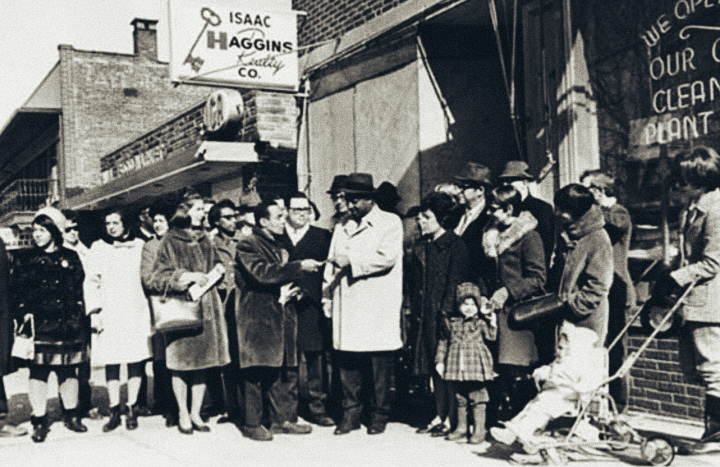
Racial Integration in the Heights
Interviews in this series were collected by undergraduate students at Cleveland State University under the supervision of Dr. Mark Souther, with funding from the Office of the Provost. The series contains interviews with pioneers of suburban residential integration and social activists who supported peaceful managed integration/desegregation and fair housing in Cleveland Heights and Shaker Heights in the 1950s to 1970s.