Sura Sevastopoulos interview, 30 May 2013
Abstract
Sura Sevastopoulos was born in Cleveland in 1948. She grew up with her mother and grandmother in Cleveland Heights, originally attended Coventry School, and recalls the walk to school quite vividly. She went to college at the Cleveland Insitute of Art, and while in school she worked at a nightclub called "La Cave," which featured many popular artists such as the Velvet Underground. Sura participated in antiwar marches down Euclid Avenue, and once lived on Hessler Road in the late 1960s. She claims to be a participant in the "Counterculture," and so was very accepting of racial integration. She traveled to Greece after her college graduation, where she met her husband. They had their wedding in Cleveland Heights at "Earth By April," one of the first vegetarian restaurants in the Cleveland area. Now she rents homes to people in Cleveland Heights, and feels that her heart still lives in the Heights, though she is now a resident of Pepper Pike.
Metadata
Interview Transcript
Transcripts may contain errors.
Sura Sevastopoulos [00:00:11] Yes.
Mark Souther [00:00:12] I got it right?
Sura Sevastopoulos [00:00:13] You did.
Mark Souther [00:00:14] Thank you for agreeing to be interviewed as part of the Cleveland Regional Oral History Collection project. I wanted to start out by just asking a little bit about your background, and we'll work our way towards Cleveland Heights and some specifics there. First, if you could tell me where you were born.
Sura Sevastopoulos [00:00:32] I was born in Cleveland, Mount Sinai Hospital, and started growing up in the Lakeview area, Earl Avenue and Lakeview, and that was because My grandparents had a small house there, and my father had passed away when I was 8 weeks old, so my mother and I moved in with them.
Mark Souther [00:01:01] Is that Lakeview near Superior?
Sura Sevastopoulos [00:01:04] I think so. I mean, I'm so off on the location at this point.
Mark Souther [00:01:10] North of University Circle?
Sura Sevastopoulos [00:01:12] Yeah.
Mark Souther [00:01:15] Were you there How old were you when— so you moved there with your grandparents. How old were you then?
Sura Sevastopoulos [00:01:25] Well, I was an infant at the time. And—
Mark Souther [00:01:35] [barely audible comments to an unknown third person] Sura Sevastopoulos [00:01:52] Um, yeah, and we lived there until I was probably in first grade is when we moved to Cleveland Heights.
Mark Souther [00:02:02] About what year would that have been, roughly?
Sura Sevastopoulos [00:02:04] I'm trying to think. Let's see. I was born in '48. Like '54, '55, something like that.
Mark Souther [00:02:17] I'm just trying to get an idea. When you moved to Cleveland Heights, where was your first home?
Sura Sevastopoulos [00:02:24] The first place we moved to, let's see, that was probably The stone— you know, there's a huge stone wall that's around an old mansion on Hampshire and Superior, and it was broken into floors, and we had one floor there. And I went to Coventry School. Used to walk through the ravines to get there, which was a lot of fun and scared my mother to death.
Mark Souther [00:03:04] Which way— I'm thinking about which way, which ravine are you referring to?
Sura Sevastopoulos [00:03:08] There's one that's right by the school. It's so different right now than it had been. There was a lot of wilderness and ravine between Mayfield and— is it Overlook? Right by the school there, and we used to like cut through that area.
Mark Souther [00:03:34] So from Mayfield, I know the area you mean that's right by the school that goes down behind all those houses off of Edgehill and all that. So you're saying there was more of a wildernessy area that was north of Euclid Heights Boulevard?
Sura Sevastopoulos [00:03:50] Yeah, I remember like climbing a wall and cutting out through someone's backyard And then we would hit like ravines and woods and just fun stuff on the way to school.
Mark Souther [00:04:02] Does Rock Court ring a bell?
Sura Sevastopoulos [00:04:04] Yeah, it's that area. Uh-huh. Rock Court.
Mark Souther [00:04:11] Now I think I know exactly what you're talking about. And that's been changed so much that—
Sura Sevastopoulos [00:04:14] Right.
Mark Souther [00:04:15] Not as much of it. That's all I was unsure of. So during that time, this was back in the '50s, how would you describe what neighborhood you lived in? What did people call your neighborhood, or did they have a name for it?
Sura Sevastopoulos [00:04:36] Just Cleveland Heights is what I remember. Sometimes Cumberland area, because I could cut through to Cumberland Pool really easily, and the park was right across from us.
Mark Souther [00:04:49] Do you remember the little church just up Superior?
Sura Sevastopoulos [00:04:53] Yeah, mm-hmm, sure.
Mark Souther [00:04:55] Who was in that church at the time? What congregation?
Sura Sevastopoulos [00:04:58] I really could not tell you.
Mark Souther [00:05:03] Just curious. It later became an AME church, and I can't remember what was there before.
Sura Sevastopoulos [00:05:08] No, I have the foggiest idea which congregation was there.
Mark Souther [00:05:13] Do you remember much about your neighbors on Superior?
Sura Sevastopoulos [00:05:19] Yeah, I made a best friend there, and she and I used to get into wonderful trouble together. Her grandmother was a potter in Cleveland, and we used to go into her studio, and whatever little pieces she didn't want, we would go door-to-door selling for like a nickel apiece. I had a lot of friends on the street. It was a great neighborhood, mostly right on Hampshire. And then there was a haunted house, which I'm told is still the haunted house on Hampshire.
Mark Souther [00:05:56] Where is that?
Sura Sevastopoulos [00:05:57] It's more down toward Coventry on Hampshire, and it would be on the Mayfield side.
Mark Souther [00:06:07] I wonder which one that is.
Sura Sevastopoulos [00:06:10] I could show it to you, but I can't really describe it. I think it had an oval window in the front, and we used to spend a lot of time just like lurking and peeking and looking in the garage and in the windows and making up stories of who had died in there.
Mark Souther [00:06:26] Was it abandoned?
Sura Sevastopoulos [00:06:27] Yeah, I think it was abandoned. We never saw anyone in it.
Mark Souther [00:06:30] Do you remember a house? It's now been torn down in the last year. There was a house that was across the street on the south side of Hampshire at the corner, I believe, of Wilton. A big house that was made of, um, had a lot of yellow brick, and it was a huge house. It's been abandoned, I'm told, for about 50 years before being torn down.
Sura Sevastopoulos [00:06:52] Wilton and Superior and which street?
Mark Souther [00:06:55] Hampshire.
Sura Sevastopoulos [00:06:56] Wilton and Hampshire. No, I don't remember.
Mark Souther [00:07:04] How long were you living at Superior?
Sura Sevastopoulos [00:07:09] A few years. And then one day during the winter, there had been a pond with a moat in the back and a hill that was all daffodils. And one winter, I went out on the pond and broke through the ice in my little snowsuit and almost didn't make it back to the moat. And my mom and my grandma decided, you know, we need to move. So we did. We moved to Belmar, and we lived upstairs in a duplex on Belmar, a double.
Mark Souther [00:07:42] Oh, near Avondale.
Sura Sevastopoulos [00:07:44] Near Avondale.
Mark Souther [00:07:48] The pond, how deep was this pond?
Sura Sevastopoulos [00:07:51] I don't really know. I know that my feet were not touching the ground when I broke through. Yeah, and I stunk really badly.
Mark Souther [00:08:05] Who was the landlord?
Sura Sevastopoulos [00:08:08] Oh, I was too young to know that. I don't know.
Mark Souther [00:08:12] Is it still apartments?
Sura Sevastopoulos [00:08:16] That I don't know either. I've always had, you know, like a really fond feeling for that house and wanted it, so I don't know if someone eventually turned it back into a single dwelling or not. But it's a great piece of land there.
Mark Souther [00:08:31] Yeah, I always admire it when I walk by. Yeah. So there was a moat sort of around?
Sura Sevastopoulos [00:08:38] There was a center moat and there was Like a little island, and then just this pond all around it.
Mark Souther [00:08:49] So, do you have any memories of the house across the street that was built in the early to mid-1800s? I don't know the name. The Pryor House, actually.
Sura Sevastopoulos [00:09:00] Oh, you know, that does ring a bell. And, you know, I have a visual memory, but I have no historical memories of it or anything that might have happened there. But I do remember that house.
Mark Souther [00:09:15] When you were going to— so you went to Coventry School, and what middle school after that?
Sura Sevastopoulos [00:09:22] After that, we kept moving. So we moved from Belmar to Meadowbrook. And we were in the Meadowbrook and Lee area, and then to Kensington. And at that time, I was going to— let's see, I went to Fairfax Elementary for a little while and then to Roxboro.
Mark Souther [00:09:52] What did your parents do for a living?
Sura Sevastopoulos [00:09:54] Well, my father didn't exist. But my mother was a secretary at Bobby Brooks. And she was kind of in charge of doing the banking and those kind of errand things. Bobby Brooks was a funny place because— I don't know if you know the history there. My mother grew up in the Jewish orphan home. The owner of Bobby Brooks, Maurice Saltzman, also grew up in the orphan home. And he hired almost all of the people that needed jobs out of— The orphan home. Jewish orphan home. So my aunts and my uncles and the whole family was working there, and it was more like a family business.
Mark Souther [00:10:40] Where was Bobby Brooks located?
Sura Sevastopoulos [00:10:43] It was around 36th and between Superior and St. Clair, maybe, or Perkins. Perkins, I remember. In fact, my husband worked there for a little while. Everyone in the family has worked there at some point.
Mark Souther [00:11:02] Let's come back to the Meadowbrook-Lee area and Kensington both during that time. What general age range were you when you were living over in that neighborhood?
Sura Sevastopoulos [00:11:15] Let's see, I know I was there probably 11 to 15. And then on Kensington, I was there even when I went to college. So that area I was in from about 11 years old till 19. And I actually got an apartment around there after that, so I was there forever.
Mark Souther [00:11:45] This helps because I'm just trying to get an idea of what you might remember in different places. So coming back to the Coventry area, because it sounds like that was more walking distance for you when you were a younger child, and then later the Cedar Lee area, what businesses, if any, do you remember walking to?
Sura Sevastopoulos [00:12:02] Mitchell's. Mitchell's was there, and that was where you got the penny candy that you could afford. I remember that vividly. Irv's was there. I'm trying to think what else. Uh, the poultry place, the kosher poultry, because we spent a lot of time playing back there.
Mark Souther [00:12:23] Um, tell me about your— what was your favorite thing to get at Mitchell's?
Sura Sevastopoulos [00:12:28] Nonpareils, those chocolates with the little white dots on them.
Mark Souther [00:12:36] It was right by the theater, correct?
Sura Sevastopoulos [00:12:38] Right. Mm-hmm.
Mark Souther [00:12:40] We have it outside.
Sura Sevastopoulos [00:12:41] Yeah, that's one of my fondest memories of the area.
Mark Souther [00:12:48] And, uh, what did you get to eat at Irv's?
Sura Sevastopoulos [00:12:51] Oh, corned beef. What else?
Mark Souther [00:12:53] I've heard they have greasy pizza too.
Sura Sevastopoulos [00:12:56] Well, I never did pizza at Irv's. I don't even know if they had it back then. I think that was a later entry because they had mostly the deli foods then.
Mark Souther [00:13:07] Yeah, my understanding is that it was a Jewish delicatessen, right? His father, I think, ran it. So it morphed over time, right?
Sura Sevastopoulos [00:13:16] Right, right. But I remember it as a deli. So this would have been in the second half of the '50s, probably early '60s, maybe. Yeah.
Mark Souther [00:13:29] Do you remember, um, the transition very well from Mostly Jewish area to the so-called hippies or the counterculture?
Sura Sevastopoulos [00:13:38] Well, being a part of the counterculture, yeah. I don't remember much about transition. I just remember this bam, it was all hippies. Because I had moved out of the Coventry area, and then I used to go back down there as a hippie to hang out.
Mark Souther [00:14:02] So you would have been 18— you were born in '48?
Sura Sevastopoulos [00:14:05] Mm-hmm.
Mark Souther [00:14:05] So you would have been 18 years old in '66, so right around college age.
Sura Sevastopoulos [00:14:13] Yeah, high school, college. I mean, I think it started when I was 17.
Mark Souther [00:14:20] What businesses at that time do you remember going to? Can you describe it?
Sura Sevastopoulos [00:14:24] Yeah, I remember that New Gallery started out there because I had a couple of pieces in there. I went to the Institute of Art and they did a show for Artists for Peace and we had pieces in that. The Obama Theater. Still remember Herb's. I don't really remember if Sunshine was there at the time, things like that.
Mark Souther [00:14:59] What about Seesaw Cafe?
Sura Sevastopoulos [00:15:01] Oh yeah, I do remember that. A lot of the bikers used to hang out there.
Mark Souther [00:15:08] Did you ever see any of them?
Sura Sevastopoulos [00:15:09] Yeah, I used to ride with some of them. Yeah, it's funny looking at a 65-year-old woman who's talking about that, I know.
Mark Souther [00:15:19] Not really, I hear all kinds of stories.
Sura Sevastopoulos [00:15:22] Actually, can you tell me more? I can't really. A lot of the bikers that I knew didn't live in the area. They went to Seesaw, but they lived in the Cumberland area of Cleveland. It was some Angels. What was the other one? Well, the Gooses are the ones I used to ride with a lot. Then there was one other group that used to hang out with us a lot, and I can't remember their name.
Mark Souther [00:15:56] What was the Gooses? Where were they from?
Sura Sevastopoulos [00:15:59] They were all Cleveland people. A lot of them were old Cleveland Heights people, and they had a motorcycle club for a really long time that was pretty popular here.
Mark Souther [00:16:13] How did they mix with— to what extent did they get along with the Hells Angels?
Sura Sevastopoulos [00:16:21] Well, some of them became Angels, and they mixed well. They mixed well with the Black motorcycle groups that were around. A man named Salisbury had a really strong motorcycle club. He also had an after-hours speakeasy that was in East Cleveland.
Mark Souther [00:16:42] He was African American?
Sura Sevastopoulos [00:16:43] Yeah. Mm-hmm.
Mark Souther [00:16:45] So, okay, so we're in the late '60s, mid to late '60s, you're recalling this? The late '60s. And I know that was quite a time of transition in both East Cleveland and Cleveland Heights. First in East Cleveland, then Cleveland Heights. So I'm wondering what these Do you remember what people in Cleveland Heights thought about, you know, a Black motorcycle club or gang, what you called them?
Sura Sevastopoulos [00:17:09] Well, I can tell you that our neighbors on Kensington were not thrilled with anybody on a motorcycle coming around. I don't know that they made a differentiation. I do remember that when I was in high school at Heights High, there was one Black male in my classes. And one black female that I can recall. So there was a huge transition after that.
Mark Souther [00:17:43] So you were in high school from '62 to '66?
Sura Sevastopoulos [00:17:46] Yeah, I graduated January '66. Same year as my mother.
Mark Souther [00:17:50] Oh.
Sura Sevastopoulos [00:17:50] Those years sound familiar. Yeah, make me feel old. That's great.
Mark Souther [00:17:58] Sorry, no, not at all. But the— so you remember two Black students through that whole period?
Sura Sevastopoulos [00:18:07] Yeah. It's insane to me right now. [laughs] Mark Souther [00:18:11] Who were they? Where did they live? Or did you know?
Sura Sevastopoulos [00:18:13] Yeah, one was Amsy Groves, who I felt pretty close to. He was a really cool guy. He lived in Cleveland Heights. I don't know which house. And he was in my biology class and some other classes, and we could cause a great deal of trouble together too. And the other one, her name was Karen, and I knew her from— I don't know if it was middle school or elementary. And she lived a few blocks away from me because I spent some time at her house at one time.
Mark Souther [00:18:49] How do you spell Amsy?
Sura Sevastopoulos [00:18:52] I guess it was A-M-S-Y or S-I-E, I'm not sure.
Mark Souther [00:18:59] You have no contact with the people now?
Sura Sevastopoulos [00:19:02] I have no contact with any of the people from high school.
Mark Souther [00:19:07] Yeah, I'm just curious because one thing I'm interested in doing is looking at some of the Oh, I wonder if you could, you know, look up his name and find him somehow.
Sura Sevastopoulos [00:19:18] That would be neat.
Mark Souther [00:19:19] Was he— when did he first arrive, or were you aware when you first saw him at High Tide?
Sura Sevastopoulos [00:19:26] I could not tell you. I think it was probably my second or third year.
Mark Souther [00:19:36] That sort of jives with, you know, Some of the other things I've heard about 1964, it seems when there was beginnings of a couple earlier. You know Robert Madison in 1960 down North Park, but that was very much an exception. Right. Just curious. How did how did they fare? You know in the school.
Sura Sevastopoulos [00:20:02] I think fine. I mean, you know I couldn't. I don't know what they experienced themselves, but I didn't experience anything that was negative. So...
Mark Souther [00:20:17] Maybe it was too early for it to be— Not enough of a change.
[00:20:25] Thinking back to— well, I wanted to ask one more question about Going back to Seesaw Cafe, you remember the bikers there. How would you describe the food there?
Sura Sevastopoulos [00:20:40] I never ate anything there. I only drank.
Mark Souther [00:20:50] Was it bar food?
Sura Sevastopoulos [00:20:52] Probably, yeah.
Mark Souther [00:20:54] Yeah, I didn't know if they were known for any particular What kind of food did people like to get there if it was mainly a bar?
Sura Sevastopoulos [00:21:00] I don't know. I don't remember eating very much during that period of time. Food was not a big issue.
Mark Souther [00:21:09] So what, in the late '60s and early '70s, were you involved in any kind of activism?
Sura Sevastopoulos [00:21:17] Oh yeah. Yeah, I was on a lot of marches, protest marches for anti-war, for equal rights.
Mark Souther [00:21:25] Where did the marches tend to take place? Give me a range of places that they—
Sura Sevastopoulos [00:21:30] Well, the ones that I really remember were mostly from University Circle to downtown Cleveland.
Mark Souther [00:21:38] What road did they follow?
Sura Sevastopoulos [00:21:41] I think we were on Euclid.
Mark Souther [00:21:44] How many people would you say were involved?
Sura Sevastopoulos [00:21:47] Lots. There were lots of people. And at the time, let's see, in the late '60s, early '70s, I also worked at a nightclub in University Circle that— I don't know if you know about La Cave. And we had all the rock stars coming in and everything, and they would go on the marches with us sometimes.
Mark Souther [00:22:15] Tell me about La Cave, because I haven't gotten any— I'm familiar with the name.
Sura Sevastopoulos [00:22:21] La Cave was an amazing place because I think the most we could ever cram in there was about 400 people. It was a small place, was downstairs like a cave. We painted the walls and we had people from Cream to Blues Project to you name it. I mean, we had blues and folk and everybody coming in. And the owner, Stan Kane, he had a house nearby and used to throw these huge parties. One time when Velvet Underground was playing there, Janis Joplin was playing somewhere else in Cleveland, and they were both at the I mean, it was, it was kind of an amazing period of time for University Circle. And I was going to the Institute of Art then and living down there, living on Hessler. Lots of question opportunities.
Mark Souther [00:23:26] Sure. I wanted to ask about Adele's. Do you remember Adele's?
Sura Sevastopoulos [00:23:28] Yeah, I do very well. I spent a lot of time in Adele's, and I remember the police waiting outside of Adele's as people walked by asking for IDs, just walking down the street. And it had— that had a lot to do with the civil rights problems that were going on. There were riots going on, and those police were really raw. I mean, they had no concept of how to even approach the subject of what was going on. They would slam us into walls and say, oh, you're nigger lovers, you're this, you're that, you know. And La Cave actually became sort of an infirmary when there was the big riots around the Hough area that moved down that way. But the police were horrible. They were just horrible. I was once asked for my ID and I said, I don't have anything with me. And he said, oh, we can take you in. I said, Jesus Christ. He said, that's it, you're going in for profanity. That's how ridiculous they were. But yeah, Adele's was a hangout for a lot of the hippies, some junkies, a lot of people tripping. And Stan's Place next to that, the coffeehouse, same thing.
Mark Souther [00:24:50] And I know there was a fire at some point in the late '60s.
Sura Sevastopoulos [00:24:54] Stan's Place, yeah. And I'm trying to remember the name of the coffeehouse, and for some reason I can't, but that's what burned, and the antique store behind it.
Mark Souther [00:25:07] What do you remember about living on Hessler? And what years were you there?
Sura Sevastopoulos [00:25:10] I was there, let's see, it must have been, it was my second year, so it was '67, '67 through '70, maybe. And I had one of the row houses toward the end. I originally moved in with some other students that were living there, and then my friends and I got the other part of that house as ours. When I first moved in, it was amazing. I lived on the 3rd floor, and it was a space where the lights in the hallway would, like, flash. There would be balls of light flying around. My doors would open and close, and people would come over just to watch this because it was this bizarre haunted spectacle. And, you know, I hate describing it because I sound absolutely insane when I do, but if you ask anyone who lived in that house, they will tell you what they saw.
Mark Souther [00:26:22] Do you remember the— there was a— I can't think of his name now, but there was probably a student, if I remember right, who led a movement to try to save Hessler from all the efforts by University Circle Development Foundation and the university.
Sura Sevastopoulos [00:26:40] Wasn't that later? Because I— hmm, it may have started in '69. I did move to— I don't know if it was '69 or '70 that I moved to a street that no longer exists where the Institute of Art on Euclid is now. It was 123rd or 126th, I can't remember. Maybe 123rd. But that street no longer exists. We had a house there that was next to that factory that the Institute of Art is in.
Mark Souther [00:27:16] It's probably in the 110s because I think you hit 118 right before you get to the railroad trestle.
Sura Sevastopoulos [00:27:25] Yeah, it was back beyond that.
Mark Souther [00:27:30] That's 118.
Sura Sevastopoulos [00:27:33] Well, it's going— we have to go up a little.
Mark Souther [00:27:36] East or west?
Sura Sevastopoulos [00:27:37] Uh, going east.
Mark Souther [00:27:41] Oh, you were under the bridge, east of the bridge?
Sura Sevastopoulos [00:27:43] Just, yeah, just beyond the bridge. Yeah.
Mark Souther [00:27:45] I think that is 123rd.
Sura Sevastopoulos [00:27:46] Yeah, something like that.
Mark Souther [00:27:48] I see. I was going to ask, I guess, a little bit more about— you mentioned Black Hawk. Do you remember any of the places over west of 100th and 1st?
Sura Sevastopoulos [00:28:02] Leo's Casino.
Mark Souther [00:28:04] I'm interested in that too.
Sura Sevastopoulos [00:28:06] Yeah, well, we used to go back and forth because Leo's Casino would want to come over and see some of our people, and we'd want to go see some of theirs. So yeah, there was a mix of people. As far as interracial, of course they had more African Americans going there. The music was geared that way, but our generation loved that music, so we would join in too. And a few of them would come over, and we had some like Southern bands like James Cotton Blues Band, so we would get more African Americans coming over for that.
Mark Souther [00:28:45] What about in that block between 105th and 107th? There was a man named Winston Willis who owned—
Sura Sevastopoulos [00:28:53] Why does that sound familiar?
Mark Souther [00:28:54] He fought against the Cleveland Clinic right and left. They hated him.
Sura Sevastopoulos [00:28:59] I remember that name, but I don't really remember him.
Mark Souther [00:29:02] It seems like he owned a place. I can't remember the name. Town something. There was a place that was bombed. It may have been before he owned in there, but there was a place he went repeatedly.
Sura Sevastopoulos [00:29:10] I don't remember that.
Mark Souther [00:29:14] It may have been a little earlier in the '60s.
Sura Sevastopoulos [00:29:16] Yeah, I don't remember that.
Mark Souther [00:29:22] The story I always hear is that Coventry replaced Euclid Avenue as the hangout for the counterculture.
Sura Sevastopoulos [00:29:31] I wouldn't say that. I really wouldn't say that. I think Coventry attracted some of the people, but not a lot of the people that I knew. I mean, we were still Hessler people and, you know, in that area. I don't think that Coventry gets the people that live down there and go to school there and do all that. I think there's a different clientele. They do, you know, they did get the hippies and the teenyboppers and, you know, all the people after that, but I don't think it's the same at all.
Mark Souther [00:30:15] Thinking back to the late '60s in that area between Leo's, which is back west of the Clinic, of course, and out around La Cave, which I'm— remind me please where La Cave is.
Sura Sevastopoulos [00:30:28] 107th.
Mark Souther [00:30:30] Right at 107th. In that area, how would you describe any sort of racial boundaries that you might have been aware of? Because I know that Hough was—
Sura Sevastopoulos [00:30:42] well, see, that's what's interesting. Yeah.
Mark Souther [00:30:46] What people, you know, to what extent did that area continue to attract a lot of white shoppers, entertainment seekers, versus It's becoming more of a Black area.
Sura Sevastopoulos [00:30:56] I think, well, I think it attracted a lot of white entertainment seekers. As far as shoppers, no. And I remember going shopping with my grandmother there when I was really little. We would go to the Alhambra Theater and we would go shopping, you know, in that block of stores that was there. I actually lived on 101st Street between Hough and Carnegie for about a year and a half after I moved off of Hessler. That's right. It's all coming back. I lived there for about a year and a half, and then I moved over to 123rd, I think it was. I had an apartment there, and most of my neighbors were hookers. And most of my neighbors were Black, except for the landlady who was a strange white woman. And I used to walk home. I used to walk to school. I used to walk home from school. I used to walk to La Cave at night, but I would get a ride home after. And I didn't feel unsafe.
Mark Souther [00:32:09] You were north of Chester?
Sura Sevastopoulos [00:32:12] We were between- Is it Chester and Hough?
Mark Souther [00:32:16] You said Hough and Carnegie, but—
Sura Sevastopoulos [00:32:18] Carnegie, yeah. Closer to Carnegie, closer to Carnegie, yeah.
Mark Souther [00:32:23] So you were within a block or two, a couple of blocks of La Cave. So then what was, what would you say was the racial mix at La Cave on a typical night?
Sura Sevastopoulos [00:32:35] Mostly white. On a typical night, mostly white. Maybe 10% were not white. That's my best guess.
Mark Souther [00:32:46] And Leo's?
Sura Sevastopoulos [00:32:48] Leo's would be just about the exact opposite, although they were getting more and more white in there.
Mark Souther [00:32:55] Were there places where you found more of an even mix anywhere through that area?
Sura Sevastopoulos [00:33:01] Hmm. I don't recall seeing an even mix anywhere, to be honest.
Mark Souther [00:33:16] Ever any racial incidents that you recall?
Sura Sevastopoulos [00:33:22] Well, as I said, you know, when there were riots, there were— I can't tell you any personal racial incidents at La Cave or Leo's. I never felt anything.
Mark Souther [00:33:37] I'm sure to some extent the music drew people together and they were there to sing.
Sura Sevastopoulos [00:33:42] Exactly, yeah. Yeah, I think it was just a whole different atmosphere than being outside of a club and living in the community and going, you know, who's that white person or who's that black person?
Mark Souther [00:33:57] We'll talk about Cleveland Heights a little bit later. I wanted to get you to tell me about the neighborhood, what we now call Grant Deming's Forest Hill again. Tell me your connection to that neighborhood and the house that— is it the same house that you now own and rent, or is it a different house?
Sura Sevastopoulos [00:34:17] My connection to that is interesting, because I rented an apartment at Meadowbrook and Lee. when I was working as an art therapist at Rapp Arts Center. And I brought my husband over from Greece, and that's the apartment that we came to. We lived there for about a year. He worked at Earth by April, and we were actually married there. And then a year later, we moved to a rental property on the corner of Yorkshire and Cottage Grove. The house that we own now is actually the one right across the street where my friend and her kids were living, and my kids spent a lot of time, so we were real attached to the house.
Mark Souther [00:35:07] These two-family, side-by-side two-family houses along Cottage Grove, I know they're sort of four on each corner, on all corners, right? In your estimate, how did those tend to be in terms of, you know, a landlord living on one side and renting out the other side?
Sura Sevastopoulos [00:35:31] Usually it was a landlord on one side and renting out the other. Our house was not. Our house was two renters, the one that we lived in. And the landlord lived on Lamberton. Also in Cleveland Heights.
Mark Souther [00:35:47] So not an absentee landlord?
Sura Sevastopoulos [00:35:48] No, not at all, no.
Mark Souther [00:35:53] So which corners are we talking about, both then and then what you ultimately bought?
Sura Sevastopoulos [00:36:00] Okay, the one that we lived in was, let's see, 3075. We bought 3076, and that would be the northwest where we lived, and— no, I'm sorry, southwest and southeast.
Mark Souther [00:36:21] Okay, now I see. And I can look at a map if I really want to see exactly. I just want to get an idea. I can't picture the houses now because they all run together for me, and there's so many nice ones that are all— yeah, they're similar, but they're all unique, but they're also similar.
Sura Sevastopoulos [00:36:39] Right.
Mark Souther [00:36:39] I can't remember whether— is that on Berkshire, is that on Yorkshire? That sometimes runs together for me. So when you lived there, you mentioned, I think, before that it was about 1975 that you moved in there, or am I remembering wrong?
Sura Sevastopoulos [00:36:57] I'm trying to remember. It must have been— yeah, we were married in '74, it must have been '75.
Mark Souther [00:37:04] And you said that the area was already multicultural when you arrived.
Sura Sevastopoulos [00:37:09] Yep.
Mark Souther [00:37:09] To what extent would you say, and in what area are we looking?
Sura Sevastopoulos [00:37:12] Not as large a percentage as it is now, but right around us there were Black families, there were mixed racial families. We're still very close to one of them, as a matter of fact, but they moved out to Twinsburg. The majority of the street was white. Our best friends, she was from France and he was from New York area. Just a lot of artists and writers, which is exactly what we wanted. Musicians, my husband's a musician.
Mark Souther [00:37:53] Does the— so the ones that were from New York and France, were they interracial?
Sura Sevastopoulos [00:37:59] No, they were not, no.
Mark Souther [00:38:01] The ones that are now in Twinsburg?
Sura Sevastopoulos [00:38:03] Mm-hmm.
Mark Souther [00:38:04] If they were mixed, were they— was it an interracial couple?
Sura Sevastopoulos [00:38:07] Yes, interracial couple.
Mark Souther [00:38:08] Or was it mixed race, both people of—
Sura Sevastopoulos [00:38:11] No, they were an interracial couple. Our next-door neighbors were Black, but most of the people on the street, I think, were white.
Mark Souther [00:38:22] Did you observe much of a change? How long were you there, and did you observe much of a change?
Sura Sevastopoulos [00:38:29] Well, we were there for 10 years, and no, we didn't observe any big changes. Anything that happened must have been subtle because there was no rumble. Nothing happened.
Mark Souther [00:38:46] The difference between when you lived there in the two-family houses and the two-family houses now, both your own and the surrounding ones. Could you comment on any similarities or differences in terms of the tenants? Is there a way to generalize, or is it—
Sura Sevastopoulos [00:39:06] I think it's hard to generalize, you know, because as I think about it, there's a lot of different And different kinds of people living in them. Some are very permanent, some are transient. We've had people living in ours for years, and then we had like a horror story about two years ago which disrupted the entire neighborhood. It took us months to get these people out. They were horrendous. It's the first time it's ever happened in 16 years.
Mark Souther [00:39:37] Can you tell me about that incident?
Sura Sevastopoulos [00:39:40] You can look it up on the internet. Just look up the address.
Mark Souther [00:39:44] I do know something about it. I'm asking mainly now just—
Sura Sevastopoulos [00:39:48] It was a woman who moved in with her mother and her children, and then everything was fine. They were really behaving fine. Everything was great. And then her mother died. And she was alone with her children, and she did not watch them at all. In fact, she actually moved out and left the kids there. There were more kids coming in all the time from, like, other cities that we didn't even know about. There were cousins living there. There were aunts. There were, you know, it was just a lot of transient people who didn't care at all. They had guns that they were shooting off the porch. We had the police there numerous times. The neighbors called the police numerous times, and we could not get them out until the city had to declare it a nuisance, and we had to go to court for that. But they padlocked the doors, and that finally got the kids out because the mother had left. All the furniture was gone, and she would go to the magistrate and say, "I need time to get my furniture out," and the magistrate would give her another two weeks. And this kept going on. So finally, the only thing that ended it was padlocking the doors, and we couldn't do it. The police used to stand there with my husband, who had the keys, while they were screaming, smoking dope, underage kids in the house, guns, bare butts out the window, yelling at the cops. They would not go in. They said they had to wait until they opened the door. It's very frustrating. That's the only time we've had a problem. We've had good people in the house.
Mark Souther [00:41:34] I thought there was a— maybe I'm thinking about another house, but I thought two years ago there was a shooting that occurred at Yorkshire and Cottage Grove.
Sura Sevastopoulos [00:41:45] Um, that was— well, I know that they had guns, and I know they shot them off the porch. But I don't know that anyone was ever hit, and I don't know if that's a different incident.
Mark Souther [00:41:57] I think it may be. It was two years ago, I think. And the incident I'm referring to is that someone was having a big party in one of those houses at Yorkshire and Cottage Grove.
Sura Sevastopoulos [00:42:07] It's that one.
Mark Souther [00:42:08] Shot into the apartment, I thought killed someone.
Sura Sevastopoulos [00:42:11] No, no one was killed in there. I know that.
Mark Souther [00:42:14] Okay, now I guess it was just a shooting.
Sura Sevastopoulos [00:42:17] I know the place has been shot at because there were bullet holes in the front window. Try being a landlord and— Yeah, right, right. And I don't blame anyone for being upset about that. We were, we were a wreck. I cannot tell you.
Mark Souther [00:42:45] Thinking back to then, when— so when did you start renting the place?
Sura Sevastopoulos [00:42:53] Around '95 or '96.
Mark Souther [00:42:56] What made you decide to invest? Had you already moved out here?
Sura Sevastopoulos [00:43:00] It might have been a little later than that. We moved here in '95, and then '96 or '97 we bought it. And that was, yeah, an investment.
Mark Souther [00:43:15]Do you have other places in Cleveland Heights?
Sura Sevastopoulos [00:43:17] Yeah, we have a place on Demington and Cedar.
Mark Souther [00:43:26] Do you find, well, since that incident, things have returned to normal?
Sura Sevastopoulos [00:43:32] Oh yeah, oh yeah.
Mark Souther [00:43:32] In terms of stable renters?
Sura Sevastopoulos [00:43:35] Thank goodness. And we have never taken Section 8 because of horror stories that I've heard, but this is probably worse than any Section 8 story I've ever heard.
Mark Souther [00:43:47] Sounds like it.
Sura Sevastopoulos [00:43:47] Yeah.
Mark Souther [00:43:50] One thing I've been curious about— I've lived in this neighborhood for 10 years, and I've always wondered the extent— I mean, I only have anecdotal evidence. It's hard to go To what extent do students tend to rent apartments in these houses, or is it too far from—
Sura Sevastopoulos [00:44:08] No, a lot of students will rent those places. The thing is, we won't rent to undergraduates. We will only rent to, like, working young adults or graduate students, because undergraduates tend not to take care of the property and party and annoy neighbors.
Mark Souther [00:44:29] How do you— this shows my own lack of knowledge. Are you able to comment on how, you know, how do you do that? I mean, it sounds like a stupid question, but how do you do that legally? Or is it something we should not be talking about?
Sura Sevastopoulos [00:44:45] No, no. I don't see any reason that you can't choose one party over another when you're renting. We advertise it as a good house for families, graduate students, professionals. And when undergraduates apply, usually they're also under 21, and we want some kind of signature from a parent or responsible party, and a lot of times they can't get it. So it hasn't been a big issue. There was one person who ranted and raved about, you know, that's discrimination, and— but you have to have some kind of sense of what you're dealing with, and we know from past that we need to deal with adults.
Mark Souther [00:45:35] I don't blame you. But I was just curious about whether that was something that had to be— that there were practical ways of dealing with that. That didn't run afoul of anyone, or if that was something that had to be completely sort of subversive.
Sura Sevastopoulos [00:45:59] Yeah, I think there's a difficulty for landlords. There was another situation where someone was moving here from another city, and she said she had 7 children. And 4 adults. And I said, that's really too many people for, you know, this house. And she was talking about how, you know, I can't discriminate. And so there is a situational problem where you have to be able to know what's good for the neighborhood and what isn't, and what's good for the house and what isn't. And you know that's just too many. So, you know, I don't know how you get around that except by saying look, there is someone else we prefer
Mark Souther [00:46:44] Are there any other things that we haven't talked about that you'd like to add in terms of either Cleveland Heights, it could be places that you were or are particularly fond of, or experiences or events?
Sura Sevastopoulos [00:47:00] Well, most major events happened in Cleveland Heights for me. Like I said, we were married at Earth by April restaurant on the corner of Cedar and Lee when that was there. And my husband worked there as his first job, one of his first jobs. His other job, first job, was at Mad Greek on Coventry when they had first opened in that, in the courtyard area.
Mark Souther [00:47:30] You say in the courtyard area?
Sura Sevastopoulos [00:47:32] Mm-hmm. Mad Greek opened— there used to be a courtyard there and then a line of stores, and they were within that. It's, it's a really different structure than it is right now, but that's where Mad Greek had opened, and he worked there as one of his first jobs.
Mark Souther [00:47:51] So it was in the same general— down at Cedar Fairmount, but it was back behind?
Sura Sevastopoulos [00:47:56] No, not Cedar Fairmount, Coventry. Coventry Courtyard. Yeah, yeah.
Mark Souther [00:48:00] I didn't realize that's one—
Sura Sevastopoulos [00:48:02] Oh yeah.
Mark Souther [00:48:03] One gap, real gap in my knowledge. So was it up near what we call Coventry Yard or somewhere else?
Sura Sevastopoulos [00:48:08] Right, yeah, near that area, near that corner.
Mark Souther [00:48:12] Back behind there, there was— I've seen pictures.
Sura Sevastopoulos [00:48:14] Right, right.
Mark Souther [00:48:15] Yeah, I didn't realize that it hadn't always been at its present location.
Sura Sevastopoulos [00:48:20] I was confused.
Mark Souther [00:48:22] Tell me about Earth by April.
Sura Sevastopoulos [00:48:25] Earth by April was one of the first vegetarian restaurants in Cleveland, and it was run by Lenny Horowitz, who was mayor of Cleveland Heights for a while. And, um, he did a great job. It was a beautiful restaurant. It had 3 rooms and a fireplace. My husband did the food ordering for them, and he gave us all 3 rooms to get married. It was a very popular restaurant for many years. Good restaurant, too. But being my husband's— one of his first experiences here, I have to tell you that their kitchen was so bizarre that he would come home and ask me, is this really what people are like here? Because they had, more than any other place that I know of, they had people who were looking to be actors and jugglers and clowns and chefs and this and that. And you could walk into the kitchen one day, and the chef, who was also a juggler, would be wearing an apron and nothing else. And he would be like working there and turn around and bare butt. One of the other guys that worked with Hari that he was close to, who became a chef, was also practicing juggling. So he'd be like either with the dishes or the eggs and be juggling them around in the kitchen. A friend of mine from the Institute of Art who was gay, when Horace first started working there, bent him over backwards and kissed him. And he was just like in this culture shock that was like a double culture shock because this was a subculture. So it kind of took him a while to get used to it, and then he realized, oh, Oh, these are crazy people.
Mark Souther [00:50:20] I'm curious about that. There's a Chinese, mostly Chinese takeout place around the corner, and that's, I think, the same building. We may be talking about different corners though. Where was that?
Sura Sevastopoulos [00:50:30] The same corner with the theater, like right on Cedar and Lee.
Mark Souther [00:50:35] I'm sorry, you were talking about— oh, okay, you're talking about Mad Greek now.
Sura Sevastopoulos [00:50:40] I'm talking about Earth by April.
Mark Souther [00:50:42] Earth by April.
Sura Sevastopoulos [00:50:43] Which was Cedar Lee Theater.
Mark Souther [00:50:46] Oh, I'm sorry. The reason I'm confused—
Sura Sevastopoulos [00:50:47] You're getting— yeah, we're going back and forth.
Mark Souther [00:50:51] Going back and forth, and I wanted to be sure you were still talking about Earth by April because I started thinking then about the old Heights Art Theater. But, but anyway, Earth by April, right around the corner, I guess, from—
Sura Sevastopoulos [00:51:04] It was where the theater expanded to the corner.
Mark Souther [00:51:07] Southeast. Okay, so on the northwest corner there's that little Chinese place, and I'm wondering how long that may have been there. Do you ever remember?
Sura Sevastopoulos [00:51:17] No, I don't remember it at all.
Mark Souther [00:51:18] Richie Chan's or something?
Sura Sevastopoulos [00:51:20] Nope, don't remember it. I remember Au Provence, which was a very nice French restaurant.
Mark Souther [00:51:28] I've heard that name. Where was that located?
Sura Sevastopoulos [00:51:30] That was in that same area, a little more toward, more away from Cedar, but on that same strip. And I remember us going there for our first anniversary. The chef there was someone I went to Heights High with.
Mark Souther [00:51:50] Was that on the northwest corner, you mean, in the Douglas Building, or are you talking now again about the southeast corner?
Sura Sevastopoulos [00:51:56] I'm still talking about the Cedarlee Theater and going farther down on that strip. It was there.
Mark Souther [00:52:09] I see. That's where Cornell's and that was.
Sura Sevastopoulos [00:52:10] And I remember the Five and Dime that is no longer there.
Mark Souther [00:52:13] Before?
Sura Sevastopoulos [00:52:14] Yeah.
Mark Souther [00:52:16] Is that where the Two Brothers in that area right down in there? Two Brothers and Golden Dragon and U.S. Bank?
Sura Sevastopoulos [00:52:25] U.S. Bank, yes. Except I think it was an Ohio Savings at the time. But I don't remember Two Brothers. I don't remember the other one you just mentioned. Oh, oh.
Mark Souther [00:52:44] What about Greaves Flowers?
Sura Sevastopoulos [00:52:46] I loved Greaves, and my husband used to get— he used to have to order gardenias from there. for our anniversary, because I met him in Greece, so there were a lot of gardenias on our nights out there. And Mr. Greaves was just a wonderful person, and he used to order them for him.
Mark Souther [00:53:06] What took you to Greece?
Sura Sevastopoulos [00:53:08] I finished the Institute of Art, and I thought I would really like to see the things that I studied. And my mother, who was a single working woman, Didn't pay my tuition. I did scholarships and working scholarships and worked at La Cave to get my way through. And when I graduated, she said she was going to buy me a ticket and give me $500. And that was what she had been saving all the time for. And I hitched through Europe, and I what part of Greece was he from? He's actually originally from Istanbul, and his family moved to Greece. They— his father had a Turkish restaurant in an Athenian suburb right by the water called Kalamaki. His is a really interesting story too.
Mark Souther [00:54:15] Yeah, I'm thinking that what I'll do is ask you a few questions about him to help me think about what I'd want to ask him and come back another day, because I just know that if we start into a conversation about the time— yeah, we get into it, I have to leave, so— and I have to really be out the door at 20 after.
Sura Sevastopoulos [00:54:33] Okay.
Mark Souther [00:54:35] I'm going to slowly wind down with this, but so if you would maybe tell me a little of his background both before and after coming to the States.
Sura Sevastopoulos [00:54:45] Okay, well, born in Istanbul, part of the Byzantine Greek people that had lived there for centuries and were kind of pushed out by the Turks wanting a more homogeneous society. They moved to Athens originally. His father, I can't remember if he originally was working with relatives cooking, because the relatives in Istanbul had olive and meat shops in the Grand Bazaar. And they moved to Athens when my husband— well, actually, when my husband was born was In Istanbul, when his father-in-law— his father decided that he was going to be an electrical engineer, and he knew nothing about it, but he kind of passed himself off as one and hired people to do the work and made a lot of money. And that's when they moved to Athens. He had an electrical shop there, but the man was a genius with food, and they eventually bought this little restaurant in the suburb, and it became one of the best restaurants in Athens, and all the diplomats used to go there, and Onassis' daughter used to go there. There was a mini-golf across the street where they used to play all the time, right on the water. So as I was passing through, I I was in London and met a friend of his in a pub, and he said, oh, look up my friend Haralambos Sevastopoulos. And he gave me directions to the restaurant. He said he'll find a place for you to stay cheap. So I did look him up, and he did find a place for me to stay cheap, and it was where all the Greek hookers and the American Navy were staying. It was very exciting. But during the day, you know, we'd go to the beach and started to get really close. And there's a lot more to it, but I went back and we wrote for 3 years just as friends and really telling each other our problems, our joys, everything. And when I went back again, we decided to get married. There was no other way for him to come over, and really he had to get me drunk to say okay, but that was 40 years ago. I think it's okay.
Mark Souther [00:57:32] And when he came here, you were already in Cleveland Heights, and let's see—
Sura Sevastopoulos [00:57:36] I was in that apartment, yeah, on Meadowbrook and Lee. I was working at Wrap Art Center as an art therapist.
Mark Souther [00:57:48] And he then started at Mad Greek then, or at— just to be sure that I didn't mix things up— started at Mad Greek?
Sura Sevastopoulos [00:57:58] Well, the first, the very first one he started, there was an ad in the paper for a crepe restaurant that was opening, Saucy Crepe, and they didn't stay open very long, but they were looking for people. This was before they opened, and they tested him out, and he had the kitchen health habits of Greece. And they— he had— somebody had spilled a whole bunch of egg yolks on the counter, and he didn't want to waste them, and he scooped them back into the bowl. And they said, you know, I don't think we can use you. So he started, he got a little knowledge, started working at Mad Greek, developed some of the recipes there too with Nikki. And on and off over the years, he kind of helped out when Loki, who was the owner with his wife Nikki, when Loki had a heart attack and needed help and we were kind of close to them for many years. But after, you know, right after he spent a little bit of time at Mad Greek on Coventry, he went to Earth by April, and he was there for a while. And in 1981, he started his own business with electrical, carpentry, plumbing, general contracting. Worked for VA for a while as a general contractor and on his own as well. And it's been that ever since. Plus he's a drummer and he plays in a lot of bands. Greek, blues, rock, lots of different kinds. He was with a Greek band for many years that was, you know, really a staple in Cleveland. It was Fantasia.
Mark Souther [01:00:06] Fantasia?
Sura Sevastopoulos [01:00:07] Mm-hmm. Like Fantasia. Yeah, only pronounced the Greek way.
Mark Souther [01:00:13] I see that. I wondered if they had an alternate spelling. And you mentioned before, maybe you can refresh my memory, that he was surprised about the race relations in Cleveland Heights.
Sura Sevastopoulos [01:00:32] Right. When he would go outside of the city to visit friends in other parts of Cleveland, he was astounded by the amount of just racial hatred that he encountered. people talking in ways that he never heard and, you know, using epithets that no one in Cleveland Heights used. He was really shocked by it. And he would come back and say, you know, everybody's not like they are in Cleveland Heights. I said, yeah, I know, because I had worked on the West Side, Near West Side, for a while and encountered the same thing.
Mark Souther [01:01:08] When did you do that?
Sura Sevastopoulos [01:01:10] When I was still in school, probably around 1969 and I worked in this little print shop as an artist. And they were just not exposed to any races but their own. It was all white. And one of them, I remember one day, came in and said, oh, my daughter had this nightmare that a Black man came in and cut off all her hair, and I don't know why she would have that because we don't know any Black people.
Mark Souther [01:01:41] Is this Ohio City that you're speaking of, or near West Side?
Sura Sevastopoulos [01:01:48] You know, I can't remember the area. I just know it was near West Side. And, oh, if I dropped a fork at lunch, they would yell things like, oh, grab it quick before the Jews get it! And I just, you know, I was not used to anything like that. So I know what he was talking about. And I'm Jewish. So he, you know, was in positions of, do I defend Judaism? Do I defend our Black friends? Or am I going to be come down on? He just never knew how to handle it.
Mark Souther [01:02:28] Very interesting. Yeah, I'd love to come back and talk. What are good times for him?
Sura Sevastopoulos [01:02:35] You'd have to ask him because his schedule's, you know, whenever somebody calls for a job.
Mark Souther [01:02:41] Yeah. Thank you for agreeing to be interviewed today.I appreciate your time.
Sura Sevastopoulos [01:02:46] Sure.
Mark Souther [01:02:49] Is there anything you'd like to add before we conclude?
Sura Sevastopoulos [01:02:51] Just that my heart is still in Cleveland Heights. My kids still feel like that's their home. The only reason we moved out here is because my mother was ill and needed a first-floor suite. And there was no way to do that. We looked all over Cleveland Heights and couldn't find anything and ended up here. And I have to tell you, I cried for months after we moved here because there's no sidewalks. I don't have my friends around, you know. All my friends were at Cleveland Heights. So it took a while to adjust for me and for the kids. They kept going back to Cleveland Heights every week.
Mark Souther [01:03:29] Have you ever thought of, seriously thought of returning?
Sura Sevastopoulos [01:03:31] Yes, many times. I would seriously do that.
Mark Souther [01:03:37] You own a place?
Sura Sevastopoulos [01:03:38] Yeah, I know, and my daughter may be living in one of those.
Mark Souther [01:03:46] Thanks very much. I'm going to go ahead and let us conclude since I have to leave in about eight minutes.
Sura Sevastopoulos [01:03:54] I should say the only thing that we love here is the space that we have. That's something we couldn't get. But, you know, you can't live in the backyard all year.
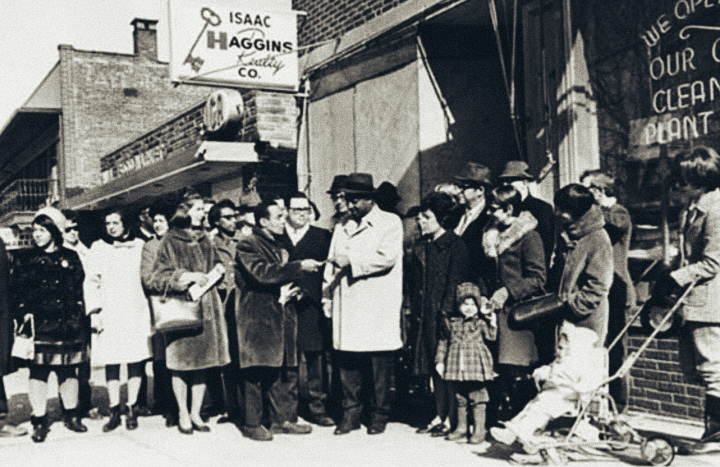
Racial Integration in the Heights
Interviews in this series were collected by undergraduate students at Cleveland State University under the supervision of Dr. Mark Souther, with funding from the Office of the Provost. The series contains interviews with pioneers of suburban residential integration and social activists who supported peaceful managed integration/desegregation and fair housing in Cleveland Heights and Shaker Heights in the 1950s to 1970s.