Judith VanKleef interview, 23 May 2013
Abstract
Born and raised in the Bronx, Judith VanKleef attended college at the University of Wisconsin. She moved to Cleveland's West Side in 1950 and then to Cleveland Heights in 1964. She discusses the shifting color line on Cleveland's East Side in the 1950s-60s and the impact of blockbusting on neighborhoods including her own. She details a blockbusting campaign in the Grant Deming's Forest Hill neighborhood in about 1967 or 1968 that catalyzed the reconstitution of a long defunct block club to try to stabilize East Overlook Road. VanKleef also discusses the Heights Community Congress, Cleveland Heights businesses, the origins of the "Nuclear Free Zone" signs at the entrances to Cleveland Heights, and the changing nature of community issues in the Heights in recent years, including the Coventry Street Fair incident in 2011.
Metadata
Interview Transcript
Transcripts may contain errors.
Judith VanKleef [00:00:24] It's Judith VanKleef.
Mark Souther [00:00:26] Okay, so I had all of it. Thank you. Where and when were you born?
Judith VanKleef [00:00:31] I was born in New York City, as a matter of fact, in the Bronx, [...] 1926.
Mark Souther [00:00:42] And so you— did you grow up in the Bronx?
Judith VanKleef [00:00:45] Yeah, basically I grew up in the Bronx until I left the Bronx to go to the Midwest for college.
Mark Souther [00:00:52] Where was that?
Judith VanKleef [00:00:53] University of Wisconsin.
Mark Souther [00:00:57] And what did your family do? What did your father do?
Judith VanKleef [00:01:01] Oh, that's a long time asking. My father's basic life was he was a— in the men's clothing manufacturing and specifically in something that I don't think they make anymore in men's clothing. And he also was an organizer in the Amalgamated Clothing Workers Union and a business— you know, worked— was active in organizing the union and keeping the union. My mother— well, my mother didn't really work. She— during the Depression, she went out and sold stockings, and she was a chambermaid, and she was quite a capable woman, though, by the way. Later, she didn't work, really.
Mark Souther [00:01:59] What kind of— were you in an apartment, or what kind of housing? Can you describe it?
Judith VanKleef [00:02:02] We lived in apartments, many apartments. We moved frequently.
Mark Souther [00:02:09] Were they cooperatives?
Judith VanKleef [00:02:12] No, no, they were not. We did not live in cooperatives. We lived in different parts of the Bronx, all over the Bronx. In fact, my sisters and I joke that we don't have to say what year it was. We just have to say the house number. One building actually that they rented, that we rented in for two years, was part of a cooperative. But they were not part of the cooperative. They were just renters there. No, that's what it was, major apartment buildings.
Mark Souther [00:02:47] When you went to the University of Wisconsin, what was your major?
Judith VanKleef [00:02:51] My major there was in chemistry, but I had gone— I did two years at Brooklyn College first, so I was a liberal arts major.
Mark Souther [00:03:04] Beyond that, did you go on for any further schooling?
Judith VanKleef [00:03:07] The only thing I did after that was training for clinical chemistry, because I ended up in a clinical lab.
Mark Souther [00:03:15] When did you come to Cleveland?
Judith VanKleef [00:03:21] 1950.
Mark Souther [00:03:22] You mentioned on the phone, or actually, I think you mentioned to me on the phone, that you lived on the West Side somewhere?
Judith VanKleef [00:03:29] We lived on the West Side for the first, I'd say, 14 years we were here. We came here in '50, and we moved into the house in January '64, although we bought it at the end of December. Yeah, and we lived in all parts of the West Side, too. We lived in 3 different— I'd say 3 different distinct neighborhoods.
Mark Souther [00:03:53] Which areas?
Judith VanKleef [00:03:55] We lived— we lived in the Detroit East Boulevard area. Then we lived in the Lorraine, East 117th Street area. Then the last eight years, we lived in Old Brooklyn.
Mark Souther [00:04:12] From Old Brooklyn, you moved—
Judith VanKleef [00:04:14] Here.
Mark Souther [00:04:19] When were you married?
Judith VanKleef [00:04:23] 1949.
Mark Souther [00:04:24] Right before you moved to Cleveland. Where were you living then in '49?
Judith VanKleef [00:04:32] Actually, I was living in Manhattan.
Mark Souther [00:04:35] I see. How long were you in Manhattan then?
Judith VanKleef [00:04:41] It was some time after I graduated— well, after I came home from college— until Howard and I— well, we actually were living in Upper Manhattan after we were married. Before we came to Cleveland, it was a different part of Manhattan. But I think that was called Manhattan, too, part of Manhattan.
Mark Souther [00:05:02] When you moved then to— well, I guess I'll go up to 19— you said the last eight years or so you were in Brooklyn, or did you say six?
Judith VanKleef [00:05:16] Old Brooklyn. No, eight years was Old Brooklyn, right, Howard?
Howard VanKleef [00:05:20] Yeah, about eight years.
Judith VanKleef [00:05:20] Yeah, because Susan was 8 when we moved here.
Mark Souther [00:05:24] So 1958 or so.
Judith VanKleef [00:05:26] No, it was 1955, '56. It was actually, it was '55, the end of '55 to '64, but that was the beginning of '64. Yeah.
Mark Souther [00:05:41] I don't know why I did the 6 years after you said 8 anyway.
Judith VanKleef [00:05:45] No, that's okay.
Mark Souther [00:05:48] In that time, did you start to— how did you come to live in Cleveland Heights?
Judith VanKleef [00:05:56] Oh, that's easy. We were living in Old Brooklyn, and I had two daughters. The older one, in school, and first she was put in— Cleveland didn't have— Cleveland had a lot of special education things, so they had What was the one level? Then the next level was major work. And then the third one was a pilot program. So the major work program was just too far from our house. They wanted her to go to it. So we sent her to the lesser one. And that was also not in our neighborhood, you know, and it was quite a walk. And then when she was about in 4th grade, They started pushing for us to send her to this pilot program, which was way out on the West Side. There was one on the West Side and one on the— like in the Harvard area on the East Side. And I had a number of reasons to be against it. Number one is I felt that if you can't give her the education she needs in a school in her neighborhood— I'm very much for neighborhood schools— in a school in her neighborhood, then, you know, that's not helpful. Second of all, they were already taking French and they were reading Russian on. And I started thinking, this is an awful lot of pressure. And she didn't need that pressure. She was a good student. She was an interesting student. But we didn't need that. We needed her to enjoy her schooling. So meanwhile, we felt that we were— living on the West Side was not culturally the best thing for us. We did a lot of traveling across town with our children for activities as well as for ourselves, for friends. So we started looking somewhat earlier. We saw— we looked for several years. But that last year when she was in 4th grade, she was overheard telling a friend that every year my mother gets moving sickness, but this year I think she means it. So we decided to go ahead and really not just look, but to really, you know, look seriously. So that's when we did it. And we actually bought the house in December and moved here in January of '64. And it turned out to be, for everybody, the best move we could have made.
Mark Souther [00:08:20] You mentioned to me on the phone as well that When you were— when it became clear that you were serious about going to Cleveland Heights, that you had some people, maybe neighbors or friends—
Judith VanKleef [00:08:32] Oh, we had a couple of people. This was— there were no Blacks. I mean, there was maybe one isolated Black or two in the city then who said to me, you know, oh, but there are Blacks living there. This is what the— this is why getting out of the West Side was— we weren't going to make a revolution there, I can assure you. It's changed now, but It wasn't anything that— and culturally, it was not good for my children. And, yeah, you know, there are Blacks there. And I said, if there are, that's fine, but I didn't know of any anyway. That was— I don't know whether I told you about it, but there was the move from Glenville, and then it moved to Black— moved to Lakeview Terrace and that area. There was always a movement to try and hold the line, is what it was. And that was to prevent the Black families from moving. But what they ended up doing in a lot of cases was resegregating the areas because they— like in Glenville, it became all Black, you know, and then gradually that area became all Black. So people were confused. They thought that Cleveland— people didn't know East from West or Cleveland Heights from— They thought we were moving to one of the Black areas, which was fine as far as I'm concerned. Let them think. But we didn't. I mean, but the cultural— it was really sort of devoid. I drove my one daughter, you know, 10 or 15 miles in one direction for her activities, the other one in another 10. I was virtually driving my children to get them decent activities. So, yeah, in fact, I told them, we're moving to Cleveland Heights. I'm giving up my chauffeur's license and going back to work. It wasn't all that fast, but anyway, it amounted to that. It was a lot better for them and a lot better for us, too. With the two of us, we're much happier here.
Mark Souther [00:10:31] You mentioned holding the line. That's a term I've heard before, and I wonder how common it was. How did you hear that and who said this at the time?
Judith VanKleef [00:10:40] Well, we heard it because there were organizations that were fighting Black residents moving into those areas. And what they would say was, when, like, I can recall when Black residents were living in Glenville, and that was some time before we moved here. The next area was, I think, Forest Hills Boulevard or Lakeview Terrace or something like that. And the movement that was against the migration of Blacks or the acceptance of Black called it hold the line at Lakeview Terrace so no more Blacks could move, you know.
Mark Souther [00:11:18] And how did they go about holding the line?
Judith VanKleef [00:11:20] Who knows, because they didn't. They weren't successful.
Mark Souther [00:11:25] Yeah.
Judith VanKleef [00:11:27] I think they just did a lot of intimidation. But what the intimidation ended up with was white people running, you know, and all kinds of things. Yeah. It was— there were a couple of real estate agents around in this city at that time. I don't know whether they were down— there was one at Lee-Harvard. And when he literally sold Lee-Harvard as far as he could, he came up here. He was in East Cleveland. I don't think he ever came into Cleveland Heights.
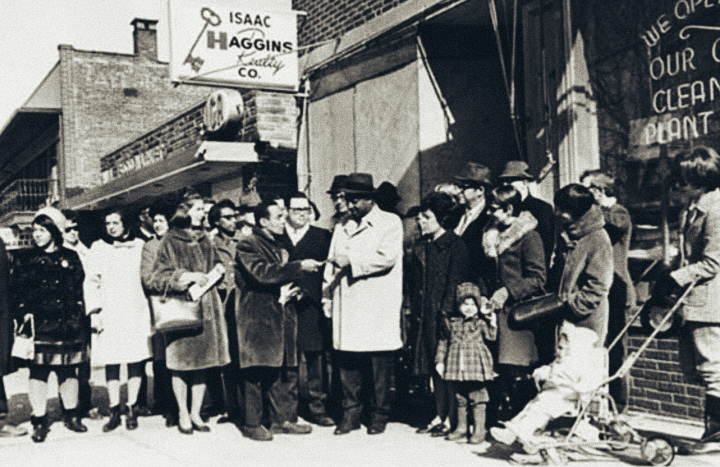
Howard VanKleef [00:11:59] Isaac Haggins.
Judith VanKleef [00:12:00] Isaac Haggins. I don't know whether he ever came into Cleveland Heights or not, but he was in East Cleveland, and we know people there who were pressured by him to move, too.
Howard VanKleef [00:12:11] That had an explosion in it?
Judith VanKleef [00:12:15] No, that wasn't Isaac Haggins.
Howard VanKleef [00:12:17] No, but I'm saying around.
Judith VanKleef [00:12:19] Yeah, there were several explosions. That was one Black family at the end of Eastover. You know about that one. He knows about it.
Mark Souther [00:12:37] This Isaac Haggins that you mentioned, Susie Kaeser mentioned Haggins Realty. Probably the children at this point, but maybe Isaac Haggins is still living, but I don't know. Do you have any knowledge?
Judith VanKleef [00:12:52] I have no knowledge. In fact, I haven't heard anything about him. We used to come across Harvard Lee to take our children to the Children's Theater at Wiley. We'd come across Harvard and the whole area was lined with Isaac Haggins signs. So when we spoke to friends of ours who lived in the neighborhood at the time, they said, yeah, I mean, it's just He's just overwhelming. He's, you know, really driving families out. And eventually these people all moved out too because they had children. They didn't want their children to be the only white children here or the only Jewish children there. So, yeah. And then shortly after that, his signs started blooming in East Cleveland around Terrace Road and stuff. And that was a very interesting migration because I worked down there then. And in the spring— I don't remember what year it was, but in the spring, there were all kinds of children walking to school in the neighborhood. The following fall, there was one woman who rode her child on a bike, on a bike to school, a white woman. All the other children were already black. And that—at that time, there was a— sometime around then, I mean, all these dates are not in my mind, but around then, there was on Channel 25, I think Channel 25 was already in existence. There was a program called Where Have All the White Children Gone? And it was about East Cleveland schools because the impact was so great that they just all moved out. And that's what made Cleveland Heights Council and Cleveland Heights, you know, not only the residents but the leadership in Cleveland Heights become proactive on the issue.
Mark Souther [00:14:55] Of course, I guess it was happening— it happened earlier in Ludlow.
Judith VanKleef [00:15:00] Ludlow is Shaker Heights, but Ludlow stayed integrated for years and years.
Mark Souther [00:15:06] I mean, there was a concern, I guess, because of what was just west of there in the city of Cleveland.
Judith VanKleef [00:15:12] That's right. And Lomond, too, around the Lomond School, which could be part of Ludlow, I don't know. But anyway, that area, too. Yeah, I mean, there were a lot of areas, but in Cleveland Heights, They realized that this could happen because all they had to do was come up the hill. And the people here who were living in what is known as Ward 1, you know, the Fairmount, you know, area and that, were against it. They didn't want that. They wanted their homes. They weren't going to have any movement. So they were very willing to help the city of Cleveland Heights to develop— I mean, the first thing, and I don't remember, but I think it was through the city. The city had a 10-point program in their real estate at that time, but I don't remember what it was that they came up with, city council came up with. But they also had no solicitation cards that everybody would sign. And I remember going out with them, not on this street only, but in other streets in the neighborhood to get people to sign. that they didn't want to be solicited by real estate agents. There were a number of— let me think of what other activities went on at the time. And by 1972, the Heights Community Congress was organized. And that was definitely a fair housing organization. And you have to talk to them. But they had— we had some major suits in this against real estate agents and such. But it also organized later the neighborhoods. And the streets were organized. A lot of us had organized streets like our street. And not all of them were organized for the same reason. Some of them were purely social. And, I mean, your street was— I can remember when they had their 50th block party, but I can't tell you what year that was. Yeah. I mean, so—
Mark Souther [00:17:13] I'm curious, you mentioned— and we'll get out of order a little bit, which is just fine. While we're on the subject of blockbusting and street clubs, I wondered if you remember— did you answer the door when— or was it just leaving a card?
Judith VanKleef [00:17:34] What, Elko?
Mark Souther [00:17:35] When Elko—
Judith VanKleef [00:17:36] Elko did it on the phone. They went up the street and called us all on the phone. And try to tell us that, you know, there are Blacks moving into the neighborhood. You know, we're willing to sell your house for you now. Get you a good price. And I don't know whether there was anybody on the street that didn't react. I think by then, if people didn't want Blacks in the neighborhood, they were already gone from the street. I mean, this— you know, if they were concerned. But— Because we had a very, very full house meeting the next night. The Elko people showed up there trying to explain themselves, and they really didn't find themselves very warmly greeted.
Mark Souther [00:18:20] Who was— well, first I'll ask, who organized the meeting?
Judith VanKleef [00:18:27] The meeting was at the Martinez's, and they're still living on the street. It was Joe and—Peggy. Peggy Martinez. They still live on the street. Now, our neighbors here are not these neighbors, but this— that lived here. She and I walked up there together. I remember it was a very, very hot night in the summer. And for the life of us, we can't remember where Howard was, but he wasn't there. And he wasn't babysitting.I didn't need babysitters by then. So, yeah, so we walked up and all these people were there. And they founded the Street Club. I can't remember who the first president was. And they started a newsletter and they had the block party. And I don't know whether the block party— I was talking to Peggy last week trying to get these dates straight. We can only go by the age of her children. And when the first block party was, but it was— Like the following year, or it was later that year, you know, we had our first— and we used to get, for years, the block parties attracted about 100 people, including children. So the whole street was pretty well— because don't forget, we had more houses on this street then, because where the garage is now, a number of houses were taken down.
Mark Souther [00:19:45] So we're talking about between Lee and Cottage Grove?
Judith VanKleef [00:19:48] We're talking about Lee and Cottage Grove, yeah.
Mark Souther [00:19:51] Going back to the Elko Realty, you said he went down the street. Do you mean literally he called from down the street?
Judith VanKleef [00:19:58] He— no, he— I don't know where he called from. He just called all the houses on the street.
Mark Souther [00:20:02] Went down the list.
Judith VanKleef [00:20:03] Yeah.
Mark Souther [00:20:04] That's what I thought you meant, but I wanted to clarify. Yeah, no.
Judith VanKleef [00:20:07] Yeah, no, they made calls. And they hit a stumbling block because I don't think they expected that kind of reaction. And I don't think we're the only street that reacted that way.
Mark Souther [00:20:22] Do you know if Elko Realty was newly in business at that time in Cleveland?
Judith VanKleef [00:20:27] You know, it seemed to me like it was, but I don't know anything about it. I probably wasn't paying that much attention, but I think it was. The one thing that was interesting about it was that one of the guys who came in as a salesman, I knew was a Cleveland schoolteacher at the time, and I think he may have been doing this to pick up extra money. And he happened to be a friend of somebody who worked with me. And so I had met him. And he was a little embarrassed when he saw me, but he didn't say anything. But, uh, so I don't know how he recruited his staff and on what basis. Probably, you know, you can make a good buck here, you know, which is what it was. But I don't have no idea who they were. They did not bother us again. And I don't know how long they stayed on Taylor Road even. Where was the office? It was between Superior Park and— what's the next street? Is that Blanche or Berkeley or, you know, over there? Yeah. It was where the apartments are, you know, across the street from the little shopping center now. It was in one of those storefronts.
Mark Souther [00:21:43] In the Tudor section?
Judith VanKleef [00:22:44] Yeah. I don't think it was a big office, but that was, we think, '67, '68.
Mark Souther [00:21:54] Do you remember whether the block club got formed at the first meeting or whether it was later?
Judith VanKleef [00:22:00] Well, we decided to form a block club at that meeting. We decided, I know, on the— I don't remember who the officers were or what was going to happen. We decided to have a block party to get everybody involved. There were a lot of decisions made there, but our historian has been gone for well over 20 years. Well, yeah, we had 2 families living there for 22, and now one's there, so it's over 25 years. And they were in their 90s when they moved. We did visit her, but she took all those things with her. And whether they remained anywhere or whether they just were lost, we don't know. But she kept perfect— she just kept records of everything. She had a very interesting life, and she was the recorder of that, too.
Mark Souther [00:22:52] Yeah, that's a shame that it's lost now, because you could really piece together a lot from that.
Judith VanKleef [00:23:00] Well, I don't know. I mean, I don't know how far back. I have flyers, but they're not that far back at all. Because there were a lot of people who did flyers and newsletters before we started doing them here.
Mark Souther [00:23:12] Apart from social events, what other ways did the Block Club that got reactivated at that meeting take action? What sort of—
Judith VanKleef [00:23:24] I'm not sure whether we took any real direct action, but I do know, like, I think we all signed anti-solicitation petitions. patient cards when that came up, which could have been later. It could have been later. That was already when the city was working on it. I don't really— I don't have any records of anything, and I have no clues to anything, because things just get further and further apart in my mind. I know that we did that. We were welcoming a street, and I think I mentioned to you that we had a Black street president. And this was a few years later. And we had a Black homeowner. And the Black homeowner said to the Black street resident— president, he said, why are you doing this? Don't you know that the street club was organized to keep you out? Because that's the kind of things that they were doing in a lot of areas. They were—the white people were organizing to keep the blacks off the street. So he explained to them, no, no, this street is to welcome us, you know, this street club. So he knew that. And I don't know whether we did anything outstanding as far as anything goes. I think we just were supportive, you know, of people. And the thing about it in those days that the tenants, the renters, The ones in the duplexes, but also people who sublet houses for one reason or another, were all just part of the street. There was no problem, which is not what we have now.
Mark Souther [00:25:10] Were the block clubs that you mentioned, the other block clubs that organized to try to keep Blacks out— I'm interested in the Do you know of any tactics that they might have used at your old homes, such as pats, not to sell?
Judith VanKleef [00:25:26] I have no idea. They were organized probably in the Glenville area, because that's where I think they came from. They may have been aware of them. I know that they existed, but I don't know what they did. I don't think I—
Mark Souther [00:25:42] You mentioned also that within a few months after you moved to this house, the first Black family—
Judith VanKleef [00:25:49] Well, it was more than a few months. It was the following year, I think, because my daughter was in— well, you know what, I'm trying to remember. But whether she was already in 6th grade when they moved, when the Storeys moved in.
Howard VanKleef [00:26:05] Oh, something like that. She was in middle school.
Judith VanKleef [00:26:06] But we moved here in 5th grade, so I think it was when she was in 6th grade. They moved in. They moved in just on the other side of Parkway in a big house. And they were fairly— I don't know what to use, but they moved from here to South Woodland, if you're familiar with moves. How's that? Well, I don't know how, but they were a pretty on-the-rise couple. And so— and they had these twin daughters that were in my daughters class
Mark Souther [00:26:47] What did they do for a living?
Judith VanKleef [00:26:49] You know, I don't know. Because I know the brother of the man was a— was an attorney, because he was a well-known attorney in town. And I don't know what they did, but they both worked. The only thing that I remember is my daughter and her friends were so impressed because their parents were so young. Their mother especially was so young. They came— that was the first thing they came in the house and told me. about how young she was. So I guess we were considered old goods, old no-goods. But I don't remember anybody at that time particularly moving out, because like in this house and the house directly across the street, I think they may have already moved. That's why I think it's a year later. They may have already moved. And the— I'm not sure they moved because of blacks coming on or whether— Or because we came on, I don't know. But anyway, they've already moved, you know, and so I have no idea. And I can't recall anybody specifically moving as a result of it. I do know that there were all kinds of other things that went on. Actually, it was the Berkowitz-Kumin funeral parlor? The guy who came into the office and told a friend of mine who was working there that, oh, before you know it, Cleveland Heights is going to be all Black. Don't go there. Don't live there. Of course, she told it to the wrong people, because those are the people who made sure that it wasn't. Yeah, but so there was a move on. And I think I mentioned the Heights Area Project that Drew was involved in helping.
Mark Souther [00:28:38] I'm sorry. I'm going to interrupt, but we need to be careful about the sound because the microphone will pick up every little thing. I've gotten used to it, but—
Judith VanKleef [00:28:47] They, you know, so they were around to help The Jewish families stay in town and to buy in town. Right around here, I don't remember anything, you know, too dramatic happening. Do you?
Howard VanKleef [00:29:10] Well, I remember an incident with the Kellings.
Judith VanKleef [00:29:16] Oh, that's much later, Howard, and he was in his alcoholic state. [telephone rings] Excuse me.
Howard VanKleef [00:29:35] Who's this? Uh, can she call you back? You, you're home now? What was that? Calling me? Okay, she'll call you back. She's in the middle of something right now. Okay, bye-bye. Okay.
Mark Souther [00:29:58] I just thought I would just let it run rather than turn it off. So there was an incident later that involved—
Judith VanKleef [00:30:07] It was a verbal thing from a very nasty individual who was under the influence of alcohol. I don't think it even counts. As far as the street goes, it had nothing to do with it.
Mark Souther [00:30:20] What about getting back to the first family that moved in? Who was there before, and was it for sale by owner?
Judith VanKleef [00:30:31] You know what? I don't know. It probably was a realty company, but I don't think we even knew the people who were there before. It was a little further up. And for the life of me, I can't remember. If I did know, I don't remember who they were.
Mark Souther [00:30:50] Was it in the house that you mentioned? It was a bigger house, and it's toward Lee.
Judith VanKleef [00:30:56] It's the first house after the duplex, after Parkway, on the north side of the street. And now it happens to be owned by an absentee landlord.
Mark Souther [00:31:09] White, It's white now.
Judith VanKleef [00:31:10] I don't know.
Mark Souther [00:31:11] Painted white.
Judith VanKleef [00:31:12] Is it painted white? Yeah. But we've had a succession of people moving in. They made what was— I don't know whether they made the sale or it was after them. There was one very bad sale made, you know, and the people left it in bad condition. Then a young couple bought it, and they redid the house and everything, and then they Moved. He was a teacher out in Sheffield, and they moved out somewhere out there. And they were a young Black couple, as a matter of fact, but they moved out there. And I don't know— I'm trying to remember where the other sales came and which houses they were. I know that the one thing we used to say is that your street is integrated when Blacks and whites move in freely, move in and out freely. And we did have that for a while, like the house across the street and a couple of other houses where the Black family and then they sold to a white family, you know. And there was no consideration of that. But we, you know, this is not one of the more— Neighborhoods. You know, it was, you know, income-wise, it was not one of the higher-income streets. We had a lot of schoolteachers, medical residents, I don't know, that kind of people, actually. So, you know, it was, it was vulnerable, you know, for a lot of things. But I don't— recall too much difficulty.
Mark Souther [00:33:00] Along those lines, and I'm going to skip out of order again, but since you mentioned your definition of integrated, which I think is a very good one, how do you— I don't really know the state of it now, but how would you describe it now in terms of, do people move in and out freely, in your opinion, regardless of race, or is there a pattern?
Judith VanKleef [00:33:22] Well, what we have now is we've had— we have 1, 2, 3, 4, 5 houses that are owned by absentee landlords, and four of those houses are owned by two landlords. In other words, two own two houses each, and the 5th This one is owned by a real estate agent. Then we have a house on the street that I'm sure it's going to fall apart before anything happens. It was our house beautiful. The family, the father, actually the husband, bought the house in 1925 when it was built. Then he married his wife, and they lived there, and they raised three children. And the youngest son went on living there all these years. And I guess it was in 2010 or 2000, I can't remember, he died suddenly. And the house has been empty ever since. And it's one of these things, there's a real estate agent owns it. The real estate agent— It's a— mortgage company is what owns it. And that's what it is, a mortgage company. They're in Cincinnati, not up here. And it's been put up for auction twice. But they put these houses on auction and they don't let anybody know. And you can't go in to see what you're bidding on. So they get no bids and it goes back up for auction. And we took a walk up on one nice day we had in the middle of the winter. And I said, I'm going to the back to see what's going on here. And we noticed the front door And it was— a pane of glass was broken in the storm. And there was a sign that said something about the house was found unlocked, but it's locked up now. And I don't know who found it unlocked. We couldn't figure all that out. Then I walked to the back, and there were two cans of trash sitting there. So I called the city, and then I called them back sometime later, and they said that a list of violations was sent. To the owners, and they are responsible. And I still— so when I still went up there last week, and this was some months ago, those two cans are still there. And that house, by the way, used to be considered house beautiful on our street. Plus, for every holiday, they had lights and decorations up. And he, the son, was really into photography. And he had slides of every event that happened. Everything on the block, the block parties, the children's Halloween, Christmas party, you know, all kinds of things that went on. In addition to which events in the street. There was a garage now. There was a vacuum cleaner place. And I still to this day don't know whether I have the story right because I've heard so many variations. We heard it was just a fire, and then we heard there was arson, you know, and an explosion. Whatever it was, he had pictures of those, all of that. He had photos of all of that. And we don't know whatever happened to them, because if they were in the house, I don't know whether they're still there or not. And we don't know whether anybody ever really officially came in and took anything out, you know. And— It's listed on the— when you look it up, it's listed as no heirs. But before all this happened, maybe right after he died, you know, his brother or somebody came in and took out some of that stuff. We don't know. He also had a tremendous music collection, because that was his— that was his— basically his profession. He worked in— worked with— at music stores and, you know, and, you know, classical music, not the— Jazz. And so he had a tremendous music collection. He was, he was a season ticket holder for Cain Park, for Blossom. I don't know whether he went to Severance or not, but I wouldn't be surprised if he did. But Blossom and Cain Park we were aware of. You know, so he had all this stuff going in addition to the house being so nice. And when his mother was alive, she would say to me, you know, if not for Peter, I don't think I'd have the energy to keep this house so nice. So he really was into keeping the house. Now it's falling apart, and there's— I keep talking about something has to be done, and I'm getting tired of it because nobody is responding. And I think that somebody has to get on— they tell me, oh, the banks are not giving loans, the mortgage, you know. There's somebody's got to take a hold of this. And I've even— a community, Heights Community Congress that I thought might pick up on this. I was told, well, they could. Oh, my other problem is that I think that houses in not just the street but in this area, in the inner city kind of a thing, what I call the inner city of the inner suburb, inner ring suburb, real estate agents are not pushing as hard as they will in a sort where they can get a lot more money. And they're letting the prices really go down. So people who are moving out are not getting their value. Plus prices are just going down anyway. So they're really being pushed down. And I think that they're not being held to task. And I was told, well, you can make it a class suit. But— and then they left it. I mean, I'm not going to make it a class suit. I haven't got anybody to sue. Nobody's done anything. I can't do the investigating. So that's where it is. But I just have this very strong feeling that whatever movement is going on in this area, in, you know, this city right now is not— you know, it's positive in the sense they want to keep things nice and going, but it's— not being reactive to the situations. I'm not asking them to be proactive, but reactive to the situations. And I don't know how much of the city— I do know that somebody told me about a house on Quilliams and Monticello that had the same problem with a real estate agent, you know, not bothering and not taking care of the property, and the property deteriorating under the real estate agents. So I think all of this is part of what's going on now in this city. And these situations are being ignored because the people in leadership are not involved. There's no real concern, you know. The house goes down, put up a garden, you know. But there's no concern for the people who've lived there or who used to live there or potentially people who could live there. So I don't know. What's going to happen, and I'm just waiting for some people who are going to take the initiative. And because other streets are having problems like this, and there are streets that you wouldn't expect would have, but, you know, foreclosures are happening everywhere.
Mark Souther [00:40:48] Yeah, it seems that sometimes I look at Cleveland Heights and I wonder whether the good days are in the past in terms of activism, leadership, vision. I don't know.
Judith VanKleef [00:41:10] Well, you know, it's crazy, but the Heights Community Congress still has a mission, which is fair housing. They still do monitoring. They do monitoring. But what they do with the— what they get in the monitoring, nobody knows, you know. I mean, if they don't— if suing is not— is part of the past, you know. But there've got to be other methods that you use to bring this to the fore and you make real estate agents aware of what's happening and community aware of it. And there hasn't been anything right now. And, you know, I— I'm strong— was a strong Heights Community Congress supporter for many years.
Mark Souther [00:41:57] Going back some, let's talk a little bit about the Heights Community Congress, and you also mentioned a group that I'm not really familiar with, Boulevard Neighbors.
Judith VanKleef [00:42:06] Okay.
Mark Souther [00:42:07] We could start with Heights Community Congress and any connection that you had with them, or anything you could tell me about them.
Judith VanKleef [00:42:14] Well, okay. The Heights Community Congress— there were a number of organizations that preceded Heights Community Congress. I don't remember all the names, but there was, you know, about integration and racial fairness and stuff. You know, one was a Black organization, one was a white organization. Do you remember the name of them? We went to several meetings. But we were never really active in it. And then I think— I don't know whether I mentioned to you, but these women in St. Ann's, this is a St. Ann's study. And they— it was on real estate dealings and stuff. In fact, there's a little book.
Mark Souther [00:43:00] I have it.
Judith VanKleef [00:43:01] You have one? Okay. Out of that, the Heights Community Congress was born. It was born with a Catholic priest and a Jewish rabbi and a few other people. And that was in 1972. And the Congress came on board with the idea of maintaining Fair housing and, you know, and maintaining a fair and equitable community. And while they had— but they recognized in order to do these things, they also had to have what I call quality of life issues, you know. They organized at that time, they organized— there were all kinds of neighborhood organizations going on. And— but then they organized around the schools. There was Boulevard— there was Noble or Caledonia, Coventry. I don't know what they did in Taylor. So I don't recall exactly how they were organized in the various things, various neighborhoods. But we had these neighborhood organizations were more closely directed related to the, you know, the constituents in each of those communities and worked with them. And those too sort of outlived themselves after a while. And actually what happened was the Heights Community Congress had a lot of programs. They had a new homeowners questionnaire. They had a housing service. They had— oh, God, my memories. You don't know?
Mark Souther [00:45:00] What was the questionnaire?
Judith VanKleef [00:45:02] The new homeowners questionnaire? Did you get one? The city's still doing them.
Mark Souther [00:45:07] Oh, I may have. It's been seven years.
Judith VanKleef [00:45:12] Okay. Well, what it was, was we called new homeowners to find out what their experience was. find out what their experience with real estate agents was. But generally— and then the city came up with their— well, the city didn't come up with it because we fought for it. The city finally put point-of-sale inspections out. And so we also asked them about that. And then at that time, the city started taking in-house. They took in-house the— What was the name of the company? Housing Service, which is part of the Community Services, you know, Community Relations Department. They took the new homeowners questionnaires in-house. They took, I don't know, whatever else we did. They took it in-house and became a part of the city. And we continued to function doing other things at the time. And—
Mark Souther [00:46:15] What role did— when did the Heights Community Congress home tour begin?
Judith VanKleef [00:46:23] Okay, the Heights Community Congress. The Heights Community Congress is over—the tours were over 40 years. The idea beside the tour was to showcase Cleveland Heights as a viable community to live in.And as a—the idea was to show all forms, all kinds. I mean, the big houses are the ones that get the plugs. But the idea was to show all kinds of houses and at the same time be a fundraiser for the Congress. And it was a great— it still is. I mean, they still have it. They're working on the one for this year. So I guess this will— we're 42 years old. I guess this is maybe the 40th or— 40th. 38th or 39th. I should remember because I've been on the committee— not on that committee, but on committees with it. And that was the whole idea of the tour. And it was one of the functions that the Congress participated in. They also did a lot of other activities. They would— and we did things which were—now when I think back, you know, like school board elections. We were interested in the schools. We were very interested. All of us were. Most of us had children in the schools, you know, not then, but, you know, some of them had them then. But we were all interested in the schools, and we thought that school board elections were key. The Heights Community Congress was not political, but they did have forums and things with speakers from the candidates come. They had forums on other issues. Our neighborhood group, you know, Boulevard Neighbors, had some very good forums and then sort of attendance started slacking off after a while. But we, you know, we were working on things. And we— then when the city took the neighborhood groups in, I don't remember what year that was. There was a reorganization because they had staff members by schools too, and you were in a neighborhood with your staff person. And it ended— this— we over here ended up in Coventry Neighbors. And as a street, I don't think we ever felt like we were— we felt like we were away from— My children went to Coventry School, and so did some of the children. But others went to Boulevard, you know, and then now they— but we weren't quite as involved because Coventry Neighbors was wrapped really around Coventry itself and, you know, completely different story. Boulevard Neighbors, I know a few years ago, in fact it was Susie Kayses tried to reorganize it and it didn't move. The only thing that moved was we got some signs out of the house and gave it to them. But so I think that the neighborhood organizations at that time, you know, just weren't. So I know Future Heights is trying to organize, but they're not doing it on the same basis. It's not at all—they are not, you know, and I don't think they're interested in the same concerns.So, but—
Mark Souther [00:49:47] More business-oriented, I think, promoting business.
Judith VanKleef [00:49:50] Well, I think they change their minds pretty often. But I think what they're trying to do is they're on it. They're not ready to do— well, the Congress, even up until a couple of years ago, had some very successful forms on racism and, you know, rights. And then when there was an incident Where was that incident? Oh, the Coventry incident. The Coventry— the Coventry Street Fair. They had a big meeting at the library that they sponsored. But there have been other, you know, other issues like that that they still do. We had one at the community center that had— the place was full. So there were a lot of people there, far more than we expected. People who are interested in maintaining the community. But they still— because there's some kind of an inertia that lacks when it comes to keeping this going. And people— I think people are at the point where they want it fed to them. You know, they're not going to take the responsibility themselves or something. You know, they want to know that somebody's out there protecting them, but they're not ready to do the protecting. So that's about what it is. And so I don't know of any, you know, I don't think it's— I don't think we're going to die.I don't think the city's going to die. I think that right now, though, the development is geared to trying to compete with what's going on at University Circle. And maybe once they get that out of there— system, they'll revert back to what they, you know, what the community needs. But I don't know how long it'll take to get it out of their system. But I think that's, you know, that's like the Lee Meadowbrook. They want that built up like the uptown is down. You know, they don't realize that, you know, we're very close. But, you know, so I don't know. I don't know where we're going or what we're doing. Mm-hmm. Unfortunately, I wish I did. I'd like to see things happening. On our street, there are a core of people that are still concerned about what's going on on the street, you know, and the neglected houses, the foreclosed houses, the absentee landlords. But there really isn't much we can do. And that's what's sad. You can't— you can't keep absentee landlords out. You can ask them to come to a meeting and to, you know, and to accept some of the responsibility for their property, to keep it. But you can't— you can't make them unless— unless, like in this case, you get them cited. And we do have one absentee landlord that I think should be cited periodically. But instead, people— take care of the property for them I think that's a good idea.
Mark Souther [00:52:52] It's sort of interesting, you mentioned taking care of the property for them. It has to be a terrible dilemma, because you know they're not going to do it. On the other hand, you feel like you have to step in, but by stepping in, you play into the—
Judith VanKleef [00:53:08] Well, the thing is, though, if you call the city, and the city comes out and you know, mows the grass and does the front, they get charged like $300 or $400. Okay? So an absentee landlord is going to think twice because he can hire somebody for $20, $25 to come in even if they don't want to do it, or she can hire somebody to come in and take care of the property, you know, take care of the grass and stuff. And then if you're renting, the other thing is You have to be concerned about who you're renting to. You have to be a responsible landlord. You can't just rent to a family and then, oh, they're not paying rent, kick them out and have this noisy, messy stuff on the street. I mean, there's just no— I don't know what makes people want to buy property. I really don't. Is it to make money?
Howard VanKleef [00:54:05] Yes.
Judith VanKleef [00:54:05] But I don't mean— I don't mean— no, no, I don't mean— but I mean at the expense of everything else. I mean, they're not, you know, like there's 2 houses here that the same woman owns. Both times she— she lives in Moreland Hills. So both times she said, oh, she was going to move into the house, you know. Instead, no, she rented them. So one house I don't hear anything bad about, but the other one I keep hearing the neighbors say that they're noisy families, or they keep changing, or— You know, so it's not easy.
Mark Souther [00:54:43] In other areas, I guess I wanted also to ask about some things that relate more to your experience of Cleveland Heights, in terms of places that you've enjoyed at different times.
Judith VanKleef [00:54:56] Well, we enjoy a lot of Cleveland Heights. We really do. Just looking out this window, we enjoy. No, we enjoy this particular location in particular because we are between two— walking distance to two libraries. We used to have two movie theaters because there was a movie theater at the end of Euclid Heights Boulevard for years and years when the Cedar Lee was here. We're walking distance to Kane Park. We now have two theaters. We have the Ensemble in Coventry and we have the Obama up the hill, but the Obama used to be at Coventry. We have had more activities right in the area than we really need, you know, walking distance, which is great. And we've enjoyed the people. We've enjoyed living here. We enjoy it. We do a lot of walking. We did a lot of walking, and it was just, you know, great to walk through here. We always felt that also there was something about Cleveland Heights that you didn't have to be very, very wealthy and you were accepted. You didn't have to be very, very poor to be accepted, you know. You just could be accepted on what you are. And we felt that that was true in most neighborhoods. I'm not sure that that's so true anymore. You hear a lot of bashing of Section 8 renters, and you hear a lot of other things going on that are not really healthy. But we still love this, especially this area. We don't want to move from here. We're really located well. In addition to one time we had the post office up on the corner. The post office used to be where Zagara's is now.
Mark Souther [00:56:52] I didn't realize that.
Judith VanKleef [00:56:53] Yeah, no, it moved. Well, I'm losing track because John has been over here for over 10 years already. He used to be at Yorkshire where Elgin Furniture is. And then he built over here. And in fact, I just was looking at today's Sun-Press. And it's been 11 years since the diners originally opened.
Howard VanKleef [00:57:16] Yeah.
Judith VanKleef [00:57:17] Yeah, so things have been happening fast in this area. But that's another thing. This street has always had concerns about those 4 corners, because what we had were car dealers. We had car dealers on 2 of them. And we had lots of young children. And they would go down the street, you know, hanging out of the car listening for sounds, and the parents used to be hysterical. So we had letters sent to the owners and the car dealers. So finally we lost car dealers, and then we had empty spaces. And we thought that when the first diners opened that everything was okay, but now we're hoping that this purchase is going to work. And Rite Aid, by the way, has got a lease that's getting near its end, so nobody knows what's going to happen there, whether they're going to keep this property and move something. They had a store up there, and, you know, like the dollar stores now, that's what we had with the drugstores a few years back. So we don't know what will happen with that corner.
Mark Souther [00:58:30] Nothing's in it right now, correct?
Judith VanKleef [00:58:31] Yeah, no, their offices are. They moved their corporate offices up, but whether that was just temporary because they had a lease. So we don't know what's going to happen. And I know that at a meeting a few years ago, John mentioned— I don't know when it was, but he said something like 3 more years on the lease. The 3 years could be coming close to an end now. I don't know.
Mark Souther [00:59:00] What about farther down? Can you remember the state of the building? They call it the Douglas Fine Arts Building on the northwest corner of Cedar and Lee.
Judith VanKleef [00:59:12] Oh, well, yeah, the Douglas Building. Representative Stokes had his offices there for years. Stokes had offices there once, he and he— well, when we moved in, there were all kinds of offices there.
Mark Souther [00:59:30] What about businesses on the first floor? Anything that you recall?
Judith VanKleef [00:59:34] Well, I don't know how long— when did Fig Leaves come in? She's up on the second floor now, but she was the front— she was a store on Cedar. There was a beauty parlor on Cedar.
Howard VanKleef [00:59:47] A barbershop.
Judith VanKleef [00:59:49] There was a barbershop. There was a— was it a White Tower? One of the real—
Mark Souther [00:59:55] Royal Castle.
Judith VanKleef [00:59:55] Royal Castle hamburger thing with bellies or whatever they are now. And, you know, I don't remember what was where. There was a theater for a while where the music store, you know, in that area. But I don't remember what was there before that. Can you?
Howard VanKleef [01:00:17] No.
Mark Souther [01:00:18] Oh, there was another theater?
Judith VanKleef [01:00:19] It was a live theater.It unfortunately didn't live very long, and the guy who started it died a few years ago, but it was after it started.
Howard VanKleef [01:00:29] Musicals.
Judith VanKleef [01:00:30] They did just musicals. And a lot of people supported it. But not enough to keep it going. And, well, I— The guitar store has been there for a long time.
Howard VanKleef [01:00:47] The guitar store.
Judith VanKleef [01:00:49] Yeah, but it's not that long. And the Lusty Wrench has been there for as far as we know. Was there something before he was with a car repair, maybe? And the rental place moved in there. Oh, there was a restaurant. Where was the restaurant? Oh, the restaurant was where the Quick Lube is now. That's where there was a Chinese restaurant, a very good one, as a matter of fact, that moved out to Euclid. That was before we moved in. Huh?
Mark Souther [01:01:22] Chin's Pagoda?
Judith VanKleef [01:01:24] No, no, that wasn't the name of it.
Mark Souther [01:01:26] There was a place on Lee called Chin's Pagoda, but that's going way back, and I didn't I don't know if that was the same one.
Judith VanKleef [01:01:32] I don't know. Well, we went out— we came from the West Side to eat there many, many, many years ago. And we did, you know, we ate there a few times and it was very good. And they were very nice people because I had a niece visit me who was maybe 12 or 13 at the time. And she liked the food. So they gave us the recipes for their food. Fried brown rice and the pork dish, one of the pork dishes. And then she and I went home and we tried it at my house. And then she took it home for her mother. I don't know whether her mother ever made them, but anyway. And— but many years later, I worked with a young woman and it was her uncle or aunt who owned that restaurant, some relatives of hers. And they owned it from the beginning, you know, when they were young and they were older then.[01:02:25] And they did move out Euclid, on Euclid, sort of in Euclid. But I don't know whether it stayed there very long or not. I don't know why they moved from that location unless the property was bought. You know, things happen and people have to move. Oh, there was also an Army recruiting thing.
Howard VanKleef [01:02:45] Yeah.
Judith VanKleef [01:02:45] For many years, right across like where the— Rental guitar places, yeah, somewhere over there. It was there for a long time until I think the draft stopped, although they still were trying to recruit high school kids.
Mark Souther [01:03:10] That rings a bell for me, to ask another question. During the Vietnam War, do you ever remember protests either there or anywhere else in Cleveland Heights?
Judith VanKleef [01:03:23] Oh, there were protests.
Mark Souther [01:03:26] Was that a site of protest?
Judith VanKleef [01:03:27] Huh? No, no. I don't know whether that was a site of protest. I don't know. I don't recall that. I do know that— geez, my kids would probably know better. I think there was some activity at the high school. People in Cleveland Heights were— we're the first— the city is an anti-nuclear zone, and that was one of the first. That group is still around.
Mark Souther [01:04:02] Can you explain— tell me all about the nuclear-free zone, from everything you know?
Judith VanKleef [01:04:06] The nuclear-free zone?
Mark Souther [01:04:09] How that came into being?
Judith VanKleef [01:04:11] How it came into being. Do you remember how it— I mean, there were people who worked on it. The whole idea was to, you know, to have areas so that you keep nuclear— this was not nuclear waste. This was not carrying— Nuclear production. And not keep carrying nuclear weapons through the city and stuff. So I think it was part of the peace movement at the time.
Howard VanKleef [01:04:37] They petitioned the city council?
Judith VanKleef [01:04:39] Yeah, they did. And it was—
Howard VanKleef [01:04:41] They went before the city council?
Judith VanKleef [01:04:43] They'd used the regular process for that.
Howard VanKleef [01:04:45] They lobbied the city council?
Judith VanKleef [01:04:47] And I know that when it went through, they put the signs up. The first thing was on Superior, just north of Mayfield, you know, beyond where the— beyond where now the city garages and stuff. They— there was a— that morning there was a— some kind of program around it when they first were installing the signs there. And yeah. And this has always been a— what were some of the other things that went on during the Vietnam War in the neighborhood? You know, most of the things that I can remember were on a larger scale You know, like downtown, public square, and stuff.
Mark Souther [01:05:34] Do you remember roughly when the nuclear-free zone signs started appearing?
Judith VanKleef [01:05:45] You know what? No. I honestly don't. But we know people— there were people— oh, no, it was after we moved. It was after. In fact, I think it was after My children were in college already. But I don't know. It must have been in the '70s or sometime. But I don't remember. There are people in town who really know that.
Mark Souther [01:06:09] Do you know anyone that I could talk to? That's very peripheral to the focus right now, but I'm still interested in it since it was brought up.
Judith VanKleef [01:06:17] I think that Frances Chiappa, who lives on Hampshire—
Mark Souther [01:06:22] Francis Chiappa. Can you spell her last name?
Judith VanKleef [01:06:25] C-H-I-A-P-P-A, and it's really Dr. Chiappa. He's a— I think he's a PhD psychologist or something.
Mark Souther [01:06:33] Francis.
Judith VanKleef [01:06:33] Francis, yeah. It's a man. I think I remember him being involved. If he wasn't involved, he would know. I think he'd been— that's the kind of thing he's interested in.
Mark Souther [01:06:57] That's a story I haven't heard.
Judith VanKleef [01:06:58] It goes with the peace movement around here, which I think there's a lot of. There still is. And it's kind of broad with all kinds of different, you know, different ideas, but everybody— it's for peace.
Mark Souther [01:07:17] Is there anything else you'd like to add, or are there people that you would suggest that I talk to, particularly about racial integration, but it could be about other aspects of Cleveland Heights?
Judith VanKleef [01:07:28] I'm trying to think of one racial integration— well, I mentioned Doris Allen to you.
Mark Souther [01:07:33] I have her on my list.
Judith VanKleef [01:07:34] You have her phone number?
Mark Souther [01:07:36] I don't have her phone number yet.
Judith VanKleef [01:07:38] I was going to possibly— Susie Kaiser probably has it. Okay. She's not listed, I know that.
Mark Souther [01:07:45] Susan, I think, is going to introduce us.
Judith VanKleef [01:07:49] Oh, good.
Mark Souther [01:07:50] In fact, she's going to introduce me, I think, to several people. She's given me— I have a list now. It's not all from her, but I have a list that has just hit 100 people.
Howard VanKleef [01:08:02] Good list.
Judith VanKleef [01:08:03] That's 100 of us that have been here many years.
Mark Souther[01:08:06] No, probably 80 is what I have. That's what she gave me, and I found another 20. They're not all in Cleveland Heights, but mostly.
Judith VanKleef [01:08:15] A lot of people in our age group and our friends have had to move out of Cleveland Heights, because they can't find the kind of housing they want when they want to sell their house. There are people who live over on Shaker Boulevard, people who live actually in Beechwood, people who live Where's another group that lives— people who— I don't know, all over, people have ended up moving.
Mark Souther [01:08:46] I can interview people, we can interview people anywhere in the region, especially in the other counties.
Judith VanKleef [01:08:55] There are people who have moved out. Who were probably here then? I don't know. I really don't have that kind of— you know, there are people who have these long connections with people, you know? Seems to me everybody I know gets old and dies. But anyway, no, I really can't think of people that I can— but Doris is the one with integration that really hits me. The other person is Lana Cowell, who was the first executive— has her name been— you have her on your list?
Mark Souther [01:09:34] I have her on my list too.
Judith VanKleef [01:09:36] Okay. And she was the— actually not the first, but the long-term executive director of the Heights Community Congress when all these things were happening and all this involvement was going on.
Howard VanKleef [01:09:52] She wasn't afraid of direct action. Everything is so proper now. Everybody is tiptoeing around. They don't want to make waves. You don't get anywhere unless you make waves. This is really what's happening, in my opinion. This is my opinion. I remember picketing. Downtown against the Real Estate Board. It was 25 below zero that day. This is when Lionel was president— director.
Judith VanKleef [01:10:27] Well, that was not exactly— what happened was they were having an annual meeting or a conference, Real Estate Board conference, in what is now the Renaissance Hotel, which was the Cleveland Hotel at the time. And we went down and we had a circle of pickets on the outside. Not out— just outside the entrance, but it was a miserable night.
Howard VanKleef [01:10:48] Yeah.
Judith VanKleef [01:10:49] But the other thing we did also was we picketed some of the real estate offices. But I don't think you can do that now. I think that some of these tactics have lost their meaning. And the suits, we won a couple of them. They were based on the outcome of discriminatory— discrimination complaints, you know, on steering. And some of them we lost. The big one against— well, it wasn't Howard Hanna. It was the people before Howard.
Howard VanKleef [01:11:22] Smyth Cramer.
Judith VanKleef [01:11:22] Smyth Cramer. I mean, that one we lost. That was a big one. But we won some. But when we were suing under— we would have affairs, you know, raise money to keep this. That stopped, you know, and the suing stopped and the— there were problems with that and I don't know what went on. But there are other things that could still be happening. You know, you don't— you change with the times to do what has to be done at the time. So there are things and there are ways in which we could be keeping up. And what the story I'm getting now is that the banks are not lending money. Well, so why don't you get after the banks? We just bailed them all out, lost our interest. So why the hell aren't they— excuse my language— why aren't they lending any money? They've got my money to use even though I'm not making anything on it. You know, I mean, you just can't sit back and say the banks are not lending. That's why the— you know, I can understand that houses were inflated for a long time. That I'm not— but start selling them way below their value? Only because that's what the banks want? That's not the answer, you know, at least not the answer to me. So there are things that can be done and they can be done in a different atmosphere, in a different context, but, you know, that respond to the things that are happening. And, you know, it's like we hit every— on everything. We— the thing that I'm involved now is with senior living and senior activities. I've become pretty involved in that. And so it's not just— but it's a lot of things. It's healthcare and Medicare. But locally, it's transportation and housing are the two big issues. Because you have an older generation. You have— the city is becoming older. First of all, we're all living longer. And second of all, you have all these people who are staying in the city who are getting older, like my children's generation, and they're not moving anywhere. And yet they're not going to be able to stay in their homes forever, you know. So you want to keep them here, so you need housing for them. And the other issue is, um, transportation for seniors is just nonexistent. So what you have is you have vans from your individual towns that— and the money for that is, you know, subsidized money, and that money is depleting. The money— what Cleveland Heights gets went down half. So as a result of which, we have to raise. So rather than becoming more inclusive and letting more people Of course, we're very cheap still. But still, more people ride the vans who are not driving. You are eliminating people. First of all, you can't have all the vans you want. You can't have— and you can't— you start raising the fare so that it becomes unreasonable. South Euclid, they pay $10 to go to a doctor. So if somebody has a couple of doctor visits, you know, and some seniors do, in a week, you know, that's $20, and that's not a little bit of money for a lot of seniors. Right now, I have found that it's less here, less than it cost me for parking when I was driving. And I have some doctor's visits with eyes that I have to have a driver for, because you're not allowed to drive there no matter whether you're a driver or not. And we're trying to keep it low, but we know that there's going to be a point at which the funding keeps drying up. And actually, this is all CASEC for the state funding. So, you know, so these are the other issues that we're involved in, in the development and the right kind of housing and accessible housing and affordable housing. And it doesn't, you know— and everybody, everybody has a different idea of what they want to live in when they can't live in their own home. I mean, it's amazing what people want. I was talking to a woman today who'd like to live in a one-story, like a cluster home. So she has a little yard, enough that she can handle gardening when she can't handle her big yard. And so, because she loves to garden, so she can keep gardening. And that's what she'd like, you know. You have other people that want to live in developments, high-rise developments. They don't care, you know, as long as it's a development. So you've got— you go across the board with everything. And you've got all these people who really want to stay in their own homes. And some can be adapted. And like this house cannot be adapted to anybody who can't— first of all, we— it's just not made for— It's not big enough doorways for wheelchairs. It's— there's no place to put a downstairs bedroom and bathroom, full bath. It's just— it was what we wanted, a house with no wasted space. And we've got it. Well, we're here almost 50 years, and 50 years ago I wasn't worrying about what was going to happen. And I don't think I'm going to build like that anyway on here. So, you know, I mean— It's— I mean, I know my feeling about that also is if you can't go upstairs and enjoy what's upstairs, what do you want to live in this whole big house for, even if you like the downstairs? So there's, you know, but other people feel differently about it. They'll stay in their house. And then there are people who put those little elevators in, whatever you call those stairways, those automatic stairways. And that's fine. So, you know, people— People make adjustments, but we need more— we need more adaptable adjustments that are more available to people. I mean, like a lot of these houses, one person. It's really expensive for one person to keep up, especially when you start needing all kinds of extra help. So you need to be able to replace that with what people need. So that's where I am these days. I was involved in that more than anything else. I think that includes— that's an all-inclusive thing, only it's pretty much limited in age group.
Mark Souther [01:17:58] I guess we should begin to wrap up. Thank you again for agreeing to be interviewed.
Judith VanKleef [01:18:05] I don't know whether I answered all your questions the way you wanted them.
Mark Souther [01:18:09] No, it's okay. And I wanted to ask just, I'll leave this running just because that way I don't have to worry about if I miss something. Just thinking ahead to when we interview you, Howard, what topics would we want to focus on the most, do you think? Maybe along the lines of what we did today, but it could vary some.
Howard VanKleef [01:18:41] I'm a former president of the United Security Congress, so I was pretty active in those days.
Mark Souther [01:18:51] What period of time were you in that position?
Howard VanKleef [01:18:55] It was in the 1980s.
Mark Souther [01:18:58] Okay. So that might be a good thing then to look at the 1980s some, because it's not the early formative period for the Congress, but it's once they had settled into what they were doing. But the, you know, of course the scale of, the scale of integration and the scale of some of the issues around it would seem to have just kept Rising boom, not having to convince people of the same things necessarily, but I'd just be curious to know more about—
Judith VanKleef [01:19:34] But one thing is that we have found, and there still is, there still is racial steering. And the other thing is school steering. People have been steered out of the city even by real estate agents. You know, and I'm told that the schools are no good and all this is—
Howard VanKleef [01:19:58] Well, basically they're told the schools are no good because there are a majority of African American students.
Judith VanKleef [01:20:05] But this is even before. This is what made it that way.
Howard VanKleef [01:20:08] So, you know, and this is still a good school system. They don't like the fact that there's a majority of African American students and they don't want their little darlings polluted by integration or something different. Shame on them because these kids are going to eventually have to go out into the real world. Our kids used to complain about the school system, but when they got into college, they realized that they did get a good education in the high school system. So, you know.
Mark Souther [01:20:53] So maybe we'll talk about the 1980s.
Howard VanKleef [01:20:59] A lot of my activity is union stuff. I'm still very active in my union retiree group. I went through a lot of strikes, and that's why I still retain that attitude of confrontation.
Mark Souther [01:21:29] What union were you in?
Howard VanKleef [01:21:31] You name it, I was in it.
Judith VanKleef [01:21:33] No, but you weren't only.
Howard VanKleef [01:21:35] Well, I was in the United Steelworkers for a long time, about 17, 18 years at Atsme, from 1972 until I retired in 1988. And I've been— I was one of the original founders of the I'm a treasurer and have been the only treasurer since the organization was formed. We've got about 18,000 members in the state now. And I went through a lot of strikes. And some we won and some we didn't. But I never— I believe that unions don't knowingly strike just to strike because it's a difficult time for union members and their families when they are on strike. But that's why I said that they're so quiet now. Like the Heights Community Congress or whatever. People had more spirit and more want to do things. I mean, this gang they got here now, I don't know what the devil they're doing, frankly. If I walk down Lee Road, and talk to 10 people, I ask them, did you ever hear of the Heights Community Congress? I'll bet you 8 of them will say they never heard of it.
Judith VanKleef [01:23:26] Maybe 10.
Howard VanKleef [01:23:28] Maybe 10. And this is what I'm saying. If you're going to accomplish something, you've got to be out there and be recognized and take definitive positions on things. And they don't do it. Everything— that's why they're failing. That's why they're failing. Because in their heyday, they did take positions and they had a lot of people who were activists.
Judith VanKleef [01:23:56] But you don't have to really be noisy. What you have to be is involved.
Howard VanKleef [01:24:02] You have to be active in—
Judith VanKleef [01:24:05] You have to answer the issues that people are interested in.
Howard VanKleef [01:24:10] That's right. And, in my opinion, this is why they're failing. And eventually they may go out. I don't know. I hope they don't, you know. But, the Heights Community Congress, I mean, you've got a turnover of officers. It was never meant, you know, for officers to self-perpetuate yourself.
Judith VanKleef [01:24:36] Right.
Howard VanKleef [01:24:37] And hopefully when the president left, there was another person to step in who was just as good or, you know, he or she had their own perspective. But the organization still kept rolling. And I don't see that happening with this group. Like I say, they kept jumping around, you know.
Mark Souther [01:25:05] Okay, well, I'm going to close for now and we can talk about some of these things another day. What is a good time of— is this a good— well, not this time, it's been towards 6, but I mean when we started, is that a good time to come back another day?
Howard VanKleef [01:25:23] You mean like tomorrow afternoon?
Judith VanKleef [01:25:24] It depends on the day.
Howard VanKleef [01:25:26] Depends on the day, yeah. I have to get my calendar book.
Judith VanKleef [01:25:30] And mine.
Howard VanKleef [01:25:33] Where's yours?
Judith VanKleef [01:25:35] In my oxygen bag upstairs. I have things I haven't put in there.
Racial Integration in the Heights
Interviews in this series were collected by undergraduate students at Cleveland State University under the supervision of Dr. Mark Souther, with funding from the Office of the Provost. The series contains interviews with pioneers of suburban residential integration and social activists who supported peaceful managed integration/desegregation and fair housing in Cleveland Heights and Shaker Heights in the 1950s to 1970s.