Robert O'Neal interview, 27 June 2013
Abstract
Robert O'Neal is the chief probation officer in Shaker Heights at the time of this interview. He was born in the Glenville area and moved to Shaker Heights when he was in the fifth grade. He went to school in Shaker, graduating from Shaker Heights High School. After high school he went to Morehouse College in Atlanta. While in college he worked on the campaign of Maynard Jackson, who became the first black mayor of Atlanta. From Atlanta he went back to Shaker for a few years then moved to Los Angeles. He returned home and got involved in the Moreland Community Association and attempted to run for council but lost. He is a Cleveland sports fan who got to attend the game in which the Cleveland Browns beat the Baltimore Colts in 1964 at the age 10.
Metadata
Interview Transcript
Transcripts may contain errors.
Robert O'Neal [00:00:12] Yes. Robert O'Neal. O-N-E-A-L.
Timothy Klypchak [00:00:17] Where were you born?
Robert O'Neal [00:00:19] Shaker Heights, Ohio. Cleveland, Ohio, really.
Timothy Klypchak [00:00:24] Have you lived here your whole life?
Robert O'Neal [00:00:27] No, I went away to school. I went to school in Atlanta and I set up a home in Los Angeles. And after my father's death, I came back to Cleveland.
Timothy Klypchak [00:00:42] What was it like growing up here?
Robert O'Neal [00:00:45] Shaker or Cleveland? Both.
Timothy Klypchak [00:00:47] Start with Shaker.
Robert O'Neal [00:00:49] It was good. It was nothing but good. I have nothing but good to say about Growing up in Shaker and Cleveland and the people, it's a very friendly town.
Timothy Klypchak [00:01:00] What are some of the things you remember about your childhood, like places, people, buildings, anything?
Robert O'Neal [00:01:10] Well, one of the interesting things in my life, I don't know if you know about a Mr. Jingeling, but this was a guy that was on local TV. And he had a drawing every year where he'd pick one family and he'd give them $500. He picked me when I was real young and he came to my house and I was about 4 years old. And when he came, you know, he was in full makeup and he scared me to death.
Timothy Klypchak [00:01:45] What schools did you attend?
Robert O'Neal [00:01:47] I attended Moreland Elementary, Woodbury Junior High, Shaker High School, Morehouse College in Atlanta, and that's it.
Timothy Klypchak [00:02:01] What was junior high like?
Robert O'Neal [00:02:04] It was fun. We were, you know how young people are, and that's the terrible age, you know, you'll try anything.
Timothy Klypchak [00:02:17] What was it like in Shaker High School?
Robert O'Neal [00:02:20] It was nice. It was— we had plenty of freedom at the high school, and I had a car, so I was— when I didn't have a class, I was out and about. And, you know, we met people, we did a lot, and the school was good to us.
Timothy Klypchak [00:02:41] What were some of the places you frequented in high school, if you frequented any?
Robert O'Neal [00:02:49] In the city of Cleveland, what kind of places did I go to? Well, I went a lot of places. I went— we went to, in Pennsylvania one time with the school, and we rode rapids, the rapids of, I think, the Allegheny River. And it was a lot of fun. We went cave diving with my biology class, and they kept us busy.
Timothy Klypchak [00:03:25] What were some of the things you liked to— or some of the places you liked to go to around the city?
Robert O'Neal [00:03:31] Well, I went to the Indians games, the Browns games, the Cavaliers games. And that's where most of my memory was as a child growing up. You know, we were all involved with sports.
Timothy Klypchak [00:03:48] What was your favorite sports memory?
Robert O'Neal [00:03:51] The '64 championship. I was there. The Cleveland Browns versus the Baltimore Colts. The Browns won that game. That was the last championship in Cleveland. 27 to nothing.
Timothy Klypchak [00:04:07] Who went with you?
Robert O'Neal [00:04:09] My grandfather took us. It was my grandfather, my cousin, and myself.
Timothy Klypchak [00:04:16] And what was the celebration like afterwards?
Robert O'Neal [00:04:19] We ran on the field. So we were— I was— I probably was about 10 years old, but we ran on the field. I can still remember running on the field. It was a lot of fun.
Timothy Klypchak [00:04:38] Um, yeah, around what year did you graduate high school?
Robert O'Neal [00:04:42] '73.
Timothy Klypchak [00:04:44] And what do you remember about Shaker integration?
Robert O'Neal [00:04:50] Shaker was, um, at the time I graduated from Shaker, it was probably around 20% Black.
Timothy Klypchak [00:04:57] Yeah.
Robert O'Neal [00:04:58] I remember it was a struggle sometimes. But for the most part, we— everybody got along. And, you know, there was no friction in school. I think the only troubles I had as a Black person was I think there were a few teachers that didn't care for us. I mean, Black people as a whole. But overall, the whole picture was a very good experience. It was fun. We had big-time fun.
Timothy Klypchak [00:05:47] You grew up in the Moreland neighborhood?
Robert O'Neal [00:05:48] I did.
Timothy Klypchak [00:05:49] I'm not familiar with that. Can you tell me a little bit about it?
Robert O'Neal [00:05:53] Yeah, Moreland is the community right here to the east of where you parked your car. Um, it was, um, it's, it's changed. It's, it's about 95% Black, but when we first moved there in 1966, it was, uh, about 30% Black. And all our neighbors were white. And, you know, it was— there was no mention of race at that time. We just— we played with whoever's kid was out to be played with. And we all had a good time. It was— there was no problem. The police officers, they were— Okay. I mean, they were there to protect us, and it was a good experience. It was good.
Timothy Klypchak [00:06:52] Is there anything that you remember in the neighborhood that happened?
Robert O'Neal [00:07:00] Like racial?
Timothy Klypchak [00:07:01] It could be racial, anything.
Robert O'Neal [00:07:04] What happened? It was amazing how quickly the community turned to, um, from a predominantly white to a predominantly Black neighborhood. Um, I think that would probably be in a matter of 10 years or so.
Timothy Klypchak [00:07:22] Um, did your parents mention any trouble they had when they moved into the neighborhood?
Robert O'Neal [00:07:28] Oh, there was, there was trouble. I remember the trouble they had getting the loan for the house. And Ohio Savings came through. But there were questions and more questions and, you know, trying to prove to the bank that they were qualified. But it happened, you know, they got the loan. My father worked at Warner-Swasey, a manufacturing place on 55th and Carnegie. He was a machinist.
Timothy Klypchak [00:08:05] Was Moreland the neighborhood that your parents initially wanted to move to, or?
Robert O'Neal [00:08:16] Yes, we knew a doctor that lived across the street, and so my father, once he was over visiting the doctor, he saw the house was for sale across the street. And he had to— he was very interested in it and he pursued it. We came from the Glenville area. You know where the Glenville area is?
Timothy Klypchak [00:08:42] Yes. Yeah. Do you remember, were you young when you guys moved to Moreland?
Robert O'Neal [00:08:48] Yes, 5th grade.
Timothy Klypchak [00:08:49] Okay. So what do you remember about the Glenville area, if anything?
Robert O'Neal [00:08:56] The Glenville area was a nice area too at that time. I remember that sports was big there too as well. There were some good athletes there. But it was about 95% Black at that time. And the school system wasn't— it was really overpopulated. They had 55 students to 1 teacher in the classes, and it was the height of Cleveland's population.[00:09:38] And it was tough getting a good education in there.
Timothy Klypchak [00:09:49] What made you choose to go to school in Atlanta?
Robert O'Neal [00:09:55] I went to school in Atlanta, one, because my mother was from Georgia. But the school I attended was also the school that Martin Luther King came from. In fact, I was a student of his sister's. And his son went to school with us. He was a classmate. It was, it's the, it was the place for Black men to go. It's an all-male school. There's an all-girl school across the street, but they were separate school system. And it was a good experience coming from basically a white community and a white school system to a Black community, a Black school system. So it was the best of both worlds in, in the 4-year period that I went to school.
Timothy Klypchak [00:10:55] What was the name of the school you attended, and do you remember the name of the all-girls school?
Robert O'Neal [00:11:00] Yep, it was Morehouse College, and the girls' school was Spelman College.
Timothy Klypchak [00:11:06] I think I talked to someone a couple weeks ago who went to Spelman around the same time.
Robert O'Neal [00:11:10] Oh, okay.
Timothy Klypchak [00:11:14] So how long were you in Atlanta?
Robert O'Neal [00:11:17] 5 years.
Timothy Klypchak [00:11:18] And what was it like in Atlanta?
Robert O'Neal [00:11:20] It was good. That was during the Carter administration. And my uncle worked in the Carter administration. He was the-
Robert O'Neal [00:11:37] He was his assistant chief of staff. And I had a lot of opportunities my way. I worked at Delta Airlines in the summer with all the Georgia Tech football players. And I really— the experience, the whole experience was just nice. It was the time that Maynard Jackson was becoming And the mayor, he was a Morehouse alumni.
Timothy Klypchak [00:12:09] Yeah.
Robert O'Neal [00:12:09] And everything was happening for the good or toward the good. And it was a great time to be there. Atlanta was a lot smaller city than it is now. And I should have stayed there. I think there might have been more opportunities for me, but I had to come back home.
Timothy Klypchak [00:12:41] Did you come home from Atlanta or did you go to—
Robert O'Neal [00:12:43] Yes, I did. I came home for a couple years and then I moved to LA.
Timothy Klypchak [00:12:49] What was home like when you came back?
Robert O'Neal [00:12:53] Things had changed, you know. It— in my community, it was becoming, you know, that it was truly a Black neighborhood by the time I came back from college. All our neighbors were Black. Most of the street was Black. And, you know, it was a different time then. Things had changed.
Timothy Klypchak [00:13:20] For the better?
Robert O'Neal [00:13:23] I mean, it was still a good community. And the quality of people was still about the same. It was just the overview of, you know, just looking out your window had changed. That was the biggest difference just in those 4 years, the population. Percentage of African Americans had grown. So it was a difference.
Timothy Klypchak [00:13:58] How long were you home for?
Robert O'Neal [00:14:01] About 4 years.
Timothy Klypchak [00:14:04] And from there you went straight to Los Angeles?
Robert O'Neal [00:14:07] Right. What I did, I took a job at A.C. Nelson, you know, the TV ratings people. And they were out of Chicago, so I went to Chicago. for about 4 months to train and then moved to Los Angeles to do the job. It was, that was an interesting job.
Timothy Klypchak [00:14:30] While you were in Chicago, what was some of your favorite parts of the city?
Robert O'Neal [00:14:35] Oh, Chicago is like Cleveland. It's a city made up of communities.
Timothy Klypchak [00:14:44] Yeah.
Robert O'Neal [00:14:44] There are all different types of community all over the place. It's, you know, there were festivals. And it just so happens that I spent the whole summer there. And it was good in Chicago. In the summertime, Chicago is great. I mean, there's festivals in every neighborhood almost every Saturday. People out, you know, then they have big festivals down at the— on the lakefront. It's a good city. It's a lot bigger than Cleveland and it's a totally different makeup. But the cities are similar in that they're community-based cities, but it's a lot different.
Timothy Klypchak [00:15:38] Um, and what was it like in Los Angeles? Crazy.
Robert O'Neal [00:15:41] Los Angeles was just crazy. I got with the fast crowd, so I was out with all the stars in bars.
Timothy Klypchak [00:15:51] And what, uh, what areas of Los Angeles did you live in?
Robert O'Neal [00:15:57] Ladera Heights, right by the airport, by LAX. You ever been to LA?
Timothy Klypchak [00:16:03] I have not. I have a couple friends who are from Los Angeles, mostly Long Beach.
Robert O'Neal [00:16:07] Yep, I worked down in Long Beach. I worked on Pacific Avenue in Long Beach. It was, and that was a heck of a commute because, you know, as you probably heard, LA's traffic is crazy, and I had to go from LAX to Long Beach. That was a crazy commute.
Timothy Klypchak [00:16:30] And how long were you in Los Angeles?
Robert O'Neal [00:16:34] 6 years.
Timothy Klypchak [00:16:36] What were some of the things you remember about Los Angeles? What was going on during that time you were there?
Robert O'Neal [00:16:44] I think the color of your skin isn't as important in Los Angeles as it is the color of your money. You got all the money in the world, they'll all accept you. I mean, that's a totally different experience from anywhere— Chicago, Cleveland, Atlanta. It's all about the money in LA.
Timothy Klypchak [00:17:14] What were some of the things that stuck out to you in Los Angeles?
Robert O'Neal [00:17:21] It was just that the city was just so big, and it was like a melting pot. And they were all nationalities and all colors, and the people were just, I mean, it's just such an international city.
Timothy Klypchak [00:17:42] Okay. I want to go back and talk about your dad. Where was he from?
Robert O'Neal [00:17:47] Cleveland. He was born and raised.
Timothy Klypchak [00:17:50] Glenville area?
Robert O'Neal [00:17:53] He graduated from Glenville High School, but he also went to Cathedral Latin on a track scholarship. And he grew up off of Cedar, off of 89th and Cedar.
Timothy Klypchak [00:18:16] And did he tell you what— What Cathedral Latin was like?
Robert O'Neal [00:18:19] I'm not familiar. He was the first Black to go to Cathedral Latin. And the whole time he was there, he was the only Black. That's why he finished up at Glenville. He said he couldn't take it anymore.
Timothy Klypchak [00:18:36] And where was your mom from?
Robert O'Neal [00:18:39] Glenville area.
Timothy Klypchak [00:18:42] She went to Glenville High School too?
Robert O'Neal [00:18:43] No, that's a lie. Yes, she grew up on 105 and Superior.
Timothy Klypchak [00:18:51] Did she work?
Robert O'Neal [00:18:54] Yes, my mother worked at just odd jobs. She wasn't a professional.
Timothy Klypchak [00:19:05] And did your dad have the same career path or did he do multiple jobs?
Robert O'Neal [00:19:13] He was a machinist, like I said, at Warner-Swayze. Then he bought a store in his neighborhood, his childhood neighborhood, and he became a little merchant.
Timothy Klypchak [00:19:26] And around what time was that?
Robert O'Neal [00:19:27] That was in the '60s, '70s, and '80s.
Timothy Klypchak [00:19:31] And did you ever work in the store?
Robert O'Neal [00:19:34] I did. My father was killed in a car accident in 1980, and I took over the store. That's when I came home from school, I was working in there for 4 years. Then it got real crazy, and I just chose not to continue it, so I shut it down.
Timothy Klypchak [00:19:59] What were some of the experiences you've had with the store in the neighborhood?
Robert O'Neal [00:20:05] It made me feel like the king. I was the king of the neighborhood. Everybody knew me and I knew everybody. Everybody was constantly asking for favors and stuff, you know. We would have to— it wasn't a wealthy neighborhood, so we would have to give out credit and all that stuff. And it was just unbelievable.
Timothy Klypchak [00:20:27] What was the name of the store?
Robert O'Neal [00:20:28] O'Neal's.
Timothy Klypchak [00:20:33] Where was the store located?
Robert O'Neal [00:20:35] 89th and Quincy.
Timothy Klypchak [00:20:40] What do you remember about the Glenville riots? I mean, I know you didn't live in the area, but—
Robert O'Neal [00:20:50] I mean, the Glenville riots were just part and parcel of what happened. to the city of Cleveland. At that time, it was overpopulated. And again, the old school, the school that I left, we had 55 students in the class. I mean, we were all over the place in the classroom. I mean, it was totally uneven. The educational system, the financial system, the housing system in Cleveland, you know, these areas were neglected, they were forgotten. And I think that's why the riots happened. You know, the people were— I mean, there weren't any jobs in the Glenville area. There still aren't any jobs in the Glenville area. But, you know, but most of the people at that time really didn't have transportation. So it was tough. It was tough. And, you know, you could see the people being squeezed in the community. Some people were doing all right. You know, some of them worked out at the Ford plant, the GM plant, the LTV. But the ones that didn't, they were working from job to job, from paycheck to paycheck, and I guess they were tired of it, and they just wanted a better life.
Timothy Klypchak [00:22:22] Leaving Cleveland and going to all these places and seeing the way— what do you think about the way Cleveland's broken up, East and West Side?
Robert O'Neal [00:22:32] Well, it's very ethnic, you know, very racial. It's definitely the— you know, and 480 did a lot to integrate the West Side, but as a— The overall view, the city is still segregated. The East Side and West Side are two different cities. The West Side is more financially stable. The East Side is more dilapidated and depressed.
Timothy Klypchak [00:23:15] How do you think Cleveland compares to Shaker?
Robert O'Neal [00:23:18] There's no comparing. No comparing. Because there's more money in Shaker. It's all about the money. You know, Shaker has a super police force, an excellent school system, and quality people. Cleveland has none of those, really. I mean, other than You know, spots of people or little groups of people. Cleveland can't compare. It doesn't have the money, the facilities, don't have the school system, don't have the police protection. It's just, you know, they don't have the snow removal. I mean, the basic— your basic needs. aren't really met like they're met in Shaker.
Timothy Klypchak [00:24:21] What can you tell me about the school system?
Robert O'Neal [00:24:25] Well, the school system was probably— when I was in school in the '70s, it was one of the best in the state. It's no longer that. I think they're It's terrible. More in the 70th percentile of school systems. But when I was there, it was the best. We had everything that we thought we needed, you know. And now they still have a lot of stuff, but they have some problem students. The government opened up this community to what is called, what was called Section 8. And Section 8 had a negative impact on the Shake. And not to say that Section 8's a good program. I think I got that. And that some people have found success through Section 8. It's just that the overall picture, I think the problem, one of the problems was the landlords didn't know how to properly screen the tenants. And so they got into a revolving door with bad tenants. And as a result, the schools suffered.
Timothy Klypchak [00:26:02] So what is it that you do now?
Robert O'Neal [00:26:05] I'm the Chief Probation Officer for Shaker Heights Municipal Court.
Timothy Klypchak [00:26:09] And what led you to that?
Robert O'Neal [00:26:12] Well, I ran for City Council, and while running for City Council, the lady that was running for judge And I became good friends, and she won her election and I lost mine, so she asked me to follow her into the court system. And I took a job, and I've been here ever since.
Timothy Klypchak [00:26:41] How long has that been?
Robert O'Neal [00:26:44] Damn near 20 years.
Timothy Klypchak [00:26:47] What are some of the things that you do?
Robert O'Neal [00:26:50] I do housing. I do the housing program, right? The pictures on my desk reflect some of the housing situations in University Heights because this court's jurisdiction is University Heights, Shaker Heights, Pepper Pike, Hunting Valley, and University Heights.
Timothy Klypchak [00:27:14] Why does Shaker— why is their jurisdiction all of those areas?
Robert O'Neal [00:27:20] Because when they made this court system, they put all— the populations of these areas was very small. And so they just made one court for all these communities. Now, Shaker is no longer the largest community. It's the biggest in area. I mean, we're the largest size city, but in the daytime, Beachwood is much bigger. Beachwood is huge because they have so much industry and corporation heads up there.
Timothy Klypchak [00:27:56] And is Shaker's population declining?
Robert O'Neal [00:28:01] A little, like all the cities in Northeast Ohio. I think when I was in school it was something like 35,000. Now it's down to 28,000, 29,000.
Timothy Klypchak [00:28:14] Is it due in part to jobs? Are they moving farther in the county or are they moving out of the state?
Robert O'Neal [00:28:22] Right, and a lot of people that live in Shaker are elderly and they have— the kids have gone off to Other places to live, California to Atlanta, you know, set up shop somewhere else, and so they've lost some of their population that way.
Timothy Klypchak [00:28:48] I don't remember if I asked you this question. Do you remember going any places with your parents as a kid frequently? Like what? Specific places?
Robert O'Neal [00:29:01] My father taught me how to play golf. So going to golf course, we went to Highland Park Golf Course, which is right up Chagrin. And we went to the drive-in and went to bowling alley up— there was bowling alley right around the corner here.
Robert O'Neal [00:29:24] And things like that, we did family outings on Saturday and Sunday.
Timothy Klypchak [00:29:32] And you guys didn't have any problems going to these places?
Robert O'Neal [00:29:36] None. None. Because if we stayed in this, in our community, I mean, in, in our, in the Shaker area, the Shaker-Cleveland area, we had no problem. None.
Timothy Klypchak [00:29:50] Uh, did you have any experiences when you were away from the community? Went to Cleveland, like just for any kind of random travel, just errand or anything?
Robert O'Neal [00:30:00] Yeah, it got rough. Cleveland's rough now. Kinsman's probably the worst neighborhood in Shaker, I mean in Cleveland. And it borders Shaker and we get a lot of our criminals that come into Shaker to do bad stuff. They come from right around the Kinsman area. And I live real close to Kinsman area, and it's tough. Our police are really working hard to keep the bad element out.
Timothy Klypchak [00:30:39] Do you still grow up— do you still live in the Moreland area?
Robert O'Neal [00:30:42] I do.
Timothy Klypchak [00:30:49] What are some of the housing things you encounter?
Robert O'Neal [00:30:55] Well, this foreclosure has really hurt the Moreland area. We've lost a lot of homes. A lot of homes have been boarded up or torn down because of this. Foreclosure and this housing crisis that's been 5 years in the making. And so now we have a lot of vacant lots in the Moreland community. We have a lot of people that really can't afford to stay. And we have a lot of absentee landlords in Moreland that really don't care anything about the community. All they want to do is collect rent. They don't want to put their money back into the house. And so therefore the house deteriorates. And it's a bad— it's bad in the Moreland area that the— The housing bubble has really, really had a negative impact on Moreland.
Timothy Klypchak [00:32:16] And what are some of the other good things about Shaker? You mentioned the police force, the schools.
Robert O'Neal [00:32:25] We got a lot of open-air places, a lot of parks. We have a nice community swimming area. It's, you know, nice walking areas. So it's been a great place to live. A great place.
Timothy Klypchak [00:32:51] What are some of the parks in Shaker?
Robert O'Neal [00:32:53] There's Horseshoe Lake. Which is, it's a, right here on the border of Cleveland Heights and Shaker. It's a nice open area where you can go walk through the woods and there's a little lake there and you can walk your dog and just sit out there and you can have cookouts and there's a pavilion there. It's nice.
Timothy Klypchak [00:33:25] What is— I've spent a lot of time in Cleveland Heights. How does Shaker compare to Cleveland Heights?
Robert O'Neal [00:33:32] Well, they were similar, but I think Shaker has been battling their problems with the housing crisis a lot more aggressively than Cleveland Heights. Cleveland Heights is a little bigger community. So I know it would be a lot tougher to do that, because I know they have the same problems that we have. And, you know, it's tough, you know, because it's tough that all these communities, all the communities throughout Ohio are hit by a financial meltdown because of this housing crisis, because those houses that they tore down, they've lost the tax base of that money that used to come in. And it's tough, you know. But Cleveland Heights is— they're doing a lot of positive things and trying to keep their stuff together too. But it's tough. It's tough. Cleveland Heights has a little more industry and business districts than Shaker. Shaker is just truly a bedroom community. That's all it is. There's no industry. There's very little business districts, and so they rely on the bulk of their tax money from the residents of the city.
Timothy Klypchak [00:35:10] From what you can remember, what has the political atmosphere been like in Shaker from When you were younger than now?
Robert O'Neal [00:35:20] Well, it's become much more of a reflection of the community. You know, we have a lot more Black council people, Black school board people. Yeah, we didn't have any of those when I was growing up.
Timothy Klypchak [00:35:44] Was it a challenge for these people to obtain—
Robert O'Neal [00:35:49] Yeah, because I, I was one of them. I tried to get one. Yeah, it's always been a challenge. They have a system that is difficult to penetrate.
Timothy Klypchak [00:36:08] I'm a little bit more familiar with the Cleveland Heights or Cleveland and how their council is set up. How's the Shaker?
Robert O'Neal [00:36:15] At large, all of them. So that means that you have to be accepted by the whole community, not just a district. So everybody, you vote for like 3 people. And so maybe it'll be a slate of 7 and the top 3 get t be on council.
Timothy Klypchak [00:36:41] How many neighborhoods are there in Shaker?
Robert O'Neal [00:36:43] About 7.
Timothy Klypchak [00:36:46] Do you know some of the other ones? What are they called? I have no idea.
Robert O'Neal [00:36:53] Well, it's Moreland, there's Ludlow, Lomont, Sussex, Fernway, Onaway, Boulevard, Mercer, Malvern.
Timothy Klypchak [00:37:14] So what made you want to get into politics?
Robert O'Neal [00:37:20] I don't know. It was just something that, you know, I was active as the Moreland Community Association's president. And so it was just a natural next step. It was, you know, I was busy in politics so I might as well have gone all the way. You know, I was at council meetings, I was doing things with council, I was talking with the mayor, I was working with the mayor. And so I just figured it might be time to join the mayor.
Timothy Klypchak [00:37:56] My next question is, what's the Moreland Community Association?
Robert O'Neal [00:38:00] It's a group of individuals that live in Moreland that are homeowners, and they take the lead on issues for Moreland.
Timothy Klypchak [00:38:13] Can you give me an example of what some of those issues might be?
Robert O'Neal [00:38:16] Yeah, there could be a troubled house that sits in the middle of our community with troubled residents. It could be a change in our school system that affects the Moreland community more so than any other community. We did take that issue and work with it. And it was-
Robert O'Neal [00:38:48] It was a lot of stuff. We would try to keep the residents engaged. You know, it was like just being the leader would be like keeping your folks motivated to attend meetings, to be active, to speak up in the meetings. And let them know what you, you want.
Timothy Klypchak [00:39:15] How long were you president for?
Robert O'Neal [00:39:17] About 3 years.
Timothy Klypchak [00:39:19] And what were some of the things that you pushed for and got accomplished?
Robert O'Neal [00:39:26] Well, the first thing, it was the grant program. A grant was a— they used to have these things called, they still have, basic block grant money. And Shaker really didn't want to get involved in that because that had a bad stigma to it. You know, that's the poor— how the poor people got things done through the block grant money. But we qualified. So why didn't we want to go get the money if we qualified for it? So we— I talked with the mayor and we decided to go after that money. And we were very successful at it. We still are. And it changed a lot of the stuff that we did in Moreland. We were able to fix up some of our parks in the Moreland community. We got— we were able to redo some of our parks. So it was a real plus. We were able to give homeowners some needed assistance in maintaining their houses. It was a good thing.
Timothy Klypchak [00:40:40] Were there any other committees you were on in the community or in the city?
Robert O'Neal [00:40:44] Yeah, I was on the youth center. That was for the high school. That high school had a youth center that we were to help out the kids that were having troubles with school. And I was on their board.
Timothy Klypchak [00:41:01] Is there anything else?
Robert O'Neal [00:41:07] I was on the Neighborhood Preservation Committee, but, you know, that's just really part of my job and stuff, dealing with housing. I was— whatever housing matters, I was pretty much in it.
Timothy Klypchak [00:41:22] Now, do you actually go to some of these houses?
Robert O'Neal [00:41:25] Yeah, I just went to this one.
Timothy Klypchak [00:41:29] What are some of the things that you have come across?
Robert O'Neal [00:41:35] You know, you wouldn't believe it. Oh man, from A to Z. We've run into ladies that had 20 cats in their house and 10 of them were dead, but they were, they were fixtures. I mean, it was, I saw some bad stuff. You know, we had a, again, we have some aging, this aging population. And the people were getting a lot older and they weren't maintaining their houses properly or their health. And they became hoarders. I see all kind of hoarding going on. All over the community. I mean, some of the bigger houses as well as the smaller houses. It's a mental health issue.
Timothy Klypchak [00:42:33] The mayor you mentioned in Atlanta, I don't remember his name.
Robert O'Neal [00:42:37] Maynard Jackson.
Timothy Klypchak [00:42:39] When was he elected?
Robert O'Neal [00:42:42] I'd say '74.
Timothy Klypchak [00:42:45] And what was that election like?
Robert O'Neal [00:42:49] It was, it was big for us because we were— I was like a freshman in college and I worked on his campaign. And, you know, for a Black man to become mayor of the largest city in the South at that time, that was major.
Robert O'Neal [00:43:11] And it was a struggle. Atlanta, boy, it's— race relationships were not as subtle as they are here. It's more covert racism. People hide their true feelings. In the South, they let you know. I don't like you. I don't want you here, and all that stuff. So we had to deal with that.
As we were walking the streets with Maynard Jackson. It was really interesting.
Timothy Klypchak [00:43:45] Can you tell me about some of the experiences you had while campaigning?[00:43:48]
Robert O'Neal [00:43:48] Yeah, well, I was with some of the biggest people in civil rights. I was with Maynard Jackson, I was with Julian Bond, I was with José Williams, and everybody, man. They were— these are Some of the biggest warriors in the civil rights movement. And walked the streets with them, man. We were learning from them. You know, these guys were young adults. They weren't that old then. They were probably in their 30s and 40s. And just wanted to be like a sponge and suck up this experience and learn from it. And grow from it, you know. It was just huge. I mean, after that, Atlanta, boy, it became like the melting pot for minorities.[00:44:44] It became a huge city. It became, you know, not only the largest city in the South, but probably one of the largest cities in the country. And it was, it was great being a part of that. You know, the downtown area was just a few old buildings, and now it's a major, major downtown, you know, with all the new buildings, the high-rises, buildings bigger than the ones in Cleveland and stuff. Yeah, it's big time.
Timothy Klypchak [00:45:22] What was one of your favorite things about campaigning for the mayor?
Robert O'Neal [00:45:27] The people I met. Because when we were down there, again, we were people from Morehouse. And, you know, I got to meet Hank Aaron and people like that. And got to, you know, stars from the sports world. And celebrities and got to meet my heroes and stuff, my childhood heroes, Jim Brown and— it was— I can't even remember some of the people. I know I'm probably forgetting them. But Julian Bond and— And Ralph Abernathy. The president of Morehouse was Dr. Benjamin— gosh, I can't even think, I can't remember his name. But these people were really active in the civil rights movement. A lot of my professors were well-educated people that were active. They were really active in the movement.
Timothy Klypchak [00:46:52] Did a lot of people come from outside of Atlanta to come help campaign?
Robert O'Neal [00:46:57] Yeah, a lot. Yep. A lot of people came from the entertainment world. Like Stevie Wonder and back then, you wouldn't know some of them because— but Lionel Richie and there were many people that were there.
Timothy Klypchak [00:47:21] How would you compare his election to Mayor Stokes' election in Cleveland?
Robert O'Neal [00:47:28] Similar, but different times. Stokes was the— he was a great leader. And he was like Maynard Jackson, he was a great orator. He could really talk. He could get up in front of a group and When he sat down, everybody was fired up. Just like Dr. King, he could get people riled up and get them ready to march and all that stuff. You know, he was good at it, you know. And they were similar, but the Stokes campaign was a little before my time. I think I was still in junior high or high school. Maynard Jackson came along when I was in college, so I was more attuned to the situation.
Timothy Klypchak [00:48:41] And what years were you in Los Angeles again?
Robert O'Neal [00:48:51] I was in Los Angeles from '81 to '87.
Timothy Klypchak [00:49:03] So, um, what did you remember when the Browns played in the playoffs then, don't you?
Robert O'Neal [00:49:10] With Red Right '88, yeah. Yeah, I remember that. They goofed it up. Yep.
Timothy Klypchak [00:49:22] So did you remain a Browns fan when you left?
Robert O'Neal [00:49:23] Always. I'm a Browns fan. I'm an Indians fan. I'm a Cavaliers fan. I'm a Cleveland fan. Even though I went to Atlanta, you know, and we didn't really play Atlanta Falcons that much or the Braves that much. I still was a Cleveland fan. So I followed all the sports teams.
Timothy Klypchak [00:49:48] What is your least favorite memory of the sports teams?
Robert O'Neal [00:49:56] Well, that, you just brought up one. I was there at the World Series, the '80s World Series when, Jose Mesa blew the save and we lost to Florida. And I was there when we lost to the Braves. I've been a Cleveland fan. I'm a— I go to the games and I buy tickets and I'm an active fan.
Timothy Klypchak [00:50:29] How many of your favorite athletes have you met from the Do you know any of the names?
Robert O'Neal [00:50:35] I know a lot of them. I used to date Jim Brown's daughter. And I used to date Carl Stokes' daughter. So I know a lot of them. You know, Paul Warfield was from Shaker. He lived over on Scottsdale. Walter Beach, he lived in Shaker. Now they're more Westsiders, you know, they live in Westlake and all that stuff out there.[00:51:10] Not as much over in these older communities, the inner-ring suburbs. Have you heard that term?
Timothy Klypchak [00:51:18] Yes.
Robert O'Neal [00:51:20] This is the inner-ring suburbs. Now the athletes want to live out in Solon and all the newer rings, suburbs, newer houses.
Timothy Klypchak [00:51:36] Is there anything else that you would like to talk about?
Robert O'Neal [00:51:41] Well, no, not much. I just want to make it clear that I think Shaker has a lot on the ball. But we have to stay on top of it. We just can't sit on our laurels and allow the community to either fall apart or become too elitist. So I'm here and I'm going to battle and I'm going to see to it that Shaker does its best to maintain the things that we do good and continue to work toward integration and full employment and fair housing and all the good stuff.
Timothy Klypchak [00:52:33] What are some of the things that are in the workings that are working towards fair housing, integration, and full employment?
Robert O'Neal [00:52:43] Well, we have a program that's to maintain the community. There is a grant program for incoming residents, people thinking about buying a house, and it's geared toward the community that you're looking at to buy. If you are a white person, you're buying in the Moreland community, they'll give you some help in buying in the Moreland community. If you're African American and you're buying a house in, in the north side of town where there's not as many blacks, they have help for you to secure a down payment. So we've got that going on. And there's a fair housing program, it's a nationwide program, and it's over— people oversee what the communities are doing to maintain their integrity and fair housing.
Timothy Klypchak [00:53:56] I don't know why I didn't think this earlier. But what are some of the interactions you had with Carl Stokes and Jim Brown after dating their daughters?
Robert O'Neal [00:54:04] You didn't know I knew them. Oh, I didn't. Carl Stokes, I really didn't know him because Carl Stokes was sick and eventually dying by the time I met his daughter and we started dating. But, you know, his daughter has died in the last two years, but she has a daughter that went to OU and she's living in Atlanta now, doing very well. Jim Brown's daughter lives out in LA. And when I go out to LA, I see her and we hang out. And in fact, I met Louis Farrakhan up at Jim Brown's house.
Robert O'Neal [00:54:55] But yeah, they're— Jim Brown has been a warrior ever since leaving football. He's been an advocate for the poor and the young people. The low-income people throughout the country. He's been one of those that walk the walk and talk the talk, and he's been a true warrior. Louis— Carl Stokes didn't live that long. By the time he was 50s, 60s, he was on his way out. Unfortunately, health-wise. So he wasn't real active as an older man. You know, he took a job in New York City, and after that job, that's when he began to lose his health, and he came back home. He eventually succumbed to his health problems.
Timothy Klypchak [00:56:16] All right. Well, that's all the questions I have.
Robert O'Neal [00:56:20] Good.
Timothy Klypchak [00:56:21] Unless you can think of any little stories that might have come up while we were talking.
Robert O'Neal [00:56:28] No, I can't.
Racial Integration in the Heights
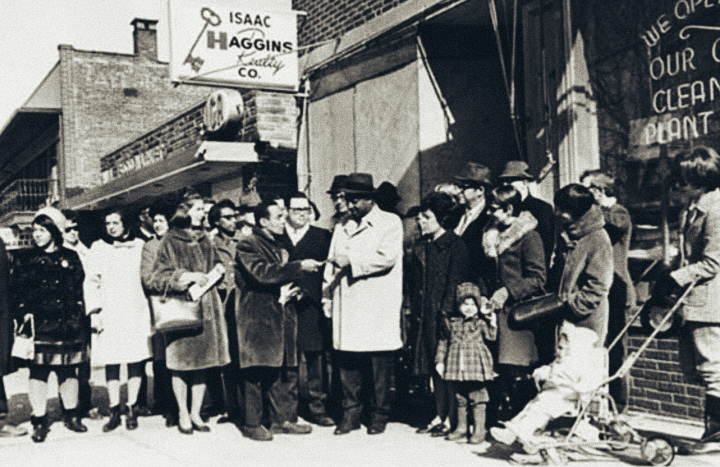
Interviews in this series were collected by undergraduate students at Cleveland State University under the supervision of Dr. Mark Souther, with funding from the Office of the Provost. The series contains interviews with pioneers of suburban residential integration and social activists who supported peaceful managed integration/desegregation and fair housing in Cleveland Heights and Shaker Heights in the 1950s to 1970s.