Jesse Johnson interview, 6 August 2013
Abstract
Jesse Johnson, a retired sergeant first class, was a leader in a local union. He describes his early experiences and how the United States changed after he came back from the war in Korea. He also mentions the riots that occurred in the 1960s, which changed Clevelanders' perception of race relations. He describes various injustices in workplaces and housing. He also describes what it was like being an African American regional leader of a union, and the various battles he fought in order to achieve a level playing field for his constituents.
Metadata
Interview Transcript
Transcripts may contain errors.
Jesse Johnson [00:00:09] Good afternoon.
Katherine Taylor [00:00:11] Can you tell me a little bit about yourself? Where you were born, the state, the city, childhood?
Jesse Johnson [00:00:20] Let me start out by saying my name is Jesse Johnson. I was born July 30th, 1932. Just celebrated my 81st birthday. Thank the Lord for that. I was born in the city of Birmingham, Alabama, and partially educated from the 1st to about the 6th grade in Birmingham. And at that time, my parents then moved to Cleveland in 1944, 1945. There I attended the Cleveland school system. And then we had a break in service where there were some domestic problems within the family where I moved back to— we were to Birmingham for about 1 year from the age of 15 to 16, and returned back to Cleveland with my father, therefore graduating from Glenville High School.[00:01:18] And then went into the military services in 1952, and where at that time I was promoted to Sergeant First Class in the 11th Airborne, which is a paratrooper outfit, returning back to Cleveland in 1955.
Katherine Taylor [00:01:40] Okay. Can you tell me a little bit where you went to school in Cleveland?
Jesse Johnson [00:01:45] In elementary school, I attended— it was a Kinsman High School. Kinsman Elementary School that was on 79th and Kinsman. That was from about the 5th to the 6th grade. And there was like one semester at Thomas E. Edison School that was on East 71st and Hough, I believe it was. My last years, I would say, at Garfield— at Glenville High School was from 1948 to 1951.
Katherine Taylor [00:02:25] Was there any difference in going to school in Alabama as it was in Cleveland, Ohio?
Jesse Johnson [00:02:32] Well, the thing in Birmingham, they were— the schools were all segregated at that time. In other words, they were all Black, all colored, as we were called in those days. And it was different. In Cleveland, obviously, we didn't have the same kind of segregation policies. Now, when I attended the Glenville School, 99% of the students there were Jewish. We used to laugh at this thing that went on, the Jewish holiday, that most of the Black kids had a chance to celebrate as well. Okay.
Katherine Taylor [00:03:17] Did things change in the Glenville area in the '50s when you moved back to Cleveland? Can you tell me about the Glenville area at that time?
Jesse Johnson [00:03:27] Well, as I indicated, when I lived in the Glenville area, we're talking about in Late '40s, early '50s. It was mostly Jewish, I would say, a few Black students, which was reflected in the school system. Now, I left that area when I went into the Army in 1952. Naturally, the demographics had changed a little bit when I returned. I was in the Army for three years.
Katherine Taylor [00:04:07] Okay, and how did it change?
Jesse Johnson [00:04:09] There were more Blacks that were moving in. You know, there was some questions that were being raised about the way in which the banks were steering people. They were steering people from the 55th area into the Glenville area. And the understanding was at that time you couldn't get any financing for finishing up or working on your homes down in that area, but you could get financing for building homes within the Glenville area. So there was an obvious change in the demographics there in that Garfield area.
Katherine Taylor [00:04:57] Okay. In the Glenville area, you said Garfield or Glenville?
Jesse Johnson [00:05:01] Glenville.
Katherine Taylor [00:05:01] Okay. Were you affected by this steering when you came back from the Army and tried to relocate in a different area?
Jesse Johnson [00:05:13] Not in a sense, because I wasn't in the market for, you know, really for buying a house at that point. I was just a returning GI.
Katherine Taylor [00:05:24] What was that like then, returning to Cleveland as an African American GI to Cleveland? Were you able to find housing, a job? What was the job market like, and what was the area like then?
Jesse Johnson [00:05:37] The area, Cleveland area, Garfield— I keep saying Garfield, but I mean the Glenville area. At that time, we used to pride ourselves that was the Gold Coast area. We used to call that the Gold Coast because that was sort of the hoity-toity area in the Cleveland area. That's where the jazz bars was, the one you talk about, the Tia Juana Club. That was the place that— really the place to be. The job market was readily available at that time. You're talking about in the '50s. You know, you could— at that time, you could leave one job on one side and go on the other side. And I will say that Dad had some difficulties when it came to Chevy and Ford. Those type of jobs were opening up, and that seemed to be that most of the people that they were hiring was coming from West Virginia, and obviously they were Caucasian. And I remember we applied for a job at the— and you reminded me of something I haven't thought about for years, that at the campus, there was a campus sweater store there on Euclid, and there were lines of candidates coming in, and it appeared to me that most of the ones that were getting a secondary The interviews were white. Most of the Blacks had been turned down and was leaving there, never got a call on it, and I was one of those. Yes, I did have a problem with that particular thing.
Katherine Taylor [00:07:17] Okay. Anything else about the area so far as job markets in the Glenville? I understand you lived in the Glenville area. It's also around the 105 area, correct?
Jesse Johnson [00:07:29] That is it, yes.
Katherine Taylor [00:07:30] What was the 105 area like then?
Jesse Johnson [00:07:33] The 105 area, as I indicated, was like— we used to call that the Gold Coast. That was the place to be. That was where the so-called elitist of the Blacks were living there, in the Gold Coast area.
Katherine Taylor [00:07:50] Okay. And as you— did you— can you tell me what happened? What was your life like? At the end of the '50s into the '60s, I understand?
Jesse Johnson [00:08:01] Well, at the end of the '50s, let's say in 1956, '57, I started working as an X-ray technician at one of the county hospitals, and I worked there for some 14 years. That is where I got indoctrinated to the union movement. Because hospital workers at that time were very, very low underpaid. And the union started organizing, oddly enough, before then. The union to me was something that I didn't know anything about until they started their organizing at the hospital. So I signed on to join the union there. Afterward, I became an officer within The union called, asked me, American Federation of State, County, and Municipal Workers, where I worked for some 30 years in various capacities. I first started there as the president of the chapter. There was a hospital here that was a main tuberculosis hospital called Sunny Acres Hospital, where I worked as an X-ray technician for 13 or 14 years. And when we got— became organized, that's when I became aware of the inequities in the kinds of payment, of pay structure that was there at the hospital, where the so-called directors there paid whoever they liked and whatever complexion they were by a different standard. Not aware of the fact that I was being underpaid compared to some of the white boys that were working at one of the East Side clinics that was primarily taking X-rays for chest X-rays, and I was the kind of magoo that took anything from barium enemas, small bone surveys, a little bit more sophisticated than them. And when the union was able to organize and get the pay structure for each, then that's when I recognized the inequities that exist, and which brought me to the standard of saying this thing of union organizing was a good thing. So I went on from there to be president of a county local, which is called 1746, that represented the county workers. And from there, I went on to become the regional director for the then-called Ohio Council 78, representing employees within the City of Cleveland, Mount Sinai Hospitals. Over 10,000 people were represented under my jurisdiction at that time.
Katherine Taylor [00:10:48] And you continued on, or what was that like?
Jesse Johnson [00:10:52] That was good. That way we participated in negotiation, arbitration, grievance procedures. Representing the employees. We were employee representatives in negotiations as well.
Katherine Taylor [00:11:08] Did you notice any disparaging treatment between those minorities versus those others?
Jesse Johnson [00:11:16] Yes, there were always— there was always some kinds of disparity. But I would say to you then that after the union became recognized, and when I say recognized, when I tell you that the first hospital union that was really established in this area was at the Sunny Acres Hospital, whereas we had to strike for some 75 days in order to get recognition. Well, after we got recognition, we went into negotiations. And to deal with disparity, that one of the main topics of a union agreement, it would call for equal treatments and nondiscrimination clauses within the contract, whereas you couldn't treat your best friend any different from anybody else in the bargaining unit when it came to discipline, working conditions, I would say.
Katherine Taylor [00:12:13] Okay, what was it like organizing at that time? Was there any violence?
Jesse Johnson [00:12:19] Not necessarily violence, but it was a long, tedious procedure. As they— we became organized and we asked for recognition, it was denied. We had problems because we were the first hospital around that was seeking recognition. So the end result of some time in February, we went out on strike. And when we went out on strike, like all hell broke loose it started snowing and it rained, and we were out there some 74, 75 days, and it was very, very difficult. And I had a family to support, and it was kind of hard to hold on at that point, but we did and survived, and we finally got recognition.
Katherine Taylor [00:13:05] Now, what year was this again?
Jesse Johnson [00:13:07] That was 1957, I believe it was.
Katherine Taylor [00:13:11] Okay, so during '57, What happened, what was going on then with the unions in the '60s? Did it change, or did it improve? How did the structure change? Did it change?
Jesse Johnson [00:13:22] The structure, it changed to the point that there was more and more, let's say, public employers and more unions that were being organized. I think the unions may have been really at its peak, as far as membership, in the '60s. '60s and '70s and '80s, but that's a— there's been a total decline. And if you've been abreast, apprised of what's been happening here since Obama been in office, and the Republicans sort of had an open warfare on public employees, there's a large decline in employment in the public sector. And there's When we start talking about police and fire, you remember the incidents that occurred as far as our current governor, who's tried to strip the collective bargaining bill out of the state of Ohio, where he was mirroring what was happening over in Wisconsin. So it's been a struggle as far as the labor unions are concerned. And the other thing that's been brought to our attention, or to my attention recently, is what is occurring now in Detroit, in Michigan, where some of the employees have been working there for years, and those that are retired, where they're throwing— the city itself is going into bankruptcy, and it's going to cause some of those employees who are retired now, who may be losing some of their pension that they worked so many years for.
Katherine Taylor [00:15:04] Tell me some of the things that you did as president with the local, some of the things that you were involved in.
Jesse Johnson [00:15:13] Well, as I've indicated, the president of the local, usually that's an administrative position, obviously, and has to meet with other Chapters at that time. There were like 7 chapters underneath it. Sunny Acres at that time was a chapter, Department of Human Services, juvenile court, Mount Sinai Hospital. There were seven chapters that was out there, and we met as an executive board with representatives from, two representatives from each one of those groups, and we would sit down and just approve where we were going, the direction in which the union was going to be going at that time.
Katherine Taylor [00:16:00] Okay. And then you went from— did you remain president for how many years?
Jesse Johnson [00:16:04] I was president for about two years, and at that time a full-time position became available as an employee representative, a staff rep, as we called it, and I was hired as a staff rep.
Katherine Taylor [00:16:19] And what is a staff rep?
Jesse Johnson [00:16:20] The staff rep is one of the, let's say, one of the lead people who give direction also to those presidents of those local unions and service those unions to the point that most of the contracts that were negotiated had three-step grievance procedure. The first step involved the union steward, second step might involve the local union president, where the third step involved that staff rep just prior to making, you know, whether determining whether an issue needed to go to an arbitration.
Katherine Taylor [00:17:02] And was there any impact on the city with the growth of the unions a this time?
Jesse Johnson [00:17:09] Well, to the impact, obviously I'd say that the services that were being rendered by the public employees at the time, even now, was better than what they are trying to provide with the private sector subcontracting the work out. It was closer contact. We did develop a good relationship where In the beginning, they thought of the union as a hostile takeover, but we were able to develop some relationships between management and the union to the point of respect, and to the point where we could resolve things rather than create problems.
Katherine Taylor [00:17:51] At the time, do you know anything about the Hough Riots or the Glenville Riots?
Jesse Johnson [00:17:57] Not at the time of the Glenville Riots. When the riots occurred, I was living on 79th and Kinsman, which was a little bit different, a little distance from what was happening on 79th and Hough. And no more than the fact that it did occur, I wasn't actively involved in anything at that time, so no more than what I read about in the paper or on the TV at that time.
Katherine Taylor [00:18:30] What was the relation- what was the city of Cleveland like at that time, then, during that— 79th and Kinsman? Tell me about 79th and Kinsman during that time.
Jesse Johnson [00:18:39] 79th and Kinsman? It was pretty quiet at that time. Wasn't anything major going on there, you know, that would cause any tension at that point. It was a 99% Black neighborhood.
Katherine Taylor [00:18:56] Okay. So from when you came in the '40s and then the '50s, the areas of Kinsman, 79th area, and Glenville area were predominantly Black?
Jesse Johnson [00:19:10] Well, earlier on, and I'm just trying to— and I'm using this as a gauge, as a kid, when I was a kid, Now we're talking about when I was like 12, 13 years old. That 79th and Kinsman area was pretty well mixed. And the gauge that I'm using there, there used to be a local bar right there on that corner of 79th and Kinsman, which was considered like a white bar. Okay there's a church currently, there on 79th and Kinsman, across from where the school used to be. That was a white church. Okay, so it was pretty well mixed during that time. Now, over the years that we talked about, the demographics changed and it became pretty much a 99% Black community, as it stands now.
Katherine Taylor [00:20:10] Okay, as a staff rep, as a president of a local union, was— have you— were you affected at all by discrimination?
Jesse Johnson [00:20:19] Yes, obviously. Obviously, yes, there's always some discrimination wherever you go. But we were able to, as a union, you can, you know, pretty much conceal. I had the responsibilities When I became the representative for the CARE plan, which was the Employee's Benefit Plan, and I was the executive director, and that jurisdiction included all of the state of Ohio, which caused me to go into places like— Clermont County, outside of Cincinnati. And some totally white areas, and you could always sense that there may have been some prejudices. They would ask you some loaded questions sometimes, or some resentment, but you knew. You knew what the questions were going to be about, because you'd been asked them 99% of the time, and after a while you're over— you're able to overcome it, you know. But you always get this sense of there are some prejudices that's existing in.
Katherine Taylor [00:21:31] Were you the first executive director, Black director? No, no. My predecessor, Hubert Bryan, a friend of mine, he was the first director of the Health and Welfare Fund.
Katherine Taylor [00:21:43] Okay, and what was— what capacity, what did you do as executive director for the union?
Jesse Johnson [00:21:48] Well, that way you maintain— what the union was able to do was to negotiate benefits That covered life insurance, dental care, vision care, hearing, and prescription drugs. So there was a fee for service, obviously, that was deducted from those covered employees that came into that office. And as a director, it was my responsibility to make to maintain the office, invest, be certain that the claims were paid. All claims that were necessary to pay, dental claims and things, came in through that office. And then we had offices in Cincinnati, offices in Toledo, Cleveland, and Columbus. So all those claims came through our office, and we processed those claims.
Katherine Taylor [00:22:51] Okay. Can you tell me— well, you mentioned that you weren't really affected by steering early on. Were you ever affected by steering, or do you know anything about steering?
Jesse Johnson [00:23:04] No more than what I heard, that these things did occur. We knew from the result of how it happened, from what they closed down, the Scoville area, the 55th area, demolished all of those.
Katherine Taylor [00:23:25] Explain that to me. What do you mean they closed it down and demolished?
Jesse Johnson [00:23:28] Well, as I mentioned earlier, if you can't get financing for upkeep, to fix your house, Then obviously the house is going to go down. But it was available to buy in that Glenville area, in the steering, and the Mount Pleasant area. So the banks would openly give you easier financing to those areas, whereas they wouldn't give you money to repair the homes down in the Scovill area, the 55th area. And as a result, those homes were eventually demolished, torn down. And those people that were living in those areas moved out, either through, either purchasing other homes or renting. And so they end up in the 105th area or the Mount Pleasant area. And Earlier on, the Mount Pleasant area was one of the— like in the Glenville area, one of the nicer areas of Cleveland.
Katherine Taylor [00:24:45] You said Mount Pleasant. Mount Pleasant area was a little bit— at what time was this? What years are we talking about?
Jesse Johnson [00:24:52] That would be in the '50s, '40s, and the '50s and the early '60s.
Katherine Taylor [00:25:02] Was it an integrated area during that time, or it became integrated later?
Jesse Johnson [00:25:09] Well, it was integrated to a point. I think, say, in the '50s and the '60s, there was a lot of Italians that were living up in the Mount Pleasant area until, you know, The numbers changed, the demographics changed.
Katherine Taylor [00:25:30] Can you tell me anything during your youth? Did you go to— was there anything, any entertainment experiences that you can remember?
Jesse Johnson [00:25:43] Back when, especially after I came out of the Army, I was a jazz lover, you know, so we to frequent certain clubs. And one of them was the Tijuana. They used to bring in people like Nat King Cole, George Shearing, these rare people, jazz folks. And there was another club downtown that my friends and I, it was like 4 of us, we used to frequent, and that was called the Loop Lounge. And down there, Miles Davis, Earl Garner, Billie Holiday. I mean, we had a— that was the place to be.
Katherine Taylor [00:26:23] Was it predominantly Black or was it a mixture?
Jesse Johnson [00:26:26] It was a mixture. It was pretty mixed, yeah, Black and white. That's one thing I like about music, kind of mellow out everybody, everybody join in. Yeah, and that was the great thing.
Katherine Taylor [00:26:39] Can you think of any memories that you can share on as an executive director, as the president of a local union that you can— would like to share?
Jesse Johnson [00:26:53] One of the things I'm proud of is the fact that the first— one of the first union contracts that came out in this area, I was lead negotiator to get the Martin Luther King's Day, into that contract. It was great. It was a good feeling. That was like a pathfinder. Even before the state itself had recognized it, began to recognize it as a holiday, we were able to do this. It was at an old hospital called Polyclinic, and we got that through. And the hardest part, hardest one to get through was at Mount Sinai Hospital. They talk about giving you everything, call it anything, a personal, we'll give you a personal day for anything. You take it off anytime, but we can't give, we can't give you Martin Luther King's Day. So they went with that, went on for two or three negotiations, and so I set them up really for a funny one. I says, I know what he's gonna— so we put it back on the table like the second or third time. So I alerted my committee. I said, Now, we can get this if you all do as I say do. I said, when he says, we'll give you a person of the day, I want you all just to go crazy and see what happens. Right on key, they went crazy, and they said, let's have a caucus. They went out and came back in, and we got it established at Mount Sinai Hospital, Martin Luther King's Day.
Katherine Taylor [00:28:25] What's some— any other memories do you have?
Jesse Johnson [00:28:29] Well, the members, most of the members of my stay with the union was the fact that we were able to uplift a bunch of employees, give them a little bit of pride in their work, and able to provide the services that mainly— There was one little story that we used to I told about the Sunny Acres experience, whereas most of the lay employees ate on one side of the cafeteria, who happened to be Black, and all of the so-called professionals were on the other side. Then there was a wall in between the two. And I'd be talking about steering and what they would do. They would start the lay employees' lunch hour between hours 11 and 12, and the so-called professionals between 12 to 12:30. And they would steer them there, to one side or the other. This thing became a big topic in our first union negotiations, and we were able to knock that wall down. But even though the wall went down, they were still scheduling them in such a way that it still happened. But after talking to some of the employees who had the ability, who were Black, to switch from their lunch hour, and they switched their lunch hour and they went in a different direction. So we started getting a mixture there.
Katherine Taylor [00:30:15] Was there any national impact on— you said that Sunny Acres was one of the first union-organized labor units here in Cleveland. Was there any impact on the nation? Did it encourage any other states or cities that you know of?
Jesse Johnson [00:30:35] Well, it was— I think it had an impact because of us being the first. And the history of that strike being so long, I don't know whether you're aware of it, but the Memphis strike was also a strike that was with AFSCME, American Federation of State, you know, where Martin, Brother Martin Luther King was killed, that he was there with our union. And until that strike occurred, ours was the longest strike out there, but I think the Memphis strike was somewhat longer. But yes, we had, we had quite an influence on it, as in any number of hospitals that are now currently under union organizing or have been organized.
Katherine Taylor [00:31:27] Did you participate in any marching?
Jesse Johnson [00:31:30] Oh yeah, we marched. We marched on Washington for jobs. I marched at the Million Man March. We marched to free Mandela on federal buildings. I marched with my bad feet, but we were there. We were there, proud to say.
Katherine Taylor [00:31:50] Okay, and tell me about it.
Jesse Johnson [00:31:53] Well, I think the one that stands out the most was the one with the Million Man March. Well, it started out as a slow process. And at that time I was working as the executive director of the CARE plan. And something strange happened to me. I don't know whether I should talk about it. I was— I went to a little bank to roll over some CDs and the little white clerk was giving me a hard time. This was about two days before, before the Million Man March. And I told her that I wanted to roll it over. She wanted— it was questions for me and questions for my executive board who had given me authority to do this. And I asked to speak to the manager. She says, I am the manager. And I said, well, I'll tell you what, if I got to go get a note I said, I can get a note to withdraw. And she was so arrogant. And I thought it was all because of the color structure. And when I got back to the office, and that made my— I made up my mind then, I'm going to go on this Million Man March, because there was all kinds of rumors floating around about what could or could not happen, or was going to happen. And the strangest The thing is, there was a busload of us that left from the union office, and we started out not knowing how many folk was going to show up. And as we hit the freeway and saw droves of buses and people coming in and in, it was the most fascinating thing I've ever experienced. After we got into Washington, the peace, the tranquility, the brotherhood of all the people there, it was just wonderful. We could see CIA people, Secret Service at the top of the buildings and watching us, but it was not one incident, not one incident. It was a beautiful day for Atonement.
Katherine Taylor [00:34:08] As an executive director, did you interact Were you involved with any national leadership at all?
Jesse Johnson [00:34:15] Well, as an executive director, I was, I would say I was on the Cleveland Federation executive board. I knew, naturally, our own international president, and I knew Jackie Presser, who was a Teamster. Yeah, so we all kind of rubbed shoulders once in a while.
Katherine Taylor [00:34:41] What was it like interacting with Jackie Presser?
Jesse Johnson [00:34:44] It was quite impressive. Jackie was quite the guy with the Teamsters.
Katherine Taylor [00:34:50] Any other leadership in the nation, leaderships that you interacted with as an executive director?
Jesse Johnson [00:34:57] Well, you know, we have— I never went to any of the AFL-CIO national conventions. But we, internally, AFSCME had its own conventions, and we pretty much met with them. Our current president of AFSCME is a Clevelander. He comes here from Cleveland. Yes.
Katherine Taylor [00:35:21] Okay. Anything else that you'd like to share about your story that you want to leave with? As a child, as an African American leader in Cleveland, what was it like? Is it different? Has it changed or anything? I know you said that you never was hit by discrimination per se.
Jesse Johnson [00:35:49] Currently, I live in Garfield, and for years I lived in I kind of dabbled around with politics with, uh, then councilman, who I was his campaign manager for about 18 years, and he served for like 18 years. His name was Henry Warren. We were pretty well respected within the neighborhood. But now, like I say, I'm 81 years old now, and I'm pretty much confining myself to occasionally golfing and doing a little gardening, and all is well. All is well.
Katherine Taylor [00:36:28] Okay. Well, there's some other things that I'm thinking that we may— we have recovered. You never— you know, I wanted to know a little bit more about going to Glenville High School. What was it like? What was your teachers like?
Jesse Johnson [00:36:47] You know, I can't recall any incidents that would be outstanding, you know.
Katherine Taylor [00:36:57] Because you said that at the time when you were in high school, it was kind of mixed.
Jesse Johnson [00:37:01] Yeah, it was mixed. It was mostly Jewish children. I'd have to say the relationship at that time was pretty good. It was good.
Katherine Taylor [00:37:11] And by it being the area, so your education perhaps was a little different that you received than maybe in some other areas?
Jesse Johnson [00:37:22] No, Glenville at that time had a very high standard. The education was high standard. One course that was taught by a law, you know, commercial law teacher. His name was James O'Meara. He ended up being the president of the teachers union. Well, I spoke to him, nice guy. I think I was pausing around a little bit. He said, Johnson, you've been fooling around so long, you're so bad, I want you to get out of here, so I'm going to give you a passing grade. So he and I ended up being friends and members of the Cleveland Federation Executive Board some 30 years later, and I remind him of that story. He said, well, you did quite well. But mostly the relationship was pretty good at Glenville.
Katherine Taylor [00:38:20] How many workers did you organize?
Jesse Johnson [00:38:26] Well, at the Sunny Acres Hospital, it must have been at least 300, but you talking about over the years?
Katherine Taylor [00:38:32] Over the years.
Jesse Johnson [00:38:33] Oh, I'd have to say, give it to you like, how many were that are, that were organized, because they were in and out. Some come in, some go out, and you have to— it was a continuous maintenance of membership where you had to go out and continue to talk to people when they changed their employment. And in the Cleveland area, there were over well, I would say over 15,000 people that was within the organization. When we're talking about organization, the City of Cleveland, City of Bedford, you're talking about the county hospitals, you're talking in terms of Lakewood, all this surrounding areas here. Mostly were represented by AFSCME Union. So there was quite a number of them.
Katherine Taylor [00:39:30] You did mention juvenile court as well?
Jesse Johnson [00:39:32] At one time we had juvenile court.
Katherine Taylor [00:39:34] In the county, did you say?
Jesse Johnson [00:39:36] Yes, in the county, and they were county probationary officers. Now this was before the current law passed, 4113, that ruled that these employees should serve at the pleasure of the court, and that pretty much snatched their— we pretty much lost our recognition under that particular law. But that was in, I think that would be in 1973 or '74.
Katherine Taylor [00:40:06] Where did you initially— you lived in what areas? Glenville, in the Kinsman area, anywhere else?
Jesse Johnson [00:40:17] Glenville, Kinsman, Garden Valley, which is a Kinsman area, and the Mount Pleasant area.
Katherine Taylor [00:40:31] Okay. Those are the only areas that you lived in?
Jesse Johnson [00:40:34] Yes, and Garfield.
Katherine Taylor [00:40:35] Okay. So what about— was there any difference in living in Garfield
Jesse Johnson [00:40:42] No, but by the time they got to Garfield, well, yeah, that's another story.
Katherine Taylor [00:40:48] We're going to take a short, brief break from Mr. Johnson. This is returning back to an interview with Mr. Johnson. Mr. Johnson?
Jesse Johnson [00:41:01] Yes?
Katherine Taylor [00:41:02] I understand that you said you were living in Garfield.
Jesse Johnson [00:41:07] Yes.
Jesse Johnson [00:41:13] Just checking, I'm trying to get the sound.
Katherine Taylor [00:41:18] Okay. All right, I'm trying to make sure the sound is better. Much better. Yes, can you tell me about living in Garfield?
Jesse Johnson [00:41:30] Yeah, early on when the family moved into Garfield, we had two children that were attending public schools, and we were thinking that when we moved in that our kids were going to be attending the Garfield school system, a part of that system. However, after we moved in, we realized that we were told that the kids that live in our area were to attend Cleveland school system, in spite of paying most of our taxes were going into Garfield. So being involved with the councilman there, we had to, in order to try to turn that around, we had to bring this attention to the school boards of both Cleveland and Garfield by filing petitions. And for other residents who had the same concern. So collecting signatures was enough to get it out. The issue before the school board, the state school board had to hold a hearing on it. We had an arbitration, and the fact that the Cleveland school system had agreed to let the children go into Garfield, but however, the Garfield school system refused to accept. Now, the ironic part of all of that is, although we were not totally against busing, but the children from Garfield that lived in our area had to get up some 6 or 7 o'clock in the morning to be bused to the far west side, and when there were schools less than two or three blocks away. And we thought that was a total inequity in the way that they were doing these kinds of things. So after we gathered all of these signatures and brought it before the school board in arbitration, the arbitrator ruled that it was totally a discriminatory policy because at that time Garfield Heights High School and all of those were like 99% white and very few Blacks. And it was relegated to the kids in our area who lived on the northern side of Broadway and East 131st Street to the Cleveland School System. And all of the— those above Broadway, south of Broadway, was going to the Garfield School System. And they were all white. So we had a We had a serious fight on that, and we got to hearings before then, and that case went before the state Supreme Court. And unfortunately, we lost it by one vote, whereas they said that Garfield had a right to refuse those kids to come in. Now, to this day, that school system is still the same, and that feeling that these children that lived in that area ought to be able to go to their own city school is still out there. And we're hoping that that will eventually change. Now I will say this for an example, the demographics has changed. Whereas before it was 99% white, the Garfield High School system is 99% Black. So hopefully we can get a better result on that sometime soon.
Katherine Taylor [00:45:02] Okay. As an executive and representing all types of people, did you ever— were there ever issues about discrimination at the table?
Jesse Johnson [00:45:16] At the table? Well, you know, the only problems we had when it came to discrimination are within the unit itself was from the so-called craftsmen, electricians, plumbers. There were a few guys who felt that they needed to get preferential treatment because they were so-called craftsmen. And in those positions, those were 99%, well, most of the majority of them were white. And the lay employees were in the orderlies and the aides classification. So every now and then those issues would arrive as far as they thought that they should have the union scales that were from the outside.
Katherine Taylor [00:46:07] Did anyone ever feel that you showed any disproportionate treatment?
Jesse Johnson [00:46:13] I'm sure they did. I've had a couple of— isolated incident where people thought that I might have treated them differently if they had been Black. But it wasn't nothing I would dwell on, really.
Katherine Taylor [00:46:29] You mentioned— what was Cleveland like so far? You mentioned entertainment. What was downtown Cleveland like at the time in the '50s and the '60s?
Jesse Johnson [00:46:37] In the '50s and the '60s, Cleveland was the place to be. If you ever seen Watching some of those Christmas stories, people go shopping down in Cleveland, in downtown Cleveland, they get dressed up. You go to ballgames, everybody would be in suit and tie and everything. It was the place to be, Sterling and Higbee's and May Company and places like that. It seems to be in those old Christmas movies. That was the way you got dressed up to go downtown. You didn't— it wasn't a casual thing. It was places to go. Now, when it came to foods, it was kind of difficult. And some of the restaurants that they had down there, like the— not the Farm, that was Clark's Restaurant. That was a— it was pretty much a segregated restaurant. It used to be there on 9th and Euclid.
Katherine Taylor [00:47:42] Tell me about that.
Jesse Johnson [00:47:44] Oh, well, you just didn't— you knew what it was all about very soon when you went in there. You just didn't go. There were some isolated incidents of prejudices that existed in those restaurants, and you knew about them, so you didn't go in there.
Katherine Taylor [00:47:57] Since you were quite involved with the Was there any issues about busing? Did you have to deal with any issues with busing?
Jesse Johnson [00:48:06] No, the busing incidents usually occurred— it was within the teachers' unions, because they were the ones that represented the busing of the school, whether or not they were going to bus the teachers or bus the kids. So they had their own problem with seniority rights and stuff along those lines.
Katherine Taylor [00:48:30] What was the temperature like when— were you involved with the Carl Stokes era at all?
Jesse Johnson [00:48:37] Oh, sure. We campaigned our tails off for Carl.
Katherine Taylor [00:48:40] Tell me about that.
Jesse Johnson [00:48:41] Well, Carl was magnetic. He was just great. I had one friend of ours, we used to call him Puge. His name was Russell Hubbard. And another coworker of mine named Jim Moore. They all grew up together with Carl, so we had a chance to meet with him on these one-on-one basis. And he, well, you know, he treated them, they were like brothers to him. And I think they all, all 3 of them went to Baldwin-Wallace College together at the same time. So, yes, we knew Carl pretty well.
Katherine Taylor [00:49:16] Okay, what was he— what did you do on the campaign trail there?
Jesse Johnson [00:49:19] We passed out literature, we made speeches, we made him available to our membership, and we just, we did all the things that you necessarily do. We passed out leaflets, you know, and the same thing with Louis Stokes. In fact, when I was president of the local union, Louis Stokes was the one that swore me in as President of the local union.
Katherine Taylor [00:49:44] Okay. Was it— where was the— you were located in downtown Cleveland, your office?
Jesse Johnson [00:49:50] Downtown Cleveland.
Katherine Taylor [00:49:51] Okay, and what was that area located— where was that office located at?
Jesse Johnson [00:49:55] We had several locations. The current location is on 32nd and Payne.
Katherine Taylor [00:50:01] Okay.
Jesse Johnson [00:50:02] Not 32nd, yeah, 32nd and Payne.
Katherine Taylor [00:50:05] Okay, that's— what was that area like? What was it like then having an office, a union office around that area?
Jesse Johnson [00:50:10] It was good. I mean, we had space available, parking. That's usually a problem, parking, especially when you have membership meetings.
Katherine Taylor [00:50:21] And your staff was— what was your staff like at that time?
Jesse Johnson [00:50:24] Oh, we had a mixture of staff, Black and white.
Katherine Taylor [00:50:27] Okay, and then was there any— so your tone basically was just It was just really pretty mellow, huh?
Jesse Johnson [00:50:35] Oh, you had to. You had to be. If you're going to be in the union brotherhood, you can't deal with stuff. You're going to be a part of the team, or you're not going to be a part of the team, Black or white. If you're not a part of the team, you're not going to be around.
Katherine Taylor [00:50:50] It's been an enjoyment listening to your story. Is there any wisdom you'd like to leave?
Jesse Johnson [00:50:55] No, no. I enjoyed talking to you. I hope that this— my life hasn't been as exciting as you thought it might be, but it's been a fine run for me. Thank you.
Katherine Taylor [00:51:12] Thank you, Mr. Johnson. Thanks for this interview today. I'm concluding the interview with Mr. Jesse Johnson on Tuesday, August 6th, 2013. Thank you.
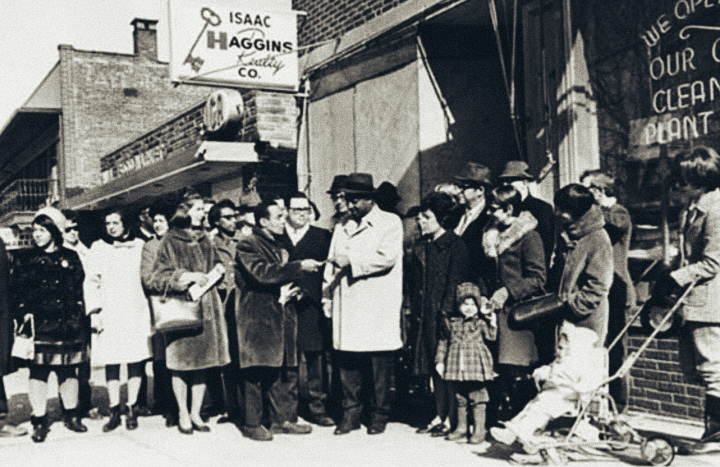
Racial Integration in the Heights
Interviews in this series were collected by undergraduate students at Cleveland State University under the supervision of Dr. Mark Souther, with funding from the Office of the Provost. The series contains interviews with pioneers of suburban residential integration and social activists who supported peaceful managed integration/desegregation and fair housing in Cleveland Heights and Shaker Heights in the 1950s to 1970s.