Susan Kaeser Interview, 22 May 2013
Abstract
Susan Kaeser lived in Wisconsin through graduate school. She earned a master of urban planning degree from the University of Wisconsin-Milwaukee, during which time she met Cleveland City Planning Director Norman Krumholz. Krumholz brought her to Cleveland to serve as a city planner. When she arrived in Cleveland in 1976 she lived first in the Ludlow neighborhood near Shaker Square before moving to Cleveland Heights in 1979. In the interview she discusses how she became a community activist, the state of integration in Cleveland Heights in the late 1970s and early 1980s, and her involvement in the early years of Reaching Heights, an organization dedicated to promoting community support of the Cleveland Heights-University Heights school system.
Metadata
Interview Transcript
Transcripts may contain errors.
Susan Kaeser [00:00:19] Sure, it's Susan Catherine Kaeser.
Mark Souther [00:00:21] Thank you. I'd like to do a little bit of, you know, just looking at your early years, where were you born?
Susan Kaeser [00:00:33] I was born in Waukesha, Wisconsin. And when I was less than a year old, my family moved to Madison, which is where I grew up.
Mark Souther [00:00:42] How long did you live in Madison?
Susan Kaeser [00:00:44] Well, I, you know, I lived there— my father owned, stayed in the same house that I grew up in until I was 30, at which point he died. But the— so we had that house forever. But I mean, for a long time. But so I consider that my home until I moved here in 1976 to Cleveland Heights. And this— that's been my home ever since.
Mark Souther [00:01:12] What did your parents do for a living?
Susan Kaeser [00:01:16] My father was a— mechanical engineer and he designed machinery. And my mother was, she was the one that was the college graduate, but she was a homemaker.
Mark Souther [00:01:31] What kind of neighborhood did you grow up in? How would you describe your house and your street?
Susan Kaeser [00:01:38] So I was recently back in Madison. It was fun to kind of review that and revisit it. We lived in the township of Madison, which was between Madison and Middleton. It was sort of a rural setting, but it was— I like to think of my neighborhood as being the elementary school area that I attended. And it was really a very interesting place because it included the Highlands, which is where I grew up, which had— was a fairly affluent area. It was a very affluent area. And I lived in a house that my uncle had designed. He was a mid-century modern architect. And he was my hero. And so we lived in— my parents built a house that he had designed. But the elementary school also included an area that was a housing cooperative and had— was pretty heavily populated by university faculty. And also a real poor area. And then some 19— some postwar housing development that was real— like tract housing. So, and then an area that was along Lake Mendota, which had really been built as cottage, summer cottages. So it was really a terrific mix of people economically, but it was a totally white community aside from that.
Mark Souther [00:03:02] What were some of your favorite things to do in the neighborhood when you were growing up? Your place?
Susan Kaeser [00:03:08] It was, you know, we had a wonderful— it was a wonderful place to grow up. We had a neighborhood football team that moved from front yard to front yard. My mother bought my sisters and me helmets and shoulder pads, and I was knocked out more than once. We played— my best friend's brother had asthma, so he couldn't be an athlete, so he coached all of us to be athletes. We did a lot of going out in the spring and playing in the drainage ditches and with the ice and the snow. We would go to the kind of vacant lot area and excavate for broken pottery and evidence of, you know, of past life there. So lots of freedom of movement, a lot of self-directed games. We just go out and play. There's an apple orchard in our backyard. We had a lot of fun having rotten apple fights. We'd have to— we'd get showered off outside because we were so messed up. We couldn't come in covered with our apple crap. And then there was a house next door where they built the hole— they dug the hole for a foundation, but they never built the house. So we did a lot of playing in the hole. There was a lot of that. And my father put up a basketball hoop for us too. So we had— We had a lot of basketball on our driveway. But before that, it would— it had been gravel and we used to have races, barefoot races about how— who's the best at running across gravel barefoot. That was— those were a few of the things we did.
Mark Souther [00:04:49] You had a lot of messy and painful— Yeah.
Susan Kaeser [00:04:53] We had a lot of fun and there were a lot of kids in the neighborhood and there was— it was sort of a pack. We would just play. It was really great. And my best friend lived in the backyard and we would basically were in and out of each other's houses as if they were our homes. And there was a lot of nurturing by all the parents, all the adults in the neighborhood, you know, took us in and took care of us. Really great.
Mark Souther [00:05:20] Did you go to high school close by or did you—
Susan Kaeser [00:05:24] Actually, the— By the time I got through, our elementary school had gone K to 8. And then at first when we lived there, and then we would have to go, we didn't participate in the public schools. So my oldest sister, who's 8 years older than I am, she went to Wisconsin High School, which was the lab school for the university. And it's where my dad had gone too. But by the time my next sister and I came along, then we went to the— Public school. First we went to the junior— well, for my sister Gigi, she went to high school after 8th grade. For me, I went to middle school. The school had changed grade configuration by the time I was in 6th grade. So then, yeah, so the high school was about 2 miles away. But yeah, that's where I went, Madison West.
Mark Souther [00:06:16] Where did you go to college?
Susan Kaeser [00:06:17] I went to Grinnell College in Grinnell, Iowa. It's about 250 miles away from home. My sister had gone there, so I felt like, you know, I knew it. I was at home there.
Mark Souther [00:06:32] What was your major?
Susan Kaeser [00:06:33] Anthropology. I had a lot of interest in biology, too, so I had close to a double major, but I was an anthropology major.
Mark Souther [00:06:39] I remember from one of our earlier conversations, I guess our first conversation, you mentioned that you, I think you were into urban planning. I don't know if you're an urban planner per se, but you had that background at some point. Tell me a little bit about that.
Susan Kaeser [00:06:58] Yeah, so after I graduated from Grinnell, I was the editor of my college paper. And I mostly was a photographer. I didn't write one word in my college paper. In fact, I was a lousy writer, but I was a photographer. And I was able to get a job as a newspaper reporter and photographer in Omaha, Nebraska after my— after I graduated. And actually that's where I really think I got my— I really like to ask people questions and I like to learn from people. So I— anyway, I think that's where I really learned how to do that. But after I was there a year, I— it was at the time of the Vietnam War and it was 1970 and the Kent State incident occurred. And I was totally isolated and alienated being in Omaha, Nebraska when that happened. And I decided I had to get back to a more— conducive liberal environment. So I decided to go to graduate school, which is what people generally do. At any rate, so I went to the University of Wisconsin-Milwaukee to do a master's in anthropology. But— and then I got rather disillusioned by academia and decided not to pursue a PhD. And after working for a couple more years, I decided that I should do what I— I should pursue the dream I'd always had, which would be— was to be an architect because my uncle who had designed my house, who was my hero, was an architect. So I thought I ought to be an architect. So the University of Wisconsin-Milwaukee had just opened an architecture and urban planning program. So I enrolled in the architecture program where I lasted for one semester and realized there's no way in the world. All I was doing was being an anthropologist analyzing the behavior of the architects. So I was— I'd always— my interest in anthropology was in urban anthropology. And that's why I went to Milwaukee, because they had a— they had an urban anthropology program. So I decided to just switch into the urban planning program at the university, from architecture into urban planning. So I have a master's degree in urban planning as well.
Mark Souther [00:09:06] When you were doing that, did you— well, actually, I want to go back for a second. You mentioned that you thought you would get into architecture in particular. What kind of designs did you imagine? I know you mentioned your uncle was an influence. I'm just curious what kind of designs you had in your head.
Susan Kaeser [00:09:21] I didn't have any design ideas in my head. I should have known that. What I like to do is look at buildings, and I'm fascinated by the history of them, the cultural times that they reflect. I like to look at space and light, but I didn't have a clue. I should have known. Somebody should have said to me, do you think about space?
Mark Souther [00:09:41] So what's your favorite kind of architecture?
Susan Kaeser [00:09:44] Well, I'm a— I'm very taken by the Prairie School. That was really the influence of where I lived. That was— my uncle was really part of the Prairie Movement in some ways. Frank Lloyd Wright was from where I live. There are Wright houses all over the place. And Madison was full of Prairie School houses.
Mark Souther [00:10:06] And when you got into urban planning, Did you have sort of a career track in mind or you just had the interest? How would you describe—
Susan Kaeser [00:10:15] Well, I think that I was definitely interested in social justice. I had been. I mean, growing up in the '60s, I was very much aware of that. I was really looking for tools and a way in which I could have— make a difference. As a newspaper photographer, I had really worked on urban— I was part of this group that reported on urban issues. And I was very aware of what was going on partly because of that. But I felt as both an anthropologist and a reporter, you are an observer. And I was really looking for a way to move from an observer role to a contributor role. Activist role. So I had pretty much focused in on housing. That was my real interest. I thought housing was where a lot of justice issues occurred. And I— my thought was that I would go to Washington and work for HUD and, you know, somehow change the world by— through public housing and housing policy.
Mark Souther [00:11:22] What were your biggest concerns about housing, as you recall, at the time? Where did you see the problems?
Susan Kaeser [00:11:29] Well, I think it was both access, it was affordable housing, and it was segregation. And public housing was the remedy at the time and the opportunity to at least get people into housing. So I thought somehow I was going to be a bureaucrat. That's what I thought.
Mark Souther [00:11:55] Washington. So this is— we're in the early 1970s, I assume, at this point, right?
Susan Kaeser [00:12:02] Right. It was actually '74 when I graduated— '75 when I graduated.
Mark Souther [00:12:06] And then you arrived in Cleveland Heights the following year.
Susan Kaeser [00:12:09] Right. So when I was in graduate school, my program was very good at bringing in outside people who were being, and one of the people that came to lecture was Norm Krumholz, who was at the time the city planner for the city of Cleveland. And he had a totally different message than everybody else. And that was essentially that the client for urban planning in Cleveland was the neighborhood groups. And neighborhood preservation was their focus, not urban downtown development. And that was very consistent with my interests. And I just decided this is the person I wanna work for. So I got an interview, and I got the job. I came out to interview another guy that was in class, another one of my classmates also at UW-Milwaukee was hired as well.
Mark Souther [00:13:10] What position was this?
Susan Kaeser [00:13:12] I was just a planner in the— but it was for the City of Cleveland, for the City Planning Commission.
Mark Souther [00:13:19] I see.
Susan Kaeser [00:13:20] And Norm had a whole crew of young planners. He was very surrounded with— he really appreciated the perspective of the generation and the commitment to— I mean, the whole philosophy of the planning department was a commitment to giving people without choice choices. And that just seemed to me to get at the heart of what social change was about.
Mark Souther [00:13:47] Sometime I'd like to talk with you more about, you know, about that period in Cleveland proper, but in the interest of time, I'm going to shift gears. We can always come back another day and talk more about Cleveland Heights. When you first moved to Cleveland Heights in 1976, how would you describe the state of racial integration in that suburb?
Susan Kaeser [00:14:11] So actually, to be more correct, when I moved to Cleveland in '76, and of course to be employed by the city of Cleveland at that time, they had a residency requirement. So I lived in the city. So I lived off of Shaker Square in the Ludlow neighborhood, which was a community that was well organized around integration. And I became involved in the Ludlow Community Association. So that was a really fun thing to do, to come to a new community and to be introduced to citizen activism. And I also served on the board of the Neighborhood Housing Services for Buckeye. Really quickly, I got into that. I don't know why, but I made one of my best friends I met through that. But it got me very focused on the Buckeye neighborhood. And on housing issues.
Mark Souther [00:15:00] Was the Buckeye-Woodland Community Congress—
Susan Kaeser [00:15:03] It existed then. I went to one of the Congress meetings of the Buckeye-Woodland Community Congress. I remember that.
Mark Souther [00:15:10] Did it offer housing service?
Susan Kaeser [00:15:13] No. NHS is a separate independent organization, and as was the Buckeye-Woodland Community Congress, which I think may have been a project of the Catholic Commission for Community Action. They had congresses all around. So, the Heights Community Congress, which— well, actually, that came into being in '72. So, I'm not really clear about that.
Mark Souther [00:15:39] I was just curious.
Susan Kaeser [00:15:40] Yeah. Yeah.
Mark Souther [00:15:42] And I'd forgotten about the connection, the Catholic connection, but I think it's coming back to me now. So, maybe I—
Susan Kaeser [00:15:49] I didn't answer your question. Yeah, go ahead.
Mark Souther [00:15:53] Knowledge was of Ludlow.
Susan Kaeser [00:15:55] Right.
Mark Souther [00:15:55] So I'm familiar with Ludlow and how back in the 1950s there were incidents that, including the John Pegg bombing that I've read about, that led to the formation of LCA. Can you describe though, when you arrived on the scene, that's what, 15 or so years later, more than 15 years into that project, how did people feel in terms of how successful How successful it was at that time?
Susan Kaeser [00:16:21] Well, I think that it was at that time, it was very much identified as like the only act in town, one of the national leaders of grassroots groups taking responsibility and taking charge of their neighborhood and trying to determine its outcome rather than having somebody else determine their outcome. And at the time, you know, I was learning a lot about the kind of strategies that you use in that kind of effort and how powerful just having community relationships is and how many strategies are ultimately about building a sense of community as the way in which you get people to invest and stay. And I think at the time people were feeling it was rather successful. And I just, every once in a while I go back and walk that neighborhood and actually in the last 6 months I went over and I was really disappointed to see the level of decline that really has occurred there because I think it had held its own for a very, very long time. Although the wall in my apartment collapsed and all the cockroaches fell out, so I did move out when that happened. So it's actually in 1979 that I moved to Cleveland Heights. I got a sublet on Euclid Heights Boulevard right at Coventry. Fabulous apartment, just a wonderful, wonderful place. And it took me almost three years to find a house that I liked as well as my apartment. But I really got sick and tired of going to the laundromat, so it was really— I needed a house to live in.
Mark Souther [00:17:58] In Ludlow, maybe just for the record, could you say a little bit about how the Ludlow Community Association worked?
Susan Kaeser [00:18:08] You know, I can't tell you very much. I think there were meetings. I know we had events, which were basically tours of some of the apartment buildings. I can remember going, doing that. Some kind of, a lot of social stuff. I don't, sorry?
Mark Souther [00:18:25] Who were the people that were most involved with it? If you had to name 2 or 3 people that you thought would really have their finger on the pulse of that organization, back in that time, or were you really plugged into that?
Susan Kaeser [00:18:38] I was, but I can't— I can picture them, but I can't come up with the names at the moment. I have to, you know, I'll read them, and I can tell you what they are, but sorry.
Mark Souther [00:18:48] Let's turn to Cleveland Heights again. So you came to Cleveland Heights in 1979. How was Cleveland Heights? Where— and you mentioned Euclid Heights Boulevard. You were in an apartment for a while. How long was it before you bought a house, and where was your house?
Susan Kaeser [00:19:04] Okay. So, we got our house in March of 1981 on Compton Road, which is where I live now. And I was pregnant, and we needed to have a house. So, that was the impetus, I think, is we were ready to move in. And my husband was 40. I was 33.
Mark Souther [00:19:29] Was Compton Road at all integrated?
Susan Kaeser [00:19:32] Interestingly, it— only maybe two families out of 75 on the street. But at that time, in '81, yeah, yeah, that's what it was. The rest of the community was much more integrated than that at that time. So.
Mark Souther [00:19:57] In your understanding, what area integrated first? And were you aware of the areas that were much more integrated?
Susan Kaeser [00:20:05] You know, I moved to Cleveland Heights because of the really— I was committed. So I went through this personal struggle about how you make a difference in the world. And I realized more and more that I thought community-based activism was the answer and that I was tired. I worked for a nonprofit working on public school reform at the state level. I only stayed at the city for a year, less than a year, which that's an interesting story too. But I just got lost there. All right. So the local-level activism really floated my boat. And I wanted— I decided I was tired of being sort of— and I was in this moral dilemma about, you know, here I am, this very privileged person with a lot of education. Do I want to be approaching social change in a professional manner or do I want to do it as the person, as the citizen? And I decided that by moving to Cleveland Heights, which had this reputation for a lot of activism, for its commitment to being an- and the activism committed, focused on trying to make an integrated community. I decided by living in Cleveland Heights, I could live and be a grassroots rather than being someone who was somehow trying to move the grassroots. So I did it really as out of a— as sort of a continuation of my personal identity and search for how to be a change agent. So Cleveland Heights was the place because there was a lot going on. So I know you asked about where did it happen first, and I'm not completely sure. My sense, really in what I've read more than what my experience was, is that along Lee Road right by Boulevard School, which is the neighborhood that I live in, that's where a lot of the pioneer families were. And I really don't know why. Partly because they weren't— there wasn't organized opposition there, probably. But there and around the Taylor Road, Taylor School, that neighborhood, that was also more welcoming, those areas. That's where it first happened. Although there was a fair amount of— there were a lot— the first black residents in Cleveland Heights were largely a professional group. And so they had access to— they could afford housing in all parts of the city. So a lot happened in Roxboro.
Mark Souther [00:22:42] So— Yeah, I'm thinking about Robert Madison, for example, was very early.
Susan Kaeser [00:22:48] Yeah, 1960. But the bombings of those houses, the houses that were bombed were all in Roxboro, the first four.
Mark Souther [00:22:59] Where were those?
Susan Kaeser [00:23:01] One on Euclid Heights Boulevard and 10 minutes later on Edwards, which is the little street that backs onto where Nighttown is. And that house isn't there anymore. And then the— on East Overlook, which is Steve Presser's house now, that one was bombed twice when two different families lived in it.
Mark Souther [00:23:24] Is that the one that Newton Hill lived in?
Susan Kaeser [00:23:25] Yep.
Mark Souther [00:23:26] Were they bombed a second time or was that all?
Susan Kaeser [00:23:28] The guards lived in it first and they were social activists and they were white. And then they sold, partly because they were willing to sell on the open market. Then the family they sold to were bombed.
Mark Souther [00:23:43] When you say sell on the open market, what other option would one have?
Susan Kaeser [00:23:48] Well, This is my understanding. Yeah. So the housing market is controlled by realtors. Who has access to listings is the question. And the— you had to be a member of the Cleveland Area Board of Realtors to have access to listings. There were no Black realtors allowed to be members of CABOR. So Black realtors didn't have access to listings. Which was one of the ways in which people— and white realtors wouldn't service Black homebuyers. So there was— it was a closed housing market. That's how they closed it. That's how they controlled it. And that's how segregation was maintained. But the open market was a way in which the integration activists— I think they named it that. They were trying to get— white homeowners who were selling to be willing to sell to anybody, to the open market. And that they would— and they would largely dealt with for sale by owners. That's— so the early activists, they looked in the newspaper. They figured out whose house was for sale by owner. Then they would call them and say, are you willing to sell on the open market, which was their way of saying to anybody. And then they would bring Black buyers to look at the houses. Sometimes the other way it was done is that sometimes an intermediary would buy the house who was sympathetic. So a seller, the white owner, could sell to a white person and then that white person would sell to the Black homeowner, home seeker. I mean, just the kind of convolutions. And then there was a— There was a premium. Frequently, you would sell at a different price to a black seeker than to a white. So, if you were black and looking for the same house, you might be charged extra $3,000 or $4,000 or whatever. So, some of the discovery of all the kind of barriers that were created is just phenomenal and how people determined to open it found ways around it.
Mark Souther [00:26:11] How aware were you at the time of the concerns I know people had about East Cleveland? I'm familiar with East Cleveland's rapid racial turnover from white to Black in the second half of the 1960s. That had to be in people's minds as they looked at Cleveland Heights since it's so close.
Susan Kaeser [00:26:30] I remember people— I mean, and for as long as people have talked about it, everybody would say, we don't want to be East Cleveland. We don't want to be— We have to take action. We don't want to be East Cleveland. That was really the— that experience was startling and very motivating to people to think that they didn't have to let the real estate industry determine the outcome of their community. So both lenders and realtors, they just weren't going to let that— the East Cleveland thing. So within three years, the community went from white to Black. And several of the people who got involved in Cleveland Heights real estate, trying to fight for the community, had lived in East Cleveland. And they were completely familiar with that. And that was a big driver in their determination to try to do something about it.
Mark Souther [00:27:23] Which people were those?
Susan Kaeser [00:27:24] Well, I know that Jack and Mary Boyle, who were very involved in creating the Heights Community Congress, and Dick and Maureen Weigand, who both Jack Boyle and Dick Weigand at one time served as mayors of the city in the post-activism period. So, but I know that they, that motivated them to provide a lot of leadership in the city.
Mark Souther [00:27:49] I'm going to skip over to— I could keep going along those lines, but I—
Susan Kaeser [00:27:54] We're way over time.
Mark Souther [00:27:57] I want to ask just a little bit about how you got into Reaching Heights and how— first, how Reaching Heights started, what are the origins of it?
Susan Kaeser [00:28:07] Okay. So when I was at the city, my first job, my first project was to figure out— because our clients were neighborhood groups, the neighborhood groups wanted to know— they were really upset about children being out of school terrorizing their neighborhoods. So I worked on that issue for 3 or 4 months and then the superintendent of the Cleveland Public Schools, Briggs called the mayor and said, this is none of your business. So, in the course of that, I found another organization which was a citizen— a community— it was a nonprofit, Citizens Council for Ohio Schools, which had a project focused on that as well. So, I went to work for them and I spent 10 years there and became the director of that. And then I quit to have my children. But in that period, the community groups in Cleveland Heights were interested because of integration, all these issues. One of the first things that comes into question is, okay, are the schools going downhill? What's the— you know, everybody's worried about school issues, and how do you maintain the integration of the public schools when the community changes? It's a very, very consistent issue across every community. And so the Heights Community Congress, the Interfaith Council, and the school district agreed to appoint a sort of a blue ribbon committee to explore those questions about what are the issues in the school district, how legitimate are the fears. At any rate, so I was appointed to that committee largely because of my experience working on this children out of school thing. And also, here it was, I'd come to be the grassroots and I finally got to go serve on a committee in my community as a— As a citizen. So it was a great breaking into being an activist in Cleveland Heights. Before that, I hadn't done much. I, you know, I learned very— from that experience how we have a lot of people who care, but if they want— if you want them involved, you actually have to invite people in. And that was my way to get invited in. So one of the things that this group came up with was this conclusion that we needed an ongoing community organization committed to supporting the public schools. And so, a bunch of the people who I had met on that task force came over to my house. At the time, I was working for the Gund Foundation doing their docket in education, and I had been investigating these kind of local education organizations. And so, we just drew up a proposal and got it funded. I wrote a proposal to the— To the foundation, Cleveland Foundation, and we kind of worked it through the school board because they need— this was going to be a support organization. You wanted the school district to accept and value the organization and not see it as an enemy, and public schools tend to have this defensiveness. They don't think anybody— anyway, that's a very interesting, very interesting process. But so it came into being that way as an outgrowth, and So, I was the first president of the board and, you know, about 6 months into it, we were able— we did get a grant and we were able to hire a staff person who was Linda Rasmussen. And then about a year and a half after that, she moved and we were sort of— we were— In many ways, a brand new nonprofit has a little trouble figuring out the strategies that it's going to use to achieve its goals and the first year or two can be really rough, and we had kind of come through a rough period. And since this was sort of my passion from the start, the board just turned to me and said, well, why don't you do this? So then I became the director, which I did for 17 years.
Mark Souther [00:31:55] What was the biggest victory that you think you saw in the 17 years at Reaching Heights? Was there a—or maybe not a single event, but—
Susan Kaeser [00:32:06] Well, I think what we did the best— we did 2 things really well. One is we were— we really supported teachers and we brought attention to what really matters is teaching. And the most effective thing you can do as a citizen to affect your schools is to be supportive of teachers. So we had a grant program for teachers. We did a Thank a Teacher program. We did a lot to really focus on the importance of the teacher and the relationship between a parent and a teacher as being a crucial way in which you can actually influence the quality of what goes on in schools. And through that whole process, we were able to very accurately claim— we were in touch all the time with teachers who were extremely effective, and so we could very easily then communicate the story of what effective teaching looked like. And if people's concern was about the quality of education, we could clearly show that we had quality and that you need to— it's very local, you need to look closely at every classroom and building, that we were really good at really holding that up. And I think that gave a huge amount of moral support to the teaching staff. It was— and the teaching— The teachers felt that the community supported them. We really found a way to do— for community ownership of the schools. And the other thing that I think we did very effectively: we did a series of new— we would write a newsletter about every elementary school every year that would really try to focus on what was going on in that school because it's the kind of news that is never— it's not what the media covers, but it's actually what people need to know. It's this very hyperlocal kind of story. But between that and all the things that we did to generate excitement about the schools, we were really effective at supporting people who had committed to being part of the schools. I don't think we were ever effective at— I don't think you can be effective at convincing someone who doesn't want to use the schools to use the schools, but people who choose to be part of public education really need to be affirmed that they have made a good choice. And I think we were extremely good at that. And so I think we sustained a lot of parent commitment to the public schools by doing these things.
Mark Souther [00:34:39] How do you feel about the state of the schools and of Reaching Heights now? Do you feel comfortable commenting on that? Where do you think the biggest successes and/or challenges are now?
Susan Kaeser [00:34:52] Well, I'm currently just in excruciating pain about what has happened to the public dialogue nationally about public education and it having become sort of a second-rate, second-choice rather than institution as opposed to the primary role that it plays in a democracy and people seem to have forgotten anything about the common good and its value and why participation in a public school system is about that rather than about consuming.
[00:35:24] You're not a consumer of education, you're a participant. And I, I'm just distressed over what has happened. And so the main thing that I do is write about that, and I try to keep alive that idea, which I fear is being lost. In the current, you know, the last 30 years has really been sort of a subtle, well-orchestrated drum roll of building fear and distrust and this definition of public schools as being failed, which in my view they are probably better than they've ever been before. They are better than they've ever been. So that's what I think about that.
Mark Souther [00:36:10] I could ask a lot along those lines too. I'm not going to in the interest of— because we do need to follow up with these guys to close up the meeting. So I do want to pause and ask if there's anything you'd like to add that we haven't covered that you'd just like to say before we close.
Susan Kaeser [00:36:31] Well, you know, I would just add that I think that my decision to move to Cleveland Heights in 1979 because of its reputation as a place where citizens really took ownership for their community was the best thing I could have ever done. And I was able to find my voice and find a vehicle and find finally the solution to what how I wanted to make a contribution to change. And it was really through grassroots citizen activism and citizens taking ownership of their community. And so Washington was really the wrong path for me, and I was really fortunate to find the right path. And I'm incredibly proud of the community and its history, and I think it has a kind of vitality that makes it special. And my interest at this point is to keep reminding people of the value of citizen activism as the ultimate solution to most problems.
Mark Souther [00:37:44] Jim, do you have anything you want to add?
Jim [00:37:46] Nothing.
Mark Souther [00:37:47] Thank you very much again for being interviewed.
Susan Kaeser [00:37:50] Thanks for asking me.
Mark Souther [00:37:52] Sure.
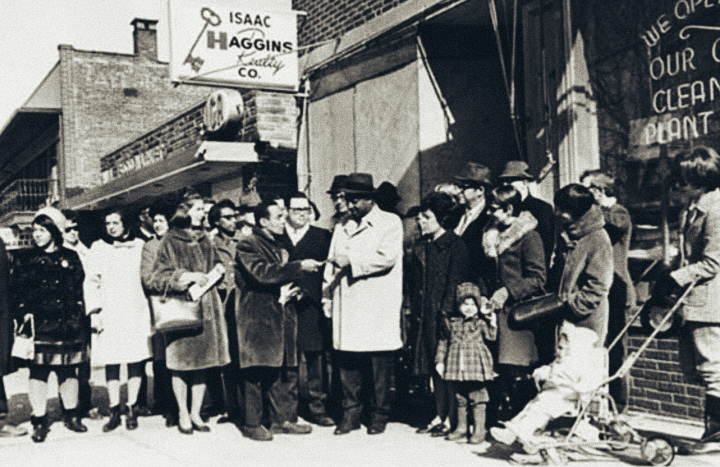
Racial Integration in the Heights
Interviews in this series were collected by undergraduate students at Cleveland State University under the supervision of Dr. Mark Souther, with funding from the Office of the Provost. The series contains interviews with pioneers of suburban residential integration and social activists who supported peaceful managed integration/desegregation and fair housing in Cleveland Heights and Shaker Heights in the 1950s to 1970s.