Sarah Taylor interview, 3 July 2013
Abstract
Sarah Louisa Taylor and her husband, Phillip, were orginally from England. Sarah works at Case Western Reserve University as a research assistant and helps new faculty members settle into the area. The Taylors were active in the Open Housing Task Force in the 1970s, which helped prevent efforts by realtors to prevent the racial integration of Cleveland Heights. The Taylors invited one such realtor to their home to discuss the issue, which led to a lawsuit against the Taylors by the realty company. Today, Cleveland Heights is an intergreated, cosmopolitan community with many amenities.
Metadata
Interview Transcript
Transcripts may contain errors.
Bethany Hollowell [00:00:02] Okay, today is Wednesday, July 3rd. I'm here with Sarah Taylor in her home in Cleveland Heights. Sarah, would you please state your full name for the record?
Sarah Taylor [00:00:11] It's Sarah Louisa Taylor.
Bethany Hollowell [00:00:14] Okay, Sarah, would you first tell me where you were born?
Sarah Taylor [00:00:19] Oh, in England. Well, actually, sorry, in Wales, but I grew up in England.
Bethany Hollowell [00:00:28] And where in Wales did you— [00:00:31] where in England did you grow up?
Sarah Taylor [00:00:35] I grew up— I was born in Porthcawl in Wales and then grew up in the southwest of England, Torquay in Devon. It's a seaside town in Devon in England.
Bethany Hollowell [00:00:48] What was your community like?
Sarah Taylor [00:00:50] Oh, it was lovely. It was really— my father was a dentist, so, you know, I grew up with that perspective of him being a professional and helping out people with dental problems who were locals. But in fact, it was basically a town devoted to greeting tourists. because it was on the southwest coast and was a very beautiful town on the seacoast, and so attracted a lot of visitors. And had palm trees, even though the latitude actually is at the north of Hudson's Bay. So it's fairly north in Canada, the same latitude, but because of the Gulf Stream, England has really quite a balmy climate, or at least has had, hopefully still will.
Bethany Hollowell [00:01:51] That's nice. Did you go to elementary school there?
Sarah Taylor [00:01:56] Yes, in England. Yes, yes, in Torquay. Yes.
Bethany Hollowell [00:02:01] And then how old were you when you came to the United States?
Sarah Taylor [00:02:04] I just left undergraduate college. I was a student at London University and worked in my last year there with an American postdoc. who got a job in Cleveland on the faculty at CWRU. And he asked if I wanted to join him over here in Cleveland, and came very gladly on a boat, jumped on a boat and came over, and never— have never left, at least not to live anywhere else. I met my husband here, and then we— who's also originally from England, but that was just accidental. We both— Philip said all the American girls were married.
Bethany Hollowell [00:02:57] What did your parents think about you coming to America?
Sarah Taylor [00:03:01] Oh, well, people are used to travel. I guess we didn't really think that it would be a commitment to a long term, and I was very happy to come and live here. And so they weren't nervous or anything.
Bethany Hollowell [00:03:26] And when you came to Case Western, you were working on your master's degree?
Sarah Taylor [00:03:33] I was a research— I was not actually doing that. I came simply as a research assistant. That was the job title I had, research assistant. So I did do a tiny bit of teaching, lab teaching, I think it was, all those years ago. But basically it was a research project, and we did write My boss and I, we wrote a paper together as a result of that research work on cell differentiation, which was very interesting, sort of pushing back the time at which, or I mean elaborating on how long cells can remain totipotential. And whether they are capable of differentiating into a fairly large number of end cells longer than one might expect. So that was interesting work.
Bethany Hollowell [00:04:42] So I assume that you had studied— you said you went to London University?
Sarah Taylor [00:04:46] Yes.
Bethany Hollowell [00:04:47] You studied chemistry there?
Sarah Taylor [00:04:49] Biology.
Bethany Hollowell [00:04:51] And how long were you studying there for?
Sarah Taylor [00:04:54] It's a 3-year program in England, undergraduate work.
Bethany Hollowell [00:05:00] So when you came to Case Western, what was your initial— what was the initial shock that you received when you came to the United States or when you came to the Cleveland area? What was that like for you?
Sarah Taylor [00:05:15] I think what struck me very immediately Well, immediately. You can't have very immediately, can you? Immediately was the feeling almost just getting off the boat, coming down the gangplank, that America, it's a place you feel the vibrancy of people greeting you and meeting you for the first time. They're interested in you for whom you are rather than for whom your parents are. That forms such a big aspect of greeting and meeting people in Europe or in England especially, maybe. And there are aspects to that that you can discuss, but basically the It was so— it was a refreshing and exciting and warming experience, and I think to some extent influenced the rest of my life here, that I wanted to return the favor of being made to feel so welcome.
Bethany Hollowell [00:06:33] And where did you stay when you came to Case Western? Where did you live?
Sarah Taylor [00:06:38] Oh, I came— I've forgotten how I found it, but it was in a nurses' hospital on Cornell Road, I think. I'm not sure if it's still there now, actually. Probably not. Pretty sure it wasn't. Reserve Manor, I think it was called, where it was. And I've forgotten, maybe it was just for women. Probably. I've forgotten now, but it was on Cornell, very close to where I was working in the lab.
Bethany Hollowell [00:07:11] Do you remember anybody else that lived there, like any neighbors?
Sarah Taylor [00:07:18] I do vaguely. I do remember one or two, but I'm not in touch— I haven't been in touch with them at all. Really, since I left. Or not so much, it faded out, they and I faded out together.
Bethany Hollowell [00:07:39] How many years were you here before you met Philip?
Sarah Taylor [00:07:42] Oh, very soon. I think it was— Philip, was it— it was how long before I met you? Was it in the Within weeks, months?
Phillip Taylor [00:07:58] Within weeks.
Sarah Taylor [00:07:59] Just within weeks. Strange.
Bethany Hollowell [00:08:03] What was Philip doing in the United States if he was also from England?
Sarah Taylor [00:08:08] He was a postdoc at Case, and we met through somebody I'd met in the biology department here, another young woman who's— I think she was originally from England. Rosalind Levine, her name was, is, but she long since left Cleveland. She had met Philip already, so it wasn't a great searching out of common ancestry. It was rather accidental, but she had an apartment on Overlook Road overlooking the University Circle area, and we met together there.
Bethany Hollowell [00:08:56] After you had finished, how long had you researched for under this professor that you came originally with?
Sarah Taylor [00:09:07] I think it was— he left to take up another position on the West Coast. in Oregon, I think. And that was after a couple of years, I think. And then I moved to work with a few, one or two other people on the faculty here in biology who asked if I could help with editing. They'd read the paper that we'd written together and they knew that I'd contributed quite a bit to that writing and so asked if I could help with their editing.
Bethany Hollowell [00:09:53] And then how long had you lived in that place on— did you say Cornell?
Sarah Taylor [00:09:59] Cornell.
Bethany Hollowell [00:10:00] How long had you lived there, do you remember?
Sarah Taylor [00:10:02] Before moving, you mean?
Bethany Hollowell [00:10:04] Yes.
Sarah Taylor [00:10:06] Gosh, I think we moved, we got an apartment when we got married. We got married and I came here in '64. Philip had moved here in '62 and we met shortly after and then got married in '66 back in England where our families were. And so '66. And I think probably at that point we got this apartment in Little Italy, which is also close by University Circle on 115th Street, I think it was.And Fairview Court, that was it, off 115th, I think. And so then— And then we bought a house up here in the Heights. In 1969, and this is where we are, same house.
Bethany Hollowell [00:11:04] So when you went back home to get married, did you stay there a while, or did you just get married and then come?
Sarah Taylor [00:11:11] Oh, we just got married and came back, yes.
Bethany Hollowell [00:11:14] And, um, how did you come upon this house? How did you guys find it?
Sarah Taylor [00:11:19] Um, I don't remember the actual details. Do you remember how we found this house, Philip? We just searched. We didn't have any special connection, right? We just went through the regular system. I don't remember any special features about it, about the search.
Bethany Hollowell [00:11:48] Why did you want to move from your Little Italy apartment? Apartment to a home?
Sarah Taylor [00:11:53] Well, we wanted to buy a home, so, in Little Italy, we had an apartment, so it was, we certainly wanted to have a home and be part, and the Cleveland Heights, we already probably knew quite a few people here, and all of whom were very happy, and Shaker and Cleveland Heights are lovely communities, very convenient, very close to University Circle and the university, Cleveland, Case Western, and, and couldn't get to other— Cleveland State and downtown. And so it was always a very convenient place to live.
Bethany Hollowell [00:12:39] Were you guys active in the downtown community? Did you go downtown frequently to shows or— Anything like that?
Sarah Taylor [00:12:46] We weren't especially active in it, but we certainly did go down more than we would go down now, I think, just because there was more downtown. There was a very lively— I remember Higbee's and Halle's were down there. And so, and I've forgotten really how I got down there. I suppose I drove. And didn't get buses or rapids. Do you remember, Philip, how we— how I used to go downtown?
Phillip Taylor [00:13:22] I don't remember.
Sarah Taylor [00:13:24] It's so long ago. No. And then there was— there were theaters, and of course they've come back now, and that's lovely, and I'm certainly trying to help promote. In fact, I've got a website for new faculty that I organize, and the current one for the summer has the Downtown Cleveland Alliance's— I'm not sure, there are several organizations that promote downtown— but the Take a Hike tours around the downtown area and the Canal Basin and this sort of thing. So It's lovely that there's a big effort to bring life back into that area.
Bethany Hollowell [00:14:09] Are you—
Bethany Hollowell [00:14:10] I'm sorry, how did you say you're involved in the Take a Hike program?
Sarah Taylor [00:14:18] I organize a website, but I organize some events for new faculty, and I've had some— the Take a Hike program is put— is organized, I think, by the Downtown Cleveland Alliance. I think that's— I'm sorry if I got the organization's name wrong, but I think that's right. And they also have trained actors or actors jump on board who portray people like John Rockefeller and people. And I've had some of them visit events that I have for new faculty just as a kick. It's fun to— in their initial event in August when we have the picnic for new faculty families. And so they burst in for a few minutes. They come out to the farm and appear. And josh, at this event. So I don't really have any other connection. I just help, try and help promote what's going on.
Bethany Hollowell [00:15:29] Sure. When you lived in Little Italy, what kind of entertainment were you guys seeking down there? Just restaurants? And was it much like how it is today, or—
Sarah Taylor [00:15:40] Very much like it is, yes. In fact, we still buy our bread at Presti's, which is there on Mayfield Road. So we've been there and it's identical, I think, to the way it was when, uh, we were first there in the early '60s. And, they're still in the same spot. I don't think there's any change, is there, Philip, in Presti's? No.
Phillip Taylor [00:16:07] Well, they've expanded.
Sarah Taylor [00:16:09] Have they?
Phillip Taylor [00:16:09] Yes.
Sarah Taylor [00:16:10] Oh, they made—
Phillip Taylor [00:16:11] they moved from one place to another and Oh, did they?
Sarah Taylor [00:16:15] But very close by?
Phillip Taylor [00:16:17] Yes.
Sarah Taylor [00:16:17] Yes, yes, very close. I don't know if they had a restaurant then, but they did— they do now, I think, or have had for many years.
Bethany Hollowell [00:16:28] So you bought your home in 1969, you said?
Sarah Taylor [00:16:31] Yes.
Bethany Hollowell [00:16:32] And did you guys have any children at this time?
Sarah Taylor [00:16:35] No, but we were hoping to have some, and we had A daughter in 1970 and another daughter in 1973.
Bethany Hollowell [00:16:44] And where did they go to preschool or school?
Sarah Taylor [00:16:48] They went to the Music School Settlement in University Circle for preschool. Very exciting place and very innovative, and it was a great start. And then Basically, they went to Laurel in elementary school. Camilla did have a year of schooling at Hawken in between, but Laurel seemed to be a place that would be a good place for girls with— whose parents had fairly high pressure.
Sarah Taylor [00:17:35] So at any rate, we— I did visit, and I was thinking we'd send them to the elementary school here, but at that time they were very much on open— open classrooms. So, uh, running around and so on.
Phillip Taylor [00:18:02] Remember, this could be broadcast.
Sarah Taylor [00:18:04] Yes.
Phillip Taylor [00:18:05] Edited.
Sarah Taylor [00:18:06] Yes.
Phillip Taylor [00:18:07] Just one sentence could be taken out and—
Sarah Taylor [00:18:11] Okay.
Phillip Taylor [00:18:11] Put on the radio. So be very careful what you say about the schools.
Sarah Taylor [00:18:16] Yes, I'm not critical. I'm just saying it was, it was a different way of approaching schooling. I was sort of old-fashioned.
Philip Taylor [00:18:27] Sure.
Sarah Taylor [00:18:27] And sort of light, maybe more regimented sounds negative, but, you know, and it was maybe in the long run, who knows what's ideal schooling environment, but it was very much in the early days of sort of open classrooms where you were running, the children were having a lot of freedom. Yes, a lot of freedom to run around, and I was thinking, oh gosh, I thought of, you know, I'm sitting down and being told what to do more. So that was more.
Bethany Hollowell [00:19:09] I've heard really good things about Laurel. So you said you've lived in this home. For some 69 years you've owned this home.
Sarah Taylor [00:19:19] Right.
Bethany Hollowell [00:19:21] What was the neighborhood like when you first moved in here?
Sarah Taylor [00:19:27] It was very like it is now, I think. I don't remember much, anything terribly different. Do you, Philip?
Phillip Taylor [00:19:44] No.
Sarah Taylor [00:19:44] I mean, there's nothing stands out anyway. Um, it was— had a varied population, and we got on very well with our neighbors who we met, of course. And maybe they were older on the whole, um, but, uh, Yes, there wasn't— nothing I would, you know, categorically say was— I mean, there may have been sort of vague differences, I mean, general differences, but not stark ones.
Bethany Hollowell [00:20:27] Was it an integrated street or—
Sarah Taylor [00:20:35] I don't think— certainly our immediate neighbors were not African American or— I can't remember if they were foreign-born like we were. Maybe some were, actually. Maybe some were European-born and—
Sarah Taylor [00:21:01] But, you know, by that you mean, were— do we have African American neighbors? You're nodding your head, so you mean that. Um, no, I don't think so. Um, not immediate anyway. But then our immediate neighbors now aren't. We've got one probably, I mean, just a couple of houses this way and a couple of houses that way, probably. So we are certainly very happily in a very integrated area now. And whether— how different it was then, I don't know. It might have been slightly bigger, a different percentage, I would probably guess. Probably slightly fewer, but I, I'm certainly never looked into it, and I'm not an expert.
Bethany Hollowell [00:21:57] I see that you've said that you've kind of done your own research and you've kind of gathered your involvement. Would you care to kind of present that to me in a way that I could maybe bounce back some questions off of you, or—
Sarah Taylor [00:22:14] These were just notes I'd made after being called by you. I just, you know, made a note of when I called people.
Phillip Taylor [00:22:27] Oh, okay.
Sarah Taylor [00:22:27] There were 2 people in particular who I'd thought about when I— I certainly know I'm not— we're not closely in touch, but that we are still known to each other and friendly and so on from those days. And so I did leave a message for both of them, and they're both involved still in Cleveland Heights activities, and I think would actually have more useful information for you regarding the evolving— the evolution of the open housing situation in Cleveland Heights. And the Heights Community Congress and how it became more sophisticated and so on.
Bethany Hollowell [00:23:19] When you moved here in '69, were you involved in any organizations, community organizations like the Heights Community Congress?
Sarah Taylor [00:23:29] Not at all, no. It was completely— it evolved with the situation. situation was— I've forgotten if Philip, or maybe Philip knows— the being barraged with real estate solicitation calls at one point. And maybe Philip can remember the year. But that was when I, you know, we kept telling them, no, we didn't have a house for sale.[00:24:11] And, uh, and because it was happening not just to us but to others, in the— and I don't know if you've talked with others in this who've had this history here. You have?
Sarah Taylor [00:24:24] Okay. So we got to realize that other people were being barraged too, and And maybe even more in East Cleveland than had happened in Cleveland Heights. And that, in fact, the real estate— or some members, not certainly not all of them, I'm sure, but some members of the real estate community were trying very hard to push out the whites, basically, to put it simply, from the inner-ring suburbs further east. They wanted to have that business opportunity of getting, attracting, or scaring rather, the whites out further east by telling them, i.e., us, that Blacks were coming in, you see, and taking over the place. And So that was certainly happening in East Cleveland and was happening in— and what period of the '70s this was, I'm not sure, early '70s, I assume. And I've forgotten how I got in touch with Gay Caro, and Lana Cowell, for instance. to people who also, and maybe were further on in this awareness. And I thought, as I told you on the phone maybe, or the young man who's working with you, Mark.
Sarah Taylor [00:26:12] That the Open Housing Task Force that we created in response to this pressure originated and started the Heights Community Congress. But in fact, I was told by Gay recently that in fact I got it the wrong way around, that in fact the Congress was already formed and the Open Housing Task Force was a subdivision of the Congress. But at any rate, we, Philip and I, were getting calls at home very frequently from real estate agents saying they had a buyer for our home. Can they bring them round? Or can they— and implying there was other housing that we could get further east as well. I've forgotten how it was phrased. But I kept saying, of course, no, of course we're not selling our house. We're very happy here. And we were very irritated by this constant barrage. And then, but at some point, suddenly occurred to me, well, that would be a good idea maybe to have her around, this agent. And We can talk with her and explain why we're not happy with what she's doing. And, you know, I mean, at any rate, I won't get into any further details on that except to say that I did call up members of the Open Housing Task Force. So we had already formed that group, I suppose. And met, we did meet once a week. And I've forgotten, I'm sorry, the details of these meetings. I went to them, they were during the week. But Gay Caro and Lana Cowell would be the people who would fill you in on more details of those meetings and the structure of that organization. But I phoned them up and said, would you like to come round? I've invited around this real estate agent. At least I haven't invited her, she invited herself. But I said, yes, do come round to her, and if you'd like to come, we could talk with her. So half a dozen of us met here, over there in the sitting room, and early '70s, I assume, sometime. And I could probably find the exact dates if necessary. Or close. And so we had quite a good meeting. I mean, as it turned out, I mean, I introduced everybody and said, do you live— to the real estate agent— do you live in the Heights? Yeah. And no, I didn't— wasn't able to bring the buyer.
Sarah Taylor [00:29:32] So she didn't bring anybody with her who was interested in buying the house, so-called. Yes, I live. So I said, don't you like it being an integrated community? And so, you know, she sort of hummed and hawed a bit. And so I said, well, we do like it being integrated. What you're doing is ruining it, you see. And we had this The conversation, I mean, it sounded like quite a fight, but in fact we let her have what she wanted to say and we explained in various different ways how we loved it here and we wanted it to continue as a cosmopolitan, integrated, you know, varied cultural community. That was, you know, what we loved about it, apart from its proximity, etc., etc., to the cultural aspects of Cleveland. And so then—
Phillip Taylor [00:30:37] Mailman!
Sarah Taylor [00:30:40] Thanks. Philip, maybe you could tell him about— Philip? Maybe you could tell him, sorry, about the fact we'll be out of town for a couple of days.
Phillip Taylor [00:31:01] Okay, thanks.
Sarah Taylor [00:31:03] Very good, sorry. So anyway, the bottom line is that everybody eventually left after their coffee, and it was a warm meeting really, and She was the last to leave, the agent. She was drinking her cup of coffee, finishing it up at the front door, and we finally said cheerio, bye. And so I thought that was the end of it. We might have educated her a bit and made her feel bad about doing this sort of thing. Anyway, the day after, or maybe it was 2 days, 2 mornings after, I got a phone call from the plane dealer, and they said, do you have any comment on being sued, on you and your husband being sued for $1 million? I said, excuse me? And, do you have a comment? He repeated it. So, I said, I have no idea what you're talking about. And so he clarified that William Burroughs, I think, was the name of the agent, the company. Was that it, Philip?
Phillip Taylor [00:32:22] I don't remember the first name. I know it was Burroughs.
Sarah Taylor [00:32:25] I see. Burroughs. I've forgotten. Anyway, um, they are suing you for deceit. Um, and then clarified that I sort of implied that we had a buyer, that we were prepared to have a buyer come and look and interested in selling. So I very much clarified that I'd not given her the impression that we were. I just said she could come round and hadn't implied any potential selling of our house. And at any rate, it did fizzle. But was on the— it was on a page of the Plain Dealer. It was published, that lawsuit, but it didn't come to anything. But that was a funny episode. But at any rate, that was just the one aspect, the one story I have that is possibly of interest to the evolution of the— of the effort in Cleveland. And I think it was not long after that that this whole real estate effort to undermine the residential ownership of this community fizzled out. They stopped doing it. And it wasn't long after that. I'd forgotten it was— I'm sure it was the efforts of the Urban Housing Task Force and the, you know, the— obviously it became obviously an important thing to the community, and so the real estate agent wasn't getting good vibes from— good, what's the word I want? Anyway, it's not good publicity if you do that sort of thing. So that's— I'm sorry, I don't have any more— anything of interest to say apart from that, really.
Bethany Hollowell [00:34:26] Do you remember reading it in the News Herald, you said? Do you remember reading it, getting it in— I'm sorry, the Plain Dealer, you said?
Sarah Taylor [00:34:34] Yes.
Bethany Hollowell [00:34:35] Do you remember getting that paper and reading your story in there?
Sarah Taylor [00:34:38] I remember the story of the lawsuit of us. It said— I remember the title was Cleveland Heights. I'm pretty certain this was the title: Cleveland Heights Couple Sued for Deceit.
Phillip Taylor [00:34:51] It was the Cleveland Press that had that headline.
Sarah Taylor [00:34:54] Oh, I'm sorry. Philip calls in, it was the Cleveland Press. But it was the Cleveland Plain Dealer that made the call, I think, wasn't it? You weren't— you were at work, I think, but—
Phillip Taylor [00:35:08] No, we came home together.
Sarah Taylor [00:35:13] Really? Oh, from work, I see.
Phillip Taylor [00:35:16] We were both working I see. Together.
Sarah Taylor [00:35:21] I see.
Phillip Taylor [00:35:23] And the phone was ringing just as we came in the back door.
Sarah Taylor [00:35:26] Yes, I remember that.
Phillip Taylor [00:35:27] And you picked it up and got this and looked at the phone and handed it to me.
Sarah Taylor [00:35:34] Yes.
Phillip Taylor [00:35:35] And they said the same thing to me and I had no idea what was going on.
Sarah Taylor [00:35:40] No.
Phillip Taylor [00:35:41] But I'd watched enough TV that I knew to say that is certainly without foundation and we have no further comment. Or something like that.
Bethany Hollowell [00:35:53] Well that would have been pretty shocking. I would think to get a phone call like that. A million dollars is a lot of money, especially, well, in the '70s as well.
Sarah Taylor [00:36:03] Yes.
Bethany Hollowell [00:36:04] Do you remember what year that was that this happened, or just early '70s?
Sarah Taylor [00:36:09] Do you remember the year, Philip? It was the early '70s, wasn't it?
Phillip Taylor [00:36:14] I don't remember the year, no.
Sarah Taylor [00:36:16] But I, I could probably find out. When I called Gay recently and Lana, they've been involved in so many Cleveland Heights things since then, organizations and working hard in different ways for it. And Gay had forgotten about this particular incident, so she roared with laughter. So she wouldn't necessarily have the date, but I'm sure I have notes. It's where they are that's the issue.
Phillip Taylor [00:36:50] But if one wants to find it, one could— somebody who has access to LexisNexis can just look up federal court for that date. District and Burroughs v. Taylor.
Bethany Hollowell [00:37:09] How do you spell Burroughs?
Sarah Taylor [00:37:11] B-U-R-R-O-U-G-H-S. I'm pretty certain that was it, and not O-W-S.
Bethany Hollowell [00:37:21] B-U-R-R-O-U— I'm sorry, could you spell it again?
Sarah Taylor [00:37:24] Sorry, it's B-U-R-R-O-U-G-H-S.
Bethany Hollowell [00:37:30] Okay, that's okay.
Sarah Taylor [00:37:32] Rather than the, like, a rabbit burrow.
Bethany Hollowell [00:37:37] Okay, I see what you're saying.
Sarah Taylor [00:37:41] I think.
Bethany Hollowell [00:37:42] Where were you guys both employed at the time? Where were you working? Still at Case Western?
Sarah Taylor [00:37:46] Yes.
Bethany Hollowell [00:37:49] Were you teaching?
Sarah Taylor [00:37:52] Right. I did a very small amount of lab teaching, I think. I know I did some, but how much I did, I've forgotten. But basically, it was— I transferred to another faculty member and did some editorial work. But I've forgotten when I stopped going down there to do that. And then I got— started a little business here importing some bird model kits and selling them to museum shops around the country. And paper model kits they were, of very lifelike species, 8 models, types of bird. And so they sold to While they were being made in England, I sold— imported them and sold them. And so that business, like UPS picked them up every day from the back porch, the packages. Philip made a stand for it, which is still there. And various other projects came along and businesses, various. Worked on public radio, started public radio here. Began that in 1976 by phoning Corporation for Public Broadcasting saying, why come— how come Cleveland doesn't have a public radio station? Because I'd heard it on the West Coast when Philip was on sabbatical. And he said, yes, actually, you're quite right. Cleveland is the largest major market in the US without a public radio station. So anyway, they called a lunch together, brought in somebody from Washington, and I noted at that lunch who seemed interested and invited them round afterwards. Luckily connected with somebody who had significant clout in the community, and 4 of us became the initial trustees, including Michael White, who'd been—
Phillip Taylor [00:40:21] I don't think he was a trustee, was he?
Sarah Taylor [00:40:24] Yes, he was one of the 4 first trustees of CPN. Michael White, myself, and Margaret Norris and Brad Norris. They left town shortly afterwards, but he was a lawyer. She was actually involved in TV, in radio for hospitals. So that's why I'd invited her over, and she'd brought her husband in. And he was energetic and had influence and took 8 years, but '84 WCPN got on the air.
Bethany Hollowell [00:41:06] Where was your first— where were you stationed at?
Sarah Taylor [00:41:10] Yes, interesting point. It wasn't where it is now. It was further on the east side. It was, I think, was it a CSU building?
Phillip Taylor [00:41:20] It was the original Board of Education transmitter.
Sarah Taylor [00:41:25] Oh yes, 50,000 watts. That's why it was very useful. Yes. All right.
Bethany Hollowell [00:41:35] I know where that is. Um, East 30th, is that—
Sarah Taylor [00:41:39] Oh, could be.
Bethany Hollowell [00:41:40] I think it's on East. I, I can see the letters WBOE. They're red.
Sarah Taylor [00:41:47] Oh really?
Bethany Hollowell [00:41:48] Blue and white.
Sarah Taylor [00:41:49] It's still there.
Bethany Hollowell [00:41:52] I think it's on East 30th. Um, I could be off, it could be different letters, but yes, for some reason that sounds familiar to me. Um, so I wanted to talk a little bit about the Open Housing Task Force. You guys advertised, or how did— who did you reach out to?
Sarah Taylor [00:42:14] Oh, um, Gosh, Gay and Lana would be more, probably more familiar with that history. So they'd be the ones to ask. I just, I'm sorry, I have very vague memory now about lots of things, and that's one of them. And so I'm not sure. We just— I think it's how it was advertised, how it was publicized. Certainly we were anxious for anybody interested, interested in promoting the cosmopolitan, remaining cosmopolitan and vibrant and continually so community here.
Bethany Hollowell [00:43:07] Did that happen to any of the other ladies and Or any of the other people who started the Open Housing Task Force, did they have any cases like what happened to you guys with the suing, the deceit?
Sarah Taylor [00:43:22] I don't think they ever— they didn't— I don't think they had the same experience because they didn't have a real estate agent daft enough to make that loss, you know, issue that lawsuit. I didn't come across one quite so, but, you know, maybe it was the publicity wasn't disliked. If you want to become known as a blockbuster, you— I don't know whether it's good to
Bethany Hollowell [00:44:06S] So after all of that happened, were you ever called again or bothered again by real estate agents?
Sarah Taylor [00:44:15] No. No. The actual blockbusting techniques seemed to fizzle out. But they worked, the people I've mentioned. And Susanna Niermann was another person who worked very hard and still does. And so all these people are ones that could give you more clarity as to the— that I'm not doing on the history of the Open Housing Task Force and how people were notified about its existence and encouraged to participate and join. And we, we went— we met together once a week on a— in a building that's- I think it's on top of the current CVS building, but anyway, it's on the corner basically of Cedar and Lee, just close by. And that beginning of that— well, not beginning, in the middle of that commercial district basically— is a building where we met on the second floor, I think.
Bethany Hollowell [00:45:26] What did you know about the Heights Community Congress then, other than that it existed? What did you understand their motives or—
Sarah Taylor [00:45:35] Well, you see, that's the reason I'm apologetic, because as I remember, the Open Housing Task Force evolved into the Heights Community Congress. But Gay, on the phone a couple A few days ago when I was talking with her. She's currently on the East Coast, but would be happy to talk further with you if you need it. But at any rate, she was reminding me that I'd forgotten that Congress already existed and the task— the Open Housing Task Force was a subdivision of the Congress, basically.
Sarah Taylor [00:46:17] So I'm sorry I'm not being useful in the crucial questions you have there.
Bethany Hollowell [00:46:24] No, that's no problem at all. It's still interesting to hear your story as far as what happened with soliciting and the calls. And so I guess now that we've kind of covered that portion of your experience in the Heights, What were some of the more positive experiences, or what was so attractive to you other than— I know you've mentioned the vibrancy of the community and the location, but is there anything else in particular that you enjoyed about living in Cleveland Heights?
Sarah Taylor [00:47:00] I think the variety of people and the dynamism and the interaction of people. You know, everybody had strong feelings about things and very positive feelings, you know. And, you know, I'd forgotten how I got involved with the Congress exactly, whether it was people I knew or whether it was, you know, I spoke with other neighbors and they said, oh yes, we're getting all those soliciting calls too, or other faculty or faculty spouses who said, oh yes, we're getting them too. So, you know, how it exactly evolved, I've forgotten. But it's just the intellectual dynamism and warmth also of people. And, you know, I'm sure if I lived— when Philip was on sabbatical, we had lovely experiences there too, but nothing that would top anything we'd had here. I mean, you just feel it's lovely and certainly also convenient with its— it has the— commercial things you need in the way of food and clothing and so on. Severance Center was very lively in those periods that we had young children with. I mean, it had the crucial supply of needed things that one needed. And so, in every way, it's a very convenient, family-friendly place.
Sarah Taylor [00:49:04] And so, and access to parks. And, uh, and if you want a bigger park, you can drive out to Cuyahoga Valley National Park, or drive in, so to speak. So, um, it's got the lovely local parks, and, uh, but also The lake not too far away, and so on and so on.
Bethany Hollowell [00:49:32] Did you take your daughters to Cain Park a lot? Which parks did you visit?
Sarah Taylor [00:49:38] A little bit. So, trying to think where we visited the most, but we did take them to a variety of parks and the lakefront and Do you remember any particular park that we— No, not one particular one, but, uh, just made— took advantage of all the various ones.
Bethany Hollowell [00:50:07] Sure. [00:50:08] What kind of entertainment did you seek in the Heights? Like, did you go to the Cedar Leaf Theatre often, or the restaurants on Coventry Road, Or any of those sort of more notable landmarks in the Heights?
Sarah Taylor [00:50:26] I suppose we didn't go to do much entertainment. And we didn't— but certainly we did go to the theater occasionally and the cinema. And Restaurants occasionally, but would you say that's right? Do you have any comment, Philip, on what we did?
Phillip Taylor [00:51:00] No, it's all a bit of a haze now.
Sarah Taylor [00:51:01] Yes, I mean, we're not— we didn't— we don't spend a lot of time going out for entertainment, I think, compared to some, possibly. But we took advantage of the local attractions a little bit.
Bethany Hollowell [00:51:23] Based off of— and this will perhaps be my last question, then I'll ask you to add anything that you feel you'd like to add— from the time that you bought your home in 1969 to What's, I guess, the biggest change that you've noticed in Cleveland Heights? It could be community or it could be structurally or—
Sarah Taylor [00:51:49] Gosh. [00:51:52] Probably think of the answer to this after you leave.
Bethany Hollowell [00:51:57] If you'd like to take a moment to think about it, that'd be fine.
Sarah Taylor [00:52:08] So, you know, you certainly see buildings get taken down or, or remodeled or, um, slightly different character. And because I'm sort of maybe innately a sort of rather conservative person, I always sort of Want to hang on to things, you know what I mean? And so when I see things change, I say, oh dear, what a shame. And, but, you know, usually it's a, you know, just a change, and not necessarily better or worse, just a new business or something like that. And so, I don't know that I see any particular strong change at all. No, I can't. It's just an ebb and flow situation. We met Mark by taking that Lee Road history.
Bethany Hollowell [00:53:30] Right.
Sarah Taylor [00:53:31] And so it sort of stimulated the memory of some businesses that had been there before that had changed hands and become different and so on. And so, but nothing, nothing major, I don't think. I'm sorry I can't give you any example of that.
Bethany Hollowell [00:53:59] It's no problem. I think that at least from what I understand of the Heights then and now, it's kind of remained that's the same kind of ambiance and the same sort of community and the same people. So I'm just curious to see if you had any observations.
Sarah Taylor [00:54:20] Yes. [00:54:20] I mean, I certainly welcome, you know, I phone new faculty if I get their names and when I get their names from the university. And I'm very careful because I have taken on that effort and formed the committee, and they're a wonderful group of people. And they, we, invite, and we let people know about the— all the aspects of the community as well as the university that they might be interested in connecting with. And, um, so I, you know, I've been in touch with encouraging them to consider, and not just the Near East side, but I'm sure that some you know, interest in looking at the Near West Side nowadays, which is just great. So our city has that aspect too. And, um, so, you know, I just— I don't— over the years, I don't think I've noted any particular difference. Just enjoy promoting in general, not any specific commercial operation. But don't ever do that. Make sure not to do that.
Bethany Hollowell [00:55:45] These new faculty that you invite into the area, do most of them live in Cleveland Heights? Do they usually find residency in the Heights, or do they—
Sarah Taylor [00:55:57] Quite a lot do, yes, because of the convenience as well as The many aspects of the Heights that are very convenient. And, you know, the beautiful architecture, turn of the 20th century, is just so memorable. And it's the lovely streets, all these— I mean, other parts of the city, the wider regional area are lovely too. I think we're so lucky in the Heights to have that early 20th century period, which has lovely gardens, just such a convenient size, really, I think, probably. And people take care of it on the whole, on— and each of them, each of the homeowners. And each house is architecturally varied from its neighbor. I don't know how they did it, cannot imagine. And the variety of materials that are used are so perfect. They— the wood and the brick and the cement or whatever they use together makes it the— it's just constantly vibrant when you walk or drive down the streets, around the streets of our suburb. But, so I, I'm not surprised that many people love, love living here.
Bethany Hollowell [00:57:30] Um, do you know the history of your house or when it was built?
Sarah Taylor [00:57:35] It was built in 1920, I think. Isn't that right, Philip? So you remember? Um, was it— how do you know if we know anything about the owners before? I've forgotten.
Phillip Taylor [00:57:47] I think it only had 2 owners before.
Sarah Taylor [00:57:49] That's what I remember too.
Phillip Taylor [00:57:54] There was a family who were here.
Sarah Taylor [00:57:53] Oh really? I don't remember that.
Phillip Taylor [00:57:55] Inception, and then there was a family whose name I forget who had it briefly.
Sarah Taylor [00:58:01] It wasn't Willower, was it? Um, I've forgotten.
Phillip Taylor [00:58:05] Something close to that.
Sarah Taylor [00:58:07] Okay, yes, we don't— it was Yes, I'd remembered that we— it was only— it only had two owners before we did, before we bought it in '69. So it was quite a long time with— and we, of course, have kept it since then. So it's only had 3 owners altogether. So sorry, that's— I don't—
Bethany Hollowell [00:58:34] Would you like to add anything else? Or do you feel like you've—
Sarah Taylor [00:58:39] I don't think I've got anything else. I'd certainly be very happy to provide the phone numbers and the names of the people I gave you, I spoke about.
Bethany Hollowell [00:58:53] Gayle and Lana? Or Gay and Lana?
Sarah Taylor [00:58:55] Gay and Lana, and Susanna Niermann. I'm not sure I have her number, but at any rate, Gay could put you in touch.
Bethany Hollowell [00:59:06] Perhaps I already have. What was Lana? Does Lana live locally?
Sarah Taylor [00:59:13] Yes.
Bethany Hollowell [00:59:13] What was her last name?
Sarah Taylor [00:59:14] I'm not sure where she is right now, but Cowell.
Bethany Hollowell [00:59:19] Oh sure, we have, we have her, we have her information. She lives here.
Phillip Taylor [00:59:24] Okay, I think because you phoned her.
Sarah Taylor [00:59:29] I think there was, but I think it was from Mark, probably.
Phillip Taylor [00:59:33] Right.
Bethany Hollowell [00:59:34] And then she worked with Susanna Niermann.
Sarah Taylor [00:59:40] Yes. So you have Gay Quereau's?
Bethany Hollowell [00:59:42] I do not. I don't have Gay's, I don't believe. What was Gay's last name?
Sarah Taylor [00:59:46] Quereau.
Bethany Hollowell [00:59:47] If she does not live locally, we probably don't have it.
Sarah Taylor [00:59:52] She does, but she's—
Phillip Taylor [00:59:53] She was contacted by you. She said, right?
Sarah Taylor [00:59:57] By Mark.
Bethany Hollowell [00:59:59] I know that Lana was.
Phillip Taylor [01:00:01] About you in the collective sense.
Phillip Taylor [01:00:03] You spoke to her, right?
Sarah Taylor [01:00:06] Yes.
Phillip Taylor [01:00:07] She called you because she'd been contacted?
Sarah Taylor [01:00:09] No, I'd called her. I left her a message. I have her local number, but I also— where I'd left a message, but in fact she gave me another number. So it's— which is probably a cell.
Phillip Taylor [01:00:27] Okay.
Sarah Taylor [01:00:29] So if you'd like that one.
Bethany Hollowell [01:00:33] How did you spell her last name?
Phillip Taylor [01:00:34] C-U—
Sarah Taylor [01:00:35] No, sorry, it's Q-U-E-R-E-A-U. Okay.
Bethany Hollowell [01:00:45] Thank you.
Sarah Taylor [01:00:46] And her husband's on the faculty here or retired, I'm not quite sure. But they're currently on the East Coast. And I think that— I think they're vacationing, I think.
Bethany Hollowell [01:01:05] Okay, so they still live locally.
Sarah Taylor [01:01:07] Right.
Phillip Taylor [01:01:08] I'm getting a lot of things wrong, but I think she said they live 5 miles away.
Sarah Taylor [01:01:17] Very good. I didn't know what length of time they spent on the East Coast, but she does have a 216 cell number.
Bethany Hollowell [01:01:30] Okay.
Sarah Taylor [01:01:30] So it's 216-905-5146. Susanna Niermann, I think, is the outgoing city manager, she told me.
Bethany Hollowell [01:01:47] How do you spell that last name?
Sarah Taylor [01:01:50] I think it's N-I-E-R-M-A-N-N. Susanna with S-U-S-A-N-N-A. I think. And then there's somebody called Sudeet.
Bethany Hollowell [01:02:21] Do you have Susanna Niermann's phone number?
Sarah Taylor [01:02:28] I don't, I'm sorry. But Gay would have it, I think. It's probably available since she's outgoing city manager.
Bethany Hollowell [01:02:41] Sure.
Sarah Taylor [01:02:41] But Gay had apparently, for instance, there was a lawsuit that I'd forgotten about, and it's bad because it was a very important thing, which was the Hilltop lawsuit, which Gay reminded me was very important. I mean, ours was just a very silly thing compared to the Hilltop lawsuit, which—
Bethany Hollowell [01:03:16] Do you recall the Hilltop lawsuit? Do you remember it?
Sarah Taylor [01:03:20] As I say, it slipped my mind, even though it was a very important part of the Open Housing Task Force effort. I think. And the Open Housing Task Force was formed, Gay reminded me, by somebody called Chip Bromley.
Bethany Hollowell [01:03:40] Yes, we have Chip.
Sarah Taylor [01:03:41] And he's around but involved with fair lending apparently at the moment. And the Hilltop lawsuit, she reminds me, Gay reminds me, was eventually filed by the Heights Community Congress with the city of Cleveland Heights. So it was a double filing there, and the Congress won this major lawsuit. So after that, it was after that, I guess, that the real estate industry cleaned up its act, Gaye said.
Bethany Hollowell [01:04:21] Well, I'd love to give Gay a phone call.
Sarah Taylor [01:04:23] Yes.
Bethany Hollowell [01:04:24] Perhaps next week or something.
Sarah Taylor [01:04:28] Yes, because she's much more— I'm just giving you some little cute story by comparison rather than a true history. But is she—
Bethany Hollowell [01:04:40] Stories are just as important, you know, I think. That's why we asked to interview you. So I'll turn off the recorder. Thank you so much for agreeing to be interviewed.
Sarah Taylor [01:04:52] You're very welcome. And so she points out-
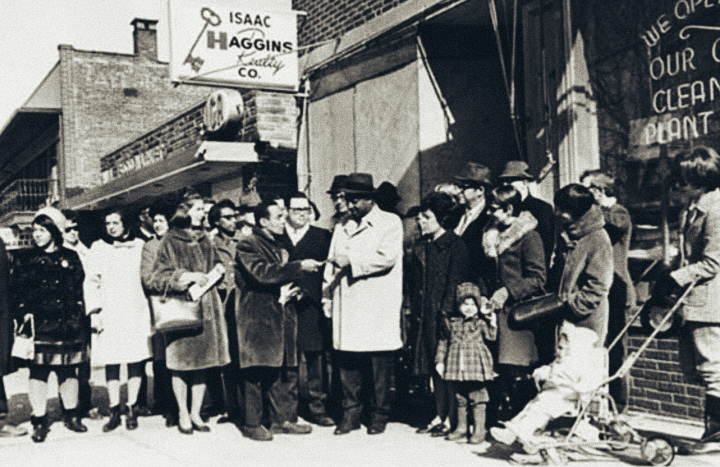
Racial Integration in the Heights
Interviews in this series were collected by undergraduate students at Cleveland State University under the supervision of Dr. Mark Souther, with funding from the Office of the Provost. The series contains interviews with pioneers of suburban residential integration and social activists who supported peaceful managed integration/desegregation and fair housing in Cleveland Heights and Shaker Heights in the 1950s to 1970s.