Gerald Hughes interview, 17 July 2013
Abstract
Gerald Hughes is an African American Clevelander who served within the Cleveland City Schools for many years. He describes his various positions at various schools. He also points out differences and similarities these schools experienced. He recalls how it was to work with the PTA and how important it is to have an active parent base. He recalls the challenges that busing brought to the school district. He then discusses what it was like to live in Cleveland Heights and his fond memories of Cain Park, among other places. He briefly discusses how the sectionalism that divided the city on East-West lines dissolved and downtown Cleveland became a central location.
Metadata
Interview Transcript
Transcripts may contain errors.
Gerald Hughes [00:00:19] When I went to Sowinski Elementary, it was one of the larger schools in the system, a very large school. About 600 or 700 kids in an old building, it was a very old building. In fact, there was two buildings. We actually rented some rooms in St. Thomas Catholic School, which is on Superior Avenue, right in the same area. So some of the classes went there. But it was an old building with a gym on the 3rd floor, lunch programs on the 3rd floor. Didn't have a full-size gym, just had a big Major room up there. It did have a satellite building, which was used as a gym. It had been a Polish neighborhood up until that, almost solidly Polish, right next to St. Casimir's, a Polish Catholic church. It was a very prominent Catholic church there, Sowinski— on Sowinski Avenue. And the desegregation was just starting to take place. And when I went there, I can't think of the year, It was predominantly Polish in community and white, and with a migration of Black families from the Hough area coming in. So you had to deal with that and all the stuff that was going on during the— Hough riot days. There was a Sowinski riot there too one time, one instance which was pretty severe. I liked the challenge of the place. It was a very big school, and it had a very good faculty. But it was challenging just being there, working in that kind of community. New experience for everybody. New experience for the Polish residents who were there who were fearful of the new people who migrated in. And the people who would come in, were fearful of the community they were moving into. And the schools kind of caught in the middle of this.
Timothy Klypchak [00:02:18] Now, the migration, was it gradual or was it like overnight, like the shift in the population of East Cleveland?
Gerald Hughes [00:02:25] No, no, it was gradual, very gradual in fact. But very noticeable though. Families were moving in mainly from The south part of— from Hough area across Superior Avenue was kind of a boundary at that time. And the area between Superior Avenue and St. Clair Avenue was kind of predominantly Polish at that time. And it was changing in many ways. The poverty level was very prevalent. That was a problem they had to deal with, too. Many youngsters were eligible for free lunches and so on. We had a mixed faculty, racially mixed, and it was a good faculty. They worked together very, very well. I was just there, I was there one year, then I went to Crispus Attucks, which was in the middle of the Hough area, 79th and Hough Avenue. Which was a predominantly Black school, which was very in the middle of the— interracial problems were there, very much a part of that area. So we had to deal with that all through this period of time. Then I went out there, that's when I went to graduate school. Well, I got a year sabbatical and a grant to graduate school at the University of Pittsburgh, which I commuted to, and came back and went to East High School.
Timothy Klypchak [00:04:10] Before we go into grad school, I know we've talked about racial tension in the neighborhood over by Sowinski. Were there parents that Were there parents that pushed for the integration, that tried to aid it in any way, like to help out, make the community get along a little bit better?
Gerald Hughes [00:04:32] Most of the parents didn't. There were parents in the school who were very active in the school, and I was very grateful for both Polish and the Polish people who were— this was kind of their school, and they wanted to— they valued it and wanted to preserve it. And a number of the Black parents, this was a new adventure for them to come in and to be working that closely with another ethnic group. And so we became a— the parents who were active in the school were very helpful, both Black and white. They spent a lot of time together and were helpful in that regard. But at the same time, we had to deal with— One of the problems in there was junior high kids, age— my school was an elementary school, went through first through kindergarten through 6th. And the junior high level kids from the Hough area, plus the junior high level kids from the area around Sowinski and whatnot, Superior, St. Clair, they were the ones who were kind of always, you were afraid something was going to happen. And they were threatening each other and all that. And there were some few instances of— when I say violence, nothing mob violence or whatnot, but just of encounters you had to be aware of. You had to take— so you had to keep attuned to the neighborhood to see what was going on. Once in a while I'd get a call from a parent about something that they heard their children talking about was going on. And once in a while some youngsters would come and tell us about it too. So you had to be alert to that. We spent a lot of time, at dismissal time was the worst time, out in the street.
Timothy Klypchak [00:06:19] So when you went to grad school, did you notice how, like notice a difference in the way the city of Pittsburgh was in comparison to the way the city of Cleveland was?
Gerald Hughes [00:06:33] I guess in a way. So I commuted. I actually— there were three of us who went together. We'd drive down on Monday and come back on Friday. And we lived there in the graduate housing. So you didn't have a lot of time to spend in the city. I went there on weekends just a few times. I liked it. I liked Pittsburgh. It was different. In many ways, I think at that time there didn't seem to be as many ethnic pockets in Pittsburgh as there were in Cleveland. And Pittsburgh was just in the process of starting, starting a change, both physically and in terms of people in the community, for the positive way. It's an excellent school. And actually, I went to Pittsburgh, University of Pittsburgh, and Carnegie Mellon University at the same time, which is right across the river from each other. I can't— I didn't spend a lot of time in the total, all over Pittsburgh. Most of our stuff was concentrated right in the university area, since we drove down and came back home. And spent a lot of time there.
Timothy Klypchak [00:07:56] So what was next after grad school in Pittsburgh?
Gerald Hughes [00:08:01] Well, I came back and I had an assignment, a dual assignment between the Cleveland Board of Education and Cleveland State University, which was part of the project we were under. So I was actually an assistant principal at East High School. Worked out of the dean's office in Cleveland State University, Dean Wiggins, kind of like a liaison between the— just helping to facilitate the programs for the faculties of some of the schools and the university together. Visitations, projects, all those kind of things. And some community work too. I stayed there for a year.
Timothy Klypchak [00:08:42] Okay. I recall you talking about East High School, and what was it like for students who lived in the neighborhood of East High School?
Gerald Hughes [00:08:53] East High School was predominantly Black at that time. I wasn't too sure how to answer that question. It had a lot of the problems which they still have in certain areas, in large— it's a very large school, an old building at that time.
Timothy Klypchak [00:09:19] I'm sorry to interrupt, but what I remember you telling me is that most of them— something along the lines of them spending their life there, going from elementary to high school in that one little area.
Gerald Hughes [00:09:33] Yes. Yeah. People were— that area was a very— people who lived there lived close together, and they were there for long periods of time. So there was an element of, a strong element of community there. As I said, it was a very large school, but an old building again. And there were children with problems, I say children ranging all the way to high school kids with all kinds of problems, from early pregnancies to violence to unstable home situations, poverty, all these kind of things you dealt with constantly in terms of— along with the educational problems which you dealt with.
Timothy Klypchak [00:10:29] And from East High School and Cleveland State, where did you go?
Gerald Hughes [00:10:32] I went back to Sowinski. I was there and was promoted to principal at Sowinski.
Timothy Klypchak [00:10:39] What was it like when you came back? Was the population changed completely, or?
Gerald Hughes [00:10:43] It hadn't changed completely. It was still changing. The Black population was— there were more Black kids there. The school was still very large, and it had shifted. There was a shift in the population, but it was still mixed. And the problems which existed there before were still present, but they were— in magnitude, they were different. They were a little more settled. We had more voice in the community. There were more parents involved, both from the Polish community and the Black community. And the parent involvement was a very important element which— I tried to promote as much as I could. That gives a little bit of stability and voices in the community.
Timothy Klypchak [00:11:37] Did the Cleveland Board of Education have any programs to try and reach out to the community to bring them into the schools?
Gerald Hughes [00:11:45] Actually, at that time, I have to say yes and no. The PTA at that time, Parent Teacher Association, was very active as, as, and they functioned as kind of a liaison between the school and the community and were very supportive of the school. Most parents who came to PTA and were active in the PTA were very important at that time, more so than they were later on after the desegregation order came through.[00:12:14] These structures, desegregation order, what kind of made these things mandatory. So they weren't— they weren't— they were voluntary, but they were mandatory that you had to be— had to be there. It made a little different dynamic working with it. You had a little more freedom in terms of using your judgment and the kind of things that you did at that time. I was there from '73 to '80 as principal.
Timothy Klypchak [00:12:46] Now, I remember you telling me about a firebombing, or someone catching the school on fire.
Gerald Hughes [00:12:51] Yeah, there was. The building, as a number of buildings in the Cleveland area, and some other cities, the same problem existed, were vandalized easily, very often. Broken windows was a very common thing. Break-ins. I remember in the office, we would close up the office for the weekend particularly, you had to take the phones and put them away. Anything that was valuable, you didn't leave out, because the break-ins were very frequent. And the worst thing that happened there was a firebomb, which was thrown into one room and completely destroyed one corner of the one floor. Which was no fun to deal with because we had used almost every room in the building, so it made it just more difficult to set up a schedule and do everything there. But that was, I think that was an isolated incident in terms of the— how dynamic it was. There was still a lot of break-ins, still a lot of window breakage, common vandalism, and so on.
Timothy Klypchak [00:14:11] For the break-ins and stuff, was there anything that was ever taken that really hindered the productivity of students? I mean, I know there weren't computers and stuff, but—
Gerald Hughes [00:14:26] Just, it disrupted things in terms of, once in a while an amplifier would be taken, projector. Some of them were taken, some were just vandalized. And of course, that really affected what we did in the school, especially in the library. You had to be alert to these things all the time, and when these things were taken, It was a very common thing in a sense across many schools in the system, in some neighborhoods. So you just did what you had to do in terms of improvising, of using your equipment, budgeting, how you replaced stuff and so on. And the system, the security was there but it wasn't there sometimes when you needed it. So there's always these kind of things you were dealing with daily. The administration was supportive down the board, but they weren't there. As I said, the community on the whole at that time was relatively supportive of the school. This was a plus. And it kind of kept an eye on the school, as soon as you said it, was set in a— it was near 79th Street, but not— but way far enough away that it kind of was isolated. But instead, people could see it. So, and they knew you were interested in it, so they kept you in touch with it and worked pretty hard at it. It was a difficult building to manage, just because the size. It was almost like two buildings.
Timothy Klypchak [00:16:13] When the firebomb made some of the— how long did it make that portion of the building uninhabitable?
Gerald Hughes [00:16:21] Well, it didn't really— the buildings, as many buildings in the city, including older buildings, are very strong. So it actually destroyed a total— one total room. The firemen told me that, and the custodian told us, said the same thing. That the fact that the building was so strong, so well constructed, that they were mainly contained in that corner. It was a corner room, so most of the damage was right there in that one single room. The floors were concrete, solid enough that it didn't go through to the second floor, so it was actually on the first floor in that one corner. Okay.
Timothy Klypchak [00:17:03] When did the order for desegregation come in?
Gerald Hughes [00:17:07] It took place in 1980. I mean, the order might have come before then, but desegregation took place officially in 1980. Sowinski School was closed at that time, and I was transferred to Harvey Rice Elementary, 116th and Buckeye.
Timothy Klypchak [00:17:27] How was that carried out? How did that impact the school system?
Gerald Hughes [00:17:34] Well, the main element most people think about in those years was that busing took place, which was a brand new element. Because up until then, Sowinski School was Sowinski community. People who came there lived in that community and walked to school. You knew the community, the community knew you. When desegregation took place, when I went to Harvey Rice School, it was a very large school, had about, we had about 900 kids in the building. It was actually, Harvey Rice is a very old school, one of the oldest ones in the system, two buildings which were joined together, but it was two separate buildings. One was built in 1900 and one was built in 1916, and they were joined. So we got approximately, I'm just guessing right now, A third of our youngsters were transferred mandatorily from the Near West Side of Cleveland. Most of them were white, a few Hispanics, who were bused to Cleveland, to Harvey Rice. Then some of them were bused out of Harvey Rice area to the West, Near West Side, to Gordon School mainly, and a couple of other schools. So this, there were disbursement of kids. which was almost mandatory, just for the sake of desegregating the kids, which brought us all kinds of problems. One was you had to develop or construct a sense of community, which was one of the things which as administrator you had to deal with all the time. You had to deal with busing. I had 9 buses at one time. Coming in every day. So bus schedules, all the problems that go along with that, being sure you could communicate with parents and other schools, all those kind of problems. And there was a whole element of white flight that took place underneath that. It began then too. Harvey Rice was a K-3 school, primary school. Didn't have 6th grade. It was a very old school, big, big building. Had a library. Did not have a gym either, for instance. Physical education classes took place in a room which was made out of two classrooms, actually, with the wall out, which had been that way for a long time. It did have a small auditorium, a small space for a library in the basement of one building. Children used to have to carry their— when they'd pick up their lunch, they'd have to fight it up to another floor level and then down the hall, so they had to move quite a distance. Managing all this was a challenge, to say the least.
Timothy Klypchak [00:20:46] Another thing I remember you mentioning to me is how did forcing the school system to desegregate essentially take away from education itself?
Gerald Hughes [00:20:57] Well, one, you spent time with administrators and other people. Had to manage, not, not directly, but manage the whole busing program, integrate, integrate, and make sure the classrooms were racially balanced with the population you had. So you spent time dealing with this almost every day. There were issues which you had to deal with, and then most of them were mandatory. I said that before, PTAs in most elementary schools were a very vital part of the community impact on the school. When desegregation took place, there was an order that came— I'm not sure what— when specifically it came out— school community councils which were formed, which were mandatory, which were not mandated to take the place of PTAs, but did take the place of PTAs simply because they were— you were asking parents to conform to a completely different set of guidelines and rules, and there were rules. So you spent a lot of time structuring those kind of things and dealing with reporting to the powers that be, whoever they were. And then the whole area, the whole problem of not only white flight but also flight of other populations for all kinds of reasons, mainly because they were escaping busing. Busing was viewed as a positive in some way because of desegregation of bodies, but it was a negative in some ways because it disrupted so many things. And one of the things it disrupted was a sense of community. Youngsters, parents and youngsters which came from one side of town to the other just didn't fit. It took a while to help them to view the school as a community in and of itself, which I thought was something necessary to maintain a good atmosphere and a good environment for the school kids.
Timothy Klypchak [00:23:10] So how long did desegregation essentially last?
Gerald Hughes [00:23:17] You know, I've been too far removed from it. The program, I said 1980 when it took place, when it physically took place, although the order had been in place before then. You know, it's hard, that's interesting, I can't answer that question directly. I was at Sowinski School for 10 years. We were continually dealing with the desegregation order during those 10 years.
Timothy Klypchak [00:23:50] What schools were close to the Harvey Rice School?
Gerald Hughes [00:23:54] Harvey Rice.
Timothy Klypchak [00:23:56] Harvey Rice. Yeah. What other elementary schools were in close proximity? Because was Harvey Rice still overcrowded? Like Sowinski, when you moved from Sowinski to Harvey Rice?
Gerald Hughes [00:24:05] Harvey Rice was very— it was bigger than Sowinski. And didn't have enough space at all. By the time I left, when I started there in 1980, there were close to 900 youngsters. When I left, there were about 500 and some in the same space, and it still seemed crowded. So physically, That changed. There were schools nearby, which our youngsters were distanced from in some ways. I was trying to think of one of them. I can give you the locations of the schools. One on Larchmere and 116th. Not Robert Fulton.
Timothy Klypchak [00:24:50] Robert Fulton was the school you mentioned last time.
Gerald Hughes [00:24:54] That was on Larchmere. Sunshine School was there for crippled orthopedic children. School for deaf children was close by. One of the things we didn't have there at— didn't deal with as much there at— We weren't close to a middle school. When I was at Sowinski, there were youngsters there from St. Francis, it was a Catholic school, and Addison, which was junior high. We didn't have that major problem at Harvey Rice, simply because the schools were too close to— too far away. So I didn't have that. It's funny, I'm sitting here trying to think, trying to remember specifically what schools there were there. Close by. Anthony Wayne was our closest school.
Timothy Klypchak [00:25:57] How did the teachers respond to the desegregation order?
Gerald Hughes [00:26:09] Well, in most cases, in my experience, they were very cooperative. Some of them were— we worked very hard. You had to work very hard at it. And if you could develop an atmosphere where you were cooperating and everybody understood what the problems were and what the advantage of working together was, something that I valued. So you tried to include the staff in decisions, in process, in understanding what was going on and cooperating. cooperating with one another. Everybody won. Everybody gained in that way. In most cases the staff was very cooperative, both at Harvey Rice and Sowinski.
Timothy Klypchak [00:26:54] And what about, I mean, I know parents probably have the gripe about their children being halfway across the city, but were there other issues they had with the desegregation order?
Gerald Hughes [00:27:11] Well, there were issues of all kinds, I guess. The main one was, of course, moving the youngsters. Sometimes the difficulty in assigning, which we had nothing to do with at school, which came from headquarters. Those were mandatory assignments. Racial balance took place. And just the very common everyday concerns of parents with their children sometimes got amplified because of the dearth of resources. There wasn't enough of certain things that you needed— equipment, time. For a while there, there were a lot of things. At the desegregation order, money came in for equipment, money came in for audiovisual materials, buses were available for field trips, all these positive, but they diminished over a period of years, which was by design, and hopefully that should be the case if desegregation were to be successful. The white flight was something you had to deal with at all times, because as the white population declined, which happened in my school, for instance, that was part of the population decline. So therefore, you had to maintain a racial balance at all times. That was one of the things that you had to deal with all the time. And the academic— program was, again, mandated by curriculum, so you didn't— you had to maintain those standards also constantly, all the time.
Timothy Klypchak [00:29:01] Another question I do remember asking you is, how do you think desegregation benefited the students?
Gerald Hughes [00:29:12] Well, in some instances, it— helped them to interact with the youngsters which they had no contact with at all. And so that was some positives. And in many instances that was the case. Friendships were developed, activities which they worked cooperatively with the end, understanding each other's ethnic backgrounds and appreciation for these kinds of things. So exploring this, some very close friendships. Now, You know, one advantage with elementary school kids, it doesn't take them long to get friends and sides in issues, and race is secondary, not an important issue. And if you, as a faculty, can recognize this and promote this, that's a positive. Actually, some of the— and I'll venture to say that most of the parents at Dubois-Sowinski— I'm sorry, Right. At Harvey Rice, from both sides of town, were supportive and cooperative in many ways. There were some issues which came up which were inevitable, and so you just dealt with them. They weren't always easy. The whole issue of the SCC, School Community Council, which were mandated by court order, Plus the practice of the PTAs, which had been in place before the court order came down, was one they had to deal with and kind of balance. Most schools, elementary schools particularly, tried to keep PTAs alive and active because this is really what carried— was the parental input to the school. There were parents in the school that volunteered, were in charge of programs sometimes. Used as, as a liaison to the communities and so on. The SCC, or the School Community Council, or whatever it was, these things were mandated. So you had to document and have sure that everybody signed off on this, that, and the other thing, and the amount of time you spent on it and so on. So these things were positives and negatives. But as I said, the elementary school I think it was a little easier in many ways for kids to deal with each other.
Timothy Klypchak [00:31:36] Do you remember being told about any issues from the high schools or middle schools?
Gerald Hughes [00:31:45] As I said, Harvey Rice was not close to any of the elementary— oh, I'm sorry, elementary, secondary schools. So we didn't deal directly with those problems there. As much as some elementary schools did, because they always had— the middle schools were always out earlier. So these kids would come to the elementary school to pick up their little brothers and sisters, or just to hang out or whatnot. And there were a lot of problems with that. We did not deal so much with those problems there at Harvey Rice.
Timothy Klypchak [00:32:18] And the next thing I wanted to talk to you about, because one of the big things that stood out to me about desegregation was you said that it succeeded in moving bodies.
Gerald Hughes [00:32:37] Yeah.
Timothy Klypchak [00:32:38] Is there anything else you felt about the desegregation order?
Gerald Hughes [00:32:47] The order itself, not the order itself, but defining itself without a court was valid as far as I could determine. The remedy was what caused, in my judgment, problems because it was too massive and difficult to manage, and the end result was not desirable. And I used that illustration of, I remember one time when Dr. Walter— what was his name? Dr. Walter decreed that all the athletic teams would be racially balanced. I think the athletic program determining by race whether or not you're on a team, and how many are on a given team. And at the same time be competitive. That was one of the funny things that happened. There were instances of very positive things that happened too. But it did— faculties were more dispersed across the city, so there was more interaction in that way. As I said, the long-term youngsters were— learned a lot about each other and had to work together in community. They didn't have the opportunity before. Those were pluses. The whole incident of white flight, which took place, surged initially right away at the beginning of it, and then gradually this continued over a long period of time. So that there was more isolation in many instances than there had been before. And it was hard to keep track of, because you didn't know in September exactly who you had in the population until they arrived. And so there was a lot of shifting in there. The city of Cleveland is a very mobile population. But then with the whole racial factor and the whole attempt to balance these bodies, we were constantly being shifted from time to time.
Timothy Klypchak [00:35:14] How different— how had it changed from teachers when you first started in the school system to when you left?
Gerald Hughes [00:35:21] Teachers?
Timothy Klypchak [00:35:21] Yeah. Well, even administrators as well?
Gerald Hughes [00:35:29] Well, again, we're still dealing with some of those problems right now as to how best to fund the course. That's a big issue, which is out of our hands directly. How to evaluate what was going on, how to program, how to use the resources that you have. How to work with communities, community people, directly or indirectly, and so on. And how to factor in the socioeconomic factors, which are very large. Knowing what to do with that, we are now probably More aware of that than we were previously. And in an ideal situation, this is always very— this awareness is, if you're aware of it and committed to doing what you can do, then it's workable.
Timothy Klypchak [00:36:44] I want to shift gears and move away from the schools to talk about your area a little bit. What can you tell me about Cain Park?
Gerald Hughes [00:36:55] It's a beautiful place. Yeah. Cain Park is a gem in this community, which, as I said, has all kinds of shows. It's a good area, accessible in many ways. It's— we're within walking distance of it. It's hard to describe Cain Park unless you can see it, been there. You been there?
Timothy Klypchak [00:37:29] I just drove past it over the past couple months and that's— I haven't actually attended anything, which is my follow-up question to, is there any festivals or events that have been held at Cain Park that you can remember that could have been monumental to the community or important to the neighborhood?
Gerald Hughes [00:37:51] Well, as I said, the arts festival just last week, that's a very large festival, very well-known, well-documented. About 100 merchants, artists rather, are there, and there's 3 days. It has an art show. There are theater plays within the Evans Amphitheater, which is a very large theater, amphitheater, and the smaller theater there too. I can't think of the name of it right now.
Timothy Klypchak [00:38:22] This arts festival, has it been a recurring thing or is it something—
Gerald Hughes [00:38:31] Oh, it's been there for years. It's every year, middle of July.
Timothy Klypchak [00:38:41] Is there anything that you attended at Cain Park that might have been probably your favorite thing you've ever watched?
Gerald Hughes [00:38:53] I think the thing I enjoyed one show very much, Elvira, a number of years ago. The first time I was at Cain Park was when I first came to Cleveland. A friend of mine who was actually from— a college friend of mine who lived in Louisville invited me to go there with him. He was in the music. He's an organist actually. Went to see Oklahoma! in the theater. And that was a new experience for me. I'd never been to a theater, a classical theater. And it's a— it has a large open-air amphitheater which is under shelter for part of it, and then the rest of it has a lawn back. I'm not sure what the capacity is, probably a couple thousand. I think I said La Dolce Vida. It was different.
Timothy Klypchak [00:39:50] When you moved onto this street, was it well integrated or was it predominantly white?
Gerald Hughes [00:39:57] When we moved here, it was predominantly white. To my recollection, there was only one in this block, well, between Euclid Heights and Taylor, To my recollection, there's only one other Black family. A Black family was here before the Evans family, and we were the second, I think, as far as I understand, on the street.[00:40:19] And as I said before, it was well integrated. There were— I'm trying to think— the home, my kids had friends who were Jewish, of course, both Orthodox and Reformed. Lithuanian. I'm trying to think of the houses right here. And Orthodox Jew, us, a Reform Jew, Lithuanian. Across the street was a Hispanic, Mexican family. Irish. There were a number of— it was well integrated in that sense, although there were very few Blacks at this point. We moved here in '69. And it was a very open community. We often say, even today, we were— no, just the other day we were talking to somebody and said we used to be in and out of each other's houses, our children would play together, you knew, you didn't have to worry about where they were. You were in somebody's house or on the street, they were fine and safe and knew each other by name. That's not happening anymore. I think that's true in many communities.
Timothy Klypchak [00:41:40] How has the— has the neighborhood changed at all, or is it still pretty well integrated?
Gerald Hughes [00:41:45] Well, this area is predominantly Black right now. This is the immediate area. I'm trying to think. I would guess that between Euclid Heights Boulevard and Taylor Road— and this is just a guess— there are perhaps 8 Black— 8 white households. The rest are- maybe 10. The rest are predominantly Black. The total area between Monticello and— I'm sorry, Mayfield and Cedar. South towards Cedar, between here and Cedar, there's more integration than there is right on the street. There's still a strong sense of community in Cleveland Heights, which we— a number of people, Susie Casey was one— really worked hard to maintain. She does a real good job working at that.
Timothy Klypchak [00:43:10] Were you ever actively involved in any community organizations?
Gerald Hughes [00:43:15] Not really actively involved. I was on the Block Grant Committee for a brief period of time a number of years ago. I was president of the Street Club, which I also went out to the Street Club for a number of years also. That was about the only direct involvement I had.
Timothy Klypchak [00:43:37] Can you tell me what the Altamont Avenue Street Club was?
Gerald Hughes [00:43:42] It was just a community street club which met periodically. We didn't actually make as much progress as we wanted to. The ideas which were— we met mainly, and we meet just for discussion about issues which we're dealing with in the street and things that we saw. [00:43:59] That we were trying to do, we'd get remedy for, meeting with the city and so on. It wasn't very successful, although we tried to maintain that level of— because at one time in the whole Cleveland Heights community there were a lot of street clubs. I don't think there's nearly as many as there were. In fact, I know there aren't as many as there were. The activities were not there. There's a strong sense of— to maintain Cleveland Heights as a good community to live in, raise kids, and to be active in.
Timothy Klypchak [00:44:39] What neighborhood is this specifically?
Gerald Hughes [00:44:43] What neighborhood?
Timothy Klypchak [00:44:43] Yeah. I know that the neighborhoods were named after the elementary schools.
Gerald Hughes [00:44:48] Boulevard. The Boulevard School is right here at the end of Baltimore. Boulevard Elementary. There used to be a middle school there, but it's not there anymore. Roosevelt.
Timothy Klypchak [00:45:02] A few weeks back, I talked to a resident in the Roxboro neighborhood, specifically on his street. They, I guess for the past 30 years, they've been closing the street down. One day a summer, right, a block party, right? Does that take place over here?
Gerald Hughes [00:45:22] Not on this street. We did have a few of them, tried to. Some streets do have— Compton, which is, uh, well, actually Compton between Euclid Boulevard and Mayfield has a block party every year, maybe twice a year actually, kind of activities they do. Keep in touch with each other. That's where Susie Casey lives, on Compton. My daughter lives on Compton also. But there aren't as many, there used to be, I think, a lot of block parties around the community, but not anymore. Although some communities do have it. The city itself works as— works very actively to try to maintain a sense of community. Cumberland Park is right— one of the things about this area, access to Cain Park, Cumberland Park. You can walk to literally two libraries. One is the main library and the Coventry Library down on Coventry. Now if you really want to walk a mile, you can walk to the University Heights Library. Grocery stores, which are literally within walking distance. Hardware is very close. Severance Center, are you familiar with that?
Timothy Klypchak [00:46:41] Yes.
Gerald Hughes [00:46:41] It's right there. So it's a livable community and a walkable community, relatively safe. There are instances always of mainly committed by juveniles of shoplifting and so on, but I consider it relatively safe.
Timothy Klypchak [00:47:09] I was curious about the piano. Do you play the piano?
Gerald Hughes [00:47:13] Just for me. Just for me.
Timothy Klypchak [00:47:17] Well, I was wondering how long you've had the piano.
Gerald Hughes [00:47:20] That piano has come up the street. We've been here 43 years. And it was here before we were. I'm not sure who the previous owner— when we bought the house, it was here. The family had four children. They took lessons on this piano. And I was interested in— I sing, interested in music, so I said I wanted my children to have access to a piano too. So I think I paid $250 for it. It's a good piano. I don't know what I'm going to do with it when we move. But it does— they told us that it literally has probably been in about 4 houses on this street already.
Timothy Klypchak [00:48:00] That's pretty cool. Street arrow, that's interesting. Were there any issues on the street when you first moved in?
Gerald Hughes [00:48:16] Racial?
Timothy Klypchak [00:48:20] Yeah.
Gerald Hughes [00:48:20] I say no very quickly, meaning by that that there were none which impacted us directly. We had— we were surprised, actually, by the openness of the realtor company, because some companies really were still dealing with segregation and were racist and were keeping you out of certain communities. And we're trying to phone into other communities and whatnot. We went to LaRonge Company, LaRonge Realty Company, which was well known at that time. They were very open to us to wherever we went, was again within our price range and where we wanted to go. A variety of places, very honest about the communities. I was impressed when we first moved here. We received a printout, well, not a printout at that time, but a listing of everybody in the community, in the immediate community, names, addresses, children, and so on. And sort of a welcome wagon without officially a welcome wagon. So we were made welcome in the community. Neighbors were very open and friendly with us. So this was a very likable community to move into. As I said, when we moved here, we were, I think, the second Black family on the block. Well, we were an integrated family.
Timothy Klypchak [00:49:44] Which of your neighbors were the first to approach you when you guys moved in?
Gerald Hughes [00:49:48] First to approach us? Well, the immediate neighbors right here, both of which were Jewish. In fact, I think it would be fair to say that the most— the first ones which were very open and accepting were Italian and Jewish. There were a number of Jewish families on the street, majority Jewish at that time. The Italian family was right across the street. They, uh— Children the same age as mine. There was another Italian family right down the street. The age of the children really brought the parents together. But this, I considered it a very open street in this community at that time. We had no— I think it'd be fair to say we had no overt racial problems. Problems we've dealt with race specifically. And overall, although the community has changed to predominantly Black, we have not dealt with any overt racial problems in this immediate community.
Timothy Klypchak [00:51:18] I remember you telling me a story about your wife going somewhere and then people being surprised because I think it had something to do with the school?
Gerald Hughes [00:51:31] Yeah, I'm not sure specifically, can't remember specifically, but there was an activity which was to address issues or programs for minority youngsters. So they sent the And our youngster was registered at that time as Black, simply because at that time it was still practiced that if a parent, a father particularly, was Black, then the youngster was registered at that time as Black. There was no multiracial designation on any form, printed form. So it was just automatic that she was invited, or a parent was invited, which I was working, of course, and she went. And what was that like? His kind of reaction was not negative, not overtly negative, but just surprised. Same thing happened when my grandson went to a math program down at Cleveland State. He was interested in that. And got there, and because his name was Hughes and his race was considered Black, he walks in and he was the only white there. Oh, he looks Caucasian. And, uh, as you describe him, those kind of incidents came up. It'd be kind of funny, we laugh about it. Heights High School, our four daughters went there, my grandchildren went there too. And again, it was a community which did have racial problems. I say simply, because it was new, a new environment, new activity, new contacts for people who were coming in from various places, some from the city, some from outside the city, some from who were here, and the whole atmosphere changed. So they became some which were— caused some concern in the community. Again, there were people from the community who were committed to working at it in whatever way they could, take whatever steps they could. So it was— the way they worked at it in Cleveland Heights is very healthy, I think, as far as I know. High school was to be commended for the way they worked at it.
Timothy Klypchak [00:53:49] All right. Is there, like I said before, I'm not familiar with the area. Is there any place in the area that I should go see or go visit aside from Cain Park? Actually, I want to get back to Cumberland Park too. But, um, is there anything in the city that people like me wouldn't know about that's probably one of, like, something that's hidden from outsiders?
Gerald Hughes [00:54:20] I said, Cain Park is an experience in itself. You probably can't get into the theater. You can look into it from one side, tops the east side of it. You can look into the stage. I think you can see the stage from there. It has a pavilion and a stage, a big stage. It puts on major shows and whatnot, and orchestras and bands and whatnot. A couple of— You go down to the park down here, Cumberland Park, and you see how close these parks are together. They literally run into each other almost.
Timothy Klypchak [00:54:51] I actually only thought it was one.
Gerald Hughes [00:54:53] Well, Cain Park runs from Taylor to Superior, right down— I'm sorry, Lee Road. You cross Lee Road, there's a connector, I'm not sure what the name of it is, Doan Creek, and then you're in Cumberland Park, which continues. Over to Mayfield, and then as soon as you cross Mayfield, you're in the East Cleveland part. It's Rockefeller Park, given to the city or to the area by Rockefeller himself. So there's a large park area here, and then Dennison Park is up the hill on Mayfield from here. It might be just worth it to just drive past the swimming pool. They just changed the parking lots so you can drive in. Go through the parking lot and see into the pool and see who's in the swimming pool at this time. You'll see an integrated population in there, a lot of Black and white kids together in there. Lee and— Cedar and Lee is a little shops area, which again, the city works very hard to keep that as a desirable place. Fairmount, Cedar Fairmount, go down Cedar Avenue down the hill before you get to Cedar. And of course that's— are you familiar with that area at all?
Timothy Klypchak [00:56:20] I drove past it.
Gerald Hughes [00:56:21] Nighttown.
Timothy Klypchak [00:56:21] Okay. That's Nighttown?
Gerald Hughes [00:56:23] Yeah.
Timothy Klypchak [00:56:26] I've heard people reference it but I wasn't— I'm not completely sure where it was.
Gerald Hughes [00:56:32] It's kind of one of these spots. And of course, the Severance Center was at one time one of the earliest shopping malls, indoor mall. Now it's changed to all outside shops. It had two department stores, Halle's and Higbee's.
Timothy Klypchak [00:56:55] All right, well, I don't have any more questions for you. Is there anything that you said I may have come to your mind during talking?
Gerald Hughes [00:57:15] No, I guess the way, the way Cleveland Heights is governed seems to work, and I think it's— I think it works in a little more open community involvement way than a lot of areas do. Mayor Kelly's been the mayor for quite a long time. The council is very active and very open in terms of the way they operate. It's got an excellent library system. And as far as I'm concerned, I would say it's a top-notch police department, good relations with the city for both police and firemen. The school system is, I guess the word would be in flux, because it's changing. With all the problems which exist for all schools, in terms of funding and whatnot, plus the population changes. There are a lot of professional people who live in Cleveland Heights and Shaker and whatnot. And who, again, are an asset to the community. It's hard when you're living right here— excuse me— and you live right here and just accept things as everyday, as normal. You don't realize how unique they are in many ways.
Timothy Klypchak [00:58:35] I understand.
Gerald Hughes [00:58:36] It's like Tremont. It's a unique neighborhood. And people don't realize how unique it is until you get there and learn about it.
Timothy Klypchak [00:58:52] One other thing I do remember us talking about before was I asked you what you thought about how Cleveland, how it still maintains sort of a divide. With the Cuyahoga River and the east and the west?
Gerald Hughes [00:59:11] It's still there, but I think, and from my point of view, it's fading. There are more— I think Cleveland is healthily seeing itself as a large city. Not a large city, but as a city which is— You know, you asked about the difference between Pittsburgh and Cleveland. The river was always a problem in Cleveland, that's dividing. I think that is not as major a problem as it is, it used to be. Although in some people's minds it still is and always will be. As I said, if you think of Cleveland Heights as being home for professional people, Shaker Heights being home for professional people, there are some communities which are predominantly Jewish. There's a large community, Jewish community in Cleveland Heights, which are committed to being here, I guess, not moving away. We're close to Beachwood. I see Cleveland as getting closer together as a large community. And down the center of downtown is shifted in a sense that it was always kind of an East Side place. Now it's the center of the city. I think that has happened, and a lot of people can give him credit for that, including Mayor Jackson. My feeling is that's what I see as happening in Cleveland right now, very positive. And I think just the investment which is going into the city is evidence of that. People don't go and invest in these kind of things in places which aren't going to be very stable.
Timothy Klypchak [01:00:50] All right, well, thank you for agreeing to do this again.
Gerald Hughes [01:00:53] Oh, no problem.
Timothy Klypchak [01:00:55] I really appreciate it. I won't lose this one.
Gerald Hughes [01:00:56] [laughs]
Racial Integration in the Heights
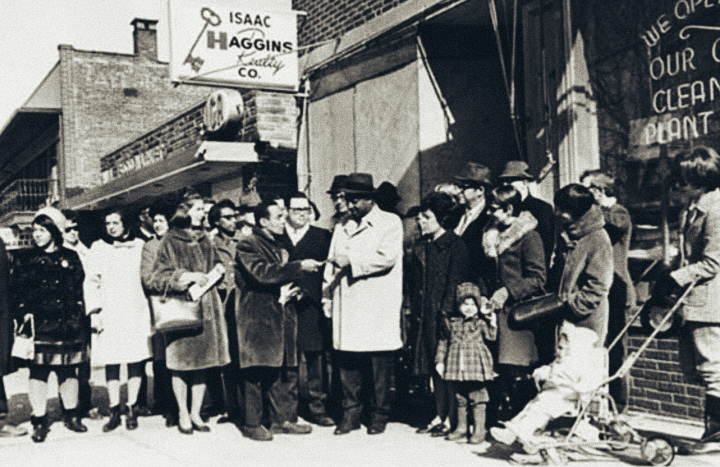
Interviews in this series were collected by undergraduate students at Cleveland State University under the supervision of Dr. Mark Souther, with funding from the Office of the Provost. The series contains interviews with pioneers of suburban residential integration and social activists who supported peaceful managed integration/desegregation and fair housing in Cleveland Heights and Shaker Heights in the 1950s to 1970s.